Lykoi: Meet the Real ‘Werewolf Cat’
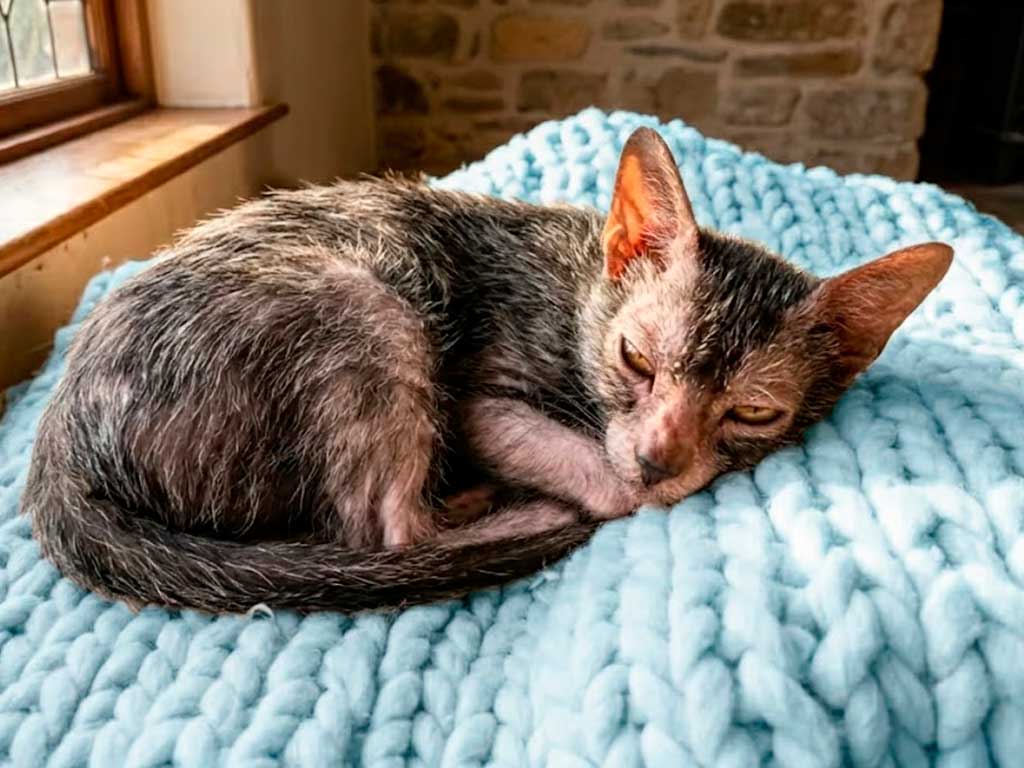
Your cat isn’t a hybrid, a hairless breed in disguise, or a designer experiment — the Lykoi earned its “werewolf cat” nickname the honest way, through a spontaneous mutation Mother Nature came up with entirely on her own.
That patchy, salt-and-pepper coat and the distinctive mask around the eyes and muzzle genuinely do look like something out of a monster movie. Spoiler: CFA itself describes the reaction to this breed as unlike anything else in recent cat fancy history — people line up just to get a look.
Quick Facts: Lean, muscular, medium size. Roan coat: intermixed white and colored guard hairs, no undercoat. Sparse hair on face, legs, and feet creates the signature “mask.” Coat coverage shifts through molting cycles. CFA championship status since 2023.
History: Discovered, Not Designed
The first Lykoi were discovered in Virginia in 2010. Their unusual appearance was initially concerning enough that people questioned whether the cats were simply unhealthy. More cats with the same look turned up in Tennessee the following year, prompting extensive medical and genetic testing along with careful test matings.
That research confirmed the roan-patterned coat came from a recessive gene entirely unrelated to any other known feline mutation — a genuine one-off, not a variation on an existing hairless or Rex trait. The first intentionally bred Lykoi kitten, named Daciana, arrived on September 14, 2011. Breeders went on to produce more than 200 additional Lykoi through extensive outcrossing, specifically to avoid inbreeding and protect genetic diversity while preserving that dramatic look.
CFA accepted the Lykoi for registration in 2018 and advanced it to full championship status in 2023 — a remarkably fast rise for a breed barely over a decade old.
CFA’s allowable outcross for the Lykoi is limited to the Domestic Shorthair — a deliberate choice to keep expanding genetic diversity without introducing traits from other pedigreed breeds that could dilute the roan mutation’s distinct look.
The Coat: Three Traits, One Werewolf Look
CFA’s official standard breaks the Lykoi’s signature appearance down into three distinct traits working together: a complete lack of undercoat, sparse guard hair concentrated on the ears, face, legs, and feet, and “roaning” — an amelanistic pattern that mixes white hairs with colored ones for that grizzled, salt-and-pepper effect.
Eyes run large, walnut-shaped, and angled slightly upward, giving every Lykoi an open, alert expression that pairs strikingly with the mask around them.
The hairless zones around the eyes, nose, and muzzle ideally form a clover-shaped “mask,” one of the most distinctive and prized features in the breed standard. Despite looking rough and wiry, the coat is genuinely soft and silky to the touch — a contrast that surprises most people meeting a Lykoi for the first time.
Kittens are actually born looking like ordinary cats. The roaning pattern doesn’t emerge until one to two weeks after birth, and the coat keeps changing throughout the cat’s life, cycling through phases from nearly hairless to nearly fully coated as it molts and regrows — a genuinely unique growth pattern not seen in other breeds.
A longhaired variant exists too, recognized in CFA’s AOV class — same underlying roan genetics, just carrying a soft, wispy, semi-long coat instead of the standard short one.
Personality and Temperament
Your cat isn’t cuddling right now because it’s busy — Lykoi would generally rather hunt than sit still, and CFA’s own breed profile notes they’ll patiently stalk toys, and sometimes their own people, before launching a sudden pounce. Once that toy is captured, don’t expect to get it back easily.
New situations bring out a reserved side at first; a Lykoi meeting a new person or environment often needs a little time to acclimate. That caution doesn’t last, though — once they warm up, they form genuinely loyal, strong bonds with both people and other pets. They thrive on interaction and will actively seek you out to insist on attention.
Vocally, Lykoi have a wide range of chirps, trills, purrs, and meows at their disposal, though they’re not excessively chatty unless they feel neglected.
That combination of independence and eventual devotion means a Lykoi genuinely earns its bond with you rather than offering it immediately — which many owners say makes the payoff feel more meaningful once it happens.
Caring for a Lykoi
Grooming needs stay light overall, since the lack of undercoat keeps shedding minimal outside of a molt. Skin can run oily, though, and occasional bathing helps — ask your breeder for cat-safe product recommendations rather than reaching for human shampoo. Pay particular attention to the ears and toes, since these spots tend to get oily too.
Sun exposure deserves real caution given how little coat coverage this breed carries in places. Limit extended sunbathing, consider a pet-safe sunscreen, and keep your Lykoi in a warm environment, since the lack of undercoat also means reduced natural insulation against cold.
Nail trims and dental care follow standard schedules — nothing breed-specific there beyond the usual consistency every cat benefits from.
Diet needs are standard for the breed’s lean, muscular build, with interactive play mattering as much as feeding schedule given how much this cat enjoys stalking and hunting-style games.
Health Conditions to Know
Health and genetic diversity have been priorities since day one of this breed’s development, backed by extensive testing. No confirmed breed-specific health conditions have turned up so far — a genuinely encouraging track record for such a young breed.
The sparse coat does call for a couple of specific precautions: ingrown hairs can occur during a molt, and skin left unprotected from the sun can experience accelerated molting from overexposure.
Health Disclaimer: This guide is for educational purposes only and doesn’t replace professional veterinary advice. Watch for ingrown hairs during molting cycles, and use pet-safe sunscreen for cats with significant outdoor sun exposure.
CFA’s breed standard is explicit that reduced hair coverage during a molt is expected and normal, not a sign of illness — worth knowing so a healthy Lykoi mid-molt doesn’t get mistaken for a sick one.
Finding a Lykoi: Price and Availability
Still a minority breed, though CFA notes the number shown at competitions grows every year. A cat show remains the best way to connect with a breeder — check with the sponsoring club first to confirm Lykoi will actually be entered. Given how few breeders exist, expect some wait for a kitten, though CFA suggests locating one shouldn’t prove especially difficult.
CFA’s Find-a-Breeder directory is a reliable fallback if a local show doesn’t have any Lykoi entered, and given how recently the breed reached championship status, the network of dedicated breeders is still actively growing.
Is a Lykoi Right for You?
This breed suits people who want a genuinely striking, one-of-a-kind look paired with an active, engaged personality. If the idea of a cat that stalks its toys like prey, warms up gradually to new faces, then bonds for life sounds appealing, a Lykoi delivers exactly that.
It’s a tougher fit for anyone in a cold climate without reliable indoor heating, or for households hoping for a purely cuddly lap cat from day one. Your cat isn’t going to look like anything else you’ve owned. Give it time to warm up, and it becomes one of the most genuinely devoted breeds around.
Multi-pet households can work well too, given how loyal Lykoi become toward other animals once past that initial reserved period — just allow the same patience during introductions that you would with new people.
One last thing worth knowing: because this breed is still so new, information and long-term data continue to accumulate every year — a good breeder stays current on the latest health findings and genetic testing recommendations as the breed matures.
Frequently Asked Questions
Is the Lykoi a hybrid or a designer breed?
No — it’s a naturally occurring mutation discovered in feral cat populations, not the product of deliberate crossbreeding or genetic engineering.
Why does a Lykoi’s coat change over time?
The breed undergoes a unique molting and regrowth cycle, shifting between nearly hairless and nearly fully coated phases throughout its life — a genuine trait of the breed rather than a health concern.
Are Lykoi cats hypoallergenic?
No cat breed is truly hypoallergenic, and the Lykoi isn’t typically classified as a lower-allergen option despite its sparse coat.
Do Lykoi cats have health problems?
No confirmed breed-specific health conditions have been documented, though owners should watch for ingrown hairs during molting and protect the skin from sun exposure.
How much does a Lykoi cat cost?
Prices vary, but expect a premium and a real wait given how few dedicated breeders currently work with this young, still-minority breed.
A Lykoi cat looks like it wandered in from folklore, but everything about it — the mutation, the mask, the molting coat — is entirely, verifiably real. Give this breed a little time to trust you, and what you get back is a genuinely devoted, endlessly entertaining companion wearing one of nature’s most unexpected designs.
Browse more breed profiles in the full Cat Breeds guide.