Cornish Rex Cat: The Greyhound-Shaped Clown in Curls
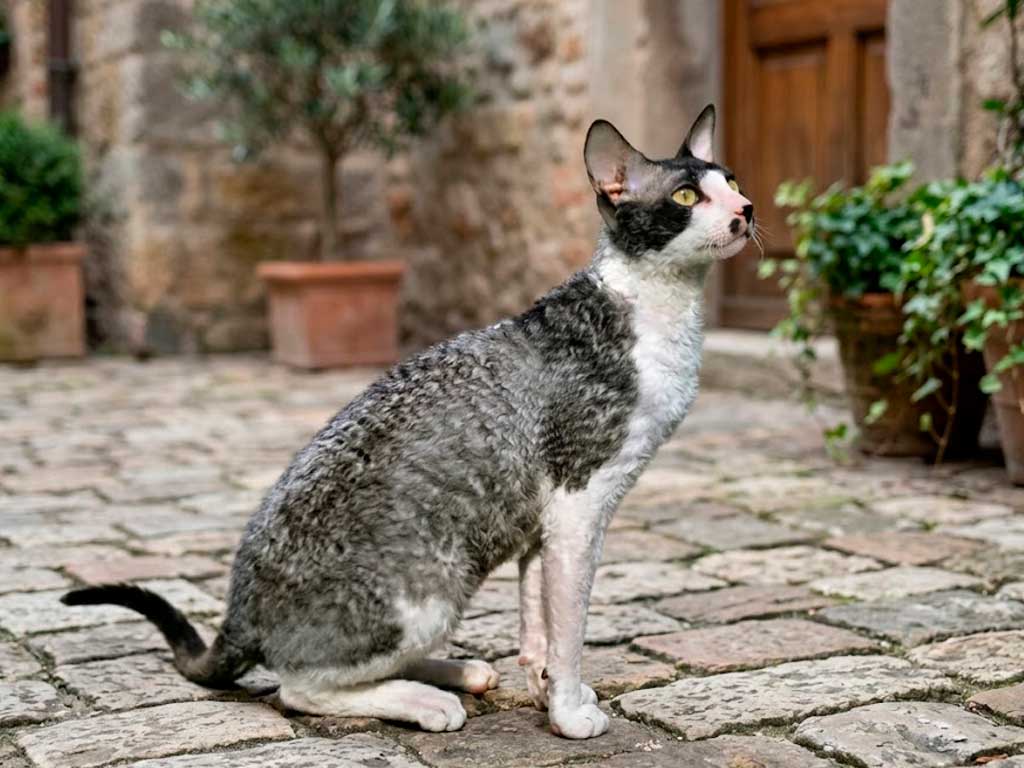
Your cat isn’t cold and shivering — that’s just how a Cornish Rex looks at rest, all lean lines and arched back like a greyhound built for the racetrack. Then it starts moving, and the resemblance to a clown takes over instead.
Add in a coat of tight, permanent curls with no straight guard hairs anywhere on the body, and you get one of the most physically unusual cats in the show ring. Spoiler: the whole breed exists because of one barn kitten in Cornwall, England, and a farmer who knew a good thing when she saw it.
Quick Facts: Small to medium, lean and fine-boned. Coat entirely free of guard hairs, tightly curled in a “marcel wave” pattern. Minimal shedding. No confirmed inherited health conditions.
History: One Curly Kitten in a Cornwall Barn
In 1950, a litter of ordinary barn cats on Nina Ennismore’s farm in Cornwall produced one kitten with an unmistakably curly, cream-colored coat. She recognized it as something genuinely new, consulted her vet and a geneticist, and bred the kitten — named Kallibunker — back to his own mother to confirm the trait would repeat.
It did. Having previously bred Rex rabbits with a similar curled coat, Ennismore borrowed the name for her new cat breed. Later breeders crossed Cornish Rex cats with Burmese, Siamese, and British Shorthairs to widen a dangerously narrow gene pool while confirming the curl was a simple recessive trait. A California breeder imported the first pair to the U.S. in 1956, and CFA granted registration in 1962, followed by championship status in 1964.
That deliberate outcrossing in the breed’s early years is a big part of why Cornish Rex enjoys such a clean health record today — widening the gene pool early prevented the kind of narrow, high-risk breeding that causes problems in some newer breeds.
Cornish Rex vs. Devon Rex: Not the Same Curl
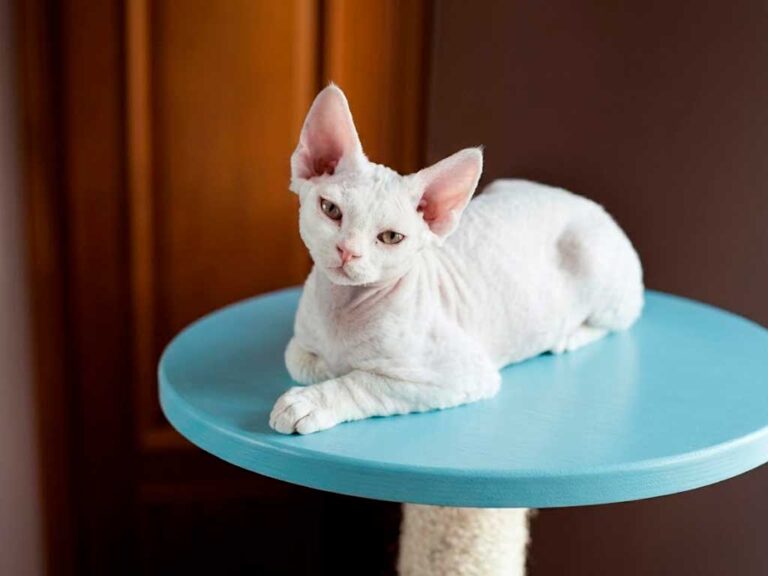
These two breeds get mixed up constantly, understandably, since both are curly-coated and share “Rex” in the name. The key difference: the Cornish Rex has zero guard hairs, giving an exceptionally soft, silky texture, while the Devon Rex has a sparser, slightly coarser coat with some guard hairs present. Cornish Rex also tends toward a leaner, more greyhound-like body, while Devon Rex carries a more pixie-like face with lower-set ears.
If you’re comparing the two side by side, spend time with both in person if possible — photos alone rarely capture the difference in coat texture, and it’s genuinely the deciding factor for most people torn between them.
Genetically, the two curl mutations are entirely unrelated despite the shared name and similar look — a Cornish Rex bred to a Devon Rex won’t reliably reproduce either breed’s specific coat type.
Physical Characteristics
Every curve on a Cornish Rex is deliberate: an arched back that’s visible even standing still, a deep but narrow chest, and long, slender legs that give the breed real spring when it jumps. The head is small and egg-shaped, with a prominent Roman nose and large, high-set ears that seem oversized for the face.
The coat itself carries 40 of the breed standard’s 100 total points — more than any other single trait — and must be dense, soft, and tightly waved from head to tail, including on the chin, chest, and belly.
Toes are another quirky detail worth knowing: five in front and four behind, per the breed standard — an incorrect toe count is actually grounds for disqualification in the show ring.
Personality: A Shadow With an Enormous Appetite
Your cat isn’t just affectionate — it’s going to be within arm’s reach at almost every moment, which is exactly why owners describe this breed as needing to maintain literal physical contact with their favorite person. Intelligent, adventurous, and famously good travelers, Cornish Rex cats treat novelty as an invitation rather than a threat.
That curiosity comes with real mischief potential. Constantly hunting for something new to investigate, this breed calls for genuinely childproofing the house and keeping breakables behind closed doors. Despite the slim build, appetite runs enormous — Cornish Rex cats are known to eat vegetables, fruit, and other foods most cats ignore entirely.
They’ll hold up their end of a conversation without becoming loud or demanding about it, preferring to communicate through presence and gentle chatter over insistent meowing. Dogs generally find them ready playmates, and kids tend to be thoroughly entertained by the breed’s antics.
That appetite is worth watching from a weight-management angle too — the fine bone structure and lean build can mask early weight gain, so portion control matters even for a cat that seems to burn through calories constantly.
Caring for a Cornish Rex
Regular combing isn’t necessary given the coat structure, but ears deserve real attention — this breed accumulates waxy buildup faster than most, so plan on cleaning with a cotton ball or vet-approved solution more often than you would with a typical cat.
Occasional bathing helps manage skin oils, since some Cornish Rex cats get a bit greasy over time without the usual guard-hair protection. These are genuine “wash-and-wear” cats — a good shampoo and a thorough towel dry is all that’s needed. Never use a blow dryer, which can damage and flatten the delicate curl pattern permanently.
Two environmental factors matter more for this breed than most: the lack of guard hairs offers little natural sun protection, so cats can genuinely sunburn, and the same thin coat makes them prone to feeling cold quickly. A cat sweater for chilly weather isn’t a novelty item here — it’s practical.
Nail trims and dental care follow standard schedules — nothing breed-specific there, just consistency over the years this cat is likely to be a fixture at your side.
Health Conditions to Know
Cornish Rex are considered a sturdy, vigorous breed with no confirmed inherited health conditions specific to the breed — a genuinely reassuring track record. The main considerations are environmental rather than genetic: sun exposure and cold sensitivity, both tied directly to the coat structure.
Health Disclaimer: This guide is for educational purposes only and doesn’t replace professional veterinary advice. Use pet-safe sunscreen on exposed skin during extended outdoor time, and provide warm bedding or a sweater in cold conditions.
Finding a Cornish Rex: Price and Availability
This is a well-established breed at CFA shows — genuinely uncommon to find a show without at least one or two Cornish Rex entered. That popularity generally makes kittens easier to find than some rarer breeds in this cluster, though a specific color or sex may still involve a short wait.
A cat show remains one of the best ways to meet a breeder and see the personality in action before committing to a kitten.
Because the breed’s original gene pool started so narrow, reputable breeders remain attentive to outcrossing history when planning litters — a good sign when a breeder can speak knowledgeably about the lines behind a specific kitten.
Is a Cornish Rex Right for You?
This breed suits people who want a genuinely interactive, people-focused cat that stays close and doesn’t mind a household with real activity. If the idea of a cat that greets guests, investigates every bag, and insists on physical contact sounds charming rather than exhausting, a Cornish Rex delivers exactly that.
It’s a tougher fit for anyone in a cold climate without indoor heating, or households unwilling to childproof for a genuinely curious cat. Your cat isn’t going to settle for admiring from a distance. It’s going to be right there, curls and all.
Multi-pet households and families with kids tend to do especially well with this breed too, given how readily it plays with both dogs and children — supervised, of course, given the breed’s small size and enthusiasm.
Frequently Asked Questions
What’s the difference between a Cornish Rex and a Devon Rex?
The Cornish Rex has zero guard hairs and a leaner, greyhound-like build, while the Devon Rex has some guard hairs and a more pixie-like face. The two curl mutations are genetically unrelated despite the similar names.
Are Cornish Rex cats hypoallergenic?
No cat breed is truly hypoallergenic, though the minimal shedding of the Cornish Rex coat makes it more manageable for some allergy-sensitive owners than heavier-shedding breeds.
Do Cornish Rex cats have health problems?
The breed has no confirmed inherited health conditions. The main considerations are environmental: sun sensitivity and cold sensitivity due to the lack of guard hairs.
How much does a Cornish Rex cost?
Given the breed’s relative popularity and established presence at shows, pricing is generally more accessible than rarer breeds, though it varies by color and breeder.
Do Cornish Rex cats need sweaters?
Many owners provide one in cold weather, since the guard-hair-free coat offers less natural insulation than a typical cat’s coat.
A Cornish Rex traces its entire existence back to one curly kitten in a Cornwall barn, and every generation since has kept that same combination of racehorse elegance and clownish energy. Once you feel that impossibly soft, curled coat for yourself, it’s easy to understand the appeal.
Browse more breed profiles in the full Cat Breeds guide.