Donskoy Cat: The Hairless Breed Found in a Soccer Bag
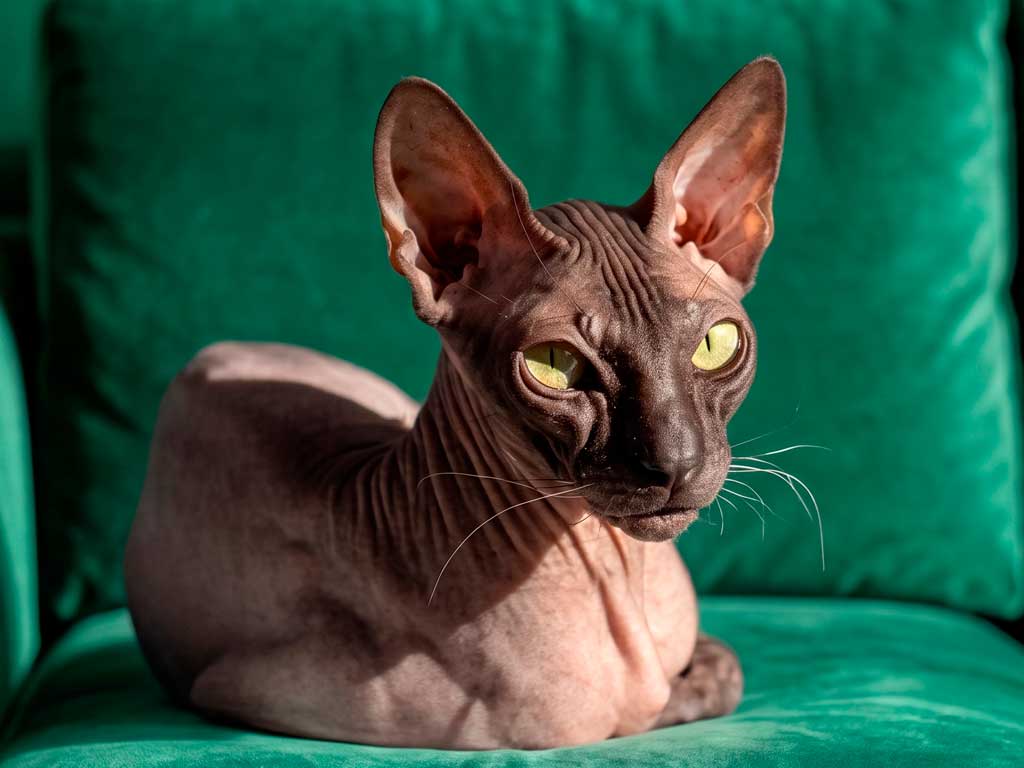
Your cat isn’t cold, even though it looks like it should be — Donskoy skin actually runs warm to the touch, closer to human skin than fur-covered cat skin. That’s just one of several genuinely unusual things about a breed whose entire existence traces back to a kitten rescued from a bag.
In 1987, in the Russian city of Rostov-on-Don, a professor named Elena Kovaleva came across a group of boys using a bag as a soccer ball. Inside was a frightened kitten. She took the kitten home and named her Varvara. Spoiler: Varvara’s hair loss, initially treated as a health problem, turned out to be the founding trait of an entirely new breed.
Quick Facts: Medium-sized, muscular, pear-shaped body. Skin warm and velvety, wrinkled at the neck, cheeks, and joints. Lifespan 12-15+ years. Four distinct coat types, most resulting in partial or full hairlessness.
History: From a Rescued Kitten to a Recognized Breed
Varvara grew up gradually losing her hair, and vets at the time assumed it was illness rather than genetics. A few years later, she gave birth to a litter with both haired and hairless kittens — and the haired ones began losing their coat too, just like their mother had. Some people wanted to euthanize the litter, assuming the kittens were sick.
Breeder Irina Nemikina rescued one of the kittens and spent years developing the trait into a stable, healthy breed. She named it the Don Sphynx — Don after the river Varvara was found beside, Sphynx for the hairlessness. TICA recognizes it today as the Donskoy. Genetic testing later confirmed the hair-loss gene is dominant, meaning just one copy passed from a parent is enough to produce it.
It’s a rare thing in the cat fancy for a breed’s entire documented origin to trace back to one specific rescue, on one specific day, involving one named person — most breeds emerge more gradually, from multiple breeders working in parallel.
The Four Donskoy Coat Types
Unlike most hairless breeds, the Donskoy doesn’t come in just one coat variety — it comes in four, and only one of them keeps meaningful hair.
Rubber Bald kittens are born completely hairless and stay that way for life. Flocked coats feel like soft chamois leather and can eventually go fully bald over time. Velour-coated kittens are born with a bald patch on top of the head — sometimes called a “monk’s cap” — with the rest of the coat gradually thinning to residual hair on the face, legs, and tail. Brush coats keep the most hair overall, ranging from bristly to soft or wavy, with bald patches that can appear on the head, neck, or back.
Because coat type isn’t fully predictable from a kitten’s appearance at birth, breeders often wait several months before confirming which of the four categories a specific kitten will settle into — worth asking about directly if a particular coat type matters to you.
Adding to the strangeness, Donskoys can grow a thin winter coat on the chest and tail in cold weather, then shed it as temperatures warm — a trait almost no other cat breed shares.
Donskoy vs. Sphynx: Not the Same Hairless Gene
These two get confused constantly, understandably, since both are hairless Russian-adjacent breeds with a similar wrinkled look. The key difference is genetic: the Sphynx’s hairlessness comes from a recessive gene, while the Donskoy’s comes from a dominant one — meaning the two mutations are entirely unrelated despite the similar appearance. Donskoy also tend to run a bit more pear-shaped and muscular, with more pronounced wrinkling.
Physical Characteristics
Everything about a Donskoy reads elegant but sturdy: a medium to medium-long body, wide chest, and a rounded “fatty belly” where the breed stores winter fat reserves. The skin itself is excessively elastic, with distinct wrinkles at the cheeks, neck, joints, and groin.
The paws are genuinely unusual — long, slender toes separated by webbing, with the front “thumbs” bending inward rather than downward, giving an almost hand-like appearance breeders sometimes call “monkey fingers.”
Males run noticeably larger than females, with broader heads, thicker necks, and more pronounced “stud jowls” once mature — a size difference more visible in this breed than in many others.
Personality and Temperament
Your cat isn’t just friendly — it’s convinced every visitor arrived specifically to see it. Donskoys are highly social, intelligent, and affectionate, following their people through the house and expecting to be included in whatever’s happening.
They’re also genuinely trainable, often learning to respond to voice commands and enjoying interactive games well into adulthood. This is not a breed built for long stretches alone — Donskoys thrive on company, human or feline, and do best with a companion pet if the household is regularly empty during the day.
That warmth extends to physical contact too — many Donskoys actively seek out laps, shoulders, and blankets, partly for the affection and partly because that warm body temperature makes cuddling mutually comfortable rather than one-sided.
Caring for a Donskoy
Because there’s little or no fur to absorb natural skin oils, hairless Donskoys need daily wipe-downs and a bath roughly once or twice a month to prevent buildup. Nail trims, ear cleaning, and dental care follow the same schedule as any cat.
Sun and temperature both need real attention. Donskoy skin sweats and tans with sun exposure, similar to human skin, so ask your vet about pet-safe sunscreen before extended time outdoors. On the flip side, that same lack of fur means cold weather hits harder — a sweater or extra-warm bedding matters more here than for most breeds.
Diet doesn’t require anything special — a quality dry and canned food combination covers the breed’s needs, though some owners note a slightly higher metabolism given how much energy hairless cats spend regulating body temperature.
Health Conditions to Know
The Donskoy is generally considered a healthy breed, with the hair-loss trait itself being cosmetic rather than a medical concern. Regular vaccinations and parasite prevention matter as they do for any cat, and skin checks are worth adding to routine care given the exposed skin.
Health Disclaimer: This guide is for educational purposes only and doesn’t replace professional veterinary advice. Ask your vet about safe sunscreen options and monitor skin for irritation, sunburn, or unusual changes.
Keep an eye on ear wax buildup too — hairless and low-hair breeds tend to accumulate more than fully-coated cats, since fur normally helps manage debris in the ear canal.
Finding a Donskoy: Price and Availability
This remains a genuinely rare breed outside Russia and Eastern Europe, so expect a real search and possible wait for a kitten. A cat show is a solid way to connect with a breeder in person, though attendance at Donskoy-specific breeders may require more travel than with more established breeds.
Given the breed’s Russian origins, some international breeders and import routes exist, though working with an established, TICA-affiliated breeder locally is usually simpler than arranging an international purchase.
Is a Donskoy Right for You?
This breed suits people who want a warm, social, genuinely affectionate cat and don’t mind the extra grooming routine that comes with little or no fur. If the idea of a wrinkled, people-obsessed cat that greets every guest personally sounds appealing, a Donskoy delivers exactly that.
It’s a poor fit for cold climates without reliable indoor heating, or for anyone unwilling to commit to sun protection and regular skin care. Your cat isn’t low-maintenance in the fur department — it just trades that maintenance for a coat you’ll never have to brush.
Multi-pet households and families tend to work well too, since Donskoys are known for offering companionship to other animals just as readily as to people — loneliness, not company, is the real risk factor for this breed.
Frequently Asked Questions
Is a Donskoy the same as a Sphynx?
No. Both are hairless, but the Donskoy’s hairlessness comes from a dominant gene while the Sphynx’s comes from a recessive one — entirely separate, unrelated mutations.
Do all Donskoy cats have the same coat?
No. The breed has four distinct coat types — Rubber Bald, Flocked, Velour, and Brush — ranging from born-hairless to retaining patches of bristly or soft hair.
Are Donskoy cats hypoallergenic?
No cat breed is truly hypoallergenic. Allergens come from skin and saliva, not just fur, so a hairless coat doesn’t eliminate the risk for allergy sufferers.
Do Donskoy cats need sunscreen?
Many owners use vet-approved sunscreen for extended outdoor exposure, since Donskoy skin can sunburn and tan much like human skin.
How much does a Donskoy cat cost?
Prices vary, but expect a premium and a real wait given how rare the breed remains outside its native region.
A Donskoy cat’s whole existence started with one rescued kitten and a professor who didn’t walk past a cry for help. Nearly four decades later, that same warmth runs straight through the breed’s temperament — wrinkled, hairless, and about as affectionate as cats come.
Browse more breed profiles in the full Cat Breeds guide.