Pixiebob: The Only Cat Breed That Allows Extra Toes
Your cat isn’t hiding an extra toe by accident — a Pixiebob might genuinely have one on purpose. This is the only cat breed in the world whose official standard permits polydactyl paws, up to seven toes per foot, right alongside the standard count.
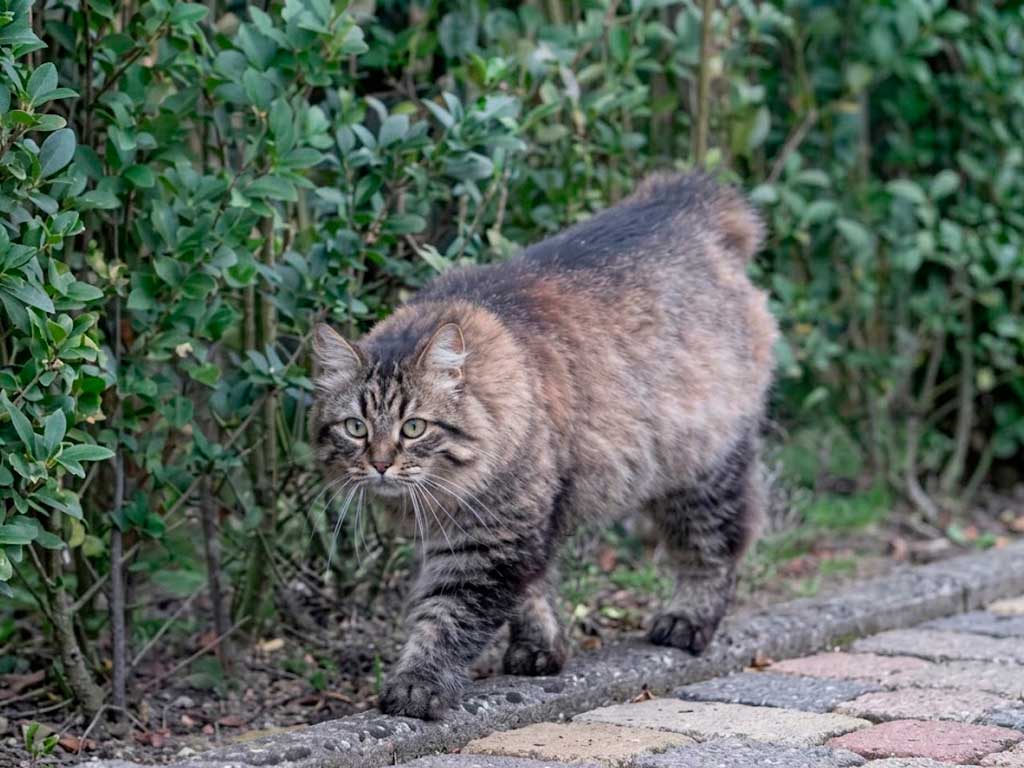
That’s just one piece of a breed deliberately built to look like it wandered out of the Cascade Mountains. Bred to resemble the wild Coastal Red Bobcat, the Pixiebob carries the rolling gait, the muttonchop face, and the short, often-kinked tail to match. Spoiler: underneath that wild look is one of the most dog-like personalities in the cat world.
Quick Facts: Medium to large, muscular, rangy build. Males 12-17 lbs, females 8-12 lbs. Life expectancy 13-15+ years. Short or long coat, always brown spotted tabby. The only breed permitting polydactyl toes, up to seven per paw.
History: One Rescued Kitten in the Washington Foothills
In spring 1985, Carol Ann Brewer purchased a polydactyl, spotted, short-tailed male kitten from a couple in the foothills of Washington State’s Cascade Range. The following January, she rescued another short-tailed male, this one standing as tall as her knee, and named him Keba.
Keba bred a neighbor’s domestic female named Maggie, and their April 1986 litter included a female kitten with muted spotting on a reddish-fawn coat and a genuinely wild look. Carol Ann named her Pixie. By 1987, she recognized these bobtailed cats had a consistent, distinctive appearance, and — partly out of concern for what would happen if she ever lost Pixie — she set out to deliberately reproduce the look.
She documented a formal breed standard in 1989, naming the fledgling breed Pixiebob in memory of her original cats. TICA granted Exhibition Status in 1994, advanced the breed to New Breed status in 1995, and awarded full championship status beginning with the 1998 show season.
IW SGC Silversprings Zeus went on to become the first Pixiebob to earn an International Award, a milestone that helped cement the breed’s presence on the wider show circuit not long after championship status arrived.
Physical Characteristics
Everything about the Pixiebob’s face echoes its wild namesake: an inverted pear shape, a heavy brow over medium, soft triangular eyes, a thick fleshy chin, and puffy nose leather. Facial hair grows downward, creating the distinctive muttonchop-sideburn look breeders specifically point to as a hallmark trait. Some Pixiebobs carry lynx tips on their ears, just like an actual bobcat.
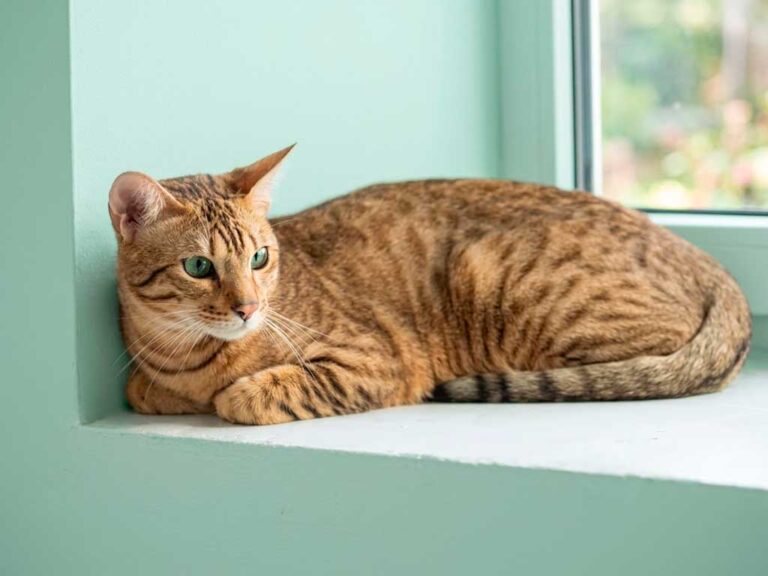
The body is substantially boned and muscular, with long, heavy legs — hind legs slightly longer than front — that produce a genuine rolling gait when the cat moves. Both shorthair and longhair varieties carry a thick, woolly double coat that stands off from the body, giving a padded feel when petted. The ideal color is brown spotted tabby, tawny to reddish-brown, with small spots muted by heavy ticking that runs even heavier and slightly silvery in winter.
Eye color runs golden brown or gooseberry green, adding to the overall wild-cat impression the breed standard is built around.
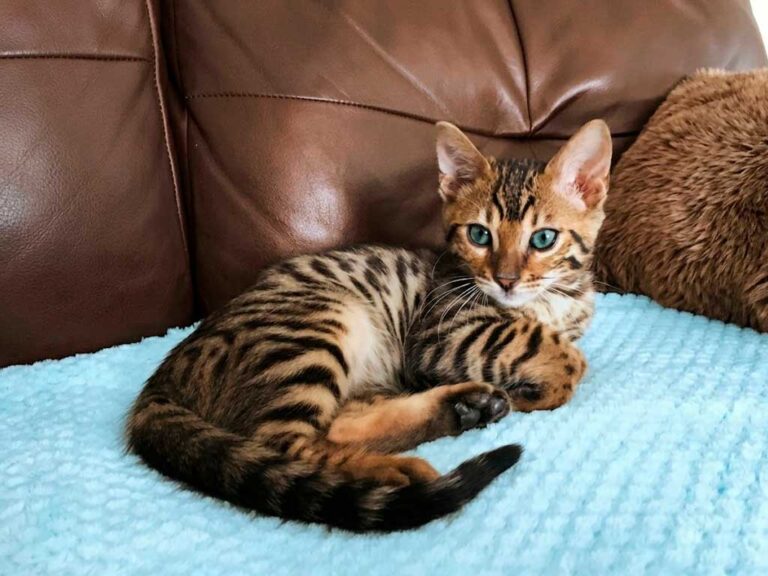
Kittens are often born with the wild look already fairly pronounced, though the muttonchop facial hair and full ticking pattern typically become more defined as the cat matures into adulthood.
The tail runs short — a minimum of two inches, up to hock length — and is frequently kinked or knotted, though it should stay completely flexible rather than rigid. Paws deserve special mention: standard cats carry five toes in front and four behind, but the Pixiebob is the only breed where polydactyl paws, with up to seven toes total, are fully permitted and embraced rather than treated as a fault.
Personality and Temperament
Your cat isn’t just tolerating the leash — a Pixiebob genuinely learns to walk on a harness and takes real interest in family outings, earning the breed its common nickname: “dog in disguise.” Intelligent and socially bonded to their families, Pixiebobs pick up fetch easily and communicate in a distinctive language of chirps, chitters, and the occasional growl rather than a typical meow.
Despite genuine athleticism and a desire to be part of everything happening in the house, this breed also has a notably laid-back, relaxed side, content to participate calmly rather than demand constant stimulation. Devoted to children and generally welcoming of other pets, Pixiebobs strike a real balance between active engagement and easygoing companionship.
Vocal range aside, this breed rarely resorts to a traditional meow at all — owners often describe the overall effect as closer to conversing with a small, opinionated wild animal than a typical housecat.
Caring for a Pixiebob
That thick, woolly double coat needs regular brushing to prevent matting and control shedding, regardless of whether you have the shorthair or longhair variety — the longhair simply carries a softer, silkier medium-length coat up to about two inches, rather than a dramatically different grooming schedule.
Round out care with regular nail trims, ear cleaning, and tooth brushing with a vet-approved paste, plus a tall, sturdy scratching post to satisfy natural scratching instinct. Diet doesn’t require anything specialized, though keeping the water bowl a few feet from food helps encourage drinking, since the smell of food nearby can put some cats off.
Interactive play matters here too, given how engaged and physically active this breed tends to stay — a few structured play sessions a day help satisfy both the athletic build and the genuinely social temperament underneath it.
Health Conditions to Know
Pixiebobs are generally a healthy breed. The main thing to watch is weight — this breed’s substantial bone structure and muscular build can make it easy to mistake early weight gain for simply being a naturally large cat, so regular hands-on checks matter more than a glance alone.
Health Disclaimer: This guide is for educational purposes only and doesn’t replace professional veterinary advice. Keep vaccinations and parasite prevention current, and schedule regular wellness exams to monitor weight and overall condition.
For polydactyl cats specifically, keep an eye on the extra toes during nail trims — those additional nails can curl or grow at unusual angles if overlooked, so a closer look than usual during grooming helps avoid discomfort.
Finding a Pixiebob: Price and Availability
This remains a relatively uncommon breed, so expect a real search and possible wait for a kitten. A cat show is a solid way to connect with a breeder in person, and TICA’s breeder directory is worth checking directly given how few dedicated Pixiebob breeders exist relative to more established breeds.
Given the breed’s still-limited number of dedicated breeders, working with someone affiliated with TICA’s breed committee is a good sign — they’ll have the clearest picture of available litters and genuine lineage.
Is a Pixiebob Right for You?
This breed suits people who want a genuinely dog-like, loyal companion with a wild look and a calm, easygoing core. If the idea of a cat that walks on a leash, plays fetch, and greets your family outings with real enthusiasm — then settles down calmly at home — sounds appealing, a Pixiebob delivers exactly that.
It’s a less natural fit for anyone hoping for a purely decorative, low-interaction cat. Your cat isn’t going to watch from a distance. It’s going to want in on the outing, the game, and the conversation, chirps and chitters included.
Active households and families who genuinely spend time outdoors together tend to get the most out of this breed — a Pixiebob that gets included in walks and outings settles into the calmer, laid-back side of its personality far more readily than one left to entertain itself.
One last practical note: because the breed’s whole standard is built around resembling a wild bobcat, don’t be surprised if strangers occasionally do a double take on walks — it’s a genuinely common experience for Pixiebob owners, and part of the fun for many of them.
Frequently Asked Questions
Is the Pixiebob part bobcat?
No — despite the name and the wild appearance, the Pixiebob is entirely domestic, bred deliberately to resemble the Coastal Red Bobcat rather than descending from one.
Why does the Pixiebob allow extra toes?
It’s the only breed whose official standard permits polydactyl paws, up to seven toes per foot, reflecting a trait present in the breed’s founding cats rather than being treated as a fault.
Are Pixiebobs good with kids and other pets?
Yes — they’re known for being devoted to children and generally welcoming of other pets in the household.
Do Pixiebobs really walk on a leash?
Many do. This breed’s dog-like, trainable temperament means leash walking and even fetch come relatively easily compared to most cats.
How much does a Pixiebob cost?
Prices vary, but expect a premium and a real wait given how uncommon the breed remains, even at TICA-affiliated shows.
A Pixiebob carries the look of a wild bobcat and the loyalty of a family dog into one deliberately engineered breed — extra toes, muttonchops, and all. Once you understand that the wild appearance is entirely surface-level, the genuinely devoted personality underneath is easy to fall for.
Browse more breed profiles in the full Cat Breeds guide.