Burmese Cats Explained: The ‘Velcro Kitty’ With Golden Eyes
Your cat isn’t just affectionate — it’s physically attached to you, in the most literal sense a cat can manage. The Burmese cat earned the nickname “Velcro kitty” honestly, and once you’ve lived with one, the name stops sounding like an exaggeration.
Look into those glowing gold eyes for more than a few seconds and most owners swear the cat can see straight through them. Spoiler: it’s not mysticism, it’s just a breed built almost entirely around connection.
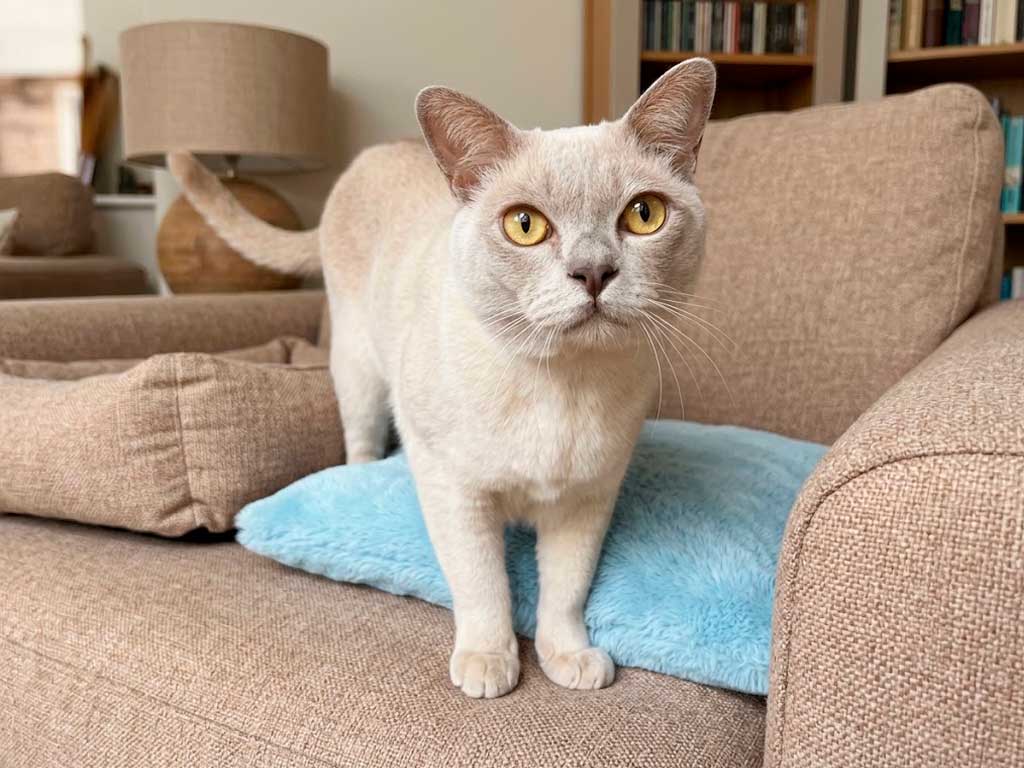
Quick Facts: Medium size, surprisingly heavy for its build. Males often reach 12+ lbs. Bright gold to yellow eyes. Comes in four colors: sable, champagne, blue, and platinum. Fully grown by around 18 months.
From One Walnut-Brown Cat to a Recognized Breed
While Burmese-type cats occur naturally on the Malay Peninsula, nearly every Burmese alive today traces back to a single cat: Wong Mau, a small, compact walnut-brown female brought to the United States in 1930. Bred to a Siamese, she produced three visibly different types of kittens — some with Siamese markings, some that resembled her, and some a solid, dark chocolate brown.
Those solid brown kittens bred true, and CFA began registering early Burmese in 1936, though the breed didn’t reach championship status until 1959. Dilute colors — blue, chocolate, lilac — occasionally turned up in litters over the following decades and, after considerable debate, were eventually accepted and renamed. Today’s Burmese come in four official colors: sable, champagne, blue, and platinum.
What Makes This Breed Feel Different
That single-cat foundation explains something else about the breed too — despite decades of expansion into new colors and countless catteries worldwide, Burmese still carry a genuinely traceable lineage back to Wong Mau herself, which is unusual for a breed this widespread.
People often compare the Burmese to a small bulldog — not in looks, but in build. Pick one up and the weight catches you off guard every time; there’s far more muscle packed into that compact frame than the cat’s size suggests.
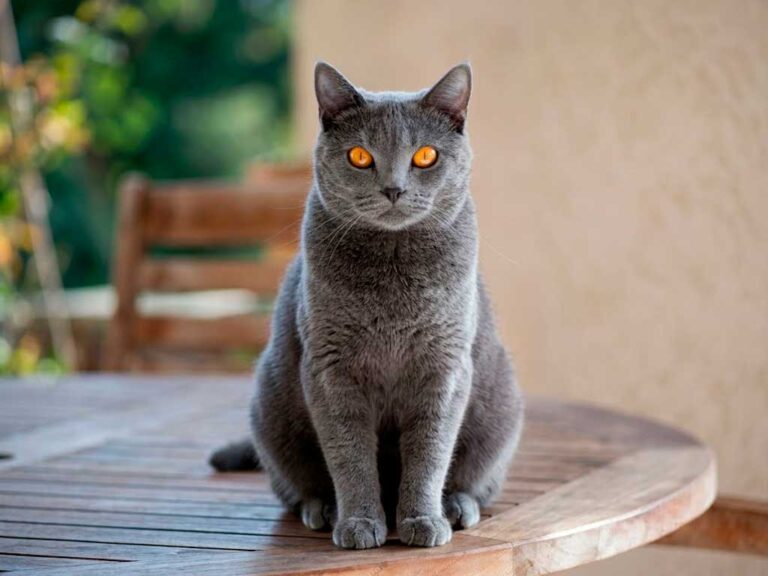
The face does a lot of the emotional work too. A rounded head, short broad muzzle, and those wide-set gold eyes combine into an expression breeders describe as sweet and almost innocent-looking — which somehow makes the strong-willed personality underneath even more charming.
That density surprises a lot of first-time owners at the vet too — a Burmese that looks like a fairly average-sized cat can weigh in noticeably heavier than expected on the scale, which is exactly the trait CFA’s standard is built around.
The tail and legs stay proportionate rather than exaggerated, and the overall silhouette reads compact and rounded from every angle — no sharp lines, no wedge-shaped features, just soft curves that match the personality underneath.
Personality: Why “Velcro Kitty” Isn’t an Exaggeration
Curious, clever, and genuinely friendly, Burmese cats adore their people without playing favorites — affection gets spread evenly across everyone in the house, human or otherwise. Most tolerate, and many actively enjoy, the family dog.
They learn games fast, including a real version of fetch, and stay playful well into old age even after mellowing out from their notoriously spirited kitten phase. Expect company in every room, a spot on (or in) your bed if you allow it, and a firm belief that the cat, not you, is actually running the household.
Kittenhood is where the spirited side peaks — expect a genuinely chaotic first year or so, full speed most of the time, before that energy settles into the calmer, still-playful adult temperament the breed is best known for.
Soft-spoken by default, Burmese will absolutely tell you when something’s wrong — just don’t expect constant chatter otherwise.
Burmese vs. Bombay: Not the Same Cat
Since the Bombay was bred partly from Burmese stock (see our Bombay cat guide), the two get mixed up occasionally. The easiest way to tell them apart: Bombays are always solid black, while Burmese come in four warm, lighter colors and never black. Temperament overlaps quite a bit, since the Bombay inherited much of its people-oriented personality from this side of its family tree.
Caring for a Burmese
Grooming sits at the easy end of the spectrum. That glossy, close-lying coat sheds minimally; a weekly pass with a rubber brush keeps it looking its best, and baths are optional rather than necessary.
Diet deserves a little more attention than the coat does. Because older Burmese may carry some genetic predisposition toward diabetes, keeping an eye on carbohydrate intake and body weight as your cat ages is a reasonable precaution, alongside the usual portion control and regular play.
Interactive play matters as much as diet here. A bored Burmese finds its own entertainment fast, and given how attached this breed gets to its people, a few short daily play sessions do more for behavior than any toy left lying around unsupervised.
Dental care and nail trims round out the routine — nothing breed-specific, just the standard schedule every cat benefits from. Given how physically close this breed likes to stay, most owners find grooming sessions double as bonding time rather than a chore either cat resists.
Health Conditions to Know
Burmese are considered a relatively healthy natural breed capable of long lives with good care. Historically, the breed showed an above-average rate of feline infectious peritonitis (FIP), a disease with a strong genetic component — but decades of careful selective breeding have brought that rate back down to roughly average for cats generally.
Some evidence points to a genetic predisposition toward diabetes in older Burmese, though research on exactly how heritable that risk is remains inconclusive. Ask breeders about diabetes history in their lines, and keep up with regular checkups as your cat gets older.
Weight checks at routine vet visits matter more here than a quick glance might suggest, since that muscular build can mask the early stages of weight gain that often precede diabetes in cats generally.
Health Disclaimer: This guide is for educational purposes only and doesn’t replace professional veterinary advice. Discuss diabetes risk factors with your vet as your Burmese ages, and monitor carbohydrate intake as part of routine care.
Finding a Burmese: Price and Availability
This is a genuinely popular breed — CFA notes it’s unusual to find a cat show that doesn’t include at least a few Burmese. That popularity generally makes kittens easier to find than some rarer breeds in this cluster, though a specific color or sex may still mean a short wait.
A cat show remains one of the most reliable ways to connect with a breeder in person and see the personality in action before committing.
Rescue and breed-specific adoption groups are worth a look too, particularly for owners open to an adult cat rather than a kitten — Burmese occasionally turn up there at a fraction of breeder pricing.
Is a Burmese the Right Fit for Your Home?
This breed suits people who want a genuinely people-obsessed cat and don’t mind constant company — following you room to room, curling up wherever you happen to be sitting, checking in throughout the day. If that sounds like a feature rather than a bug, a Burmese delivers it in full.
It’s a tougher match for anyone who wants a more independent, low-touch cat. Your cat isn’t going to respect much personal space. It’s going to consider your lap, your keyboard, and your side of the bed all fair territory.
Multi-pet households tend to do well too, especially with dogs — Burmese are frequently described as more dog-tolerant than the average cat, which can make introductions smoother than expected.
One last thing worth knowing before you commit: this breed genuinely doesn’t do well as a background pet. If your lifestyle keeps you away from home for long, unpredictable stretches, a Burmese will notice, and it will let you know about it.
Frequently Asked Questions
Why are Burmese cats called “Velcro kitties”?
Because they’re famously physically attached to their people — following from room to room and seeking constant contact, rather than the more independent behavior typical of many other breeds.
Are Burmese cats good with kids and dogs?
Yes — they’re known for being good with children and generally tolerant of, or genuinely fond of, dogs in the household.
What colors do Burmese cats come in?
Four official colors are recognized: sable (dark brown), champagne, blue, and platinum.
Are Burmese cats prone to health problems?
They’re a generally healthy breed. Historical elevated rates of FIP have been largely bred out, though some evidence suggests older cats may carry a genetic predisposition toward diabetes.
How much does a Burmese cat cost?
Given the breed’s popularity, prices and availability are generally more reasonable than rarer breeds, though specific colors may involve some wait.
A Burmese cat spends its entire life making sure you know exactly where it stands: right next to you, ideally touching. Once you accept that the Velcro nickname is accurate rather than cute exaggeration, this breed becomes one of the most rewarding companions a person can bring home.
Browse more breed profiles in the full Cat Breeds guide.