Canaan Dog: Israel’s Ancient Survivor Breed

Canaan Dog is a medium-sized pariah breed from Israel, recognised by the FCI in 1966 and classified there as a primitive type used for watch and security work.
It stands 50 to 60 cm at the withers, weighs 18 to 25 kg, and is one of the few breeds that survived as a free-living population rather than being shaped in kennels.
That origin explains the temperament and the paperwork problem. Registries describe the breed with numbers that do not match each other, one registry lists a coat colour that the other two call unacceptable, and the health evidence base is genuinely thin. This guide separates what is documented from what is repeated.
What Is a Canaan Dog?
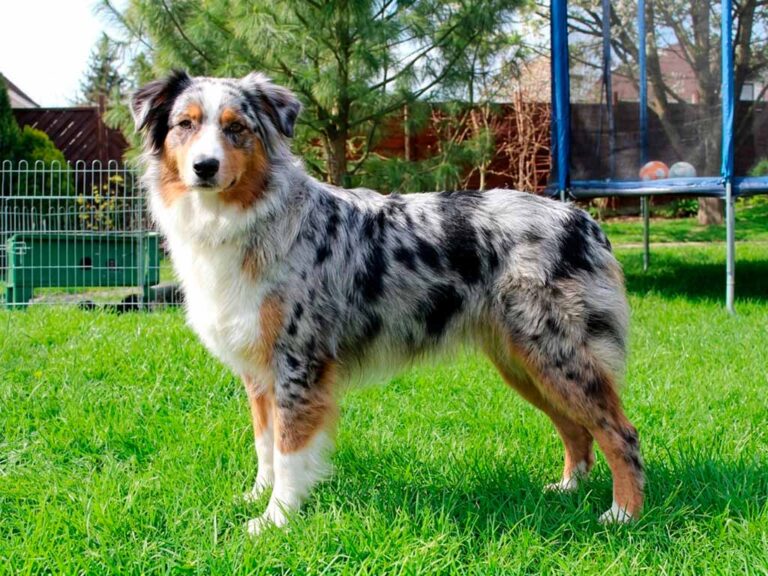
The Canaan Dog is a square, strongly built dog of wild-dog type, with erect low-set ears, a bushy tail carried curled over the back and a dense double coat built for desert conditions. The FCI describes it as alert, quick to react and distrustful of strangers, strongly defensive without being naturally aggressive.
These are the figures worth keeping, with the source named because the registries disagree on more than one of them.
| Also called | Kelev K’naani |
| FCI standard | No. 273, Group 5, Section 6, primitive type |
| Origin | Israel |
| FCI acceptance | 1966; current standard published 1985 |
| UKC recognition | 1992, Sighthound and Pariah Dog group |
| AKC recognition | 1997, Herding group |
| Height | 50 to 60 cm at the withers |
| Weight | 18 to 25 kg |
| Coat | Harsh straight outer coat, profuse undercoat, short to medium |
| Lifespan | 12 to 15 years, with some sources saying 11 to 15 |
| Best for | Experienced owners who will do daily training and socialisation |
How Big Do Canaan Dogs Get?
The FCI standard gives one height band for the breed and notes that males can be considerably larger than females. That absence of a sex split is unusual, and it is the reason the American figures look like a different breed on paper.
| Source | Height and weight |
|---|---|
| FCI standard | 50 to 60 cm at the withers; 18 to 25 kg |
| AKC, male | 20 to 24 inches; 45 to 55 lb |
| AKC, female | 19 to 23 inches; 35 to 45 lb |
| UKC | 20 to 24 inches; 40 to 55 lb, with no female range |
One conflict is worth stating plainly. The AKC female minimum of 19 inches and 35 lb converts to about 48 cm and 16 kg, which sits below the FCI floor of 50 cm and 18 kg. A bitch can therefore be correct in one registry and undersized in another. Do not use a single number to judge a dog.
What Colours Can a Canaan Dog Be?
Colour is where the published information gets genuinely confusing, because the three registries do not permit the same palette. The FCI is the most explicit about what is allowed and what is not.
| Colour or pattern | Status under the FCI standard |
|---|---|
| Sand, gold, red, cream | Most typical of the breed |
| Red-brown, white, black | Accepted |
| Spotted, including Boston Terrier patterns | Accepted and common |
| Black mask on any colour | Permitted, but the mask must be symmetrical |
| Grey, brindle, black-and-tan, tricolour | Unacceptable |
The UKC agrees on the exclusions and adds one more: grey and liver are unacceptable colours. The AKC’s breed colour table, meanwhile, includes liver as a registrable colour code. That is a straight contradiction between registries, and a buyer relying on one page will reach the wrong conclusion about a liver-pigmented puppy.
Two details from the standard are worth knowing for their own sake. The mask has to be symmetrical, so a lopsided dark muzzle is a fault. And white markings with black patches, described in the standard as Boston Terrier patterns, are common rather than unusual.
What Does a Canaan Dog Look Like?
The impression is of a wild canid that has agreed to live indoors. The standard’s identifying features are specific, and most of them are in the head:
- Ears are erect, relatively short and broad, slightly rounded at the tip and, unusually, set low on the skull.
- Eyes are dark brown, slightly slanted and almond shaped, and dark rims are essential.
- The nose is black, and the head is a blunt wedge that looks broader because of the ear set.
- The body is square, with a deep chest, well tucked belly and a level back.
- The tail is set high and thick, a brush rather than a whip, carried curled over the back.
- The feet are strong, round and cat-like with hard pads, and the trot is quick, light and energetic.
The coat is a working desert coat rather than a show coat. The outer hair is dense, harsh and straight, short to medium in length, with a close and profuse undercoat underneath.
Where Does the Canaan Dog Come From?
Israel, and the breed’s own history is unusually well documented for a primitive dog. It survived as a pariah population on the fringes of settlement, used by Bedouin as flock and camp guardians, with some dogs guarding for the Druze on Mount Carmel.
The archaeological anchor cited by both the AKC and the parent club is a wall painting rather than a fossil dog. Drawings on the tombs at Beni-Hassan, dated 2200 to 2000 BC, depict dogs that closely resemble the modern breed. Older claims about vast cemeteries of matching skeletons circulate online; the registries do not make them, and I have left them out.
The modern breed exists because of one researcher. In 1934 Dr Rudolphina Menzel arrived in what was then Palestine with her husband and began studying the local pariah dogs.
The parent club records that she was asked by the Haganah to develop a dog for guarding isolated settlements, and that during the Second World War she recruited and trained more than 400 dogs as land mine detectors, a role in which they outperformed the mechanical equipment of the day. The same dogs worked as sentries, messengers and Red Cross helpers.
By 1948 there were around 150 Canaan Dogs in the stud book. Four dogs were exported to the United States on 7 September 1965 and became the foundation of the American population. The AKC admitted the breed to its registry in 1996 and made it eligible for the Herding group in 1997, as its 141st breed.
Shop for Your Breed

Just Food For Dogs – Fresh Frozen
Fresh meals. Gently cooked, then frozen to lock in nutrients. 100% Human Grade Ingredients. Gently Cooked in the USA. #1 Vet-Recommended Fresh Food.
Shop on JustFoodForDogs
Raw Paws Pet Food – Frozen Raw Pet Food
Feeding your pet a frozen raw pet food diet is a simple way to deliver real, whole-food nutrition in its most natural form.
Shop on RawPawsPetFood
Bravecto Chews for Dogs
Bravecto is a long-lasting flea and tick protection option for your dog. 1 dose of Bravecto chew provides up to 12 weeks of powerful protection, which is nearly 3 times longer than a monthly treatment.
Shop on BestVetCare.com
Deworming Treatments for Dogs
BestVetCare offers you a wide range of worm treatments which come in a variety of forms such as oral paste, tablets, granules, and liquid solutions.
Shop on BestVetCare.comHappyPetZone participates in various affiliate programs with brands and retailers. We may receive a commission on purchases made through our links, at no extra cost to you.
What Is the Canaan Dog’s Temperament Like?
The FCI summarises the breed in a sentence that is worth reading twice: alert, quick to react, distrustful of strangers, strongly defensive but not naturally aggressive, vigilant against people and other animals, and extraordinarily devoted and amenable to training.
The UKC adds the detail that best explains living with one. Faced with an intruder, a Canaan Dog’s first reaction is to stay out of reach and bark continuously rather than close in. That is territorial behaviour without a bite at the end of it, and it is exactly what the breed was kept for.
Trainability is the part most often misreported. The FCI calls the breed amenable to training and the AKC calls it highly intelligent and readily trained. The same UKC standard adds the caveat that matters: a Canaan considers itself the equal of the people it lives with. Biddable and deferential are different things.
The practical result is a dog that is docile with its own family and reserved with everyone else. The AKC is direct about the consequence, warning that passive owners who have not established themselves will find the dog running the household.
Are Canaan Dogs Good With Children and Other Dogs?
With children, the UKC is warmer than most standards dare to be. It states that Canaans raised with children are very gentle with them and extremely protective of them. The condition is the same one that applies to every breed with a guarding instinct: raised with, not merely introduced to.
With other dogs, the UKC is blunt. Canaans of both sexes may be aggressive with other dogs, particularly in their own territory. The AKC lists strange dogs alongside strange people and new environments as things the breed is mistrustful of, and calls early socialisation and puppy classes a must.
Same-sex pairings are the usual flashpoint, and territory is the usual trigger. Two Canaans of the same sex in one house can work, and it is not a pairing to attempt without a plan.
How Much Exercise Does a Canaan Dog Need?
Less than the working history suggests. The AKC describes a moderate exercise requirement and notes that the breed adapts well to different living situations when it gets daily outings. The parent club makes the same point in different words, saying the Canaan does not require an excessive amount of exercise.
Some pet-care sites quote one to two hours a day. That figure does not come from a registry or a breed club, and it is the sort of number that makes a manageable breed look unsuitable.
What the breed does need is a reason to think. A Canaan that patrols a garden for an hour has done more useful work than one that trots beside a bicycle. These ways to tire out a high-energy dog suit the breed’s brain better than extra mileage.
Fencing is the non-negotiable part. A dog bred to patrol a boundary will test the boundary, and a garden gate left open is an invitation rather than an accident.
How Do You Train a Canaan Dog?
Positive methods, short sessions, and a socialisation plan that starts before the vaccination course ends. The AKC warns that harsh training methods have a negative effect on the breed’s sensitive nature, and that warning is consistent across every source that discusses training.
A workable sequence for the first year:
- Socialise deliberately, with new surfaces, sounds, people and calm dogs, before the puppy is sixteen weeks old.
- Teach a boundary cue indoors first, because the same cue will later guard a gate.
- Reward every check-in on a walk, so proximity becomes the dog’s default rather than a command it can refuse.
- Practise recall on a long line in an open field, and never rely on it near a road.
- Give the dog a job, such as scent games or a place to watch the street, because an unoccupied guardian invents work.
- Keep sessions to five minutes and end while the dog is still succeeding.
How Do You Groom a Canaan Dog?
The coat is close to self-maintaining, with one predictable exception. The AKC notes that the breed stays clean and needs fewer baths than most active breeds, and that it has a shedding season at least once a year when frequent brushing earns its keep.
| Task | How often |
|---|---|
| Brushing, with a slicker or undercoat rake | Weekly, and daily during the shed |
| Bathing | Only when genuinely dirty |
| Ear check | Weekly, which the AKC singles out |
| Nail trimming | Every few weeks |
| Dental care | Daily brushing where the dog allows it |
The UKC standard notes that the breed is shown in a completely natural condition with no trimming. That is a useful guide for pet owners too, since there is no breed-appropriate haircut to arrange.
What Health Problems Do Canaan Dogs Have?
Here the honest answer is more useful than a list. The breed is widely described as robust, and the published evidence behind that reputation is thin enough to state precisely.
The largest UK breed-health survey, published in 2017, captured only six Canaan Dogs out of more than 43,000 dogs, far below the number needed to estimate a breed-specific prevalence. The practical reading is that no reliable prevalence figure exists for this breed, in either direction.
The only breed-level counts come from the Israel Canaan Dog Club of America health charts, which list conditions with a possible genetic basis reported to the health chair. The totals are small and the data stop in 2007:
- Seizures are the most frequently reported entry, with 45 dogs recorded over the life of the survey.
- Progressive retinal atrophy appears 13 times, and hip dysplasia 11 times.
- Monorchidism appears 10 times, alongside rarer entries including congenital deafness and a single osteosarcoma.
Those numbers are counts, not rates, and they describe a population of roughly 600 to 700 dogs in North America. They are a reason to ask a breeder questions, not a reason to expect a problem.
The screening picture is clearer. The AKC’s national breed club recommends patella, hip, elbow, ophthalmologist and thyroid evaluations, and the ICDCA health index points to CERF eye checks, OFA elbows, heart, patellas and thyroid, and PennHIP or OFA hips.
The UK breed club states that the Canaan is one of the healthiest breeds around with no known hereditary problems, while also advising patella testing because a few dogs have been diagnosed.
Put together, the sensible position is this. Ask for hip, patella, eye and thyroid results on both parents, and treat any claim that the breed has no health issues as marketing rather than evidence.
Lifespan is usually given as 12 to 15 years, with the breed’s own health charts quoting 11 to 15. Any dog that collapses, struggles to breathe, bleeds heavily or shows sudden severe pain needs a vet immediately. This guide is educational and does not replace veterinary advice for the dog in front of you.

Lemonade Pet Insurance
Explore customizable pet insurance coverage and learn whether Lemonade is the right fit for your dog or cat.
- Customizable coverage options
- Online policy management
Is the Canaan Dog a Rare Breed?
Yes, and the numbers are unusually specific. The breed’s own health charts estimate the North American population at 600 to 700 dogs. That scarcity shapes everything about buying one: litters are planned months ahead, prices reflect a small gene pool, and many puppies are placed with people already known to breeders.
It also raises the stakes on health testing. A breed this small cannot afford to lose lines, and a careful breeder will talk about coefficient of inbreeding before you ask.
Is the Canaan Dog the Right Dog for You?
The breed suits an owner who wants a thinking watchdog, enjoys daily training, and is comfortable being the person who sets the rules. It is loyal in a way that feels earned rather than automatic, and it is a genuinely striking dog to live with.
Choose another breed if any of these describe your household:
- You want a dog that greets every visitor with enthusiasm.
- Nobody is home to train and socialise during the first year, when the work actually happens.
- You already have a same-sex adult dog and no plan for a careful introduction.
- You want a breed with predictable, well-documented health statistics to plan around.
If none of those apply, the Canaan Dog is a rewarding and genuinely different companion. If you want the same primitive temperament in a busier, more talkative package, our Shiba Inu guide covers the closest popular comparison.
For a breed with the same desert heritage and a very different body, see the Sloughi, and the Xoloitzcuintle guide covers another ancient breed that survived alongside people rather than because of them.
If you are drawn to the breed’s intense attachment and want to prepare for the downside, read about separation anxiety in attached dogs before you bring one home.
Compare it against the alternatives in our Dog Breeds hub before you join a waiting list.