American Pit Bull Terrier: Separating Reputation From Reality
In the United Kingdom, owning an American Pit Bull Terrier without a court exemption is a criminal offense. That single fact tells you how polarizing this breed has become, even though its temperament depends far more on upbringing than on genetics.
This guide separates verified facts from persistent myths, covers what daily life with this athletic, affectionate breed actually looks like, and explains the legal landscape any prospective owner needs to understand. You’ll also find out why the popular claim about this breed’s jaw doesn’t hold up to scrutiny.
History and Origin
This breed originated in nineteenth-century England, originally bred for bull-baiting. That grim beginning eventually gave way to new roles once the breed reached the United States.
American breeders repurposed the dog as a working animal, using it for herding, guarding property, and even military service. Versatility became one of its defining traits early on.
Popularity soared through the twentieth century, and the breed became a recurring presence in advertising and film. Its reputation shifted dramatically, though, once illegal dogfighting and high-profile attack coverage entered the public conversation.
The breed remains controversial today, caught between passionate advocates and equally passionate critics. Environment and handling, not genetics alone, largely determine how any individual dog turns out.
Physical Characteristics
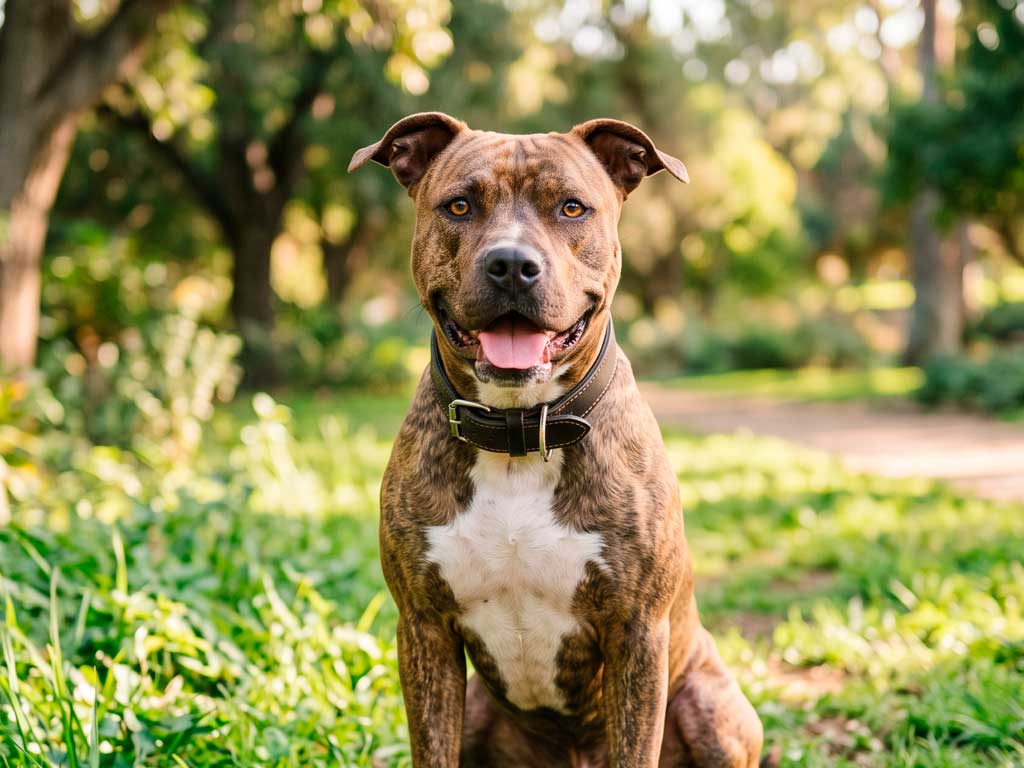
This breed carries a muscular, athletic build with a broad head and powerful jaw. Its agility and strength both trace directly back to that compact, well-built frame.
Adults stand 43 to 53 centimeters tall and weigh between 14 and 27 kilograms. A short, smooth coat comes in black, brown, blue, brindle, or white.
Every individual carries a unique color pattern, adding to the breed’s visual variety. Most American Pit Bull Terriers live between 8 and 15 years.
One popular variant, sometimes called the blue pitbull, gets its striking blue-grey coat from a genetic dilution of black pigment. It’s not a separate breed, just a color variation within the same standard.
Temperament and Personality
Loyalty runs deep in this breed, and it typically forms strong bonds with its family. Properly socialized and trained individuals tend to be affectionate, gentle, and genuinely eager to please.
Puppies and adults alike generally warm up well to people when raised with consistent guidance. That said, temperament varies by individual, shaped heavily by upbringing and environment rather than breed alone.
This breed also serves well as a watchdog, thanks to a naturally protective streak toward its family. Strangers, though, may get a more cautious reception than familiar faces.
Care Guide for the American Pit Bull Terrier
Diet and Nutrition
A balanced diet built around high-quality protein, healthy fats, and carbohydrates keeps this breed in good condition. Age, size, activity level, and metabolism all factor into the right portion size.
Fresh water should stay available at all times. This article offers general guidance only and does not replace veterinary advice, so consult your vet to fine-tune feeding for your individual dog.
Exercise Requirements
High energy levels mean this breed needs substantial daily activity, ideally spread across two or three sessions. Mental stimulation matters just as much, through puzzle toys, obedience training, or interactive games.
A securely fenced yard and plenty of indoor space both support this breed’s need to move and play. An under-exercised American Pit Bull Terrier quickly becomes restless.
Grooming Needs
The short, smooth coat needs regular brushing to stay healthy and glossy. Bathing, nail care, and dental hygiene all deserve consistent attention as well.
Grooming sessions double as a good opportunity to check the skin for irritation, since this breed can be prone to certain skin issues.
Training and Education
Structured training benefits this breed enormously, the same as it would any dog. Positive reinforcement methods, rewarding good behavior rather than punishing mistakes, produce the most reliable results.
Clicker training works particularly well here, relying on a clear stimulus-response connection the dog can easily learn. Basic obedience and early socialization both deserve priority from puppyhood onward.
Consistency and patience matter more than intensity. A well-structured routine, maintained over time, shapes a far more balanced adult dog than sporadic, high-pressure sessions ever could.
Health and Longevity
This breed can be prone to allergies, hip dysplasia, skin problems, thyroid issues, and mitral valve disease, a heart condition affecting valve function. Responsible breeders screen for hip dysplasia before breeding.
This information is educational and does not replace professional veterinary advice. Routine checkups help catch developing health issues early, especially for a breed with several known predispositions.
Is an American Pit Bull Terrier the Right Dog for You?
Active owners who understand this breed’s specific needs tend to succeed best. Regular exercise and consistent training aren’t optional extras here, they’re essential to a well-adjusted dog.
A secure, spacious yard suits this energetic breed particularly well. Families with young children should always supervise interactions closely, a rule that applies to every dog breed but matters especially here given the size and strength involved.
Prospective owners should also check local laws before committing. Some countries and regions restrict or ban ownership entirely, so legal research belongs at the very start of the decision process.
Frequently Asked Questions
Is the American Pit Bull Terrier illegal in the UK?
Yes, under the Dangerous Dogs Act 1991, it’s illegal to own, breed, sell, or give away this breed along with three others, without a specific court exemption. Exemptions sometimes apply if a dog passes a behavioral assessment and is deemed no public safety risk.
Is the American Pit Bull Terrier a dangerous breed?
Like any breed, it can display aggressive behavior without proper training and socialization. Upbringing, environment, training, and individual temperament all play a far bigger role than breed alone.
Can this breed’s jaw actually lock in place?
No, this is a persistent myth. No dog breed or mixed-breed dog has a jaw capable of locking.
Is the American Pit Bull Terrier good with children?
It can be, with proper socialization and training. Supervision between dogs and young children remains essential regardless of breed, and that guidance applies especially here.
Does this breed need an experienced owner?
Generally yes. Its energy, strength, and specific socialization needs respond best to an owner who understands consistent, positive-reinforcement training.
Commit to consistent positive-reinforcement training and early socialization, and this breed can become the loyal, affectionate companion its advocates describe. Responsible ownership makes the biggest difference in how this story turns out.
Not sure if this breed fits your household, or curious about size-appropriate alternatives? Take our Dog Breed Quiz or browse the full dog breeds hub to compare options.