Snowshoe Cat: Half Siamese, All Big Personality
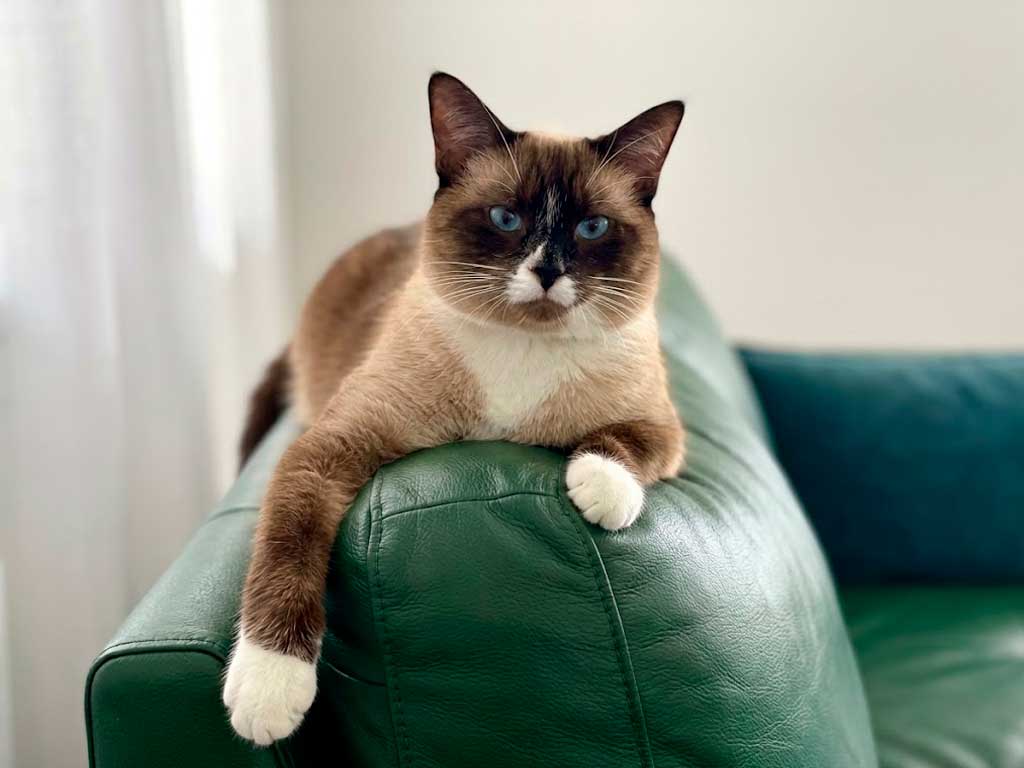
Here’s what’s really going on with all the “snowshoe siamese” searches out there: it’s not a Siamese variety. It’s its own recognized breed, and mixing the two up is the single most common confusion this cat runs into. The Snowshoe cat carries real Siamese ancestry, but the white “socked” feet that give it its name come from a completely different bloodline.
What Makes Snowshoe Cats Unique
In the late 1960s, Philadelphia Siamese breeder Dorothy Hinds-Daugherty found three kittens in a litter with classic Siamese point coloring, except for one detail: unusual white feet that looked like tiny snowshoes. Fascinated, she tried developing the trait into its own breed but struggled to get consistent results. Fellow breeder Vikki Olander of Norfolk, Virginia picked up the project, crossing Siamese with American Shorthairs to lock in both the pointed coloring and the white boots. Vikki wrote the first breed standard and became, for years, the only breeder producing them.
Recognition came slowly. The Cat Fanciers’ Federation and American Cat Association accepted the Snowshoe as experimental in 1974, but interest stayed so limited that Vikki remained the sole US breeder into the late 1970s. The CFF granted full championship status in 1982, and ACFA followed in 1990, the same year the breed crowned its first grand champion. Today’s breeders lean toward Oriental Shorthair and the older, heavier-bodied type of Siamese rather than American Shorthair, chasing more consistent color and markings.
Common Challenges and How to Handle Them
The strict, hard-to-reproduce markings are exactly why this breed stays so rare. The white “socks” come from a recessive gene combination that’s genuinely difficult to breed consistently, so litters can vary a lot even from experienced breeders, which keeps supply low and demand confused.
The bigger challenge is expectation management. This is not a low-maintenance, independent cat. Snowshoes bond hard to one particular person, dislike being left alone for long stretches, and can turn destructive or vocally insistent when bored. If your household is empty most of the day, this breed will let you know it’s unhappy about that, loudly and often.
Daily Care Essentials
Physically, care is simple. The short, smooth coat needs only light regular brushing, and there’s no special diet beyond quality food suited to an active, athletic build. The real commitment is social: daily interaction, play, and genuine companionship matter more here than any grooming routine.
One quirk worth planning for: Snowshoes love water. Many will happily join you in the shower, paw at a running faucet, or splash in a shallow basin left out for them, so don’t be surprised if bath time becomes a shared activity.
Health and Longevity
Snowshoes are a generally healthy breed with no major congenital conditions tied to the standard, though like some Siamese lines, individuals can occasionally show crossed eyes or a kinked tail. Neither is typically a health concern beyond cosmetic.
Health Disclaimer: This guide is for educational purposes only and doesn’t replace professional veterinary advice. Regular checkups matter for every breed, healthy reputation or not.
Is This the Right Cat for You?
A Snowshoe suits someone who wants Siamese-level chattiness and devotion without necessarily committing to a full Siamese, plus a genuinely distinctive look that still turns heads. It’s a poor match for anyone gone most of the day or hoping for a quiet, low-contact pet — this breed was built to be underfoot, and it takes that job seriously.
Frequently Asked Questions
Is a Snowshoe cat a type of Siamese?
No. It’s a separate, recognized breed that used Siamese in its foundation but has its own standard, distinct white-footed markings, and different registry history.
Why are Snowshoe cats so rare?
The strict markings standard is genuinely hard to reproduce consistently through breeding, which has kept the number of breeders and available kittens low since the 1970s.
What colors do Snowshoe cats come in?
Seal, blue, chocolate, and lilac point, always paired with the breed’s signature white feet.
Do Snowshoe cats like water?
Yes, unusually so for a cat. Many enjoy playing in running water or even joining their owner in the shower or bath.
Are Snowshoe cats good for first-time owners?
They can be, provided the owner has time for a genuinely social, attention-seeking companion. They’re a poor fit for anyone wanting a low-contact pet.
The Snowshoe proves a breed doesn’t need a dramatic origin story to earn devoted fans — just a persistent breeder, a happy genetic accident, and decades of patient work to make it consistent.
Browse more breed profiles in the full Cat Breeds guide, including the Siamese, Oriental Shorthair, and American Shorthair that shaped this breed.