American Shorthair Cat: Breed Guide, Personality & Price
Your cat isn’t “just a regular cat” — even if it looks like one. If you’ve got a short-haired tabby that seems a little sturdier, a little calmer, and a lot more photogenic than the average mixed-breed cat, you might actually own an American Shorthair, not a generic Domestic Shorthair.
Spoiler: those two names get mixed up constantly, and the confusion isn’t your fault. Here’s the difference, plus everything else worth knowing about one of the oldest cat breeds in the country.
Quick Facts: Medium to large, muscular build. Lifespan runs 13-17 years. Comes in over 80 recognized color and pattern combinations. Even-tempered, moderately active, famous for a nearly silent “meow.”
American Shorthair vs. Domestic Shorthair: What’s the Difference?
Here’s what’s really going on: “Domestic Shorthair” isn’t a breed at all — it’s the catch-all term for any short-haired cat of mixed, unknown ancestry, the kind you’d typically meet at a shelter. Our Cat Breeds guide covers that distinction too.
The American Shorthair, meanwhile, is a specific, pedigreed breed with a documented standard, a known history, and consistent physical traits bred for generations. Both can look remarkably similar at a glance, which is exactly why the mix-up happens so often.
History: From the Mayflower to the Show Ring
The breed’s ancestors are believed to have crossed the Atlantic on ships, including, according to breed lore, the Mayflower itself, brought along specifically to keep rodents away from food stores. By 1634, cats descended from those early arrivals were credited with saving a colony’s crops from squirrels and chipmunks.
As settlers moved west, their cats went with them, working farms and homes across the growing country. American Shorthairs were shown at the first organized cat show in the U.S. in 1895, and they were one of the five founding breeds recognized when the Cat Fanciers’ Association formed in 1906 — though under a different name.
For decades, the breed was registered as “Domestic Shorthair,” the very label that causes today’s confusion. In 1965, a cat named Shawnee Trademark was named CFA’s Cat of the Year, and that same year the breed was officially renamed American Shorthair — specifically to separate it from the broader, non-pedigreed Domestic Shorthair category.
Physical Characteristics
Structurally, American Shorthairs look built for the job they were bred to do: a medium to large frame, thick muscular build, and a dense, hard-textured coat that historically stood up to rough outdoor conditions. The head is oblong with a powerful jaw, and the eyes have a distinctive shape — an almond curve on top, rounder underneath.
Ears are medium-sized and slightly rounded, set apart at roughly twice the distance between the eyes, which contributes to that broad, open facial expression the breed is known for. The tail is medium in length, thick at the base, and tapers to a blunt-looking end.
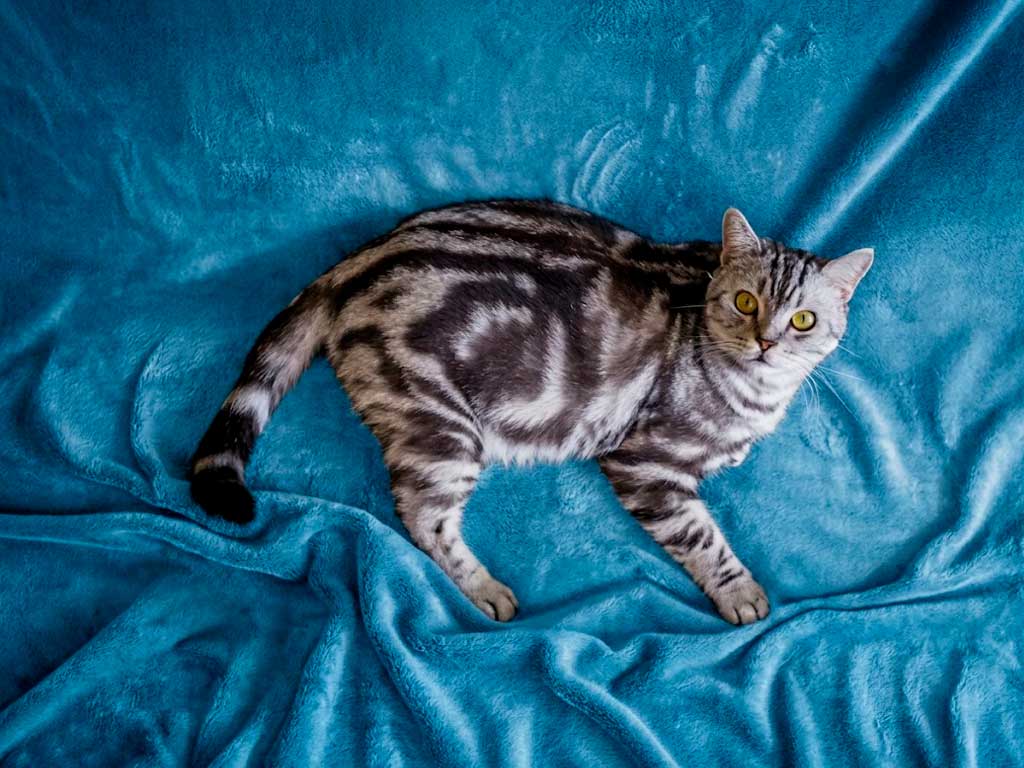
Coat variety is enormous. Over 80 color and pattern combinations are recognized, though the silver classic tabby remains the breed’s most iconic and widely recognized look.
Personality and Temperament
Your cat isn’t ignoring you when it wanders off to entertain itself — it’s just genuinely comfortable being alone, a trait bred into generations of working cats that had jobs to do without supervision. That said, American Shorthairs are affectionate on their own terms, and many do enjoy settling on a lap once the day’s business is handled.
They’re easygoing with kids, seniors, and other pets, especially when introduced young. One quirk worth knowing: this breed is known for a nearly silent “meow” — mouth open, no sound — as a polite way of requesting attention rather than demanding it.
Hunting instinct runs deep here. Wand toys, puzzle feeders, and anything that mimics prey tend to be the fastest route to a happy American Shorthair, well into their senior years.
Trainability is another underrated trait here. Thanks to a sharp, working-cat intelligence, American Shorthairs are often easier to teach than people expect — staying off counters, using a scratching post consistently, and even retrieving small toys are all realistic goals with a bit of consistency.
Caring for an American Shorthair
Diet needs are standard for the breed’s size and activity level — nothing specialized required, just a quality food appropriate to life stage. Because this breed can be prone to weight gain if under-exercised, portion control matters more as cats age and slow down.
Enrichment matters more than raw exercise volume for this breed. Perches and window access for watching birds or squirrels, foraging toys that dispense treats, and short daily play sessions with a wand toy do more for a working-cat lineage than an empty room to run around in.
Grooming is low-effort: weekly brushing with a slicker brush or grooming mitt keeps shedding manageable, with a bit more attention during the heavier spring shed. Baths are rarely necessary outside of show prep. Nail trims twice a month and regular teeth brushing round out the routine.
Health Conditions to Know
American Shorthairs benefit from a large, diverse gene pool, which generally works in their favor — this isn’t a breed defined by one narrow health risk the way some others are. Still, a couple of conditions are worth watching.
Hypertrophic cardiomyopathy (HCM), a thickening of the heart muscle, was noted in some lines in the 1980s and 90s, though selective breeding and screening have made it far less common today. Feline lower urinary tract disease (FLUTD) also shows up somewhat more often in this breed than average, so watch for straining, frequent trips to the litter box, or blood in the urine.
Regular veterinary checkups that include cardiac screening become more valuable as this breed ages, simply because early-stage HCM often shows no outward symptoms until the disease has progressed.
Health Disclaimer: This guide is for educational purposes only and doesn’t replace professional veterinary advice. If your American Shorthair shows signs of urinary distress or unusual fatigue, contact your vet promptly rather than waiting it out.
American Shorthair Price and Where to Find One
This is a widely available breed, which keeps prices more reasonable than the rarer cats in this cluster like the American Curl. Kittens from a registered breeder typically run a few hundred to just over a thousand dollars depending on color, lineage, and region.
A registered breeder can also confirm health testing on the parents, which matters more than the price tag itself when it comes to avoiding avoidable heart or urinary issues down the line.
Because true American Shorthairs are less common in shelters than mixed-breed Domestic Shorthairs, expect to go through a breeder for a documented pedigree — though plenty of shelter cats carry a strong resemblance and similar temperament for a fraction of the cost.
Is an American Shorthair Right for You?
This breed suits people who want a genuinely low-maintenance cat — even temperament, minimal grooming, comfortable being alone during work hours, and easygoing around kids and other pets. It’s a solid first-cat choice for exactly that reason.
It’s a less exciting pick for anyone who wants a breed with a dramatic physical quirk or constant, demanding energy. Your cat isn’t going to put on a show. It’s going to quietly run the household while making it look effortless.
Apartment or house, working household or a home with someone around most of the day — this breed adapts well either way, which is a big part of why it has stayed consistently popular for over a century.
American Shorthairs in Pop Culture
This breed’s friendly, photogenic build has landed it more screen time than most. Salem from Sabrina the Teenage Witch is the most famous fictional example, and the breed’s calm trainability has made it a favorite for film and TV cats generally. Off-screen, American Shorthairs have been the pet of choice for several well-known owners over the years, a fair reflection of just how mainstream this breed has become.
Frequently Asked Questions
Is an American Shorthair the same as a Domestic Shorthair?
No. Domestic Shorthair describes any short-haired cat of unknown, mixed ancestry. American Shorthair is a specific pedigreed breed with a documented standard and history.
How much does an American Shorthair cost?
Kittens from registered breeders typically range from a few hundred to just over a thousand dollars, depending on color and lineage.
What health problems are American Shorthairs prone to?
The breed is generally healthy thanks to a diverse gene pool, though hypertrophic cardiomyopathy and feline lower urinary tract disease appear somewhat more often than average.
How long do American Shorthairs live?
Typical lifespan runs 13 to 17 years with good preventive care.
Are American Shorthairs good with kids and other pets?
Yes — they’re consistently described as easygoing and tolerant, especially when introduced to children and other animals early on.
An American Shorthair carries centuries of working-cat history in a coat that still comes in over 80 varieties, all wrapped around one of the steadiest temperaments in the cat world. Once you know what to look for, it’s easy to see why this breed earned its own name.
Browse more breed profiles in the full Cat Breeds guide.