Protomelas taeniolatus: The Complete Red Empress Care Guide
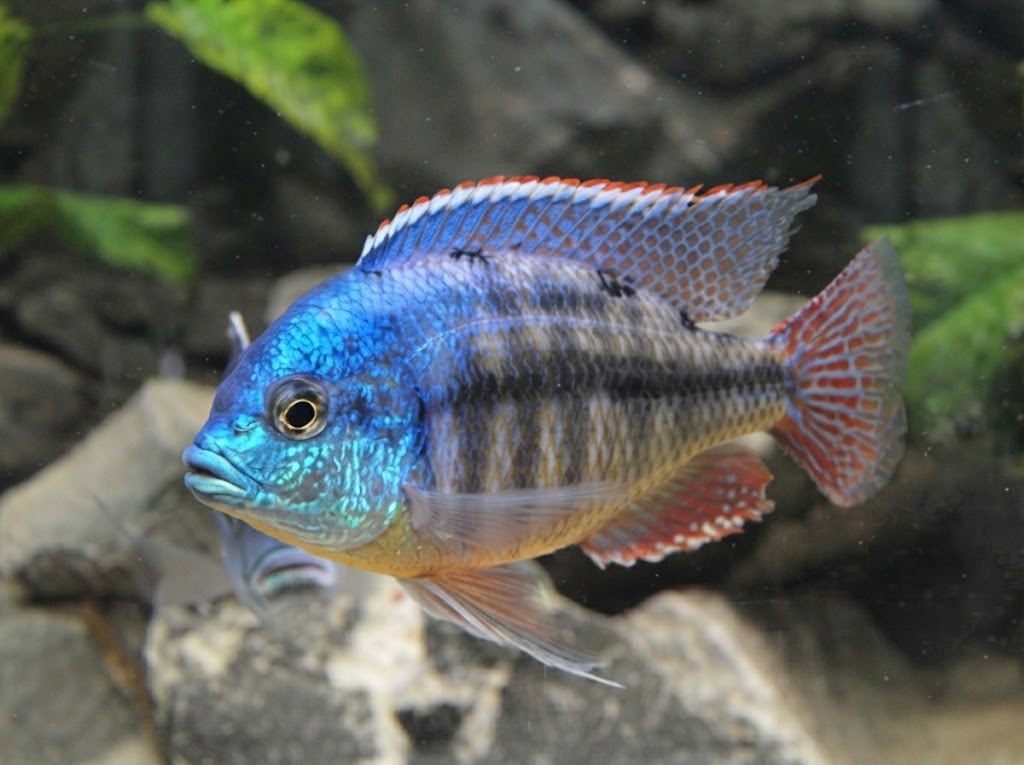
A mature male Protomelas taeniolatus can reach around 15–19 cm and develop an extraordinary mix of red, orange, and metallic blue. The fish sold as Red Empress, Super Red Empress, Fire Blue, or Spindle Hap is also more complicated than its trade name suggests.
In practice, the locality matters. Different Lake Malawi populations can look dramatically different, and aquarium sources disagree on adult size, minimum tank volume, and exactly how much space a breeding male needs.
This guide covers Protomelas taeniolatus identification, natural habitat, tank size, water parameters, diet, behavior, tank mates, sexing, Red Empress color forms, and breeding. The goal is a setup that works for the fish you actually have, rather than a generic Malawi cichlid recipe.
Quick Identity Card
| Trait | Details |
|---|---|
| Scientific name | Protomelas taeniolatus |
| Family | Cichlidae |
| Lake | Lake Malawi |
| Common names | Red Empress, Spindle Hap, Fire Blue |
| Adult size | About 13–19 cm depending on population and source |
| Lifespan | Roughly 8–15 years in published aquarium references |
| Diet | Primarily aufwuchs and algae-associated food, with animal matter taken opportunistically |
| Temperament | Generally moderate, but breeding males become strongly territorial |
| Water temperature | 24–26°C is a practical target |
| pH | 7.5–8.5 |
| Hardness | Moderate to hard, alkaline water |
| Breeding | Maternal mouthbrooder |
| Social structure | Group or harem rather than a lone fish |
One important point appears immediately in the references: Fishipedia lists an average size of 13 cm and maximum of 15 cm, while AquaPortail gives 15–20 cm and a maximum male length around 19 cm. Locality, sex, and whether the source is describing wild or aquarium specimens can all affect the number.
What Is Protomelas taeniolatus?
Protomelas taeniolatus is a haplochromine cichlid endemic to Lake Malawi in East Africa. Its range includes Malawi, Mozambique, and Tanzania, and it occupies shallow to moderately shallow rocky environments around the lake.
The species was described by Ethelwynn Trewavas in 1935. Older aquarium literature and commercial labels have attached several other names to fish now associated with P. taeniolatus, which is one reason Red Empress identification can become confusing.
Aquaportail lists names including Haplochromis steveni, Haplochromis fenestratus, Haplochromis hinderi, Haplochromis boadzulu, Haplochromis Red Empress, and Haplochromis Fire Blue in the aquarium trade. Those historical and trade names should not automatically be treated as interchangeable modern species identifications.
Here’s what actually matters when buying one: ask for the scientific name and, if possible, the collection locality or breeder line.
Why the Red Empress Name Gets Confusing
The famous Red Empress coloration is associated particularly with the Namalenje form of Protomelas taeniolatus. That population can produce males with strong red coloration across the body combined with blue or greenish tones around the head.
Other geographic forms can look quite different.
Aquarist Atlas documents multiple locality-associated forms and notes that males can show red, orange, or blue coloration depending on origin. That geographic variation is one of the defining features of this fish.
This is also why photographs from different aquariums can make the species look like several unrelated cichlids.
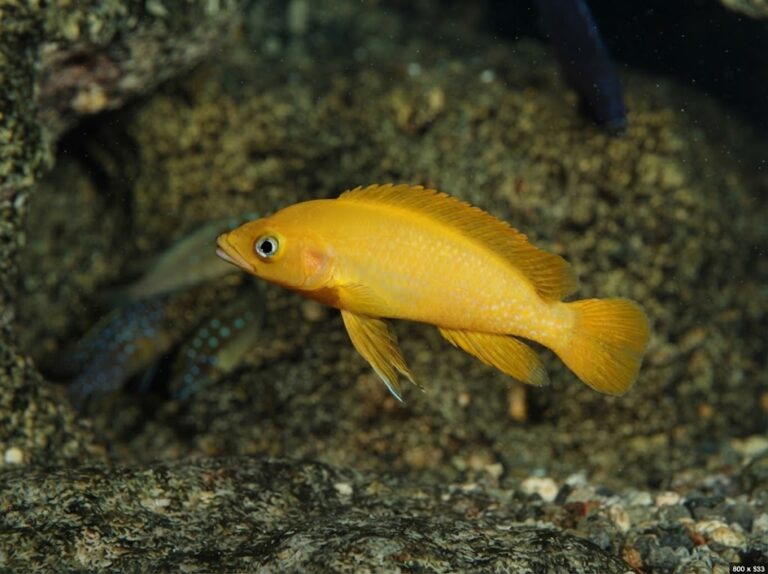
Juveniles are especially misleading. Young fish and females are much less colorful, while dominant adult males develop the intense colors that make the Red Empress name so popular.
If you want a particular color form, buy the locality or established strain you actually want. Don’t assume every fish sold as “Red Empress” will mature into the same pattern.
Natural Habitat and Distribution
Lake Malawi is a large rift lake with hard, alkaline water and a tremendous variety of rocky, sandy, and transitional habitats.
Protomelas taeniolatus is associated with rocky areas where sediment is limited, often in relatively shallow water. Fishipedia describes a substrate of sand and rocks, with slow or nearly stagnant water conditions in its habitat profile.
AquaPortail describes the species as occupying rocky habitats with little sediment, generally below about 10 meters, and notes that brooding females use the rocks for shelter.
That habitat explains the basic aquarium layout:
- Fine sand or another smooth substrate
- Large rocks arranged into stable structures
- Open swimming areas
- Shelters and broken sight lines
- Strong biological filtration
- Well-oxygenated, alkaline water
You don’t need to turn the aquarium into a wall of rocks. Protomelas taeniolatus is a larger haplochromine fish, and swimming length becomes increasingly important as adults mature.
Protomelas taeniolatus Tank Size
Tank-size recommendations vary more than they do for many Malawi cichlids.
Fishipedia recommends at least 400 liters for a group of four and specifies approximately 130 cm of tank length. AquaPortail takes a substantially more conservative approach, recommending at least 800 liters and 200 cm because of the territorial behavior of mature males.
Aquarist Atlas lists a 125-gallon aquarium as its recommended standard setup, which is about 473 liters.
The numbers don’t lie: this is a fish where tank length matters as much as raw volume.
For a serious long-term group, I would plan around a tank of at least 120 gallons with roughly 48 inches of length, and larger if you intend to keep multiple males or build a more complex Malawi community.
If you can provide 150 gallons or more, especially with a tank around 72 inches long, territorial management becomes considerably easier.
The larger recommendation is particularly relevant during breeding. AquaPortail reports that a male can defend a large territory and drive other fish away from his spawning area.
Why Length Matters
A 500-liter aquarium that is tall and narrow does not give the same territorial flexibility as a long 500-liter aquarium.
For Protomelas taeniolatus, prioritize:
- Long swimming lanes.
- Rock structures that interrupt direct lines of sight.
- Several retreat areas for females.
- A defined breeding zone.
- Enough open substrate for normal movement.
The objective is to prevent one dominant fish from seeing every other fish in the aquarium at all times.
Water Parameters for Protomelas taeniolatus
Lake Malawi cichlids need stable alkaline water, and Protomelas taeniolatus is no exception.
A practical aquarium target is:
| Parameter | Recommended target |
|---|---|
| Temperature | 24–26°C / 75–79°F |
| pH | 7.5–8.5 |
| GH | About 10–15 dGH as a practical range |
| Ammonia | 0 ppm |
| Nitrite | 0 ppm |
| Nitrate | Keep controlled and preferably below 20–30 ppm |
| Water changes | About 20–30% regularly |
Fishipedia reports a broader natural temperature range of 23–28°C, pH of 7.5–8.5, and GH of 8–15. Its aquarium recommendations use the same pH and temperature range.
AquaPortail gives 24–26°C, pH 7.5–8.5, and GH 10–30.
There is no advantage in chasing the upper end of every published range. Stability is more important.
If your tap water is naturally alkaline and moderately hard, work with it rather than constantly forcing the chemistry up and down. If your source water is soft and acidic, build a stable Malawi water strategy before adding fish.
Limestone-based rock can help buffer alkaline water, but test the actual aquarium rather than assuming the rock will produce a particular pH.
Aquarium Setup: Sand, Rocks, and Swimming Space
A good Protomelas taeniolatus aquarium looks more open than a heavily decorated mbuna tank.
Start with a layer of fine sand. Add substantial rock structures toward the back and sides, leaving the center and front relatively open.
The rocks have several jobs.
They provide shelter. They create visual barriers. They give females places to retreat when a male begins displaying. They also create surfaces where algae and aufwuchs can develop.
Avoid unstable rock piles. A large adult cichlid can move considerable amounts of substrate, and a collapse can injure fish or damage the aquarium.
A few large structures are usually more useful than dozens of tiny ornaments.
For a broader Malawi aquascaping reference, the Kenyi Cichlid care guide and Flavescent Peacock care guide on Happy Pet Zone cover how rock placement and open swimming areas change according to the fish’s natural behavior.
Filtration and Water Movement
Protomelas taeniolatus is not a tiny fish, and adult Malawi cichlids produce substantial biological waste.
Use filtration rated comfortably above the aquarium’s actual volume rather than running a filter at its advertised maximum capacity. Strong biological media, mechanical filtration, and good surface agitation should all be part of the system.
Water movement should provide excellent oxygenation without turning the entire aquarium into a washing machine.
Fishipedia describes the species’ natural water movement as slow or stagnant, but that should not be interpreted as a reason to run an under-oxygenated aquarium. A well-filtered Malawi tank still needs strong gas exchange, especially when heavily stocked.
Test ammonia, nitrite, nitrate, pH, and hardness regularly.
If nitrate climbs rapidly between water changes, the solution is usually somewhere in stocking density, feeding, filtration capacity, or maintenance frequency.
Protomelas taeniolatus Diet and Feeding
The natural diet is particularly useful when designing the aquarium menu.
Aquaportail describes the Namalenje form as primarily herbivorous, feeding by scraping algae and aufwuchs from rocks while also taking small crustaceans and other opportunistic food when available.
Other references classify the species more broadly as omnivorous. Fishipedia uses that classification, while its feeding recommendations emphasize moderate portions and appropriate cichlid foods.
For the aquarium, think plant-leaning omnivore rather than pure carnivore.
A sensible feeding rotation includes:
- High-quality Malawi cichlid pellets or flakes.
- Spirulina or algae-based foods.
- Small amounts of frozen or live foods such as brine shrimp or daphnia.
- Occasional additional protein rather than a protein-heavy daily diet.
Feed small portions that disappear within a few minutes.
Fishipedia specifically recommends portions that fish can consume in roughly two to three minutes and warns that uneaten food contributes to ammonia, nitrite, and nitrate accumulation.
You can feed twice daily to growing fish and use smaller adult portions depending on body condition.
A thick belly is not the goal. Good body condition, active behavior, and stable water quality are.
Behavior and Temperament
Calling Protomelas taeniolatus peaceful without qualification creates the wrong expectation.
Fishipedia describes the species as generally peaceful and not strongly territorial in ordinary community conditions. AquaPortail, however, emphasizes that breeding males defend large territories aggressively.
Both descriptions can be true.
Outside breeding, the fish may spend most of its time swimming through the aquarium without constantly challenging every neighbor. Once a male establishes a spawning territory, the behavior can change dramatically.
This is why aquarium length, rock placement, and female numbers matter.
A dominant male needs enough territory that subordinate fish can move away rather than being trapped in a corner.
How Many Protomelas taeniolatus Should You Keep?
Fishipedia recommends a minimum of four fish in 400 liters and suggests a ratio of one male to three females.
That ratio makes practical sense for a breeding group.
A single female paired with an intensely interested male has nowhere to redirect his attention. Several females spread that pressure across the group.
For a larger aquarium, one male with three or more females is a useful starting structure.
Multiple males require considerably more space. If your aquarium is not long enough to establish separate territories, keeping multiple adult males can turn an otherwise manageable group into a constant territorial battle.
Male vs. Female Protomelas taeniolatus
Sexual dimorphism becomes much clearer as the fish matures.
Adult males develop the spectacular coloration associated with the Red Empress name. Depending on locality, colors can include intense red, orange, blue, turquoise, and greenish tones.
Females are usually much less colorful and tend to retain subdued silver, grey, or brown tones with darker markings.
Juveniles can look similar to females.
This creates a common buying mistake: selecting several colorful-looking juveniles and assuming they will develop into the same male coloration. Young Protomelas are difficult to sex reliably by appearance alone.
If a specific male-to-female ratio matters for your stocking plan, buy from a breeder who can sex the fish rather than relying on juvenile coloration.
Red Empress, Super Red Empress, and Senga Bay Forms
The trade names deserve a section of their own because they influence what aquarists think they are buying.
- Red Empress is the broad commercial name most often associated with the species.
- Super Red Empress generally refers to especially red captive or locality-associated fish selected for stronger coloration.
- Namalenje refers to a geographic form associated with Namalenje in Lake Malawi and is particularly important when discussing the classic red coloration.
- Senga Bay appears as a separate long-tail search term in the Google Ads data, with 50 average monthly searches. That makes locality-specific identification worth addressing, especially for buyers who want a particular wild form rather than a generic trade fish.
Here’s what actually matters: a color label is not a substitute for locality information.
If the seller cannot tell you whether the fish is wild, captive-bred, or associated with a particular locality or strain, treat the trade name as a marketing description rather than a precise scientific identification.
Protomelas taeniolatus Tank Mates
Choose tank mates based on four things:
- Adult size
- Temperament
- Diet
- Water requirements
Other appropriately sized Lake Malawi haplochromines can be considered, especially fish with similar temperament and swimming patterns.
Peacocks and more peaceful haps can work in carefully designed large aquariums. The Flavescent Peacock care guide is useful for understanding the calmer end of Malawi community planning, while the Copadichromis chrysonotus care guide covers another group of peaceful open-water Malawi cichlids.
Some mbuna can also be kept in large Malawi systems, but aggression becomes the limiting factor.
The [Kenyi Cichlid care guide] shows why this matters. Kenyi cichlids are substantially more aggressive and territorial than a typical Protomelas taeniolatus community fish.
Avoid combining this species with fish that are too small, extremely peaceful, or dependent on completely different feeding conditions.
Also avoid mixing closely related Protomelas forms when preserving a particular strain or locality is important. Hybridization is difficult to reverse once it happens.
Can Protomelas taeniolatus Live With Mbuna?
Sometimes, but it depends heavily on the mbuna species and aquarium size.
A large aquarium with careful rock placement can support a mixed Malawi community. A crowded tank containing highly aggressive mbuna is a different situation.
The problem is not simply whether one species can physically tolerate the same pH. It is whether the fish can establish usable territories without constant harassment.
Aggressive mbuna may dominate the lower and rocky areas of the aquarium, while a Protomelas spends much of its time trying to avoid them.
If you want a calmer setup, build the community around similarly sized haps and compatible peacocks instead of using aggression as the main method of controlling aggression.
Breeding Protomelas taeniolatus
Breeding is one of the most interesting parts of keeping this species.
Protomelas taeniolatus is a maternal mouthbrooder. The female carries the eggs and developing young in her mouth after spawning.
AquaPortail reports approximately 80–120 eggs and describes spawning over a rock or, in an aquarium, sometimes on an open sandy area.
The male intensifies his coloration and displays to the female. She collects the eggs into her mouth as they are laid, and fertilization occurs through the typical Malawi mouthbrooder spawning sequence.
The female then withdraws to quieter areas while she incubates.
Fishipedia considers aquarium reproduction very easy and gives approximately 25°C and pH 8 as ideal breeding conditions.
How Long Does the Female Hold the Eggs?
AquaPortail reports that the eggs hatch after roughly three to four days and that the female releases free-swimming fry after approximately 19–24 days, with longer mouthbrooding possible under natural conditions.
During this period, the female may eat very little or stop feeding altogether.
Do not assume a brooding female is sick simply because she is holding food differently or refusing normal meals.
Raising the Fry
If you leave the fry in the main aquarium, many will be eaten by adult fish.
A heavily structured aquarium gives the young more opportunities to hide, but survival is never guaranteed.
For higher survival rates, a separate rearing aquarium is the better option.
AquaPortail recommends transferring a brooding female to a separate aquarium around days 15–18 if the goal is to raise more of the brood. It describes fine sand and rock shelters as suitable for the holding tank.
Once free-swimming, fry can take finely crushed foods and newly hatched brine shrimp.
Keep water quality excellent. Small fry are far less tolerant of neglected water than a healthy adult cichlid.
Common Protomelas taeniolatus Care Mistakes
1. Buying the fish for color alone
The spectacular male in the store tells you very little about the eventual social structure of your aquarium.
Ask about adult size, sex ratio, locality, and breeding line.
2. Using a short aquarium
A tall tank with impressive volume can still provide poor territorial space.
Prioritize length.
3. Keeping only one female
A male with one female can focus breeding pressure on the same fish repeatedly.
A group with several females distributes that attention.
4. Feeding too much protein
The species can eat animal foods, but its natural feeding ecology is strongly associated with aufwuchs and algae-covered surfaces.
Keep the staple diet appropriate for a plant-leaning Malawi omnivore.
5. Treating all Red Empress fish as identical
Trade names hide geographic variation.
Two fish sold under the same name can develop noticeably different adult coloration.
6. Ignoring breeding aggression
The fish may look calm for months and then become territorial when a male establishes a spawning site.
Build the aquarium for that future behavior, not just the juvenile fish you see today.
Protomelas taeniolatus vs. Other Malawi Cichlids
The biggest practical difference is size and behavior.
Compared with many mbuna, Protomelas taeniolatus is larger and generally less relentlessly territorial outside breeding. Compared with smaller peacocks, it requires more swimming space and can produce a much larger territorial footprint when spawning.
Compared with open-water utaka such as Copadichromis, it is more closely tied to rocky and benthic feeding areas.
That distinction matters when designing a mixed Malawi aquarium.
A successful Malawi tank is not simply a collection of fish that tolerate pH 8. It is a community where each species can occupy its preferred space without being bullied out of it.
Conservation and Responsible Purchasing
Fishipedia lists Protomelas taeniolatus as Least Concern on its IUCN status field.
That does not make responsible sourcing irrelevant.
Lake Malawi cichlids have complex geographic variation, and collecting locality-specific fish can matter to both conservation and hobby genetics. Captive-bred fish are often the sensible choice for aquarists who want a particular appearance without adding unnecessary pressure to wild populations.
Never release an aquarium fish into a lake, river, canal, or drainage system.
If you no longer want the fish, return it to a reputable aquarium store, breeder, club, or experienced keeper.
Frequently Asked Questions
Final Setup Recommendation
If you want Protomelas taeniolatus to thrive rather than simply survive, build around the adult fish from day one.
Use a long aquarium of at least 120 gallons for a serious group, with 150 gallons or more giving you considerably more room for territorial management. Keep the water around 24–26°C, pH 7.5–8.5, maintain stable hardness, and use fine sand with large, stable rock structures that break sight lines without eliminating swimming space.
Keep one male with several females, feed a plant-leaning Malawi diet, and watch the male’s behavior as breeding begins.
In practice, tank length, stable alkaline water, and a sensible sex ratio will solve more problems than any expensive aquarium gadget. Get those three pieces right first, and the Red Empress becomes a much easier fish to understand and keep.