Aborichthys Garoensis: Care Guide for the Vulnerable Garo Loach
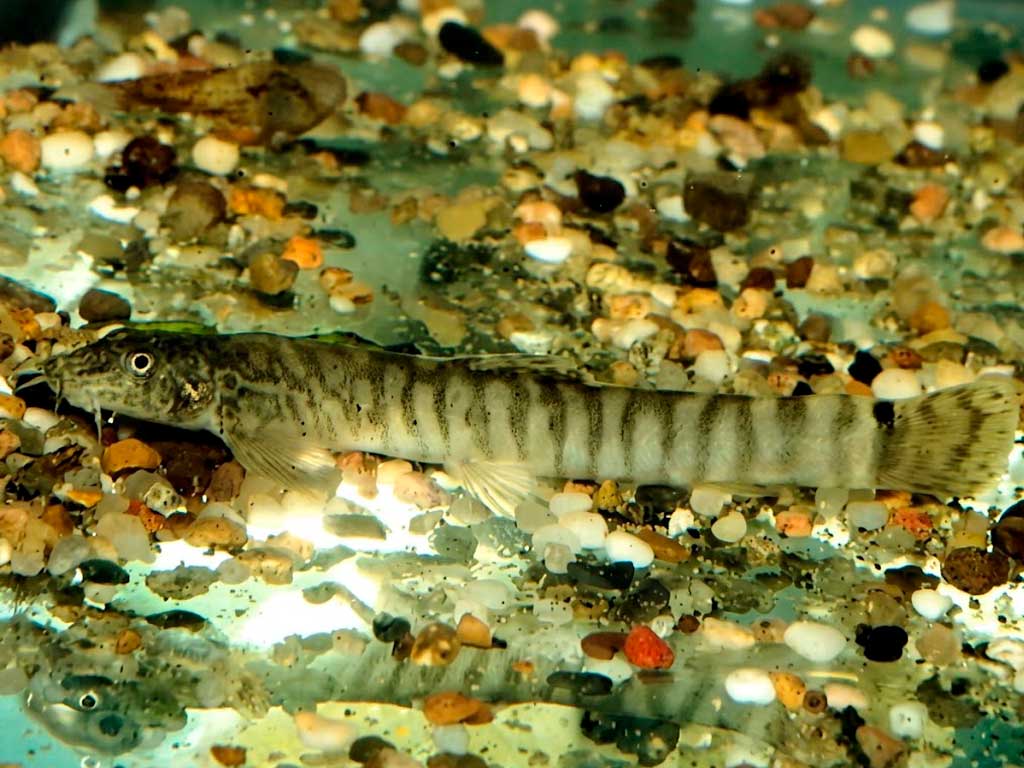
Aborichthys garoensis carries an IUCN Vulnerable rating, a status its close cousin Aborichthys elongatus doesn’t share, and that single fact should shape how anyone approaches keeping it.
In practice, this small loach from a single patch of hills in northeastern India comes with real conservation stakes attached, not just a care sheet.
This guide covers what’s actually known about it, where the documentation gaps sit, and why sourcing matters more here than with most aquarium fish.
Quick Identity Card
| Trait | Detail |
| Scientific name | Aborichthys garoensis (Hora, 1925) |
| Common name | Garo Loach |
| Family / Order | Nemacheilidae, Cypriniformes |
| Synonyms | Noemacheilus garoensis, Aborichthys goaensis |
| Origin | Garo Hills, Meghalaya, India (also recorded near the Dikrong River and in Arunachal Pradesh) |
| Adult size | Typically 3.5 to 4.5 cm in the hobby; formal records list a maximum of 9.0 cm SL |
| Diet | Accepts dried foods, needs regular live or frozen meals |
| Temperament | Poorly documented in aquaria; assume genus-typical caution |
| Water temperature | 20 to 24°C (68 to 75°F) |
| pH | 6.5 to 7.5 |
| GH (hardness) | 1 to 8 dGH |
| Minimum tank | Roughly 50 L (13 US gal), mini-aquarium territory |
| Breeding | Unreported in aquaria |
| IUCN status | Vulnerable (assessed 2010) |
Origin and Natural Habitat
Aborichthys garoensis comes from a narrow slice of northeastern India centered on Tura, in the Garo Hills of Meghalaya. Additional records place it near the Dikrong River, a northern tributary system, and in parts of Arunachal Pradesh, though the core known range stays tight around the Garo Hills themselves.
It lives in streams with pebbly bottoms, the same fast, well-oxygenated running water that defines the whole Aborichthys genus. Wild abundance is described as very rare, which lines up with the species’ restricted range and its Vulnerable conservation status.
Identification
The body follows the standard Aborichthys blueprint: elongated, compressed, and marked with oblique stripes. Taxonomic work distinguishing it from close relatives points to 30 to 35 body bands that tend to anastomose (join together) along the upper sides, a denser and more connected pattern than the banding seen in A. elongatus.
The vent sits distinctly closer to the caudal fin base than in some congeners, a detail researchers use as a key diagnostic feature when separating Aborichthys species in the field. Formal maximum length runs to 9.0 cm standard length, though most fish encountered in the hobby stay considerably smaller, in the 3.5 to 4.5 cm range.
Behavior and Temperament
Here’s what actually matters before buying this fish: firsthand behavioral documentation stays thin. Unlike A. elongatus, which has well-recorded digging and feeding habits from hobbyists who’ve kept it, A. garoensis simply hasn’t been written about with the same depth.
The safest working assumption borrows from genus-wide patterns: expect a fast-current specialist that digs around rockwork and reacts strongly to feeding, similar to its better-documented relatives. Anyone who keeps this species successfully would genuinely be adding new information to what’s publicly known about it.
Diet and Feeding
In captivity, Aborichthys garoensis accepts dried foods without much trouble. That said, a diet built entirely on dry food isn’t enough.
Regular meals of live or frozen fare should form the backbone of feeding, matching the pattern seen across the genus. Small live foods and frozen options like bloodworm or brine shrimp give the closest match to what this species would encounter picking through a fast-moving stream bed.
Tank Requirements and Water Parameters
Given its small adult size, Aborichthys garoensis fits into a smaller footprint than A. elongatus, around 50 liters (13 US gallons) as a working minimum. That said, small volume doesn’t mean simple maintenance. This species carries a genuinely difficult reputation among the fishkeepers who’ve documented it.
Water needs to stay on the cool side for a tropical species: temperature between 20 and 24°C (68 to 75°F), pH neutral to slightly acidic at 6.5 to 7.5, and general hardness notably soft at 1 to 8 dGH, softer than what A. elongatus tolerates.
Oxygenation is the real make-or-break factor. This species evolved in fast, clean mountain water and reacts badly to sudden shifts in its environment, so stability matters as much as the numbers themselves.
The aquarium water chemistry guide covers how to hit and hold soft, neutral parameters without the swings this species can’t handle, and the water pump guide breaks down sizing flow correctly for a stream-style setup. Trust me on this one: a mature, stable tank beats a brand-new one every time with a species this sensitive.
Tankmates and Compatibility
No documented compatibility record exists specifically for this species, so the safest approach borrows the same logic used for A. elongatus: fast, current-loving fish handle the environment far better than slow or long-finned tankmates. Species from genera like Danio, Devario, and Garra make more sensible companions than placid bottom-dwellers.
Given the rarity and conservation status of this fish, many keepers choose a dedicated species tank instead of a mixed setup, which also removes any competition for food that a more sensitive, poorly documented species could lose.
Breeding
Reproduction in the aquarium remains unreported, consistent with the rest of the genus. No captive-bred stock appears to exist in the hobby at any meaningful scale.
That gap matters more here than with A. elongatus. A Vulnerable species with no established captive breeding program depends entirely on wild collection for the aquarium trade, which raises the stakes on every purchasing decision.
How It Differs From Similar Aborichthys Species
Distinguishing Aborichthys species reliably comes down to band count, band pattern, and vent position rather than color alone. The numbers don’t lie once they’re compared directly.
| Species | Body bands | IUCN status |
| A. garoensis | 30 to 35, anastomosing dorso-laterally | Vulnerable |
| A. elongatus | Fewer, concentrated on the posterior body | Least Concern |
| A. tikaderi | 15 to 20, almost encircling the body | Vulnerable |
| A. kempi | 18 to 21, distinct on the caudal peduncle | Not separately assessed from A. boutanensis in recent taxonomy |
If a “Garo loach” for sale can’t be tied to a documented Meghalaya or Arunachal Pradesh locality, treat the identification as unconfirmed rather than assumed.
Conservation Status
The IUCN Red List classifies Aborichthys garoensis as Vulnerable, assessed in 2010 under criterion B1ab(iii), meaning its estimated range covers less than 20,000 km² and that range keeps shrinking. The drivers are habitat-level: siltation from deforestation and the spread of agricultural development into the streams this species depends on.
That combination puts real weight behind a simple rule: buy captive-bred whenever it’s available, and if it isn’t, ask hard questions about collection locality before adding this fish to a tank. A species already this restricted doesn’t have room to absorb careless demand from the aquarium trade.