Abramis Brama: Care Guide for the Common Bream
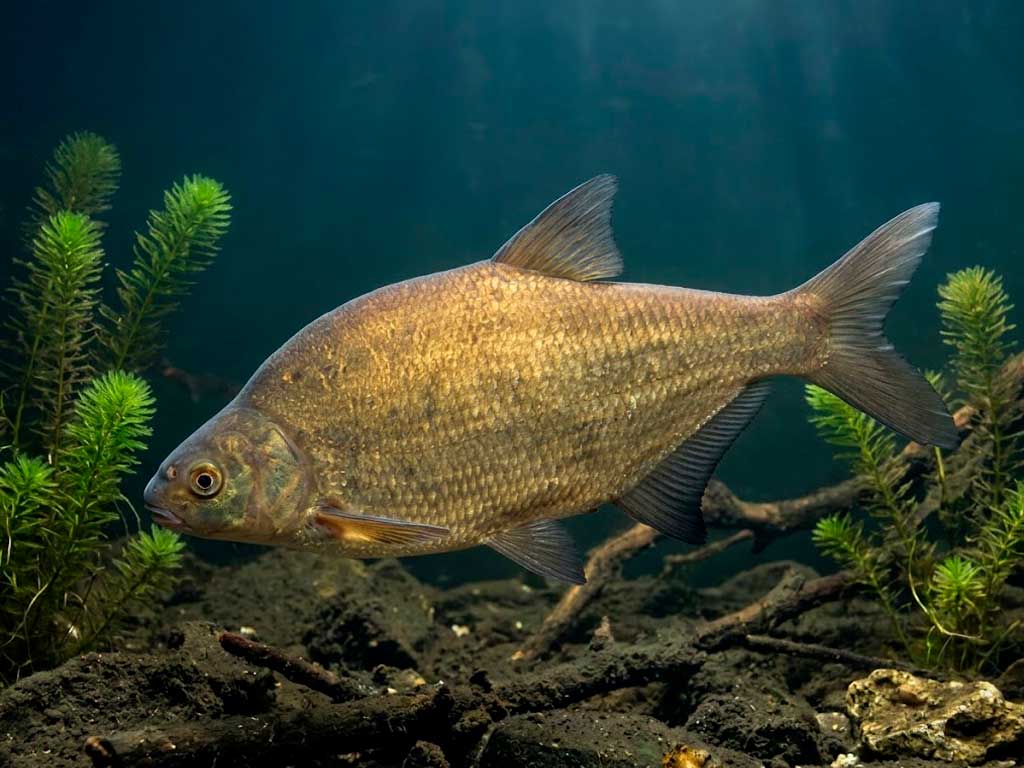
Abramis brama grows to 80 cm and 9 kilograms in the wild, which rules it out as an aquarium fish before diet or water chemistry even come up. In practice, this is a European pond, lake, and river species, the kind anglers target rather than something anyone keeps in a home tank.
This guide covers where it actually lives, what a proper outdoor setup looks like if someone keeps it at all, and how to tell it apart from the fertile hybrids it forms with roach, a genuine identification headache in the wild.
Quick Identity Card
| Trait | Detail |
| Scientific name | Abramis brama (Linnaeus, 1758) |
| Common names | Common Bream, Freshwater Bream, Bronze Bream, Carp Bream |
| Family / Order | Cyprinidae (Leuciscinae), Cypriniformes |
| Genus | Abramis, monotypic (only species in the genus) |
| Origin | Most of Europe, east to the Caspian, Black, and Aral Seas |
| Adult size | Typically 30 to 55 cm, up to 90 cm and 9.1 kg recorded |
| Diet | Omnivore, benthic invertebrates and zooplankton |
| Temperament | Gregarious, forms large winter shoals with other species |
| Lifespan | 15 to 20 years in the wild, up to 25 in captivity |
| Setting | Garden pond, lake, or natural water body, not a standard aquarium |
| Legal note | Captive keeping regulated in France; invasive in New Caledonia |
| IUCN status | Least Concern |
Origin and Natural Habitat
Abramis brama covers most of Europe north of the Alps and Pyrenees, plus the Balkans, reaching east through the Caspian, Black, and Aral Sea basins. It’s naturally absent from the Iberian Peninsula, the Adriatic basin, Italy, Scotland, and Scandinavia north of certain latitudes, though people have introduced it into Ireland, Spain, northern Italy, Lake Baikal, and the upper Ob and Yenisei river systems.
The species favors still or slow-moving water: lakes, canals, slow rivers, and brackish estuaries, with a strong preference for warm, shallow lakes over fast-flowing streams. Some populations are semi-anadromous, moving into brackish or coastal water to feed on algae and aquatic plants before returning inland.
Identification
The body runs laterally compressed with a distinctly high-backed profile, giving mature fish an almost humped silhouette. The mouth sits slightly undershot, built for picking food off the bottom rather than grabbing prey in open water.
Coloration starts silvery-grey and shifts toward bronze in older fish, especially in clear water. The fins stay dark grey to black, never red, a detail that separates bream from several similar-looking cyprinids at a glance.
Behavior and Temperament
This species runs strongly gregarious. Winter brings large shoaling aggregations, often mixed with other fish species entirely, a behavior anglers rely on heavily when targeting bream in cold months.
Feeding activity leans nocturnal. Bream search cleaner, shallower water at night more actively than during the day, working the bottom for whatever the sediment holds.
Diet and Feeding
The natural diet centers on benthic invertebrates, insect larvae, worms, and snails, dislodged directly from fine bottom sediment. Larger individuals will also take small fish opportunistically.
When zooplankton runs abundant, bream shift toward filter-feeding, and juveniles rely on zooplankton almost exclusively before growing into a more benthic feeding style. That flexibility is part of what makes the species so widespread across such different water types.
Pond and Habitat Requirements
Given the adult size this species reaches, a home aquarium was never a realistic option. Anyone keeping Abramis brama outside natural waters needs a genuine garden pond, lake, or large outdoor system, not a tank.
Water should stay cool to temperate rather than tropical, matching the still or slow-moving lakes and rivers this species evolved in. Vegetation along the margins matters too, both for cover and because spawning depends directly on dense aquatic plant growth.
Before considering keeping this species at all, check local regulations. France restricts captive keeping under its environmental code, and the species carries invasive status in places like New Caledonia where it doesn’t belong.
Breeding
Spawning happens in May and June once water temperatures climb above 15°C, timed to dense vegetation in still water, floodplains, or lake margins. Fish reach sexual maturity between 3 and 4 years old, though maturity can shift earlier in populations under growth pressure.
Males develop nuptial tubercles, small white bumps on the head and body, and defend spawning territory along the shoreline during the season. Females don’t necessarily spawn every year, and spawning frequency itself varies by population: some spawn once annually over a few days, others 1 to 3 times across 7 to 14 day intervals. Fecundity runs enormous, from roughly 100,000 up to over 900,000 eggs depending on female age and size.
Bream vs. Roach Hybrids: How to Tell Them Apart
Here’s what actually matters for anyone trying to identify a bream pulled from the water: Abramis brama forms fertile hybrids with roach (Rutilus rutilus), and these hybrids show up constantly in mixed European waters.
Since the genus Abramis contains no other species to confuse it with, hybrid identification is the real practical challenge here, not species comparison.
Pure bream carry the diagnostic dark grey to black fins and a pronounced high-backed profile. Hybrids tend to show intermediate traits: fin coloration that leans lighter than pure bream but darker than pure roach, and a body depth that sits between the two parent species rather than matching either cleanly.
Anglers and fisheries biologists both flag this cross as one of the more commonly misidentified fish in European freshwater systems.
Conservation Status
The IUCN Red List classifies Abramis brama as Least Concern, reflecting its wide native range and general abundance across European waters. That said, conservation status and ecological appropriateness are two different questions entirely.
The U.S. Fish and Wildlife Service has flagged this species in ecological risk screening despite it having no established wild or trade presence in the United States, precisely because a fish this adaptable and long-lived carries real invasive potential wherever it doesn’t naturally belong.
Its confirmed invasive status in New Caledonia backs that concern up with an actual case, not just a theoretical one.