Saint Bernard: The Complete Breed Guide
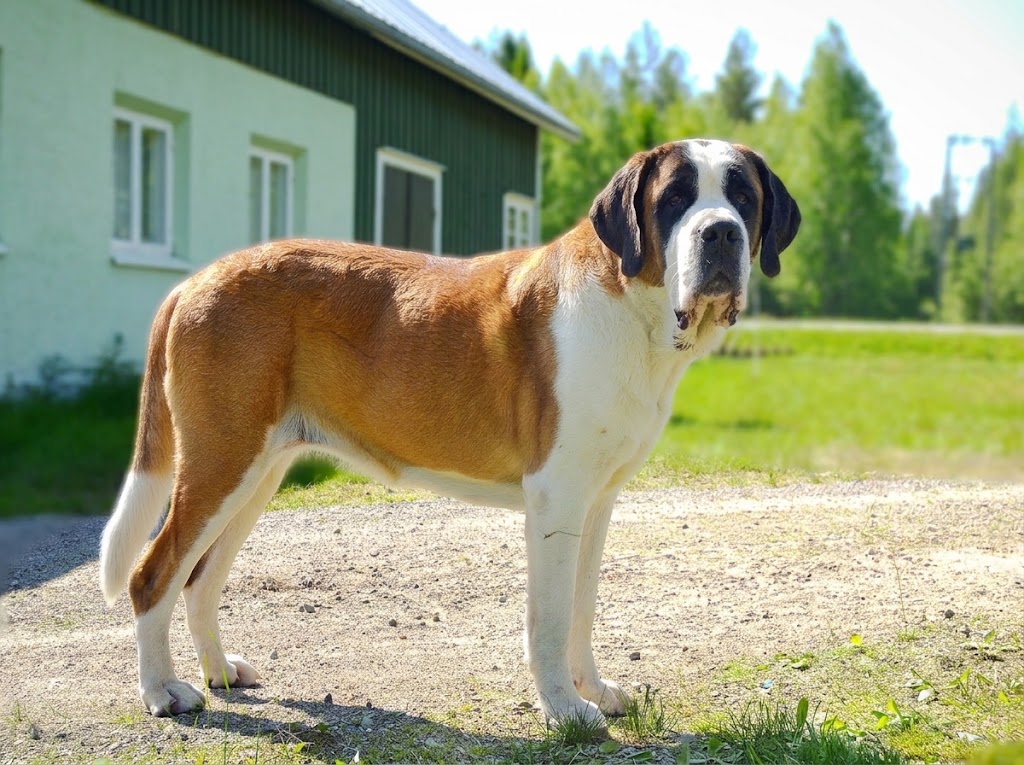
If you grew up watching Beethoven slobber his way through a family sitcom, you already know this breed’s face.
The Saint Bernard is one of the most recognizable dogs in the world, and there’s a lot more to the story than a giant, drooly movie star.
Quick Facts
- Height: 28–35 in (males), 27–31 in (females)
- Weight: 150–200 lbs
- Lifespan: 8 to 10 years
- Coat: rough (long) or smooth (short), orange, mahogany brindle, or red brindle with white
- Group: Working
- Best suited for: experienced owners with space to spare
History: From Alpine Rescuer to Hollywood Star
The breed takes its name from the Great St Bernard Hospice, founded in 980 AD as a refuge for travelers crossing a dangerous Alpine pass between Switzerland and Italy. By 1707, the exhausted monks running it realized these dogs had a better nose, more strength, and a warmer coat than they did, and started breeding them specifically for mountain rescue.
One dog earned genuine legend status: Barry, credited with saving around 40 lives in the Alps. His preserved body is still on display at the Natural History Museum in Bern today.
Here’s the thing that famous image of a Saint Bernard with a brandy barrel around its neck is pure legend. No rescue dog from the hospice ever actually carried one; it’s a myth that stuck because it made for a good story.
The long-haired variety exists almost by accident. Monks tried crossing Saint Bernards with Newfoundlands to build a warmer coat, but the longer hair trapped snow and ice instead, which put the dogs at risk. Give it time, though that failed experiment is exactly why the rough-coated variety exists today.
As for movie fame: the Beethoven franchise used more than 100 puppies during filming of the second movie alone, simply because the dogs grew faster than production could keep up with a single puppy’s size.
Temperament and Personality
“Gentle giant” genuinely fits this breed. Saint Bernards are affectionate, loyal, and easygoing with family, and they rarely bark without real reason.
They usually accept other pets without much fuss, and their protective instinct shows up more as calm alertness than aggression. Trust me on this one: leash training matters enormously while they’re still small enough to correct, because pulling becomes a much harder habit to break once a dog this size decides it wants to go somewhere.
Daily Care Essentials
Despite the size, Saint Bernards don’t need enormous amounts of exercise about an hour a day covers most adults. Puppies need it introduced gradually, since too much activity too soon can stress growing joints and bones on a dog this large.
Grooming depends on which coat type you’ve got: smooth-coated dogs are fairly easy, rough-coated dogs need brushing several times a week just because of the sheer surface area involved. I’ve gone deep on both coat types and the tools that actually work in a dedicated grooming guide.
Expect serious drooling regardless of coat type, and budget for a large-breed diet with smaller, more frequent meals this breed is prone to bloat like most giant dogs.
Health and Longevity
Saint Bernards face real health challenges tied to their size, including bone cancer, epilepsy, heart conditions, hip and elbow dysplasia, and inherited eye disorders. Hip and eye screening before breeding matters a lot here.
This article offers general, informed guidance rather than a diagnosis. Talk to a licensed veterinarian about joint and cardiac screening and any health concerns specific to your dog.
Bringing One Home
Pricing varies widely by breeder, coat type, and lineage, and I’ll break down realistic numbers in a dedicated cost guide. Rescue and breed-specific adoption are genuinely worth exploring too I’ll cover exactly where to look in an upcoming piece.
You’ll also see “miniature” or “teacup” Saint Bernards advertised online, plus a poodle-cross I’ve broken down in a dedicated Saint Berdoodle guide covering generations, size, and the hypoallergenic truth. I’ve also broken down the miniature and teacup Saint Bernard myth in its own honest piece.
Mistakes to Avoid
- Over-exercising a growing puppy, which stresses joints on a breed already prone to hip and elbow issues
- Skipping leash training early, before the dog is too strong to correct comfortably
- Underestimating the drool and grooming commitment, especially with the rough coat
- Choosing this breed for a small living space without a real exercise plan
Frequently Asked Questions (FAQs)
Did Saint Bernards really carry brandy barrels?
No, that’s a popular myth. No documented rescue dog from the Great St Bernard Hospice ever carried a barrel of brandy.
Are Saint Bernards good with kids?
Generally yes, though supervision matters given their sheer size. A gentle temperament doesn’t change the fact that a 150-pound dog can accidentally knock a small child over.
How much do Saint Bernards drool?
A lot. This is one of the heaviest-drooling breeds out there, regardless of coat type, so keep a towel handy.
How long do Saint Bernards live?
Typically 8 to 10 years, on the shorter end for dogs generally, which is common among giant breeds carrying this much size and weight.
Give this breed space, gentle early training, and realistic expectations about the drool and the fur, and you’ll have one of the most loyal, easygoing giants a family could ask for.