Curly Haired Retriever: The Complete Breed Guide
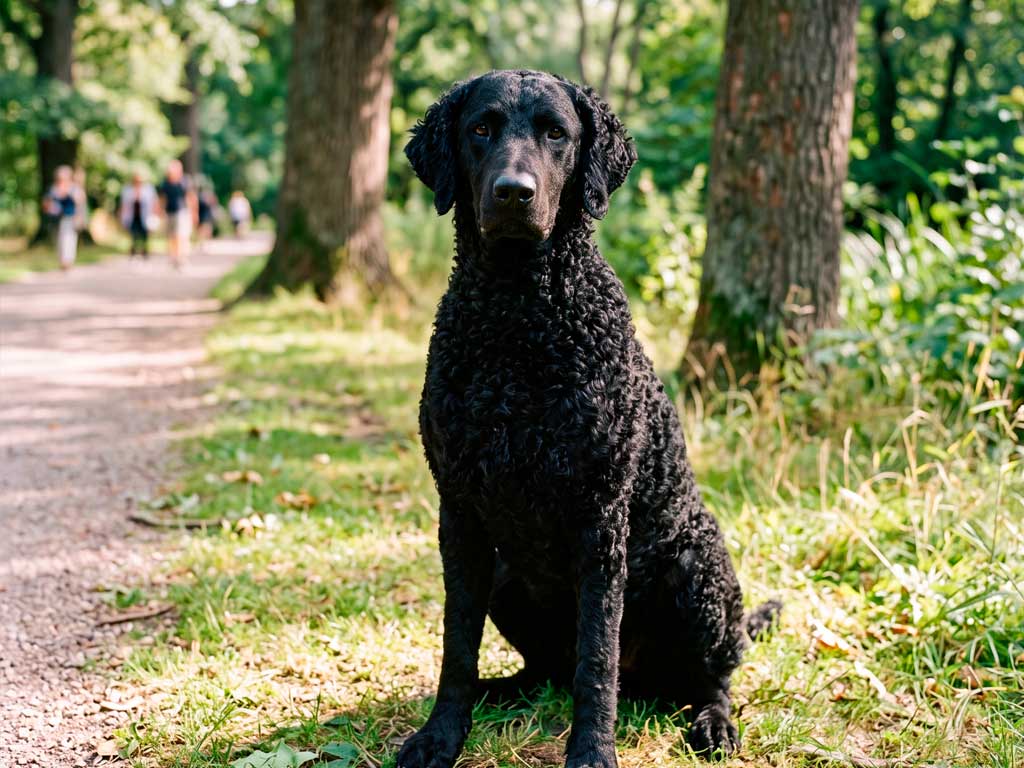
Searched for “curly haired retriever” and landed here because your Golden or Labrador suddenly grew a wavy patch of fur? You’re not alone — and here’s the twist: there’s also a real breed with that exact description, the Curly-Coated Retriever, and the two get mixed up constantly.
This guide covers both, starting with the actual breed.
What Makes the Curly-Coated Retriever Unique
The Curly-Coated Retriever is one of the oldest retriever breeds in existence, and its coat isn’t a fluke or a crossbreed accident. Those tight, water-resistant curls are the entire point of the dog. Breeders shaped this coat deliberately, going back to crosses with the old English water dog, the Irish water spaniel, and later the poodle.
He was first shown in the ring back in 1860, and for a while he was the retriever gamekeepers actually relied on. Then the Labrador came along, and the Curly’s popularity dropped hard. Give it time, though — this breed never actually disappeared, and dedicated fans kept it alive through two world wars when registrations dropped as low as five dogs in a single year.
Standing taller than most other retrievers — males reach around 26 to 27 inches — this is a big, athletic dog built for stamina over speed. Adults typically weigh 60 to 70 pounds. Trust me on this one: that height difference is noticeable the first time you see one next to a Golden.
Common Challenges and How to Handle Them
Here’s the thing — Curlies aren’t like most retrievers you’ve met. They’re smart, independent, and genuinely aloof with strangers, which throws off owners expecting a Golden-style greeter at the door.
That reserve isn’t shyness, and it shouldn’t be treated like a problem to fix. It’s baked into the breed standard. Early, consistent socialization matters enormously here, more than it does with most retrievers.
A few things that make ownership smoother:
- Start socializing early and often, exposing your Curly to new people, places, and situations before six months old
- Keep training sessions short and game-like — boredom kills motivation with this breed fast
- Expect a longer maturity window than other retrievers; Curlies genuinely take longer to grow up mentally
- Don’t mistake independence for stubbornness — work with their instincts, not against them
They’re intelligent dogs, and that intelligence needs an outlet. A bored Curly will find their own entertainment, and it’s rarely the entertainment you had in mind.
Daily Care Essentials
Exercise and Activity
This is a sporting dog through and through, and it needs real exercise — at minimum 40 minutes a day, though most Curlies want more. Apartment living generally doesn’t work for this breed; they need yard space to actually move.
Water is where a Curly comes alive. That dense, oily coat exists specifically to handle icy water and thick brush, so swimming isn’t optional entertainment — it’s what the dog was built for.
Grooming: Working With the Curls, Not Against Them
Here’s where new owners get it backward. Brushing a dry Curly coat causes frizz, not neatness. Skip the daily brush-out routine you’d use on other retrievers.
Instead, dampen the coat and massage it with your fingers, then pat it flat. Most owners find their Curly barely needs brushing between the annual or twice-yearly shed. The coat is naturally oily, so plan on bathing a few times a year rather than weekly — that oil is doing real work protecting the skin underneath.
Health Considerations
Like most large breeds, Curly-Coated Retrievers can develop hip dysplasia and inherited eye conditions. Reputable breeders screen breeding pairs for both — hip X-rays and eye certification — before producing a litter, and asking for that paperwork is a fair question to put to any breeder.
This article gives general, informed guidance rather than a diagnosis. Always talk to a licensed veterinarian about breed-specific screening and any health concerns specific to your dog.
Frequently Asked Questions (FAQs)
Is a Curly-Coated Retriever the same as a curly haired retriever?
Usually, yes — most people typing “curly haired retriever” are searching for this exact breed. But the phrase sometimes gets used loosely for any retriever with an unusually wavy or curly coat, including Goldens and Labradors.
Why does my Golden Retriever have curly hair on its back?
This shows up more than people expect, and it’s almost always genetic, not a health problem. Some Golden Retriever lines carry a recessive gene affecting coat texture, producing wavy or curly patches, especially along the back and hips. It doesn’t indicate poor breeding on its own, though a vet visit rules out any underlying skin issue if the change appeared suddenly.
Are Curly-Coated Retrievers good family dogs?
Yes, with the right household. They’re affectionate and loyal with their own family, energetic with kids old enough to play rough, and best suited to homes with space and an active routine — not a quiet apartment.
Do Curly-Coated Retrievers shed a lot?
Moderately, and mostly in one concentrated shedding period a year for males, twice a year for females. Between those periods, shedding is minimal.
How long do Curly-Coated Retrievers live?
Typically 8 to 12 years, sometimes closer to 14 with good care and consistent vet checkups.
Final Verdict: Is It a Good Fit?
If you want an intelligent, water-obsessed working dog who’s fiercely loyal at home but won’t fawn over every stranger at the park, the Curly-Coated Retriever delivers exactly that. Families with room to roam and patience for a slower-maturing dog tend to do best.
If you came here because your Golden Retriever grew a curly patch overnight, breathe easy — that’s genetics doing its thing, not a red flag. Either way, you now know more about curls on a retriever than most people ever will.