Meet the Caucasian Shepherd Dog: Ancient Guardian of the Mountains
Few breeds carry as much raw power and history as the Caucasian Shepherd Dog. Bred for over two thousand years to guard flocks against wolves and bears in the mountains between Europe and Asia, this dog remains one of the most formidable guardians alive today.
This guide breaks down everything a prospective owner needs to know, from its imposing size to the firm, experienced handling it requires. You’ll also find out why apartment living is completely off the table for this breed, and what makes its bark so effective at scaring off threats.
History and Origin
This breed traces its roots to the Caucasus mountains, a rugged region straddling Europe and Asia. Shepherds there relied on it to protect sheep flocks from wolves and bears.
Locals still call it a wolf fighter, a nickname earned through generations of confronting predators head on. Few working breeds anywhere can claim that kind of reputation.
History places this breed among the oldest in the world, with a lineage stretching back more than two thousand years. Its deep, powerful bark developed specifically to scare off threats before they got close.
The Federation Cynologique Internationale recognizes the breed under the official name Caucasian Shepherd Dog, though many people still know it as the Caucasian Mountain Dog or Caucasian Ovcharka.
Physical Characteristics
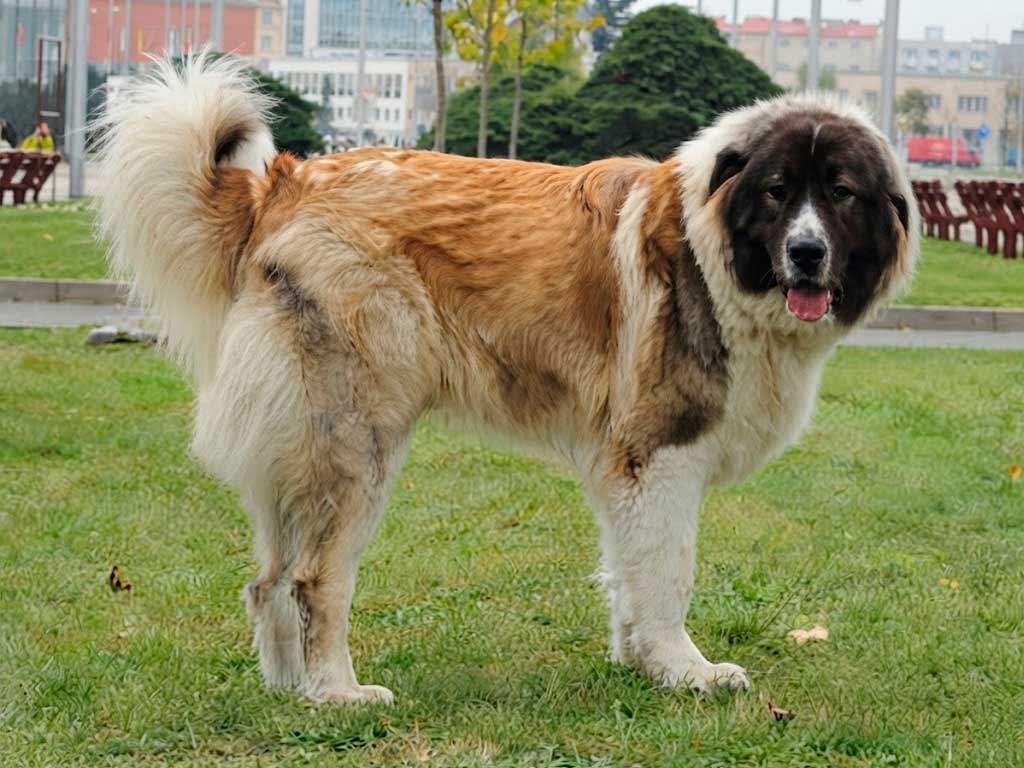
This is a genuinely massive dog with a muscular, well-proportioned build made for strength and endurance. A broad, imposing head and deep-set eyes give it an air of quiet determination.
Males stand 68 to 75 centimeters tall, while females measure 64 to 70 centimeters. Adults typically weigh between 45 and 70 kilograms, and some individuals top 90 kilograms.
Coat length varies by bloodline and can be short, medium, or long, but it’s always dense and thick enough to handle brutal cold. Colors range widely, including grey, white, fawn, and brindle.
Most Caucasian Shepherd Dogs live between 10 and 12 years. Genetics and consistent veterinary care both influence where a given dog falls in that range.
Temperament and Personality
Brave, protective, and fiercely independent, this breed was built to guard, not to please. A strong territorial instinct means it won’t hesitate to confront anything it perceives as a threat.
With family, though, the Caucasian Shepherd Dog turns loyal and affectionate. Strangers get a far cooler reception, since this breed stays naturally reserved and watchful around anyone unfamiliar.
Confidence runs deep in this breed, and that confidence demands an equally confident handler. Without clear leadership, a dog this size and this independent can become genuinely difficult to manage.
Around children, this breed tends to be patient and protective. Supervision still matters, simply because of the size and strength involved, not because of any particular aggression.
Care Guide for the Caucasian Shepherd Dog
Diet and Nutrition
A protein-rich diet formulated specifically for large and giant breeds supports this dog’s substantial muscle mass. Nutrient needs shift considerably compared with smaller dogs.
This article offers general guidance only and does not replace veterinary advice. Ask your vet to help fine-tune feeding amounts and schedules for your individual dog.
Exercise Requirements
Despite its size, this breed isn’t hyperactive. Daily walks and moderate activity keep it healthy and balanced without demanding hours of intense exercise.
Gentle, steady walks suit this dog better than high-intensity sessions. That said, mental engagement still matters just as much as physical movement.
Grooming Needs
Regular brushing keeps the coat free of tangles and loose hair, especially on long-coated individuals. Increase brushing frequency during heavy shedding seasons.
Expect a bit of drooling as a normal part of life with this breed. It’s a minor tradeoff for a dog this devoted and protective.
Training and Education
Early socialization matters enormously with this breed. Exposing puppies to different people, animals, and environments helps prevent excessive territorial behavior later on.
Firm, consistent leadership works far better than harsh corrections here. This breed simply doesn’t respond well to inconsistent or heavy-handed training methods.
Positive reinforcement builds trust while still establishing clear boundaries. Start training the moment a puppy comes home, since bad habits form quickly in a dog this strong-willed.
Health and Longevity
Like many giant breeds, this dog faces an elevated risk of hip dysplasia and certain heart conditions. Regular veterinary checkups catch most issues well before they become serious.
This information is educational and does not replace professional veterinary advice. Schedule routine screenings to keep a large, powerful dog like this one in good health.
Is a Caucasian Shepherd Dog the Right Dog for You?
Experienced owners who understand large guardian breeds tend to succeed best with this dog. First-time dog owners should look elsewhere.
Small apartments simply don’t work for this breed. A spacious home with a securely fenced garden gives it the room it genuinely needs.
This dog can live alongside other pets, provided socialization starts early. Skipping that step often leads to territorial conflicts down the road.
Anyone drawn to a devoted, formidable guardian will likely fall in love with this breed. Anyone hoping for an easygoing first dog probably won’t.
Frequently Asked Questions
Is the Caucasian Shepherd Dog suitable for families?
Yes, provided the family already has experience with large dogs and can commit real time and attention. This breed rewards active, responsible households.
Does this breed need a lot of exercise?
Not necessarily. Energy levels stay moderate, though regular physical and mental stimulation remains important for overall wellbeing.
Is the Caucasian Shepherd Dog hard to train?
It can be challenging given the breed’s independent streak. A patient, consistent handler using positive reinforcement from puppyhood gets the best results.
Can this breed live in an apartment?
It’s not recommended. This dog needs real space to move around, along with regular access to outdoor activity.
Is the Caucasian Shepherd Dog a good guard dog?
Absolutely. Its protective instinct and natural wariness toward strangers make it one of the most reliable guardian breeds a family can own.
Commit to early socialization and confident, consistent leadership from day one. That foundation determines whether this breed grows into a stable guardian or an unmanageable handful.
Weighing this breed against other giant guardians? Browse our full dog breeds hub for more guides like this one.