Doberman: The German Guardian Who Nearly Vanished and Was Saved by War
The Doberman represents one of dog breeding’s most dramatic historical narratives—a breed intentionally created by a 19th-century German tax collector, nearly extinguished during World War I, rescued by military and police work, and ultimately developed into one of the world’s most recognizable guardian breeds. These elegant, muscular dogs combine aristocratic bearing with formidable capability, requiring experienced, confident ownership and realistic understanding of their significant health vulnerabilities.
Dobermans are intensely loyal to family yet naturally suspicious of strangers, with a temperament reflecting both protection work heritage and demanding behavioral characteristics. Understanding this breed means appreciating their authentic working legacy, accepting their serious health concerns, and providing the expert leadership they require. This comprehensive guide explores the Doberman’s complete profile.
History and Origin: From Tax Collector’s Creation to Military Icon
The Doberman’s origin story is remarkably specific and well-documented. In late-19th-century Germany, Herr Louis Dobermann—a vigilant, tax collector, and dog enthusiast—deliberately created this breed to serve as his personal protection companion during his dangerous work rounds. Dobermann sought the ideal guardian dog: powerful enough to deter threats, intelligent enough to respond to complex commands, and visually impressive enough to discourage confrontation.
Dobermann cross-bred multiple established breeds intentionally. Rottweilers provided size and strength. Great Danes added additional size and power. Greyhounds contributed speed and refined athletic grace. Manchester Terriers delivered sleek coat texture, elegant silhouette, and determined temperament. Evidence suggests he may have also incorporated German Schnauzers, German Pinschers, German Shepherds, and Weimaraner Bracos. This deliberate multi-breed crossing created something entirely new—a working dog optimized for protection and patrol work.
The breed was first registered in the German studbook in 1893. What followed is the most dramatic chapter: during World War I, the Doberman nearly disappeared entirely. Europeans couldn’t afford to feed large dogs during wartime shortages. The breed faced potential extinction. However, military and police discovered Dobermans’ exceptional utility as working dogs, and their adoption by security services ensured survival. A famous legend describes early competition judges being too frightened to examine Dobermans’ teeth, resulting in a toothless dog winning the show because judges couldn’t verify dentition.
This military and police heritage directly shaped modern Dobermans’ temperament and working drive.
Physical Characteristics: The Thoroughbred Among Dogs
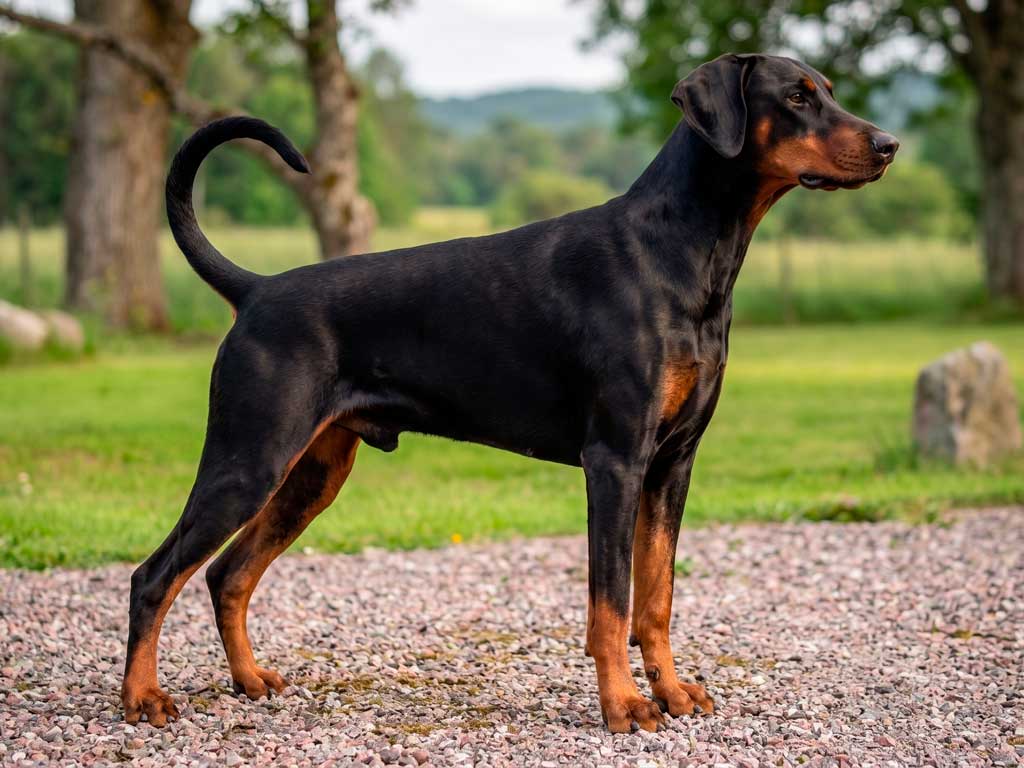
The Doberman is a large, powerfully built dog combining evident muscularity with refined elegance. Males typically stand approximately 69 centimeters tall (27 inches), while females measure 65 centimeters (26 inches). Adults weigh 32 to 45 kilograms (70 to 99 pounds). Their body structure is often described as resembling a thoroughbred racehorse—muscular, balanced, and conveying both power and grace.
The coat is short, sleek, and lies close to the body. Dobermans display black, brown (red), blue, or fawn (Isabella) coloring with distinctive rust or tan markings on the muzzle, chest, legs, and above the eyes. These color combinations, combined with their athletic frame and alert expression, create a striking, immediately recognizable appearance.
Their bearing is proud and dignified. Unlike some large breeds appearing bulky or imposing, Dobermans appear refined and intelligent—a breed designed for protection work, reflecting genuine working purpose rather than exaggerated extremes.
Temperament and Personality: The Single-Owner Dog with Limits
Dobermans are intensely loyal, intelligent, and capable—but they are definitively not for everyone. These dogs form profound bonds with their family, becoming almost protectively devoted. They are often described as “single-owner dogs” or “one-family dogs,” showing remarkable connection with their primary people while remaining aloof or suspicious with strangers.
This loyalty coexists with strong will and protective intensity. Dobermans think critically about situations and respond to perceived threats with confidence and decisiveness. They do not panic or overreact to normal stimuli. However, they will not tolerate deliberate provocation—they react with appropriate force to genuine challenges.
Critically, Dobermans are not playful, eternally forgiving family companions. They possess clear boundaries and expectations. They will not accept disrespect from anyone, including children. The breed requires owners establishing clear, consistent leadership. An inexperienced or tentative owner creates serious behavioral problems.
The breed shows poor tolerance for being alone (2/5 rating). They’re companion animals requiring involvement in family life. Extended isolation causes behavioral issues and anxiety.
Care Guide
Diet and Nutrition
Large breeds require specialized nutrition with balanced proportions of proteins, fats, minerals, and vitamins. Dobermans need high-quality food formulated for large, active dogs. Feed twice daily in appropriately-sized portions.
Dobermans are prone to gastric dilatation-volvulus (bloat)—a life-threatening emergency requiring immediate surgery. Feed smaller, more frequent meals. Avoid exercise immediately after eating. Learn bloat symptoms: distended abdomen, retching, restlessness, collapse. Know your veterinarian’s emergency protocols.
Exercise Requirements
Dobermans require more than 2 hours of daily exercise plus continuous training. These working dogs need sustained activity, not casual walks. Running, agility training, and structured activities suit them well. Mental stimulation is equally important as physical exercise.
Puppies under 12 months require shorter exercise sessions to avoid joint damage during growth phases.
Grooming Needs
Dobermans require very minimal grooming. Their short coat needs only occasional brushing with a rubber glove to remove loose hair. Unlike many large breeds, grooming is one of their practical advantages.
Training and Education
Dobermans are highly trainable (5/5 on the Purina scale), responding excellently to clear, consistent leadership and positive reinforcement. However, training requires confidence and experience. These dogs will test boundaries with inexperienced owners.
Early socialization is non-negotiable. Without early exposure to varied people, dogs, and environments, their natural wariness becomes problematic. However, socialization doesn’t eliminate protective instinct—it manages appropriate expression.
The breed requires responsible ownership of a working dog, not a misguided attempt to have a “friendly family dog.” Dobermans are friendly toward their family but appropriately wary of strangers.
Health and Longevity
Dobermans typically live 10 to 13 years. The breed is predisposed to several serious genetic health conditions requiring breeder screening:
Dilated cardiomyopathy causes progressive heart muscle weakening—often the leading cause of death in the breed. Wobbler Syndrome affects the spine, causing incoordination and mobility problems. von Willebrand’s Disease Type 1 is a bleeding disorder potentially causing uncontrollable hemorrhage. Hip dysplasia causes joint deterioration. Gastric dilatation-volvulus (bloat) is a life-threatening emergency requiring immediate surgery. Hypothyroidism causes weight gain and lethargy. Persistent hyperplastic primary vitreous causes eye problems.
Responsible breeders conduct hip examinations, eye evaluations, and DNA testing for von Willebrand’s before breeding. Before acquiring a Doberman puppy, verify these health screenings have been completed on both parents.
Is This the Right Dog for You?
Dobermans suit experienced, confident owners in secure homes seeking a powerful, intelligent working companion.
Choose a Doberman if you:
- Have significant dog training and ownership experience
- Want a large, powerful guardian dog
- Can provide confident, consistent leadership
- Can commit to socialization and training
- Want a breed responding to clear boundaries
- Can manage a “one-family” dog not comfortable with strangers
- Are prepared for potential serious health costs
- Understand serious health risks
Consider another breed if you:
- Are a first-time dog owner
- Cannot provide experienced, confident leadership
- Need a naturally friendly dog welcoming all strangers
- Cannot afford potential health costs
- Want a dog comfortable being left alone
- Dislike aloof, reserved temperaments
- Cannot commit to extensive socialization
- Prefer naturally obedient, eager-to-please dogs
Frequently Asked Questions About Dobermans
1. Why are Dobermans called “single-owner dogs”? They form intense bonds with their primary family, becoming almost protectively devoted. They’re naturally suspicious of strangers and don’t warm quickly to people outside their family. This isn’t unfriendliness—it’s appropriate caution reflecting their guardian heritage.
2. Do Dobermans require experienced owners? Absolutely. They’re intelligent, strong-willed dogs needing confident leadership. Inexperienced owners often create behavioral problems because Dobermans will test unclear boundaries. The breed is excellent but demands expertise.
3. What health problems affect Dobermans? Dilated cardiomyopathy (heart disease) is the most serious and common cause of death. Wobbler Syndrome, von Willebrand’s Disease, hip dysplasia, bloat, hypothyroidism, and eye problems are also concerns. Responsible breeders screen for these conditions.
4. Can Dobermans live in apartments? Yes, with appropriate exercise. They need 2+ hours daily activity but adapt to apartment living if their needs are met. However, leaving them alone for long periods is problematic regardless of space.
5. Are Dobermans aggressive? Not inherently toward people, but they’re protective and suspicious of strangers. Aggression toward people results from poor breeding or irresponsible ownership. Well-bred, properly socialized Dobermans are confident protectors, not aggressive animals.
The Refined Guardian with a Dramatic Past
The Doberman represents one of dog breeding’s most intentional creations and most dramatic histories. A tax collector’s need for protection evolved into a breed nearly extinct during war yet rescued by military and police work, ultimately becoming one of the world’s most recognized guardian dogs.
For the right owner—someone with experience, confidence, and realistic expectations—the Doberman offers unmatched devotion, intelligence, and capability. However, for those romanticizing the breed or lacking experience, Doberman ownership quickly becomes overwhelming.
Responsible Doberman ownership means embracing these elegant, powerful dogs for what they authentically are: serious working dogs requiring experienced, confident leadership.