Spanish Water Dog: The Complete Breed Guide
Ask two kennel clubs what kind of dog the Spanish Water Dog actually is, and you’ll get two different answers. The UK Kennel Club files it under gundogs. The American Kennel Club calls it a herding breed. Neither is entirely wrong, and that disagreement says everything about how versatile this dog really is.
This guide sorts through that versatility: coat care, temperament, exercise needs, and the health screening this breed benefits from. Every detail here reflects verified breed-standard data and established canine care practices.
One number stands out immediately. This breed scores just 1 out of 5 for tolerating time alone, the lowest possible rating. Anyone considering a Spanish Water Dog needs to plan around that fact before anything else.
History and Origin
The Spanish Water Dog’s curly, woolly-coated ancestors have worked across Europe for several centuries. Related breeds evolved alongside it, including the French Barbet, the Italian Lagotto Romagnolo, and the Portuguese Water Dog.
Historians trace the breed’s arrival in Iberia to Arab traders, Roman settlers, or early merchants, though no single origin story has been confirmed. Whatever the route, the dog quickly proved useful for herding sheep and goats across rugged terrain and helping fishermen retrieve gear and objects lost overboard.
Formal recognition came surprisingly late. Breeders began pursuing pedigree status in the 1970s, and Spain’s Kennel Club accepted the breed in the mid-1980s. The dog still performs many of its original herding and retrieving jobs today.
Physical Characteristics
Adult males stand 44 to 50 cm tall and weigh 18 to 22 kg. Females run smaller, standing 40 to 46 cm and weighing 14 to 18 kg.
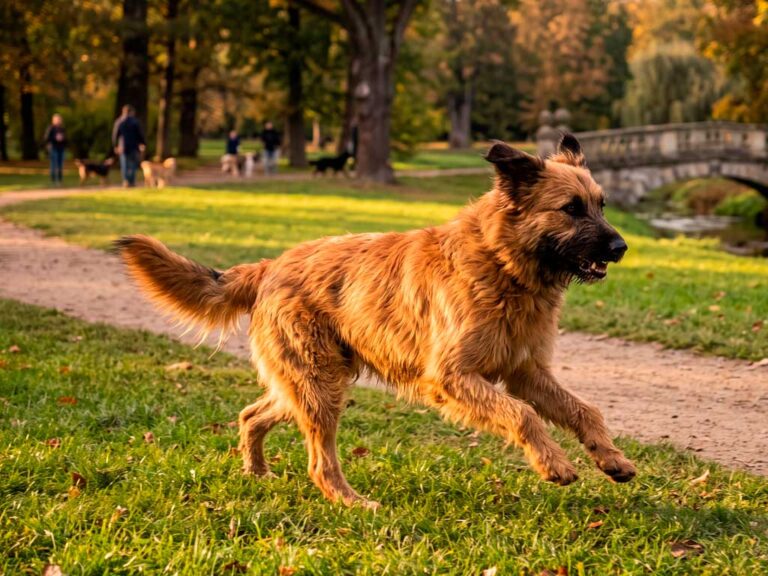
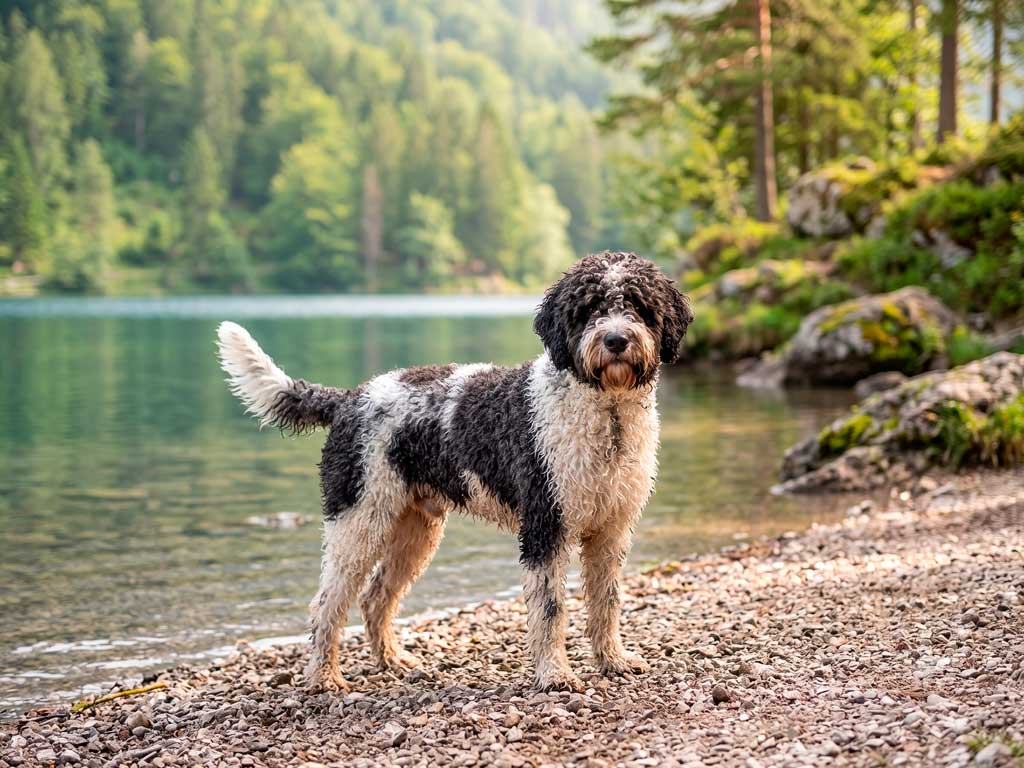
The coat is the breed’s signature feature: curly, woolly, and naturally prone to forming cords if left to grow long. Colors include solid black, white, or brown, plus black-and-white or brown-and-white combinations.
Overall build stays sturdy and muscular without any bulkiness, built for both swimming and covering rough ground.
Temperament and Personality
Loyalty and good humor define this breed’s personality. Spanish Water Dogs genuinely enjoy the whole family, though most form one especially strong bond with a single person.
A natural protective streak shows up in alert, purposeful barking when something feels off. This isn’t a guard dog in the traditional sense, but it will absolutely let you know when something’s wrong.
That protective instinct pairs with genuine warmth toward familiar faces. Strangers might get a bark or two, but aggression isn’t typical for this breed when properly socialized.
Care Guide
Diet and Nutrition
A Spanish Water Dog’s diet needs the correct balance across all major nutrient groups, with fresh water always available. Feed twice daily according to specific food guidelines, and check body condition regularly to catch weight changes early.
This article provides general nutrition guidance only. Consult your veterinarian for a feeding plan tailored to your dog’s age, activity level, and health status.
Exercise Requirements
Budget at least one hour of exercise daily, though this versatile breed handles herding, retrieving, swimming, and most typical dog sports and games with enthusiasm.
Water safety deserves special attention. This breed will dive into any body of water without hesitation, so leash your dog near unfamiliar or unsafe water until you’re confident about the area.
Grooming Needs
Grooming here works differently than with most breeds. The coat naturally cords when left long, and those cords need to be separated by hand rather than brushed or combed.
Spanish farmers traditionally sheared their dogs each spring alongside their sheep, and that tradition continues today. When the coat grows too long, the standard approach is a full, even shave rather than trimming. The upside: this hands-off coat makes the breed a popular hypoallergenic choice.
Training and Education
Training a Spanish Water Dog takes more patience than some breeds require, since this dog scores relatively low on ease of training despite its intelligence. Independent thinking, a trait bred into working and herding dogs, sometimes looks like stubbornness during basic obedience work.
Consistency and positive reinforcement produce the best long-term results. Early socialization matters too, particularly around other pets, since this breed can need extra guidance to coexist smoothly with unfamiliar animals.
Given the breed’s herding background, structured activities like agility, obedience trials, or water retrieval work channel natural instincts productively.
Health and Longevity
Spanish Water Dogs live 10 to 14 years on average. Hip dysplasia tops the list of breed-specific concerns, alongside progressive retinal atrophy, an inherited condition causing gradual vision loss, and glaucoma, a painful buildup of pressure inside the eye. Ear infections also show up more often in this breed than in many others.
Breed clubs recommend hip dysplasia screening, an eye exam checking for pectinate ligament abnormalities linked to glaucoma risk, and a DNA test for progressive retinal atrophy before breeding.
This section offers general information only and doesn’t replace veterinary diagnosis. Regular ear checks matter here given this breed’s documented susceptibility to ear infections, especially after swimming.
Is This the Right Dog for You?
Families looking for a loyal, adaptable companion tend to do well with this breed, and it typically gets along with children when introductions happen carefully. Some prior experience with dogs helps, particularly around managing the coat and channeling the breed’s working instincts.
Anyone gone from home for long stretches should think twice, given the breed’s very low tolerance for being alone. Access to safe water for swimming and regular exercise time matters more here than a large yard.
Spanish Water Dog Quick Facts
| Trait | Details |
|---|---|
| Life Expectancy | 10–14 years |
| Weight | 14–22 kg |
| Height | 40–50 cm |
| Coat | Curly, woolly, corded |
| Shedding | Minimal, hypoallergenic |
| Grooming | Hand-separated cords, seasonal shave |
| Family Friendly | Excellent |
| Good with Other Pets | Good, with training |
| Tolerates Being Alone | Very poor |
| Energy Level | High |
Spanish Water Dog vs. Similar Breeds
| Breed | Coat Type | Hypoallergenic | Best For |
|---|---|---|---|
| Spanish Water Dog | Curly, corded | Yes | Active, hands-on owners |
| Portuguese Water Dog | Curly, wavy | Yes | Active families |
| Lagotto Romagnolo | Curly, dense | Yes | Families, truffle hunting fans |
| Barbet | Curly, long | Yes | Water-loving households |
Frequently Asked Questions
Is the Spanish Water Dog hypoallergenic? Yes. Its coat sheds minimally, making it a popular choice for allergy-prone households, though no breed is completely allergen-free.
Do Spanish Water Dogs need to be brushed? No. Their coat naturally cords and should be separated by hand rather than brushed, following the breed’s traditional grooming approach.
Is the Spanish Water Dog a herding or hunting breed? Both, depending on the kennel club. The UK classifies it as a gundog, while the US classifies it as a herding breed, reflecting its historically versatile working role.
How much exercise does a Spanish Water Dog need? At least one hour daily, ideally including swimming, retrieving, or herding-style activities that match its working background.
Can a Spanish Water Dog be left alone? Not easily. This breed scores among the lowest for tolerating solitude and does best with consistent companionship.
Are Spanish Water Dogs easy to train? Moderately. Their independent streak, a trait from their herding and working history, means training takes patience and consistency rather than repetition alone.
Do Spanish Water Dogs shed? Very little. Their curly coat traps loose hair rather than releasing it, which supports their hypoallergenic reputation.
What health problems affect Spanish Water Dogs? Hip dysplasia, progressive retinal atrophy, glaucoma, and ear infections are the most commonly documented concerns for this breed.
Are Spanish Water Dogs good with children? Generally yes, especially with proper introductions and supervision, as with any breed around young kids.
Why do Spanish Water Dogs get shaved? Following a Spanish farming tradition, owners shave the coat evenly once it grows too long to manage, similar to shearing sheep each spring.
Water access and companionship top the priority list for this breed, more than anything else on this page. If you’re weighing another curly-coated option, our Portuguese Water Dog guide covers a close cousin with a similar hypoallergenic coat and water-loving temperament.