Best Pet Lizard by Size: Choosing by Space, Budget, and Experience
The best pet lizard by size comes down to one rule: choose the species that fits the adult enclosure you can actually house, not the baby you can afford today.
That single reversal prevents most of the rehoming in the hobby. A bearded dragon costs less than its tank, and a tegu costs less than the room it needs. Match the adult animal to the space first, then pick the species.
This guide sorts the common pet lizards into five size bands, from geckos under 10 cm (4 in) to monitors over 1.8 m (6 ft), with enclosure sizes in liters and gallons, diet, and the experience level each one demands.
Best Pet Lizard by Size at a Glance
The table groups the species covered below by adult length, with the enclosure each one needs.
| Size band | Species and adult length |
|---|---|
| Micro, under 10 cm (4 in) | Dune gecko, mourning gecko, electric blue gecko |
| Small, 15 to 30 cm (6 to 12 in) | Leopard gecko, African fat-tailed gecko, Chinese cave gecko |
| Medium, 46 to 61 cm (18 to 24 in) | Bearded dragon, blue tongue skink |
| Large, 0.9 to 1.5 m (3 to 5 ft) | Argentine tegu, rhino iguana, sailfin dragon |
| Gigantic, 1.8 to 2.1 m (6 to 7 ft) | Asian water monitor |
Micro Lizards: Under 10 cm (4 in)
Micro species fit a 76 L (20 gal) tank and still behave like wild animals rather than ornaments. They are the only category where a small apartment genuinely works.
What you trade for the space is interaction. Most micro geckos are watch-only animals, they escape through gaps you would not notice, and a colony can become a population faster than expected.
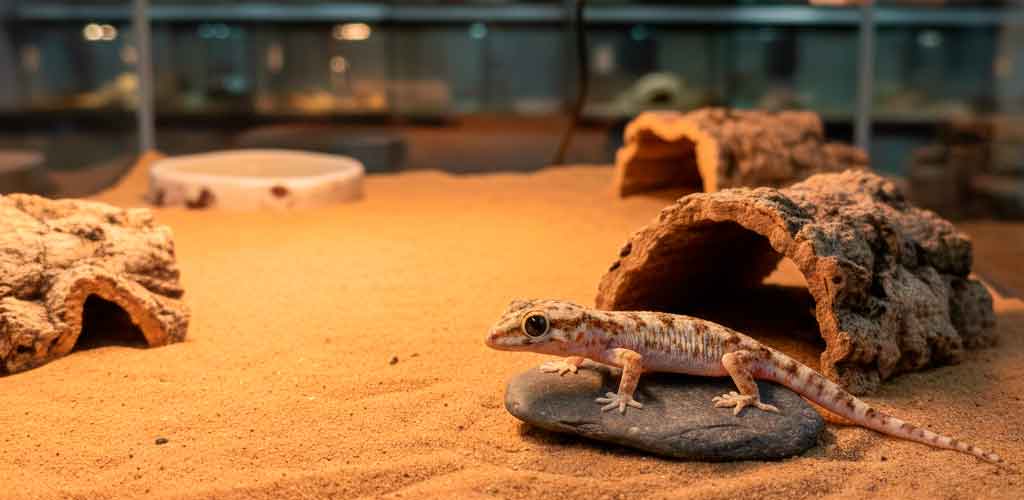
- Dune gecko (Stenodactylus). A desert species that tolerates company, which is rare among lizards, and a small colony fits a 76 L (20 gal) setup with play sand, cork bark, and a consistent heat source. Hardy enough for a first micro lizard.
- Mourning gecko. Parthenogenic, meaning the population is entirely female and reproduces by cloning. A tropical vertical setup suits them, and a single animal becomes a colony without a male.
- Electric blue gecko (Lygodactylus williamsi). The neon blue is the selling point, and the care is less forgiving. This one needs proper UVB and stable humidity, so it is a second micro species rather than a first.
Small Lizards: 15 to 30 cm (6 to 12 in)
This band is where most keepers find their long-term animal, because it balances handling with a tank that fits a normal room.
- Leopard gecko (Eublepharis macularius). The default beginner lizard, and the reason is dietary: insects only, no salad to prepare. A 151 L (40 gal) breeder tank is the modern standard for one adult, and the species account at Animal Diversity Web covers its natural history.
- African fat-tailed gecko. Similar build to a leopard gecko, with a higher humidity requirement. Choose it if you want the same shape and slightly more demanding conditions.
- Chinese cave gecko. Dark scales, red eyes, and a preference for cooler, damper conditions. A good fit for a keeper in a naturally cool climate, and a poor fit for a hot dry room.
The full leopard gecko care guide covers enclosure, heating, and the supplementation schedule in detail.
Medium Lizards: 46 to 61 cm (18 to 24 in)
Medium is where the hobby gets serious. These animals need a dedicated piece of furniture, a real UVB budget, and a diet that changes with age.
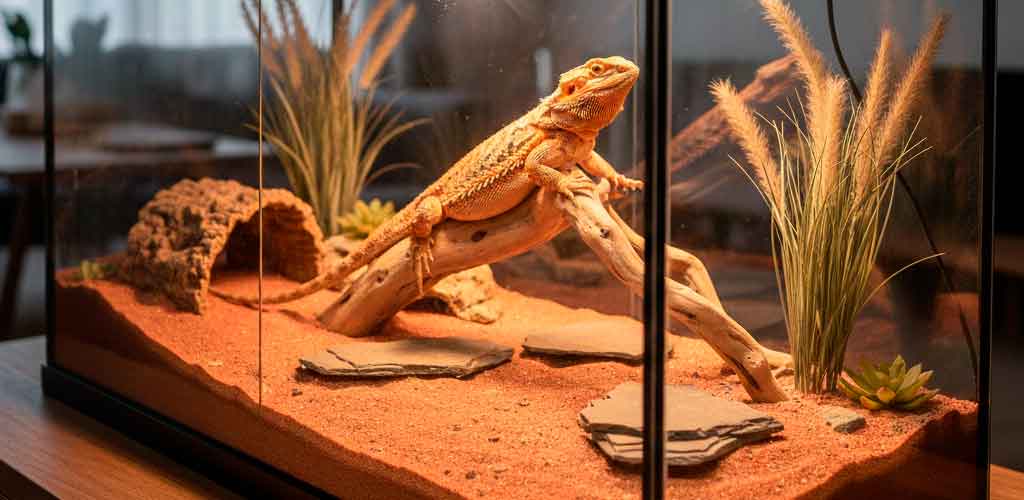
- Bearded dragon (Pogona vitticeps). The most social lizard in the trade and the one most often bought on impulse. An adult needs a 454 L enclosure at minimum, roughly 122 x 61 x 61 cm (4 x 2 x 2 ft), plus a daily salad and live insects. The bearded dragon care guide has the temperatures and diet ratios.
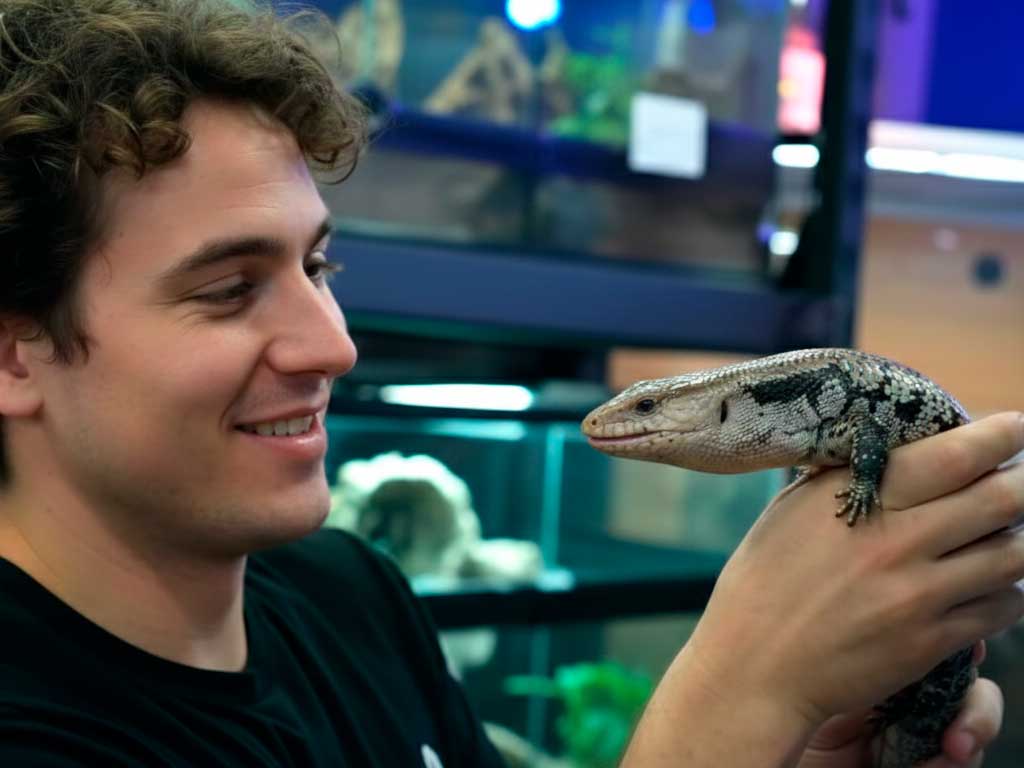
- Blue tongue skink. Ground-dwelling, calm, and easier to handle than its size suggests. The Northern form tolerates drier air, while Indonesian animals need higher humidity. See the blue tongue skink guide for the split between the two.
Diet is where these two diverge most. A bearded dragon shifts from insects to greens as it grows, and a blue tongue skink eats a mixed diet that includes plant matter and protein from the start.
Large Lizards: 0.9 to 1.5 m (3 to 5 ft)
Large lizards turn a hobby into a household commitment. The enclosure is furniture, the food bill is real, and the animal can hurt you without meaning to.
- Argentine black and white tegu. The most intelligent lizard on this list, and the one most often described as dog-like. It needs an enclosure around 244 cm (8 ft) long, and it goes through a defensive phase during adolescence that surprises owners who expected a permanent puppy.
- Rhino iguana. A herbivore that looks prehistoric and behaves more predictably than a tegu. Still large, still expensive to house, and still an animal for someone with a spare room.
- Sailfin dragon. Striking, flighty, and dependent on a large water feature. The hardest of the three to keep well, and not a species to learn on.
The enclosure rule for this band is the one from the FAQ below: plan for at least twice the animal’s length. For a 1.2 m lizard, that is a 2.4 m enclosure before you think about height.
Gigantic Lizards: 1.8 to 2.1 m (6 to 7 ft)
One species defines this category, and it is a lifestyle decision rather than a purchase.
- Asian water monitor (Varanus salvator). Intelligent, powerful, and capable of injuring a person with its tail. It needs a dedicated room with high humidity and a filtered swimming pool, and it will outgrow anything bought for a juvenile. The species account is worth reading before you look at prices.
Owners who keep these animals well describe the same arrangement: the room belongs to the monitor, and the keeper works around it.
Before You Choose: Three Checks
Choosing the best pet lizard by size is a measuring exercise before it is a taste exercise.
- Measure the adult enclosure, not the baby. Find the adult size of the species and the minimum tank for that size, then measure the spot in your home where it would go.
- Price the setup, not the animal. Tank, UVB fixture and tubes, thermostat, hides, and the first six months of food usually cost more than the lizard itself.
- Check the vet. A reptile-experienced exotic vet within driving distance is part of the equipment list, not a luxury.
A keeper who answers all three honestly will pick a better animal than one who starts from a photograph.
What You Give Up at Each Size
Every band trades something for what it offers, and knowing the trade is more useful than a species list.
| Size band | The trade-off |
|---|---|
| Micro | Minimal handling, serious escape risk, and a setup that is easy to underestimate |
| Small | A forgiving animal with a tank that still has to live somewhere permanent |
| Medium | Daily food prep, a real UVB budget, and furniture-sized enclosure |
| Large | Room-scale space, a defensive adolescence, and an animal that can hurt you |
| Gigantic | A dedicated room, permanent humidity control, and no margin for improvisation |
Mistakes That Come From Choosing by Size
- Buying the baby and planning for the baby. Every species here is sold small. The tank you buy second is always the expensive one.
- Measuring floor space but not height. Arboreal species need vertical room, and a tall tank on a small footprint gives a terrestrial lizard less usable space than the numbers suggest.
- Skipping the UVB line in the budget. The fixture and the annual tube replacements cost more than most people expect, and they are not optional for a diurnal species.
- Assuming a bigger tank solves a temperament problem. A tegu in a large enclosure is still a tegu in a defensive phase. Size of tank and ease of keeping are different questions.
The Rule That Outranks Everything Else
For any lizard above the small band, plan an enclosure at least twice the animal’s length, with height added for arboreal species. A 1.2 m (4 ft) lizard needs a 2.4 m (8 ft) enclosure, and an arboreal species needs vertical room on top of that.
That rule explains why the size bands above matter more than the species list. The animal you can house properly is the animal you can keep well, and the reverse is where most surrenders begin.
If UVB or calcium has already gone wrong, the guide to metabolic bone disease in reptiles covers the signs and the recovery path.
This guide provides general educational information and is not a substitute for veterinary care. Talk to a reptile-experienced exotic vet about the species you are considering before you buy.
Frequently Asked Questions
Where to Go Next
The reptile care guide covers the husbandry basics that apply to every species here, and the green iguana guide is the next step up in size if a medium lizard already feels manageable.
For the full picture of what each category demands, read the care guide for the species you are closest to buying rather than the one that looks best in a photo. Every link above goes to a guide with the enclosure numbers for that animal.
That is the whole method: pick the band, measure the wall, price the setup, then choose the species. The best pet lizard by size is the one you can still house in five years.
Sources
- Animal Diversity Web, Eublepharis macularius
- Animal Diversity Web, Pogona vitticeps
- Animal Diversity Web, Varanus salvator