How to Take Care of a Chameleon: Beginner Guide

Contrary to what most people assume, a chameleon changing color isn’t camouflage kicking in — it’s closer to a mood ring. How to take care of a chameleon properly starts with understanding that color shifts are mostly about communication and temperature regulation, not hiding from predators, and that single myth explains a lot of behavior that otherwise looks mysterious. I’ve kept everything from bearded dragons to crested geckos, and chameleons are genuinely one of the more demanding species on this list, with almost no room for “close enough.”
Quick facts: Veiled chameleons (Chamaeleo calyptratus), the most commonly kept pet species, are native to Yemen and Saudi Arabia, growing up to 24 inches and living 5-8 years in captivity. Chameleons have independently moving eyes, prehensile tails that function like a fifth limb, and feet built in opposing bundles for a locked-in grip on branches.
Choosing a Chameleon and What It Costs
Buy from a reputable breeder rather than an impulse pickup at a general pet store, and ask directly how the animal has been housed and fed. A healthy chameleon grips branches firmly, has clear eyes that move independently, and shows alert, curious behavior rather than sitting motionless and dull-colored.
Budget well beyond the animal’s purchase price. A proper screened enclosure, T5 UVB fixture, basking bulb, misting or drip system, and live plants typically add up to more than the chameleon itself, and that’s before ongoing costs for feeder insects and UVB bulb replacements every 6-12 months.
Not a Beginner Reptile, Even Though They’re Sold That Way
Chameleons get bought on looks more than almost any other reptile, and that’s worth naming directly. They’re genuinely difficult to keep well — the temperature, humidity, and hydration setup all need to be precise and consistent, and there’s much less margin for error than with a bearded dragon or leopard gecko.
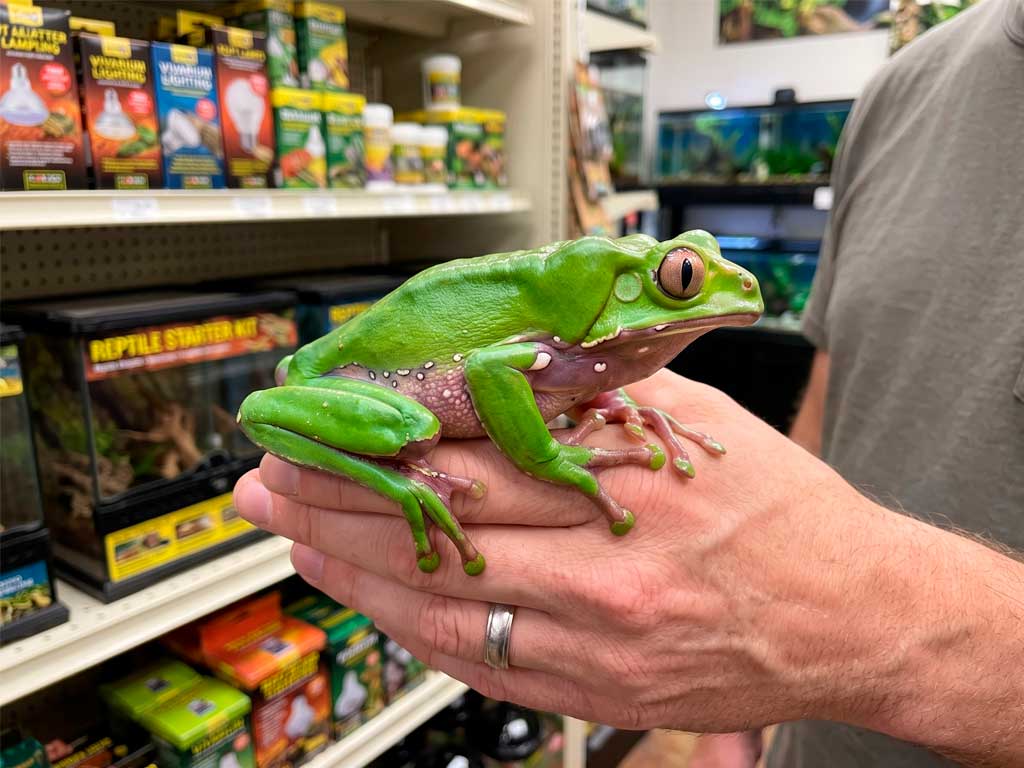
They also don’t offer much in the way of interaction. Chameleons tolerate minimal handling at best, and most individuals would rather be watched than held. If what you want is an animal you can take out and hold regularly, a chameleon is likely to disappoint that expectation even when it’s perfectly healthy and well cared for.
That said, the difficulty isn’t about any one task being hard on its own. It’s that temperature, humidity, hydration, and lighting all have to stay dialed in simultaneously, and letting one slide tends to cause problems faster than it would with a more forgiving species.
None of this means don’t get one — it means go in knowing this is closer to keeping a living piece of art than a companion animal, and budget the time for a setup that actually matches that reality.
Enclosure: Screen, Not Glass
Skip glass tanks entirely. They trap humidity and heat unevenly and block the airflow chameleons need, which contributes directly to respiratory illness. A screened or hybrid enclosure with solid sides for humidity control and mesh for ventilation is the right call instead.
Minimum size for an adult veiled chameleon runs around 2’L x 2’W x 4’H, and bigger is genuinely better here, especially for males. Fill it with a dense network of horizontal and vertical branches, live or artificial plants, and multiple hiding spots, since chameleons want cover as much as they want climbing routes.
The Vertical Gradient: Warm Top, Cool Bottom
Unlike a bearded dragon’s side-to-side temperature gradient, chameleons need a top-to-bottom one. Basking areas near the top should reach 90-100°F depending on species, while the lower, shaded zones stay closer to 70-80°F, and nighttime temperatures can drop to 60-70°F without an issue.
Never use heat rocks or under-tank heaters for a chameleon — both fail to replicate the vertical gradient this species actually needs and add real burn risk. A basking bulb positioned at the top of the enclosure, run on a thermostat, is the safer and more effective setup.
UVB and Lighting
UVB is essential, not optional. Without it, chameleons can’t produce the vitamin D3 needed to absorb dietary calcium, which leads directly to Metabolic Bone Disease — a condition that causes soft bones, tremors, and difficulty climbing in chameleons specifically.
Use a T5 high-output linear UVB bulb rather than a compact or coil style, since linear tubes deliver stronger, more even output. Mount it above the mesh, keep the basking branch within the manufacturer’s recommended distance, and run a consistent 12-hour light and dark cycle using a timer rather than manual switching.
Humidity and Hydration: Why They Won’t Drink From a Bowl
Chameleons don’t recognize standing water as something to drink, so a water dish alone will leave one dehydrated even if it’s sitting right there. Hydration comes from licking droplets off leaves, which means misting and drip systems aren’t optional extras — they’re the entire water source.
Mist the enclosure at least twice daily, and add a slow drip system to supplement between mistings. Humidity itself should swing through the day, roughly 40-50% during daylight hours and climbing to 80-100% overnight, which mimics the natural dew cycle chameleons evolved around. A digital hygrometer takes the guesswork out of hitting that range consistently.
Diet and Feeding
Chameleons are primarily insectivores, with veiled chameleons also accepting some plant matter unlike most other pet species in the family. Offer gut-loaded crickets, dubia roaches, and silkworms as the diet’s foundation, with occasional waxworms as a treat given their high fat content.
Never feed fireflies, since they’re toxic enough to be fatal, and skip anything with warning coloration — red, yellow, or orange markings often signal a genuinely toxic insect in the wild. Stinging insects like bees and wasps are off the list too, for the same reason you wouldn’t want to test that assumption yourself.
Juveniles eat once or twice daily, while adults typically do well every other day. Dust feeder insects with calcium a few times a week, using a D3-free formula if UVB is already part of the setup, since doubling up on D3 risks toxicity.
Handling: Why Less Is More
Wait until a chameleon is at least 5-6 inches long before regular handling, and even then, keep sessions brief. This is a species where minimal interaction is genuinely the correct approach, not a compromise.
Never grab a chameleon by the tail or pull it off a branch — gently disengage the feet and tail instead, working with the grip rather than against it. Let the animal step onto your hand voluntarily when possible, using a branch as a bridge if it’s hesitant.
Health Red Flags and When to See a Vet
Book an initial exam with a reptile-experienced exotic vet within the first few weeks of bringing a chameleon home, including a fecal test for parasites. Annual wellness exams after that catch problems early, since chameleons are subtle communicators and rarely show dramatic warning signs.
Watch for sunken eyes, persistent gaping, dull or darkened coloration that doesn’t resolve, and any difficulty climbing or gripping branches — these all warrant a vet visit rather than a wait-and-see approach. Like other reptiles, chameleons can carry Salmonella; the precautions are the same ones covered in more depth in our tortoise care guide, and they’re worth reading in full if this is a new concern for your household.
This guide provides general educational information and isn’t a substitute for veterinary care. If your chameleon shows any of the signs above, a reptile-experienced exotic vet is the right call, not a home remedy.
Frequently Asked Questions
Getting Chameleon Care Right From the Start
Every mistake covered here comes back to the same handful of gaps: a glass enclosure instead of screen, a side-to-side gradient instead of top-to-bottom, or a water bowl standing in for the misting routine a chameleon actually needs. Fix those and how to take care of a chameleon turns out to be a demanding but genuinely manageable routine.
Not as scary as it sounds, once the basics are actually in place.