Blue Tongue Skink as a Pet: Complete Beginner Guide
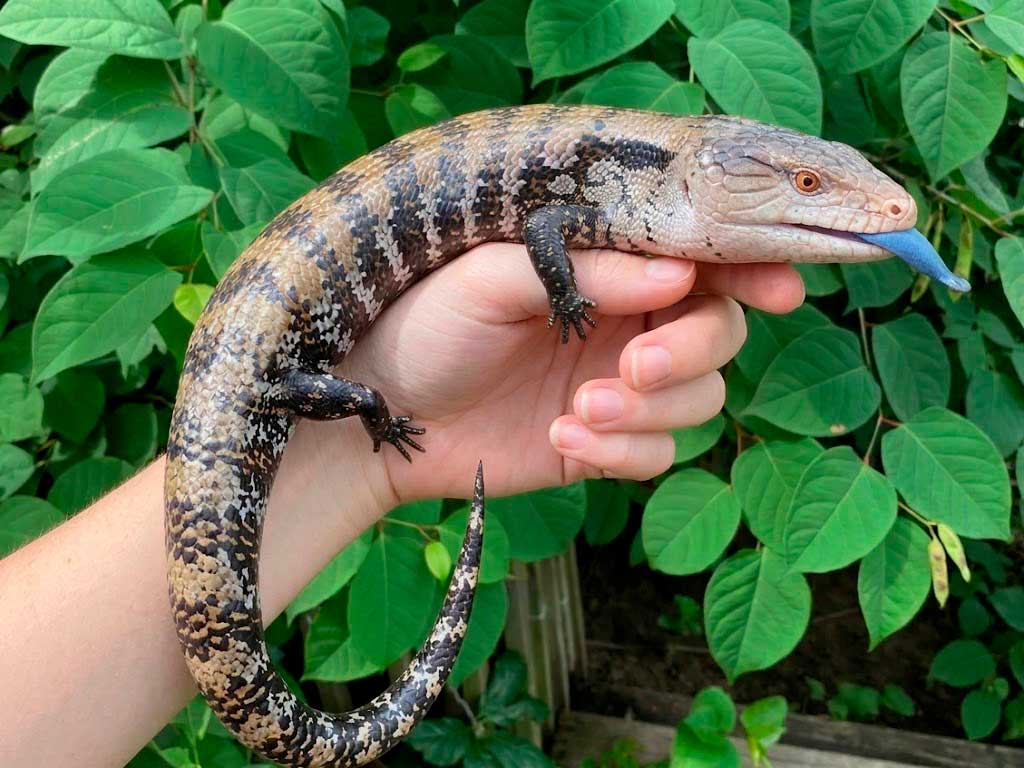
Contrary to what most first-time reptile owners expect, a blue tongue skink as a pet often turns out to be the most interactive animal on this entire site more so than a bearded dragon, and light years ahead of a chameleon that would rather not be touched at all.
These stocky, short-legged lizards flash a genuinely striking blue tongue as a defense display, but in captivity that same tongue mostly shows up during feeding time from an animal that’s usually happy to see you.
I’ve kept everything from leopard geckos to ball pythons, and blue tongue skinks are consistently the species people fall hardest for once they actually meet one.
Quick facts: Blue tongue skinks (Tiliqua spp.) are native to Australia, Tasmania, Papua New Guinea, and Indonesia, growing 18-24 inches long and living 15-20 years, sometimes past 30, with proper care. They’re diurnal omnivores, give birth to live young rather than laying eggs, and rank among the most people-friendly lizards commonly kept as pets.
Choosing a Blue Tongue Skink and What It Costs
Buy from a reputable breeder rather than an unverified import, and ask which species or subspecies you’re getting, since Indonesian, Australian (Northern and Eastern), and shingleback skinks all vary somewhat in size and habitat needs. A healthy skink has clear eyes, moves with energy, and shows curiosity rather than hiding constantly.
Budget beyond the animal’s price. A properly sized enclosure, strong UVB fixture, basking bulb, and thermostat typically add up to more than the skink itself, and that’s before ongoing costs for feeder insects, produce, and UVB bulb replacements every 6 months.
Blue tongue skinks are sometimes confused with true skinks in the pet trade, so confirm the genus (Tiliqua) with the seller if you’re buying online rather than in person. Getting the species right upfront makes every other care decision, from enclosure size to diet ratios, easier to plan correctly.
Enclosure Setup
Adult blue tongue skinks need at least 8 square feet of floor space, and bigger is genuinely better here since these are heavy-bodied, terrestrial lizards that use ground area more than height. A 4’x2’x2′ enclosure is a common starting point for a single adult, sized up from a smaller juvenile setup as the skink grows.
Skinks are surprisingly capable escape artists, so a secure, well-ventilated mesh lid with working locks matters as much as the enclosure’s footprint. Give juveniles more decoration and cover than adults, since a young skink in a large, sparse space tends to show more stress than one with plenty of places to retreat.
Substrate
Paper towels, reptile carpet, or brown paper are the safest defaults, particularly for younger skinks still learning their environment. Loose substrates carry real impaction risk in this species, and some keepers, particularly those newer to skinks, are better off avoiding them entirely.
That said, experienced keepers sometimes use a sand-and-soil blend or coarse woodchip successfully, since blue tongue skinks are natural burrowers and clearly enjoy the behavior. If you go this route, stick to a coarse, low-dust option and watch closely for any signs of digestive trouble.
Whichever substrate you choose, offer enough depth for real digging, not just a thin cosmetic layer. Skinks that can’t express normal burrowing behavior sometimes compensate by scratching persistently at glass or corners, which is a stress signal worth addressing rather than ignoring.
Temperature and the Belly-Heat Habit
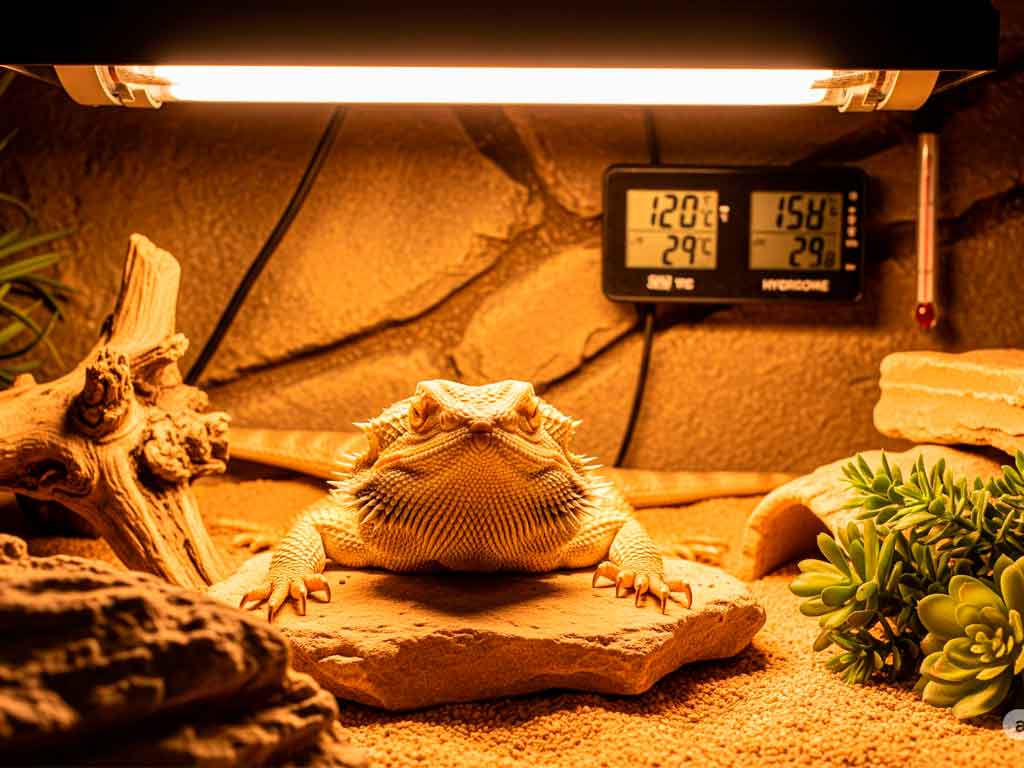
Aim for a basking surface around 95-100°F, with the cool end sitting near 75-80°F, and a night drop to about 70°F. Run heat sources through a thermostat, and keep any basking bulb mounted well out of reach, since skinks are heavy enough to climb onto low-mounted fixtures and get burned.
Beyond overhead basking, blue tongue skinks also like secondary belly heat, often lounging on a sun-warmed rock or flat slate placed near the basking area. It’s a small detail most beginner care sheets skip, but it’s worth replicating with a solid, stable surface positioned close enough to the heat source to warm up without becoming dangerously hot itself.
UVB and Lighting
Blue tongue skinks are strong midday baskers, in the same category as bearded dragons, and need a correspondingly intense UVB source rather than the lower output that suits a more shade-seeking species. A 10-12% UVB tube spanning most of the enclosure’s length, mounted near the basking area, is the standard recommendation.
Run a consistent 12-hour light and dark cycle, and replace the bulb every 6 months regardless of whether it still looks fine, since UVB output fades well before the bulb visibly dims.
Diet: The Skink That Eats Almost Anything
Blue tongue skinks are genuinely omnivorous, doing well on a mix of roughly 60% plant matter and 40% animal protein. Dark leafy greens, chopped vegetables, and a modest amount of fruit make up the plant side, while gut-loaded insects, occasional pinkie mice, and even the occasional hard-boiled egg cover the protein side.
Avoid onion, peas, spinach, iceberg lettuce, and avocado, none of which offer real nutritional value and some of which cause outright problems. Dust food with a calcium supplement regularly, alternating with a multivitamin, and use a D3-inclusive formula unless your UVB setup is confirmed strong and consistent.
Juveniles eat daily, while adults typically do well every 2-3 days. A heavy water dish large enough to soak in should stay available at all times, since skinks use it for both drinking and occasional bathing.
Handling: The Friendliest Lizard on This List
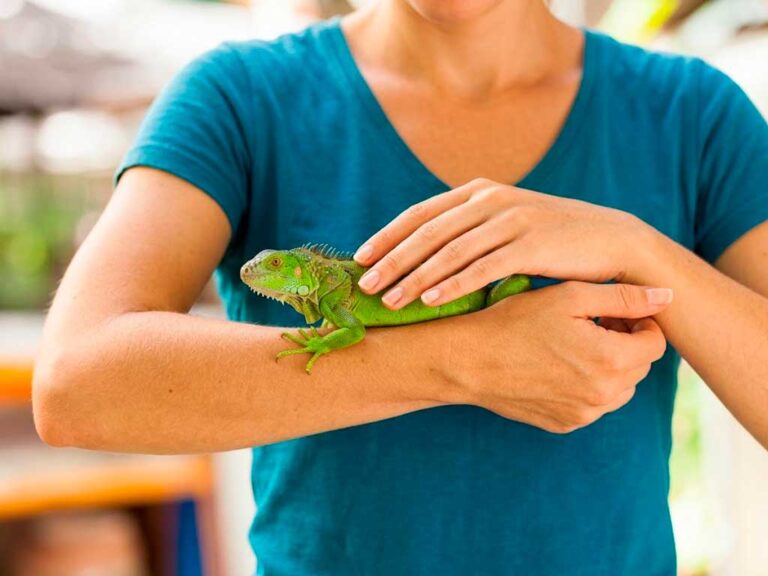
Pick a skink up slowly from the side where it can see you approaching, rather than reaching in from above, which reads as a predator strike to most reptiles. Regular handling several times a week genuinely helps here, since blue tongue skinks tend to grow more comfortable with people the more consistent that contact is.
Quick safety note: even a friendly skink can bite if startled or mishandled, and their jaw strength (built for crushing snail shells) is no joke. Slow, predictable movements solve most of this before it becomes an issue.
Reproduction Note: Live Birth, Not Eggs
Unlike most reptiles on this site, blue tongue skinks don’t lay eggs at all. Females carry developing young internally and give birth to live babies, typically in litters of 10-15, which surprises a lot of first-time keepers who assume all reptiles are egg-layers by default.
If you’re keeping a male and female together, breeding can happen without any deliberate effort on your part, so think through what you’d do with a litter before housing a pair together.
Health Red Flags and When to See a Vet
Book an annual checkup with a reptile-experienced exotic vet, even when everything looks normal, since skinks hide illness well. Common issues include metabolic bone disease from inadequate UVB, respiratory infections from a cold or damp enclosure, and thermal burns from heat sources positioned too close.
Watch for incomplete shedding, fungal skin patches, bite wounds if housed with another skink, and any sign of mouth rot or unusual swelling — all of these warrant a vet visit rather than a wait-and-see approach.
This guide provides general educational information and isn’t a substitute for veterinary care. If your blue tongue skink shows any of the signs above, a reptile-experienced exotic vet is the right call, not a home remedy.
Frequently Asked Questions
Getting Blue Tongue Skink Care Right From the Start
Every mistake covered here comes back to the same handful of gaps: underestimating the floor space needed, skipping the strong UVB this species actually requires, or missing the belly-heat detail that makes a basking setup feel complete. Fix those and a blue tongue skink as a pet turns out to be one of the most rewarding lizards covered on this site.
Not as scary as it sounds, once the basics are actually in place.