Green Iguana Care: The Complete Beginner Guide
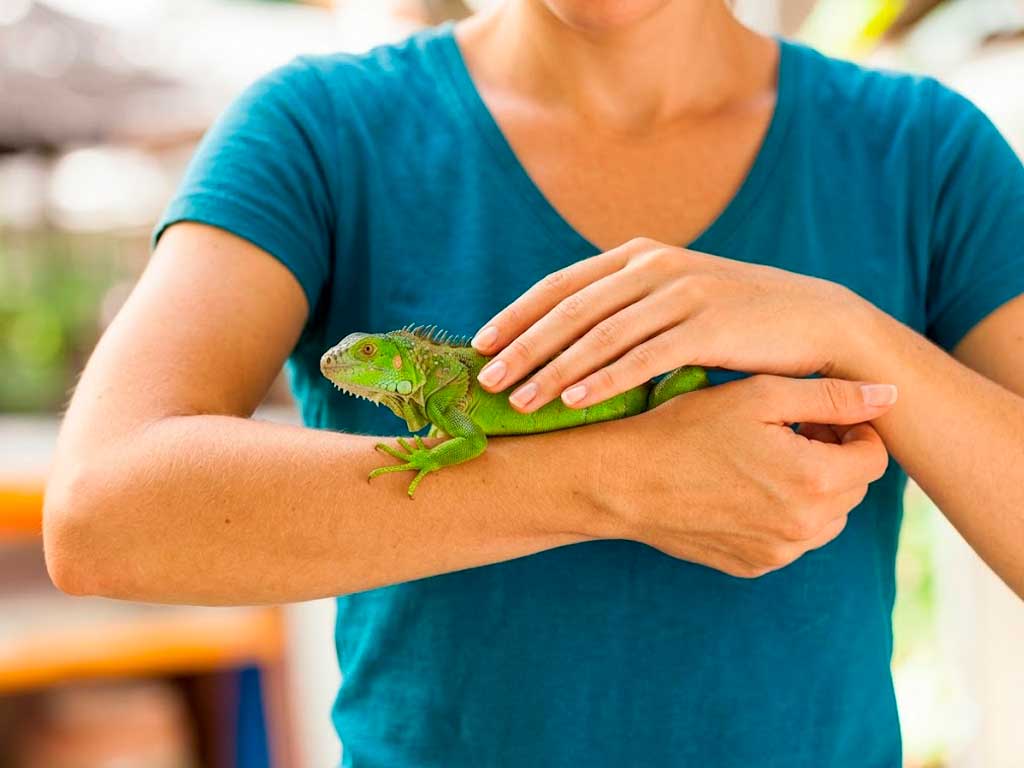
Contrary to what the hatchling at the pet store suggests, green iguana care is really a plan for housing a six-foot, eleven-pound animal, not the eighteen-inch lizard currently sitting in your hands. Cold-stunned iguanas famously fall out of trees during Florida cold snaps, which sounds like a joke until you realize it’s just basic reptile biology — they’re ectotherms, and without enough heat, their whole body simply stops working.
That single fact explains more about green iguana care than almost anything else on this page. I’ve kept everything from bearded dragons to blue tongue skinks, and iguanas are consistently the species people underestimate hardest before bringing one home.
Quick facts: Green iguanas (Iguana iguana) are native to Central America, South America, and the Caribbean, growing up to 6 feet long and weighing 11+ pounds as adults. They live 12-15 years on average, sometimes past 20 with excellent care, and are strict herbivores despite looking like they could eat almost anything.
Choosing an Iguana and What It Costs
Buy from a reputable breeder rather than an impulse pickup, and go in accepting that the hatchling in front of you will be an entirely different animal in two years. Color morphs (blue, red, orange, albino) are all still green iguanas genetically, and none of them change the care requirements below.
Budget for the enclosure, not the animal. A custom-built room-sized setup with proper heating, UVB, and humidity control typically costs far more than the iguana itself, and that’s before ongoing costs for produce and UVB bulb replacements every 6-12 months.
Ask directly about the iguana’s current size and growth rate before buying, since a hatchling that’s already growing slowly can signal early health problems worth addressing before you commit. A healthy young iguana has clear eyes, grips branches firmly, and shows curiosity rather than lethargy.
Enclosure Setup: Think Room, Not Tank
A 20-gallon tank works for a hatchling under 18 inches, but that’s the last small enclosure this species will ever need. An adult iguana requires roughly 12 feet by 8 feet of usable space, which in practice means most keepers build a custom room-sized enclosure or dedicate an actual spare room rather than buying anything off a shelf.
Skip glass entirely — it holds humidity poorly and restricts the airflow a large, active lizard needs. Wood, mesh, or plexiglass construction works much better, and every branch or decoration should be checked for parasites and secured well enough to hold real weight.
Outdoor enclosures are genuinely worth considering in warm climates, since they solve the space problem and give an iguana real sun exposure at the same time. A secure, predator-proof outdoor setup still needs shade, a water source, and a safe way to bring the animal indoors during cold snaps.
Substrate
Paper towels or reptile carpet are the only substrates worth using here. Loose substrate increases disease risk, GI impaction, and mold growth in an enclosure this large, and the payoff in appearance isn’t worth the risk for an animal this size.
Temperature: Why Heat Has to Come From Above
Ambient temperature should run 85-90°F, with a basking area reaching 95-105°F, dropping to 75-80°F at night. Multiple heat bulbs are usually necessary given the enclosure size, and every source should run through a thermostat.
Here’s the detail most care sheets skip: heat needs to come from above the iguana, not the side or below. Iguanas have a light-sensing parietal eye, sometimes called a third eye, on top of the head that helps regulate circadian rhythm and thermoregulation, and overhead heat lines up with how that organ actually works.
UVB and Lighting
Outdoor access is genuinely the gold standard here if your climate allows it, since nothing replicates natural sunlight’s UVB output. Where that’s not possible, a strong UVB setup indoors is non-negotiable, not optional, and skipping it is one of the fastest ways to end up with Metabolic Bone Disease in an animal this size.
Run a consistent 12-hour light and dark cycle, and use red or purple night bulbs if any heat is needed after dark, since those wavelengths don’t disrupt the sleep cycle the way white light does.
Humidity
Aim for 70-80% humidity, maintained through regular misting and the enclosure’s ambient warmth. A commercial misting system is worth the investment at this scale, since manual misting alone rarely keeps up with a room-sized enclosure consistently.
Always include a hygrometer to confirm actual humidity rather than guessing, and keep clean water available at all times, since iguanas naturally live near water sources and drink regularly.
Diet: Strict Herbivore, No Exceptions
Iguanas eat roughly 95% vegetables and 5% fruit, and should never receive meat, dairy, or other animal protein. A 2:1 calcium-to-phosphorus ratio matters here, and a calcium-dusted mixed salad is the standard way to hit it consistently.
Hatchlings eat twice daily, iguanas over 2 feet once daily, and full adults every other day. Pieces should be cut small enough for the iguana to break down easily, since their fused, pleurodont teeth crush food rather than tear it.
Handling and Behavior
Start taming and handling young, since a startled adult iguana is fast, strong, and capable of breaking a person’s arm with a tail whip. That’s not an exaggeration — it’s a documented defense mechanism, and early, consistent handling is what prevents it from becoming a problem later.
Watch for head bobbing (dominance display) and darkening color when basking outdoors, which is normal heat-absorption behavior rather than a health concern. Twitching or a visible loss of balance, on the other hand, is not normal and warrants a vet visit.
Shedding and the Nasal Salt Gland
Baby iguanas shed every 4-6 weeks, while adults shed roughly once a year, usually in pieces rather than all at once. Regular misting during a shed helps loose skin come away cleanly.
Green iguanas also have a nasal salt gland that occasionally “sneezes” out crystallized salt — a genuinely normal process that surprises a lot of new owners the first time they see it. Persistent nasal discharge is different and worth a vet visit, since it can also signal excess dietary salt or an underlying issue.
Health Red Flags and When to See a Vet
Book an initial exam with a reptile-experienced exotic vet as soon as you bring an iguana home, including a fecal test, since captive-raised iguanas frequently carry parasites or infections picked up before arriving. Annual exams with bloodwork after that catch problems a physical exam alone would miss.
Watch for lethargy, abnormal skin discoloration, stuck shed, decreased appetite or fecal output, loose stool, open-mouth breathing, and reduced limb use — all of these warrant a vet visit rather than a wait-and-see approach. Falls, broken bones, overheating, and egg binding are emergencies that need immediate attention.
This guide provides general educational information and isn’t a substitute for veterinary care. If your iguana shows any of the signs above, a reptile-experienced exotic vet is the right call, not a home remedy.
Frequently Asked Questions
Getting Green Iguana Care Right From the Start
Every mistake covered here comes back to the same handful of gaps: underestimating adult size, skipping UVB because a hatchling looks fine without it, or heat sourced from the wrong direction. Fix those and green iguana care turns out to be a genuinely manageable, if large-scale, commitment.
Not as scary as it sounds, once the basics are actually in place.