Seachem Products Guide: What Your Tank Actually Needs
Seachem makes more than 150 individual products, and most aquarium owners only ever touch three or four of them.
In practice, that’s not a problem you don’t need the whole catalog, you need the five or six items that solve the actual issues your tank runs into.
This Seachem products guide breaks the lineup into the categories that matter: water conditioning, fertilization, remineralization, filtration media, and fish medications.
I’ve used Seachem products across freshwater and light saltwater setups for years, and the pattern holds every time.
Owners either buy too much a shelf of bottles they never open or too little, and end up firefighting problems that a $10 product would’ve prevented. This guide is meant to fix that split.
What Seachem Actually Makes
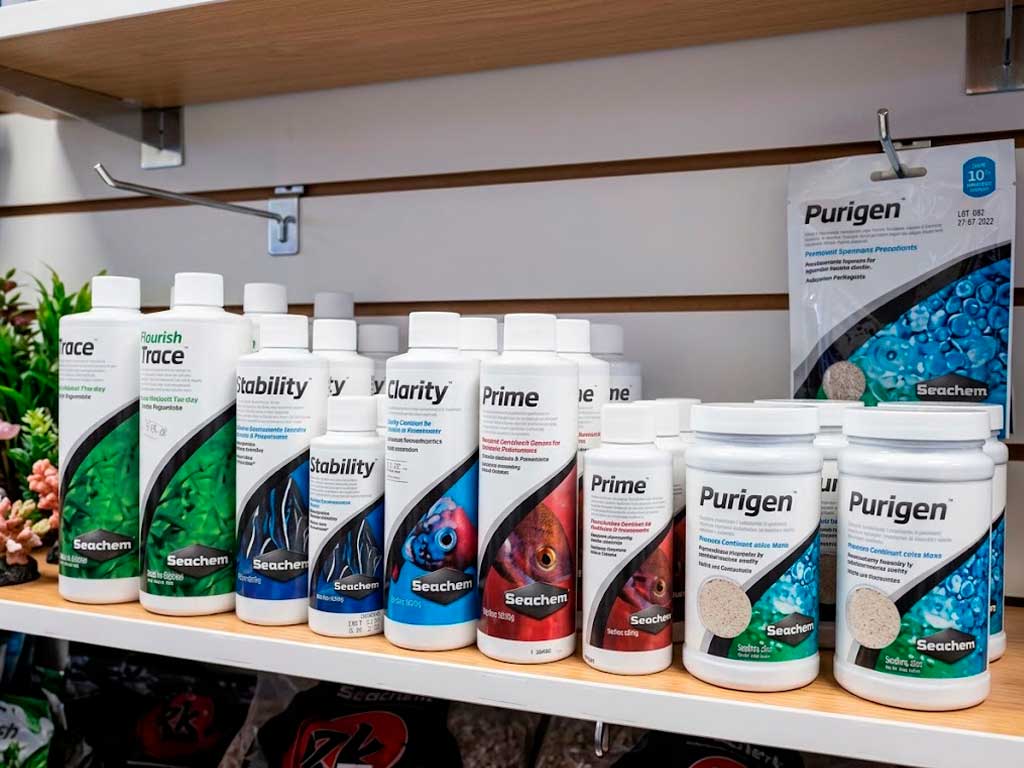
Seachem’s catalog splits cleanly into five functional groups, and knowing which group a product belongs to tells you more than the product name ever will.
Water conditioners and detoxifiers — Seachem Prime is the flagship here, and it’s the one product I’d call close to mandatory. It neutralizes chlorine, chloramine, and ammonia in one dose, dosed at 1 mL per 10 US gallons for tap water treatment.
FROM AMAZON.COM
Shop the Seachem Lineup
Browse the full range of Seachem water conditioners, plant supplements, and treatments to find the right product for your tank.
Buy on Amazon.comHappy Pet Zone may earn a commission when you click through to Amazon.com, at no extra cost to you. As an Amazon Associate, we earn from qualifying purchases.
Fertilizers and plant supplements — the Flourish line covers everything from macro nutrients to trace elements. If you keep live plants, this is where most of your Seachem budget will go.
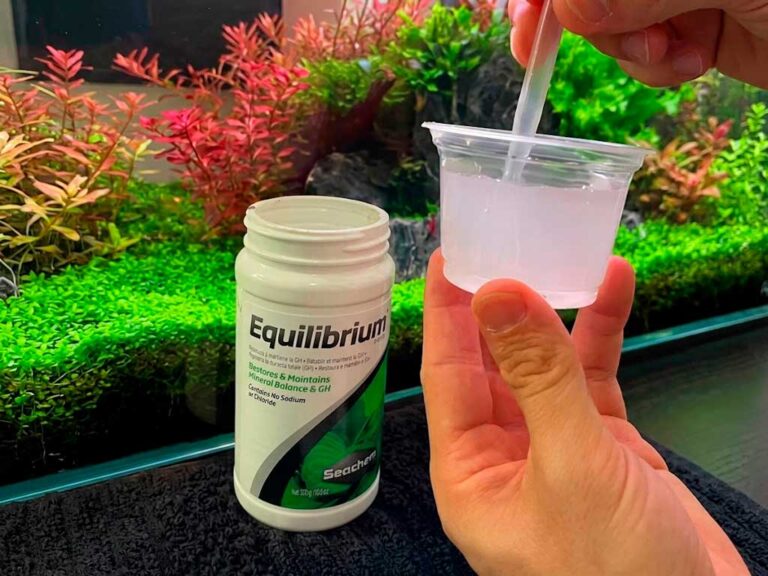
Remineralizers — Equilibrium and Alkaline/Acid Buffer exist to build GH and KH back into soft or RO water. Cichlid keepers and shrimp keepers use these constantly, for opposite reasons.
Filtration media — Matrix, Purigen, and PhosGuard are the three you’ll see referenced most across the hobby, each targeting a different water-quality problem.
Medications — KanaPlex, ParaGuard, and MetroPlex treat specific fish diseases, not general “tank health.” Using the wrong one wastes money and stresses the fish further.
Diagnosing Water Quality Problems
Cloudy water, algae blooms, and lingering detritus all have identifiable causes, and Seachem built a full troubleshooting chart around exactly this. White clouding usually means a bacterial bloom in a young or unstable tank.
Green clouding points to floating algae, almost always tied to excess nitrate, phosphate, or light. Persistent ammonia or nitrite, on the other hand, signals a bacteria colony that hasn’t caught up yet the same issue covered in detail in our guide to a stalled nitrogen cycle.
We cover the full symptom-by-symptom breakdown, plus which Seachem product actually addresses each one, including Seachem Clarity for fast-clearing cloudy tanks, in the dedicated troubleshooting article in this cluster. For general water parameter fundamentals before you get to troubleshooting, our aquarium water guide is the right starting point.
Fish Health and Medications
This is the one category where I want to be direct: medication charts are a starting reference, not a diagnosis. Dropsy, Popeye, fin rot, and Ich all have distinct visual symptoms, and Seachem’s own chart maps six common presentations to specific treatments like KanaPlex and ParaGuard.
But two diseases can look nearly identical in the early stages, and treating the wrong one delays real recovery.
If you’re seeing bloating, protruding eyes, shredded fins, or the classic “salt-grain” look of Ich, it’s worth cross-checking symptoms carefully before dosing anything and for anything progressing fast, an aquatic vet or an experienced local fish store beats a chart every time. The full disease-by-disease breakdown lives in the fish disease article in this cluster.
Fertilizing a Planted Tank
The Flourish line runs on a weekly dosing rhythm, not a single “add and forget” bottle. A full system includes Flourish (macros), Flourish Excel (a liquid carbon source), Trace, Iron, Potassium, Phosphorus, and Nitrogen dosed across a 7-day rotation. Most beginners overcomplicate this immediately.
In practice, a low-maintenance routine using just Flourish, Excel, Potassium, and Iron covers the needs of most low-tech planted tanks without daily dosing fatigue. The full weekly schedule both the complete system and the simplified version, side by side is broken down in the Flourish dosing article in this cluster.
Reading Nutrient Deficiencies
Plants show deficiency through specific, readable symptoms. Chlorosis on older leaves usually points to potassium or magnesium. Chlorosis on new growth, with stems going short and slender, points to iron or manganese instead. Nitrogen shortage shows up as stunted growth across the whole plant, not localized spotting.
There’s also a nitrogen-form detail most beginner guides skip: plants respond differently to ammonium (NH4+) versus nitrate (NO3) nitrogen, and the difference isn’t small testing across six common aquarium plant species showed some species growing over 400% better on one form versus the other.
That’s why Flourish Nitrogen includes both forms rather than just one. The complete deficiency chart, plant-by-plant, is in the nutrient deficiency article in this cluster.
Remineralizing Hard-Water Species
If you’re running RO or very soft tap water, straight water conditioning isn’t enough you also need to rebuild the minerals plants and fish actually use. Equilibrium adds potassium, calcium, and magnesium back into the water column, which matters most for African cichlids and other hard-water species.
If that’s your setup, our African cichlid tank guide covers the broader hardness requirements this pairs with. The full Equilibrium and Alkaline/Acid Buffer dosing breakdown, plus deficiency symptoms for each mineral it restores, has its own article in this cluster.
Filtration Media and Filter Bags
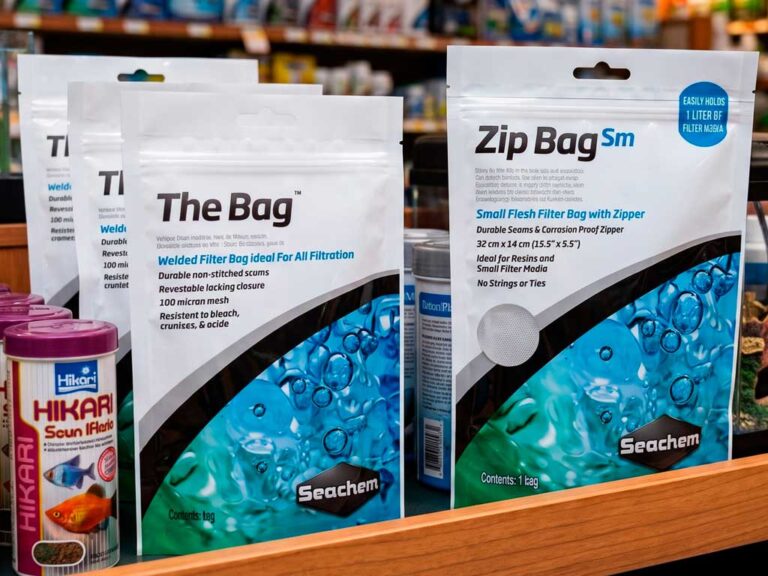
Seachem’s media Matrix, Purigen, PhosGuard needs the right bag to actually work, and this is where a lot of people waste media capacity without realizing it. The standard “Bag” uses a superfine 180-micron mesh and fits any Seachem media loose.
The Zip Bag steps up to a corrosion-proof zipper closure built specifically for PhosGuard, MatrixCarbon, and similar fine media. The Large Zip Bag exists mainly for Matrix and Pond Matrix in bigger canister or sump setups.
This connects directly to your filter choice our hang-on-back filter comparison already covers the Seachem Tidal as one of the top picks, and our full filtration systems guide walks through media stacking in more depth.
The bag-by-bag comparison, with exact dimensions and media compatibility, is covered in the filter bag article in this cluster.
Building Your Own Seachem System
Here’s what actually matters if you’re starting from zero: Prime for every water change, one fertilizer routine if you keep live plants, and nothing else until a specific problem shows up.
Buy Matrix or Purigen when your filter media needs replacing, not before. Add Equilibrium only if your water tests soft. Keep one broad-spectrum medication like ParaGuard on hand, and add disease-specific treatments only once you’ve confirmed what you’re actually dealing with.
The numbers don’t lie: most successful planted and community tanks run on four to six Seachem products total, dosed consistently, rather than a shelf of specialty bottles used once and forgotten. A dedicated guide to Seachem Prime and Amguard, the two most-searched products in the entire line, rounds out this cluster.
This guide is for general aquarium care reference and isn’t a substitute for advice from an aquatic veterinarian, especially for fish showing signs of serious illness.