Why Your Aquarium Isn’t Cycling: The Hidden Reasons Your Ammonia and Nitrites Won’t Drop
Quick Facts
- Average time for a healthy cycle: 4 to 5 weeks
- Bacteria’s ideal temperature range: 68°F to 82°F (20°C to 28°C)
- Three hidden stall causes: cold water, low KH, phosphorus deficiency
- Fastest fix: seed your filter with media from an established tank
- Golden rule: never add fish until ammonia and nitrite both read zero
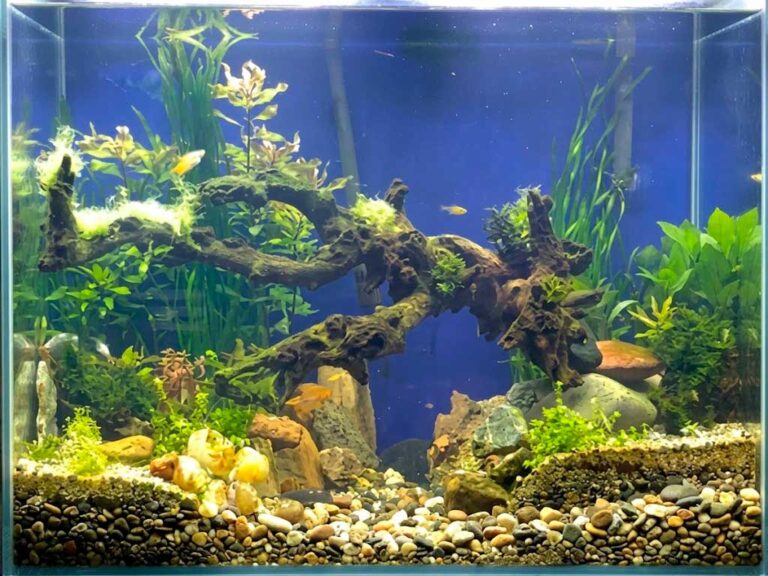
Starting a new aquarium is an exciting journey. You’ve picked the perfect tank, arranged the aquascaping beautifully, and filled it with water. Now, you’re just waiting for the nitrogen cycle to do its magic so you can safely introduce your first fish.
But then, you hit a wall.
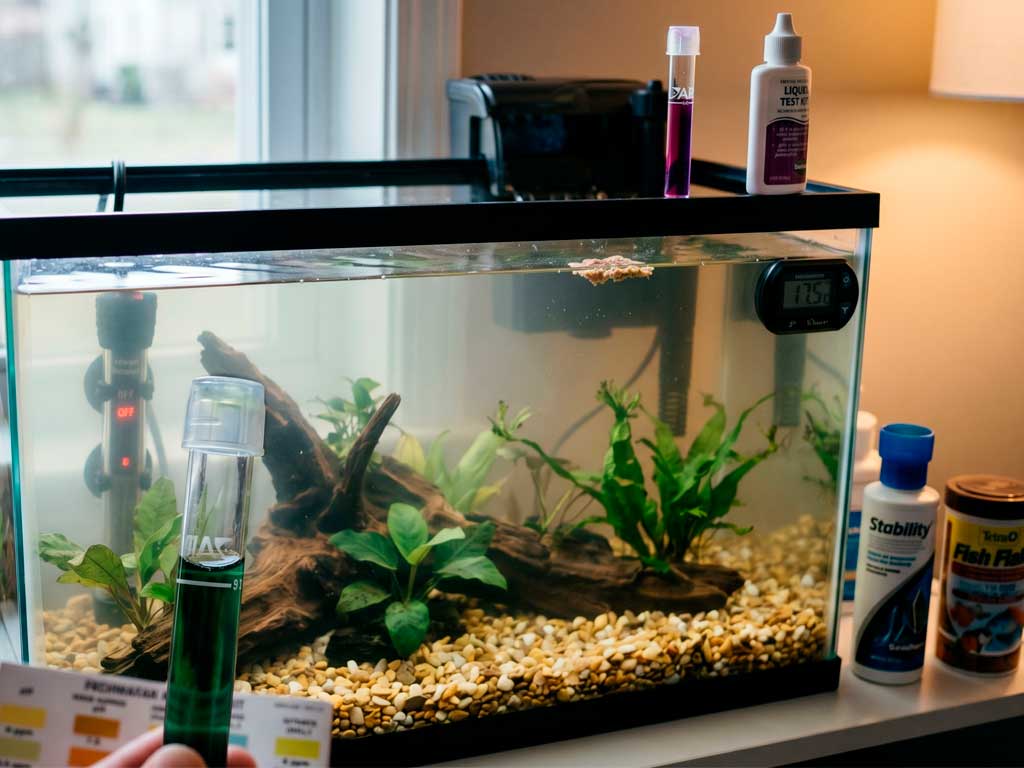
Two weeks go by. Then three. Maybe even four. You pull out your liquid test kit, expecting to see perfect zeroes, but the vials turn that dreaded shade of dark green or deep purple. Your ammonia or nitrite levels are sky-high, and they refuse to budge.
If your aquarium is not cycling and you feel like you are stuck in water-parameter limbo, you are not alone. This is one of the most frustrating bottlenecks in the fishkeeping hobby.
Fortunately, the biological process hasn’t failed you. It has likely just been paused. Let’s break down exactly why your tank’s beneficial bacteria have gone on strike, and how to kickstart them back into action.
The Invisible Engine: A Quick Refresher on the Nitrogen Cycle
Before we look at the fixes, we need to understand what is supposed to happen under the hood. To achieve a safe environment for aquatic life, three distinct groups of bacteria must establish themselves in your filter and substrate:
- Heterotrophic Bacteria: These are the cleanup crew. They take organic waste (like fish food or decaying plants) and break it down into ammonia (NH3/NH4+).
- Nitrosomonas Bacteria: These specialized microbes oxidize the toxic ammonia and turn it into nitrite (NO2-), which is unfortunately still highly toxic to fish.
- Nitrobacter Bacteria: This final group takes the nitrite and converts it into nitrate (NO3-).
Nitrate is significantly less toxic. In a fully cycled tank, you might see nitrates climb up to 40 or 50 ppm before you bring them down via routine water changes or live plant absorption.
A Note on Aquatic Safety: Achieving a balance of 0 ppm ammonia and 0 ppm nitrite is critical before adding any livestock. Exposure to even trace amounts of these compounds can cause severe gill damage, stress, and mortality in fish and invertebrates. Always consult a professional or test your water rigorously before adding life to your tank.
If your test kits are consistently showing high ammonia or nitrites, the chain has broken. Here are the three most common culprits stalling your biological filter.
1. Your Water is Too Cold (The Temperature Trap)
We often think of bacteria as indestructible, but they are highly sensitive to their environment. One of the most common reasons a cycle grinds to a halt in a new setup is a lack of heat.
Beneficial bacteria thrive in warm water. Their ideal metabolic and reproductive sweet spot lies between 20°C and 28°C (68°F to 82°F).
If you are cycling a new tank in a cold room without a heater plugged in, and your water temperature drops down to 18°C (64°F) or lower, nitrification will drastically slow down or stop entirely. The bacteria don’t die, but they essentially go into hibernation.
The Fix: Plug in an adjustable aquarium heater and set it to around 26°C (79°F) during the cycling process. Keeping the water consistently warm will supercharge bacterial reproduction.
2. Zero Carbonate Hardness (The KH Bottleneck)
This is a hidden trap that frequently catches keepers of specialized setups off guard, especially those preparing tanks for sensitive dwarf shrimp like Caridina species. If your first aquarium happens to be a shrimp-safe setup, this is the section to pay closest attention to.
Beneficial bacteria require inorganic carbon to build their cellular structures and carry out their metabolic processes. They extract this essential carbon directly from the Carbonate Hardness (KH) in your water.
If you are using pure RO (Reverse Osmosis) water with zero KH, or if your local tap water is incredibly soft, your bacteria have no fuel source. Without KH, the bacteria cannot multiply, and your cycle will stall out indefinitely.
Furthermore, as nitrification occurs, it naturally consumes KH, which can cause your pH to crash to acidic levels below 6.0, stalling the cycle even further.
The Fix: If you are cycling a tank that eventually needs to have zero KH, give the bacteria a foothold with a small carbonate buffer first, then transition to your target parameters once the tank is fully cycled. A product like Seachem Reef Carbonate works well for this, since a few drops raise KH gently without swinging your pH too fast. Alternatively, perform small water changes with tap water to replenish the inorganic carbon naturally.

FROM AMAZON.COM
Seachem Reef Carbonate 500 mL / 17 fl. oz.
Gently raises carbonate hardness (KH) without a sudden pH swing, giving stalled bacteria the inorganic carbon they need to establish.
Buy on Amazon.comAs an Amazon Associate, Happy Pet Zone earns from qualifying purchases at no extra cost to you.
This guide contains an affiliate link. As an Amazon Associate, Happy Pet Zone earns from qualifying purchases at no extra cost to you.
3. The Forgotten Nutrient: Phosphorus Deficiencies
When we talk about the nitrogen cycle, we naturally focus on nitrogen. But just like any living organism, beneficial bacteria need a balanced diet to survive and multiply. Specifically, they need phosphorus.
Bacteria utilize phosphorus to create Adenosine Triphosphate (ATP), which is the fundamental energy currency of their cells. Without a trace of phosphorus in the water, they lack the energy required to process ammonia and nitrite effectively.
Modern bottled bacteria products are fantastic and highly reliable, but they cannot build an ecosystem out of thin air.
The Fix: Go old-school. Even if you are using high-quality commercial bacterial starters, add a tiny pinch of fish flake food or a few drops of pure aquarium fertilizer to the tank. As the food decays, it releases the essential urea and phosphorus your bacteria desperately need to generate energy and thrive.
Quick Reference: What’s Stalling Your Cycle
| Cause | Symptom | Fix |
|---|---|---|
| Water too cold | Bacteria growth slows or stops below 64°F | Add a heater, target 79°F |
| Zero carbonate hardness | pH crashes below 6.0, cycle stalls indefinitely | Add a mild carbonate buffer, then transition once cycled |
| Phosphorus deficiency | Bottled bacteria added but no progress | Add a pinch of fish food to feed the colony |
The Ultimate Cycling Virtue: Patience
In a world of instant gratification, the aquarium market has adapted by offering products that promise a fully cycled tank in 7 to 10 days. While these starters accelerate the process, nature rarely moves on a strict corporate timeline.
FROM AMAZON.COM
Tetra SafeStart Plus for New Freshwater Aquariums, 8.45 oz
Seeds your filter with live nitrifying bacteria to jumpstart the nitrogen cycle in a new freshwater tank.
Buy on Amazon.comAs an Amazon Associate, Happy Pet Zone earns from qualifying purchases at no extra cost to you.
A robust, stable nitrogen cycle typically takes four to five weeks to truly mature. If your parameters are stuck, check your temperature, verify your KH levels, ensure there is a source of phosphorus, and above all, give it time.
Your best ally in this hobby will always be patience. If you’re setting up your very first tank, our guide to starting your first aquarium covers the full setup process from the ground up.
If your ammonia and nitrites are still stuck after checking all three factors, don’t panic. Go back through temperature, KH, and phosphorus one at a time, since it’s almost always one of these three.
For a deeper look at keeping your water balanced long after your tank finishes cycling, our guide to mastering aquarium water chemistry is the natural next read.
Filtration capacity plays a large role here too. Our complete filtration guide explains how media surface area drives the nitrogen cycle.