Tetra Water Conditioners: How to Treat Aquarium Water the Right Way
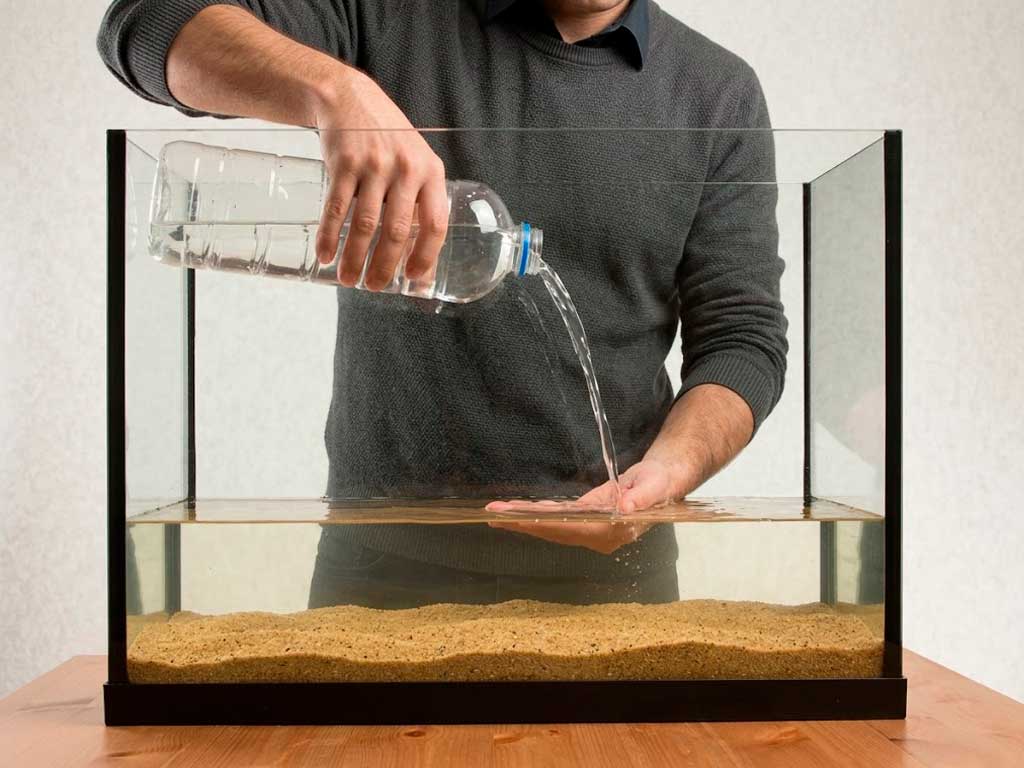
An aquarium is a closed system. Nothing about the water gets better on its own, chlorine doesn’t evaporate fast enough, ammonia doesn’t disappear, and minerals don’t balance themselves. Every bit of water quality in that tank exists because someone put it there.
That’s what water conditioning is: the ongoing work of making tap water, or saltwater mix, safe and stable for whatever lives in it. This guide covers the general logic first, freshwater and saltwater both, and then walks through where Tetra products fit into that routine and which one solves which problem.
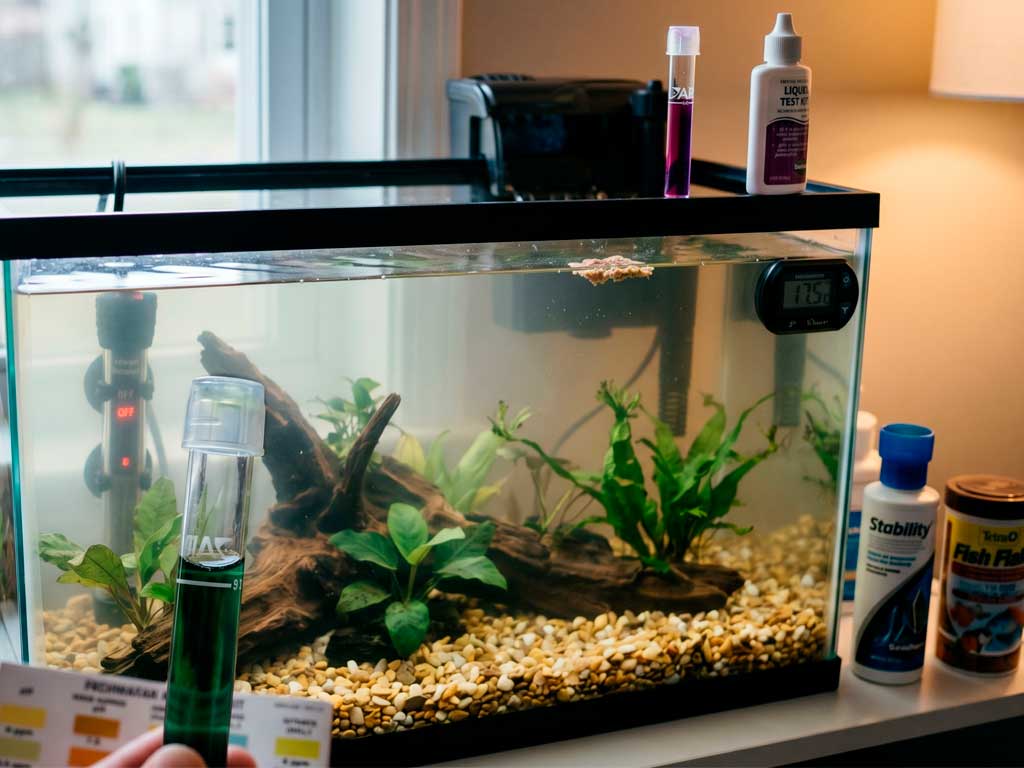
If you want the full picture of aquarium water chemistry beyond conditioning specifically, our complete aquarium water guide and water chemistry guide go deeper into testing and long-term balance. This piece focuses specifically on conditioning products and how to use them correctly. If you want to know how to actually verify your water is safe after conditioning it, see our Tetra EasyStrips testing guide.
What “Conditioning” Actually Means: Three Jobs, Not One
People treat “water conditioner” as one product category, but it’s really three separate jobs that happen to get bundled under the same shelf label.
Dechlorination and detoxification neutralizes chlorine, chloramine, and heavy metals in tap water. Municipal water is treated to be safe for humans, not fish, and those same chemicals that make it safe to drink are toxic to gills. This step happens every single time you add new water, no exceptions.
Bacterial seeding establishes the colony of nitrifying bacteria that runs the nitrogen cycle, converting ammonia into nitrite and then into far less harmful nitrate. A brand-new tank has none of this bacteria yet, which is why fish added too early get hit with what’s usually called new tank syndrome.
Parameter balancing covers pH, general hardness (GH), and carbonate hardness (KH), the numbers that determine whether water stays chemically stable or swings around every time you do a water change. This is the job most beginners skip, and it’s usually the reason a tank that tests fine on ammonia and nitrite still stresses its fish.
Freshwater vs. Saltwater: Where the Approach Splits
The three jobs above apply to both freshwater and saltwater tanks, but what you’re aiming for is different enough that the same bottle of conditioner doesn’t solve the whole problem in either setup.
Freshwater tanks care most about dechlorination and a stable nitrogen cycle. Hardness matters, but mostly for specific species, African cichlids want harder, more alkaline water, while soft-water fish like many tetras and discus want the opposite. Saltwater tanks add a layer freshwater doesn’t have: you’re building the water from scratch with a marine salt mix rather than just treating what comes out of the tap, and total dissolved solids, specific gravity, calcium, and alkalinity all need active management, not just a one-time dose.
| Parameter | Freshwater Community | Marine Fish-Only | Marine Reef |
|---|---|---|---|
| pH | 6.5 to 7.5 | 7.8 to 8.4 | 8.0 to 8.4 |
| Ammonia / Nitrite | 0 ppm | 0 ppm | 0 ppm |
| Nitrate | under 20 ppm | under 5 ppm | under 5 ppm |
| Specific gravity | n/a | 1.023 to 1.025 | 1.023 to 1.026 |
| Temperature | 22 to 27°C | 23 to 25°C | 25 to 27°C |
If you’re just getting a saltwater tank running, our saltwater aquarium setup guide and saltwater maintenance checklist cover the salt-mixing and top-off routine in more detail than fits here.
The Tetra Water Care Lineup, Compared
Tetra’s water care line covers all three jobs above, split across five products that overlap more than the packaging suggests. Here’s the breakdown before the individual products.
| Product | Job | Best for |
|---|---|---|
| AquaSafe | Dechlorination | Routine tap water treatment |
| AquaSafe Plus | Dechlorination + stress coat | New fish, handling, transport |
| SafeStart | Bacterial seeding | Cycling a brand-new tank |
| SafeStart Plus | Bacterial seeding, concentrated | Faster cycling, larger tanks |
| EasyBalance | Parameter stabilization | Reducing water change frequency |
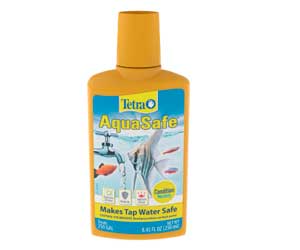
Tetra AquaSafe is the baseline dechlorinator. One dose neutralizes chlorine and chloramine and binds heavy metals, and it’s what most people should be reaching for every time they add tap water to the tank, freshwater or marine make-up water alike.
FROM AMAZON.COM
Tetra AquaSafe
The baseline dechlorinator for routine tap water treatment, freshwater or marine make-up water.
Buy on Amazon.comHappy Pet Zone may earn a commission when you click through to Amazon.com, at no extra cost to you. As an Amazon Associate, we earn from qualifying purchases.
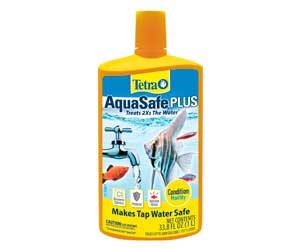
Tetra AquaSafe Plus does the same dechlorination but adds a biopolymer that’s marketed as a stress coat, meant to support the fish’s natural slime layer during handling, transport, or right after introducing new stock. It’s the version I’d default to whenever fish are actively being moved or stressed, not just during a routine top-off.
FROM AMAZON.COM
Tetra AquaSafe Plus
Dechlorinates and adds a stress-coat biopolymer, best used around handling, transport, or new fish.
Buy on Amazon.comHappy Pet Zone may earn a commission when you click through to Amazon.com, at no extra cost to you. As an Amazon Associate, we earn from qualifying purchases.
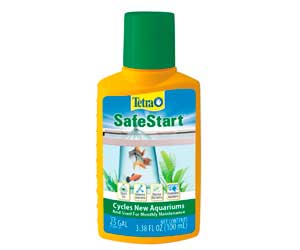
Tetra SafeStart handles the second job: seeding live nitrifying bacteria so a new tank doesn’t have to wait out a full four-to-six-week cycle before fish go in safely. It’s most useful exactly once, when a tank is brand new, though plenty of people also use it after a filter change wipes out most of the established colony.
FROM AMAZON.COM
Tetra SafeStart
Live nitrifying bacteria that lets you skip most of the wait on a brand-new tank’s cycle.
Buy on Amazon.comHappy Pet Zone may earn a commission when you click through to Amazon.com, at no extra cost to you. As an Amazon Associate, we earn from qualifying purchases.
Tetra SafeStart Plus is the concentrated version, formulated to cycle larger tanks or work faster than the standard bottle. If you’re setting up anything over roughly 30 gallons, the Plus version gets you to a safe ammonia and nitrite reading sooner.
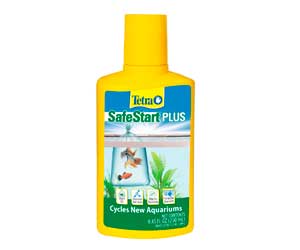
FROM AMAZON.COM
Tetra SafeStart Plus
Concentrated bacterial seeding built for larger tanks or a faster route to a safe cycle.
Buy on Amazon.comHappy Pet Zone may earn a commission when you click through to Amazon.com, at no extra cost to you. As an Amazon Associate, we earn from qualifying purchases.
Tetra EasyBalance is the odd one out, it’s not for a single event like dechlorinating or cycling, but for ongoing parameter stability. Dosed regularly, it’s designed to slow the drift in pH and hardness between water changes, which in practice means you can space out full changes a bit further without the tank swinging out of range.
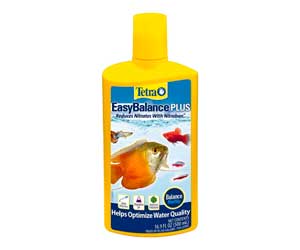
FROM AMAZON.COM
Tetra EasyBalance
Ongoing pH and hardness stabilizer that reduces how often a tank needs a full water change.
Buy on Amazon.comHappy Pet Zone may earn a commission when you click through to Amazon.com, at no extra cost to you. As an Amazon Associate, we earn from qualifying purchases.
Building a Routine: New Tank vs. Established Tank
A brand-new tank needs all three jobs at once: dechlorinate the fill water, seed bacteria before or at the same time as adding fish, and hold off on fish entirely until ammonia and nitrite both read zero. That’s the order that avoids new tank syndrome, and it’s worth checking our guide to a tank that won’t cycle if ammonia or nitrite is stuck instead of dropping.
An established, cycled tank only needs dechlorination at every water change, full stop. Bacterial seeding isn’t necessary once the colony is mature, and parameter balancing becomes optional maintenance rather than a rescue step, useful if your water changes are infrequent or your tap water swings in hardness season to season.
Dechlorinate every time, seed bacteria once, and balance parameters as an ongoing habit rather than a fire drill. That order holds whether you’re running a ten-gallon community tank or a reef setup, only the specific products and numbers change. For the rest of the Tetra lineup beyond water care, see the full Tetra products guide.