Hornwort Care Guide: The Complete Aquarium & Pond Guide
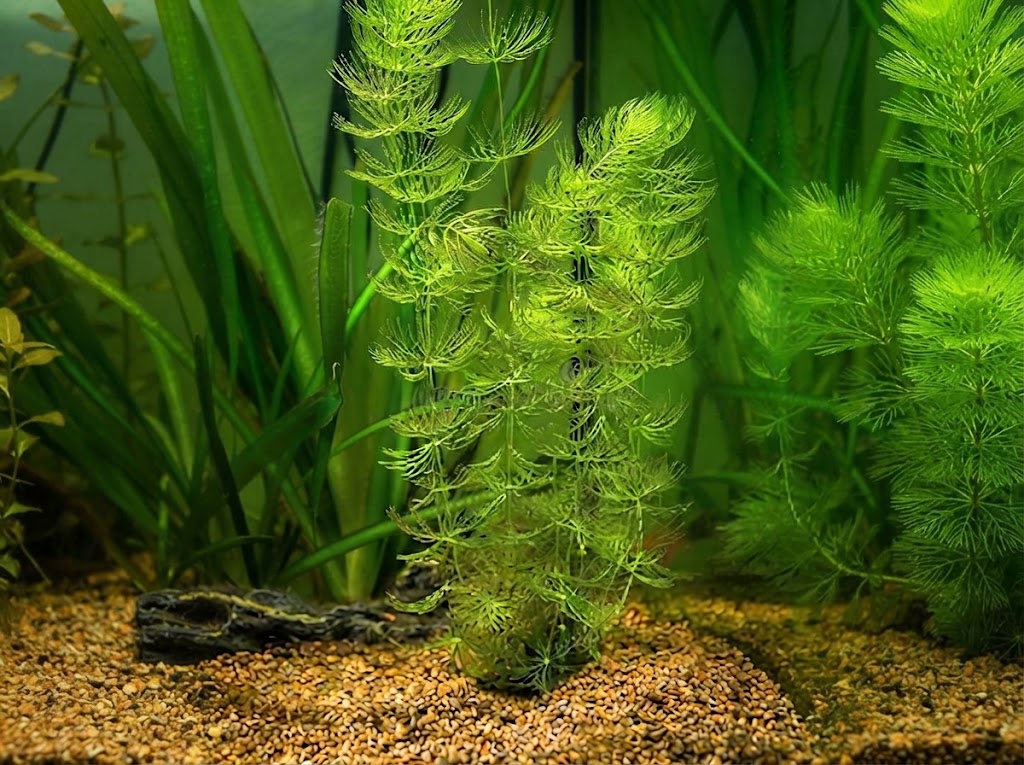
Hornwort can turn from a few stems into a dense mass of green growth surprisingly quickly.
That fast growth is exactly why Ceratophyllum demersum is useful in aquariums, but it is also why beginners sometimes end up fighting it instead of enjoying it.
Hornwort is an unusual aquarium plant. It has no true roots, can grow floating or weighted in place, absorbs nutrients directly from the water, tolerates a wide range of conditions, and provides dense cover for fish and fry. The trade-off is rapid growth, shading, and needle drop when conditions change.
Hornwort Quick Facts
| Scientific name | Ceratophyllum demersum |
| Common names | Hornwort, coontail, rigid hornwort |
| Growth habit | Free-floating or anchored underwater |
| Roots | None |
| Difficulty | Beginner |
| Growth rate | Fast |
| Light | Low to moderate; stronger light increases growth |
| CO₂ | Not required |
| Temperature | About 59–86°F (15–30°C) |
| pH | About 6.0–7.5, with broader tolerance |
| Substrate | Not required |
| Fertilization | Water-column nutrients |
| Propagation | Stem cuttings and side shoots |
What Is Hornwort?
Hornwort is a submerged aquatic plant with long stems covered in whorls of stiff, finely divided leaves. The common name comes from the plant’s distinctive appearance, while coontail describes the bushy shape of its foliage.
The most important detail is underneath the foliage: Hornwort has no true roots. It absorbs water and dissolved nutrients through its stems and leaves, so it can live freely in the water column without an established root system.
Does Hornwort Have Roots?
No. Hornwort does not have a conventional root system. You can bury the lower part of a stem, but that does not turn it into a rooted aquarium plant. The buried section may deteriorate while the upper growth continues.
That is why Hornwort can simply float. If you want it in a particular location, use an aquarium-safe plant weight, clip, or similar method to hold it in place rather than forcing the stems deep into gravel or sand.
Should Hornwort Float or Be Planted?
For most aquariums, floating is the easiest option. Floating Hornwort receives strong access to light near the surface and can spread horizontally, creating excellent cover for fry and small fish.
Weighted Hornwort is useful when you want a background screen. Keep the stems loosely secured and remember that this is a fast-growing plant. A few stems near the surface can become a thick mass that blocks light from everything below it.
Hornwort Lighting Requirements
Hornwort tolerates relatively low light, which is one reason it remains popular in beginner aquariums. It does not need an expensive high-output fixture simply to survive.
For a normal planted aquarium, start with a consistent lighting schedule of around 7–9 hours per day. Stronger light can produce faster growth, especially when the plant is floating directly beneath the fixture. If algae increases, look at the aquarium as a whole rather than automatically adding more light.
For more detail, see our Aquarium Lighting Guide.
Does Hornwort Need CO₂?
No, Hornwort does not require injected CO₂. It can grow successfully in low-tech aquariums without a pressurized carbon system. Floating specimens also have easy access to the air-water interface.
Adding CO₂ can increase growth, but that is not always an advantage with Hornwort. It already grows quickly, so additional carbon may simply create more plant material that needs trimming.
How to Fertilize Hornwort
Hornwort feeds primarily from the water column, so liquid fertilizer is the sensible approach. The exact product depends on what is already available in your aquarium.
A tank with fish may already receive substantial nitrogen and phosphorus through feeding and waste. A lightly stocked planted aquarium can be much leaner, while Hornwort can consume available nutrients quickly.
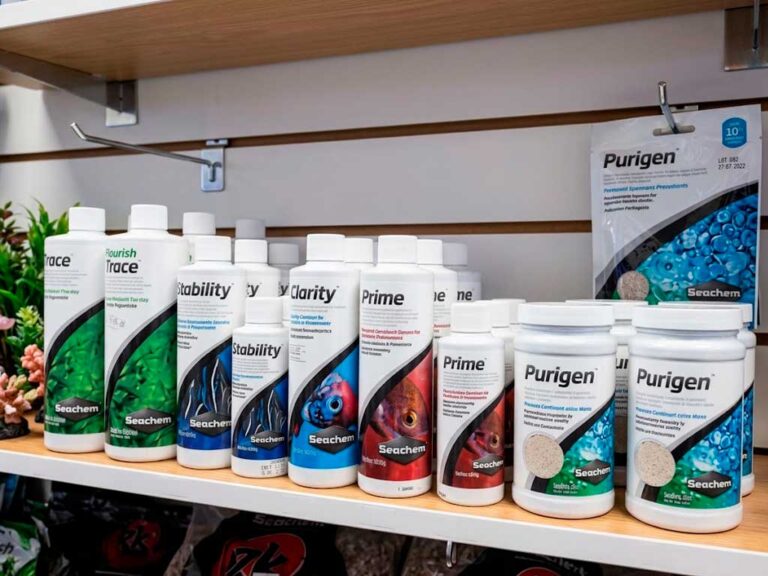
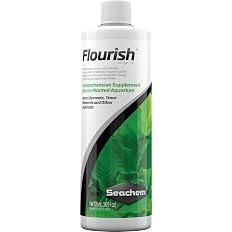
Seachem Flourish Comprehensive is a reasonable option when additional micronutrients are needed. It supplies nutrients such as calcium, magnesium and iron without being a nitrogen or phosphorus supplement.
FROM AMAZON.COM
Seachem Flourish Freshwater Plant Supplement
A comprehensive plant supplement with minerals, trace elements, and vitamins to support healthy growth in freshwater planted tanks.
Buy on Amazon.comHappy Pet Zone may earn a commission when you click through to Amazon.com, at no extra cost to you. As an Amazon Associate, we earn from qualifying purchases.
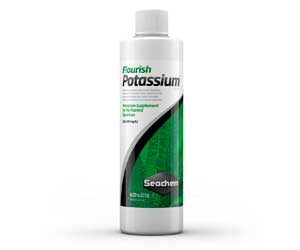
Potassium can also become relevant when older growth develops characteristic deterioration. Seachem Flourish Potassium is formulated as a concentrated potassium supplement.
FROM AMAZON.COM
Seachem Flourish Potassium 500 mL / 17 fl. oz.
Concentrated potassium supplement for planted freshwater tanks. Supports strong stem growth and helps prevent deficiency without affecting pH.
Buy on Amazon.comHappy Pet Zone may earn a commission when you click through to Amazon.com, at no extra cost to you. As an Amazon Associate, we earn from qualifying purchases.
Avoid treating fertilizer as a generic solution. If the aquarium already has adequate nutrients, adding more will not necessarily improve the plant.
Hornwort Water Parameters
Hornwort is adaptable compared with many popular aquarium plants. A practical target is about 59–86°F (15–30°C), a pH around 6.0–7.5, and soft to moderately hard water.
The exact values matter less than stability. Hornwort can tolerate conditions outside these ranges, but sudden changes in temperature or water chemistry can trigger needle drop.
Our Aquarium Water Guide covers the broader water-quality side of planted tank care.
Why Is My Hornwort Dropping Needles?
Needle drop is probably the most important Hornwort problem to understand. The plant can suddenly shed large quantities of its fine leaves, leaving long, almost bare stems.
- Recent movement is a common trigger. A new temperature, water chemistry profile, light level, or handling routine can cause shedding. Give the plant time before discarding it.
- Sudden water changes can also stress Hornwort. If shedding repeatedly follows large water changes, consider smaller changes performed more consistently.
- Nutrient shortage matters in heavily planted or lightly stocked aquariums. Fast growth can consume available nutrients quickly, especially when the rest of the tank contains many plants.
- Physical damage and excessive shade are other possibilities. Rough handling can damage the foliage, while another floating plant can block light from lower Hornwort growth.
How to Stop Hornwort From Shedding
Start with the simplest questions. Was the plant recently moved? Did the aquarium undergo a major water change? Is the tank heavily planted but lightly stocked? Is another plant blocking the light?
Avoid making several major changes simultaneously. A stressed plant does not benefit from constantly changing lighting, fertilizer, CO₂, water chemistry, and placement all at once.
If the stems remain green and firm, there is a reasonable chance the plant can recover. Remove dead material and give the healthy sections stable conditions.
How Fast Does Hornwort Grow?
Fast. That is the defining characteristic of this plant. Under suitable conditions, Hornwort can add several inches of visible growth over a relatively short period, and a small bunch can become a substantial mass within weeks.
Growth speed depends on lighting, temperature, nutrient availability, carbon availability, and competition from other plants. This makes Hornwort useful when you need rapid plant growth, but demanding when you want a tightly controlled aquascape.
How to Trim Hornwort
The simplest strategy is to remove whole stems or sections rather than repeatedly cutting every stem at the same height. Healthy cuttings can continue growing, so every trimming session can create more Hornwort.
For a controlled aquascape, remove excess pieces completely. Pay particular attention to the surface because a thick floating raft can shade plants below it and restrict light reaching the substrate.
Inspect an established colony at least weekly. Extremely fast growth may require more frequent thinning.
How to Propagate Hornwort
Propagation is extremely easy. Take a healthy stem and cut it. The remaining piece can continue growing while the cutting can be floated or secured elsewhere in the aquarium.
Hornwort can also produce side growth as it develops. The challenge is usually controlling propagation rather than encouraging it. If you already have enough, remove trimmings from the aquarium instead of allowing them to drift into another corner.
Hornwort in a Betta Tank
Hornwort can work well in a Betta aquarium. Dense growth creates cover, and the plant tolerates relatively gentle circulation. A floating bunch can provide a sheltered area near the surface while adding structure.
Keep the surface open enough for the Betta to reach it easily. A smaller, regularly trimmed portion is usually more useful than allowing Hornwort to cover the entire tank.
Is Hornwort Good for Shrimp?
Yes. Hornwort can provide valuable structure for shrimp, particularly when dense foliage collects biofilm and microorganisms. Young shrimp can also use the fine foliage as cover.
When you remove a large mass, inspect it before throwing it away. You may be removing shrimp along with the plant. For a shrimp aquarium, trim gradually rather than pulling out the entire colony at once.
Hornwort for Goldfish
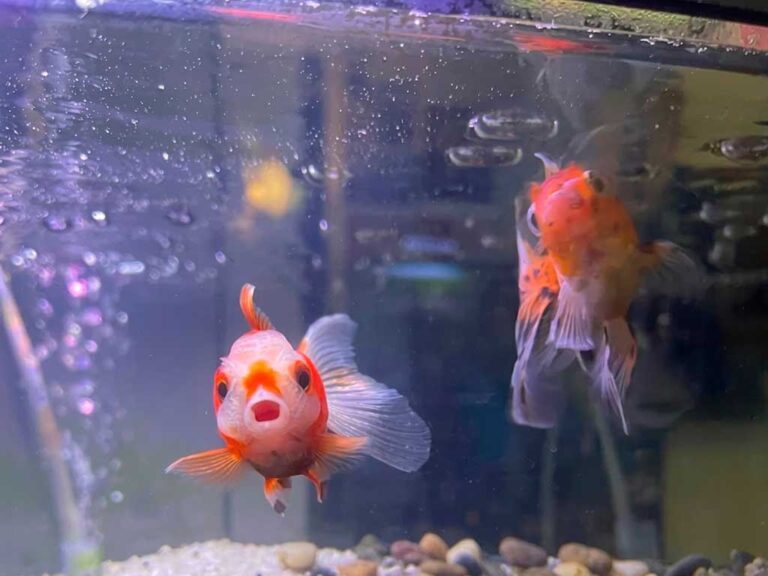
Hornwort is worth considering for goldfish aquariums because it grows quickly enough to tolerate some grazing. Goldfish may eat it, however, and particularly hungry fish can consume it faster than it recovers.
If your goldfish repeatedly shred every plant you add, treat Hornwort as a renewable crop rather than expecting a permanent decorative clump.
Hornwort for Ponds
Hornwort is also used as a submerged oxygenating plant in ponds. The Natural History Museum lists Ceratophyllum demersum among oxygenating plants for small wildlife ponds. The plant can provide underwater habitat while taking up dissolved nutrients.
Remember that aquatic plants produce oxygen through photosynthesis during the day, while respiration continues when photosynthesis stops. Hornwort can support a pond ecosystem, but it should not be treated as a replacement for appropriate aeration in a heavily stocked pond.
Does Hornwort Control Algae?
Hornwort can help reduce algae pressure because a fast-growing plant competes with algae for available nutrients. That competition can make conditions less favorable for some algae problems.
It should not be treated as an algae cure. Excessive light, overfeeding, poor maintenance, and unstable water conditions still need to be addressed. If you are specifically dealing with filamentous algae, see our guide to removing filamentous algae.
Hornwort and Other Aquarium Plants
Hornwort can coexist with many aquarium plants, but its growth rate changes the equation. Java Fern, Java Moss, and Anubias are useful companions because they tolerate lower light and can remain healthy beneath some surface shade.
High-light carpeting plants are more difficult. If Hornwort covers the surface, the plants below receive less light. Thin the floating mass before changing fertilizer or water chemistry.
Our Java Fern Care Guide and Java Moss Care Guide cover two useful lower-light companions.
Hornwort vs. Coontail
In aquarium stores, Hornwort and Coontail commonly refer to the same species, Ceratophyllum demersum. The name Coontail describes the bushy appearance of the plant.
Rigid Hornwort is another common name used for the same species. When shopping, check the scientific name whenever possible because common names are not always consistent between sellers.
Hornwort vs. Similar Aquarium Plants
- Hornwort vs. Anacharis: Anacharis has broader leaves arranged around the stem and can develop roots. Hornwort has stiff, forked needle-like foliage and no true roots.
- Hornwort vs. Cabomba: Cabomba has delicate fan-shaped leaves, while Hornwort has bristly leaf whorls.
- Hornwort vs. Guppy Grass: Both are fast-growing and can float, but Guppy Grass has softer, finer foliage and a different growth habit.
- Hornwort vs. Myriophyllum: Water milfoils generally have softer, feather-like foliage and can root more readily.
Common Hornwort Problems
| Leaves dropping | Check recent movement, water changes, nutrients, shading, and physical damage. |
| Brown lower stems | Remove damaged growth and check whether the stem is buried or compressed. |
| Growing too fast | Thin the plant regularly rather than weakening otherwise healthy growth. |
| Shading the aquarium | Reduce the floating mass before it blocks light from lower plants. |
| Not growing | Check light, temperature, nutrients, and competition from other plants. |
| Covered in algae | Review lighting, nutrients, feeding, and maintenance rather than treating the plant alone. |
| Disappearing | Check whether goldfish or other herbivorous fish are eating it. |
| Floating away | Use an aquarium-safe clip, weight, or floating corral. |
A Simple Hornwort Maintenance Routine
Once a week, check the newest growth, inspect older stems for excessive needle loss, and look at how much of the surface is covered. Also inspect the filter intake for loose Hornwort needles.
Remove excess growth before it becomes a dense mass. You do not need to make Hornwort complicated. Your main job is controlling where its rapid growth goes.
Frequently Asked Questions
Hornwort makes the most sense when you want fast growth, dense underwater cover, and strong water-column nutrient uptake without building a specialized planted substrate.
Start with a modest portion. Give it roughly 7–9 hours of consistent light, maintain stable water conditions, and provide enough water-column nutrition to support active growth. Then control the plant weekly before it shades everything underneath it.
If you want Hornwort floating, let it float. If you want it in the background, secure it without burying the stems. And if it suddenly drops its needles after being moved, do not throw it away immediately. Green, firm stems can recover.