Podenco Maneto: Spain’s Rare Low-Slung Rabbit Hunter
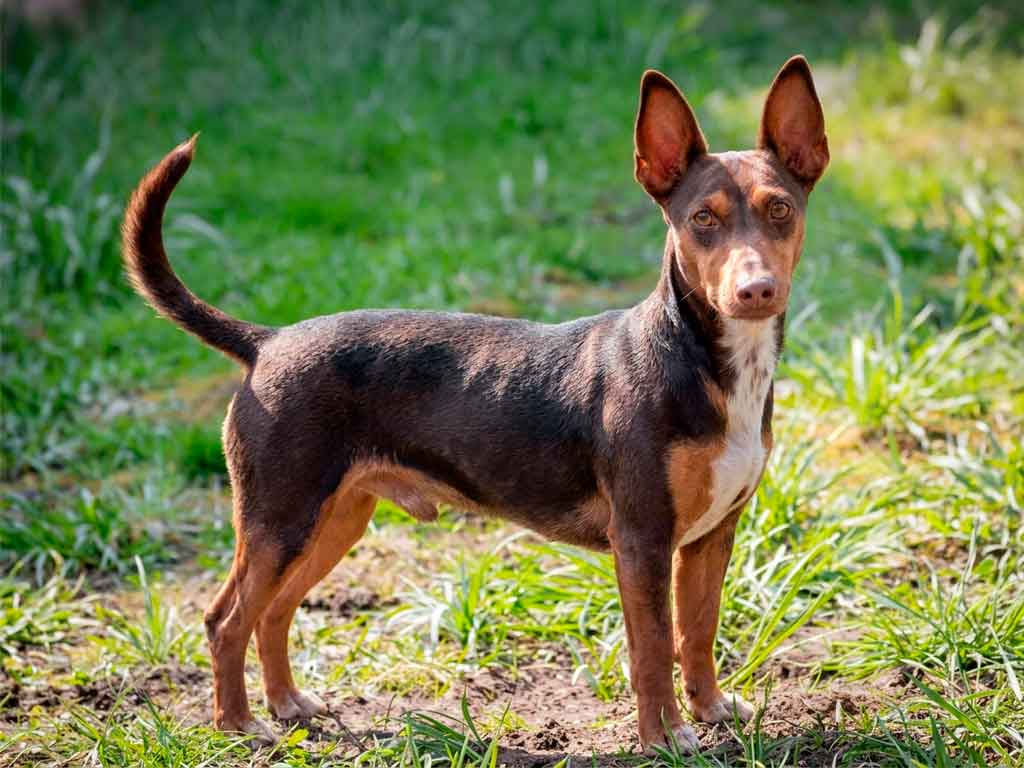
The Podenco Maneto is a small Andalusian hunting dog with the body of a dachshund and the ears of a podenco, bred to work rabbits in thick scrub and narrow ground where taller dogs cannot follow. It is recognized in Spain and unknown to most of the world.
The breed suits owners who want an affectionate companion with genuine working drive and who will manage that drive with training. It is a poor match for a household that wants a dog to stay put once it catches a scent.
The sections below cover the breed’s origin, recognition, temperament, exercise, training, grooming and health.
What Is a Podenco Maneto Bred For?
The breed comes from Andalusia in southern Spain, with Cádiz and Málaga treated as its cradle. It is generally understood to descend from the medium Podenco Andaluz, with a mutation that shortens the legs fixed over generations through controlled breeding.
That short-legged build is the point. A Maneto works close to the ground and close to the hunter, pushing through dense brush, brambles and narrow ravines that stop a bigger dog. Hunters often run them alongside taller podencos for exactly that reason.
The working style is patient rather than fast. A Maneto is not quick, and does not need to be. It works quietly and methodically, stops and barks when it finds the animal, and lets the rest of the pack move in.
That bark is a signal, not noise. In a working pack, the dog that finds the rabbit is the one that tells the others where it is.
Podenco Maneto Quick Facts
The table below collects the breed’s practical details. Figures vary between sources, which is normal for a breed without an international standard.
| Detail | Podenco Maneto |
|---|---|
| Origin | Andalusia, southern Spain (Cádiz and Málaga) |
| Recognition | Recognized in Spain by the RSCE since 2004; not recognized by the FCI |
| Height | Around 35 cm (about 14 inches) at the shoulder |
| Weight | 8.5 to 11.5 kg (roughly 19 to 25 pounds) |
| Coat | Short, in shades of red and cinnamon, with or without white |
| Build | Long body, short muscular legs, large upright ears |
| Lifespan | Commonly reported as 12 to 14 years |
| Best suited to | Owners with dog experience and a steady daily routine |
Is the Podenco Maneto an Official Breed?
The answer is more interesting than a simple yes or no.
The breed is recognized in its home country by the Real Sociedad Canina de España, which gave it indigenous breed status in 2004. The Fédération Cynologique Internationale does not recognize it, which is why you will not find it in most international breed lists.
Claims about the breed’s age should be treated with caution. There is no scientific evidence establishing how old the Podenco Maneto is, and the supporting record is visual rather than documentary: dogs resembling Manetos appear in nineteenth-century photographs and paintings.
What is documented is the working use. The short legs, the ear shape and the brush-hunting style are consistent across Spanish sources, and the breed has been used for rabbit hunting and, in some areas, for birds and waterfowl.
So the honest description is this: a distinct type with a real working history and a formal Spanish recognition, not an ancient breed with a documented lineage.
What Is the Podenco Maneto’s Temperament Like?
Spanish sources describe the breed as a sweet family pet that adapts easily to family life. It wants to be with its person, seeks affection, and works willingly for a food reward.
The breed is affectionate within its own home and reserved with strangers. That reserve tends not to last, because curiosity usually wins, but the first reaction to a visitor is caution rather than enthusiasm.
There is more character in these dogs than their size suggests. Owners describe an independent, intelligent dog with a strong opinion, and one that tends to treat itself as above the other dogs in the household. Socializing a Maneto with many different breeds is the practical response to that.
That independence is not aggression. It is confidence in a small body, and it explains why the breed is often described as having a big personality on little legs.
Expect voice around prey rather than constant barking. A Maneto that finds something worth announcing will say so, which is the working behavior the breed was selected for. Other vocal dog breeds are managed in the same way, by teaching when quiet pays better.
Shop for Your Breed

Just Food For Dogs – Fresh Frozen
Fresh meals. Gently cooked, then frozen to lock in nutrients. 100% Human Grade Ingredients. Gently Cooked in the USA. #1 Vet-Recommended Fresh Food.
Shop on JustFoodForDogs
Raw Paws Pet Food – Frozen Raw Pet Food
Feeding your pet a frozen raw pet food diet is a simple way to deliver real, whole-food nutrition in its most natural form.
Shop on RawPawsPetFood
Bravecto Chews for Dogs
Bravecto is a long-lasting flea and tick protection option for your dog. 1 dose of Bravecto chew provides up to 12 weeks of powerful protection, which is nearly 3 times longer than a monthly treatment.
Shop on BestVetCare.com
Deworming Treatments for Dogs
BestVetCare offers you a wide range of worm treatments which come in a variety of forms such as oral paste, tablets, granules, and liquid solutions.
Shop on BestVetCare.comHappyPetZone participates in various affiliate programs with brands and retailers. We may receive a commission on purchases made through our links, at no extra cost to you.
How Much Exercise Does a Podenco Maneto Need?
Plan for 60 to 90 minutes of daily activity, mixing walks with scent work.
What works well for this breed:
- Walks in places with new smells, allowed to move at the dog’s own pace.
- Scent games at home, including hidden food, which tire the brain faster than a straight walk.
- Short free-running sessions in enclosed space, where the dog can sprint and turn.
- Simple training games that reward searching rather than chasing.
Apartment living works for the Maneto, provided the routine is consistent. The breed is small enough for a flat and busy enough to need a real daily outlet, and the risks come from boredom rather than from the building.
The short legs are an advantage here as well. A Maneto cannot cover ground quickly, which makes an escaped dog easier to recover and makes off-lead work more forgiving than with its taller relatives.
If you have had a working breed before, the guide on tiring out an active dog covers the mental side of exercise, which is where this breed is satisfied.
How Do You Train a Podenco Maneto?
The hunting instinct is inherited rather than taught. Even a puppy raised away from hunting will respond to certain smells, so training is about management rather than deletion.
A sequence that works:
- Build the relationship first, with time, food rewards and consistent handling.
- Teach recall indoors and in enclosed space before testing it anywhere with scent.
- Reward every return generously, since food motivation is one of this breed’s strongest features.
- Use scent games as a controlled outlet so the nose gets a job you chose.
- Socialize deliberately with many different dog breeds, because the breed’s default is self-assurance.
- Practice recall around wildlife at a distance, and keep a long line in unfamiliar country.
The breed is intelligent with a good memory, which cuts both ways. A Maneto remembers what worked, and it remembers inconsistency even more clearly.
What About Grooming and Weight?
Grooming is the easy part. The coat is short, and a weekly brush keeps it clean and healthy.
The weight is the part that needs attention. A long back on short legs carries load badly, and extra kilos on this body shape put real strain on the spine and the joints.
The routine that keeps a Maneto comfortable:
- Brush once a week and check ears and paws while you are there.
- Feed measured portions suited to a small, active dog rather than free-feeding.
- Weigh the dog regularly, since small weight gains are easy to miss under a short coat.
- Use a padded harness with wide straps rather than a collar, so pressure does not sit on the neck and back.
- Discourage jumping from sofas and beds, and provide a ramp or step where the dog insists.
A harness is not a fashion choice for this build. It spreads load across the chest instead of concentrating it on one small area.
Podenco Maneto Health Considerations
The breed is generally hardy, and the health conversation centers on the body rather than on a long list of inherited disease.
The elongated spine and short legs are the structural issue. Dogs with this build are more exposed to back problems and joint strain, particularly when they carry extra weight or jump repeatedly from height.
The second consideration is data. A rare breed with a small population generates limited published veterinary information, and thin data is not the same as a clean health record. Ask any breeder or rescue what is known about the dog’s relatives.
This article offers general, informed guidance rather than a diagnosis. Talk to a licensed veterinarian about screening and any health concerns specific to your dog. A dog showing back pain, reluctance to move, lameness or a sudden change in behavior needs a veterinary appointment rather than a wait-and-see approach.

Lemonade Pet Insurance
Explore customizable pet insurance coverage and learn whether Lemonade is the right fit for your dog or cat.
- Customizable coverage options
- Online policy management
Podenco Maneto vs Other Podencos
Spain has several podenco types, and the differences are practical rather than cosmetic. The table below compares the Maneto with the Ibizan Hound, the best-known member of the family.
| Podenco Maneto | Ibizan Hound |
|---|---|
| Around 35 cm at the shoulder, long body, short legs | Large, tall and long-legged |
| Works close to the hunter in dense cover | Works at distance and at speed |
| Rabbit specialist in brush and ravines | Hunts rabbit by sight and scent over open ground |
| Recognized in Spain only | Recognized internationally |
The Ibizan Hound breed guide covers the larger relative, and the Podenco Canario guide covers the island type. Both are considerably more demanding to exercise than a Maneto.
Is a Podenco Maneto Right for You?
The honest answer depends on how you feel about prey drive and routine.
A Podenco Maneto is a good fit when:
- You want an affectionate, people-focused dog in a small package.
- You can give 60 to 90 minutes of daily activity with scent games included.
- You are happy to socialize the dog widely from puppyhood.
- You will keep the dog lean and manage jumping from furniture.
- You like a dog with opinions rather than one that waits to be told.
A Podenco Maneto is a poor fit when:
- The dog would be off lead near wildlife without a trained recall.
- Long hours alone are the household norm.
- You want a dog that ignores interesting smells.
- Someone in the home cannot supervise a dog that jumps on and off furniture.
- You are choosing the breed for its rarity rather than its needs.
For more breeds in this size band, the small breed dog guides cover the alternatives, and the wider dog breed guides cover the rest of the site’s library.
Frequently Asked Questions
Is the Podenco Maneto a Good Fit For You?
This is a compact working dog that happens to be affectionate, and both halves of that description matter. Owners who give it a daily job for its nose and a clear routine get a loyal, funny, confident companion that travels well and lives comfortably in a flat.
Owners who want a dog that ignores a scent trail should choose something else, and the short legs make it easy to forget that this is still a hunting dog.
One concrete next step: if you are drawn to the breed, look for podenco rescue organizations in Spain and the UK before looking for breeders. The Maneto is rare enough that a rescue conversation will tell you more about the dog’s real character than any listing.