Ibizan Hound: The Complete Guide to This Ancient Hunting Breed
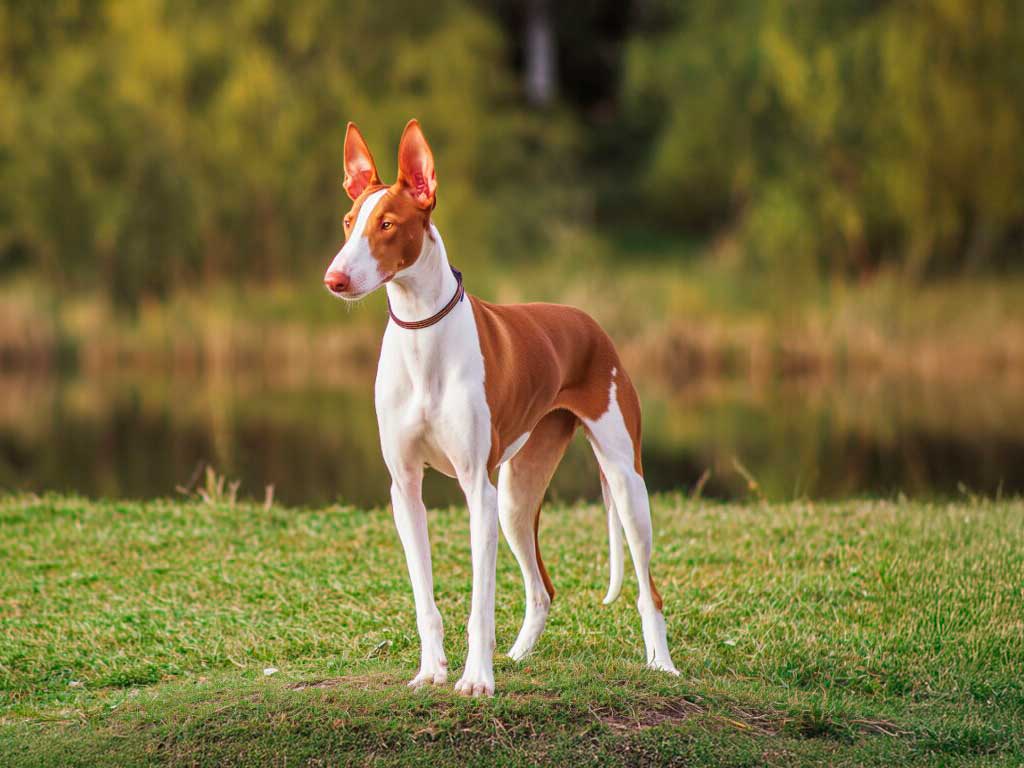
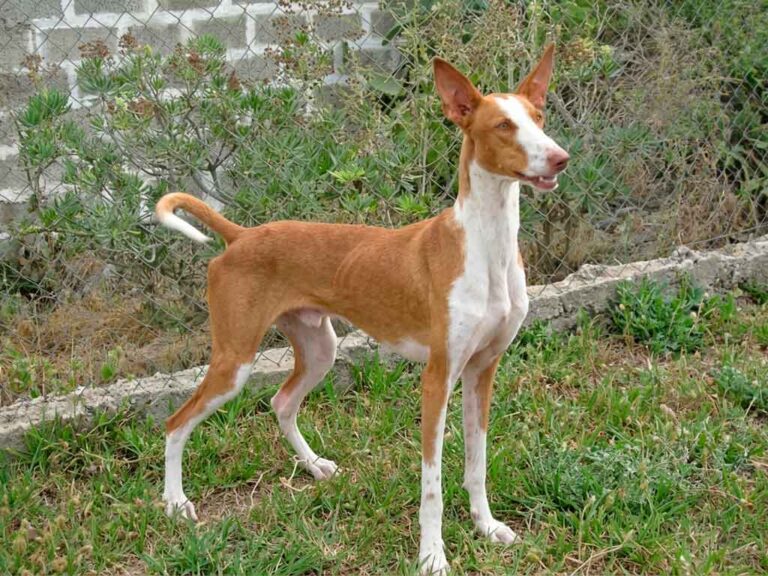
The Ibizan Hound is a tall Mediterranean sighthound that clears a wall from a standing start and then spends the evening asleep on the sofa. The Kennel Club standard gives its height as 22 to 29 inches (56 to 74 cm), and breed sources usually put weight at 42 to 55 pounds (19 to 25 kg).
Most live 10 to 12 years. It suits owners with a high fence, a patient training plan, and someone home most of the day. It does not suit anyone who assumes a garden wall means anything to a dog that jumps for a living.
A ten-point overview sits above. The two things it cannot show are how the dog gets over a fence and how it moves once it is on the other side.
The Numbers, With a Caveat
Height below follows the Kennel Club standard (2026), which also warns that balance matters more than raw size. Weight is not set by any standard, so the figure here is the range breeders quote.
| Feature | Ibizan Hound |
|---|---|
| Group | Hound, in the sighthound family |
| Size | Large and narrow, built like a deer |
| Height | 22 to 29 inches (56 to 74 cm) |
| Weight | 42 to 55 pounds (19 to 25 kg), commonly quoted |
| Coat | Smooth or rough, both hard and close |
| Colour | White, chestnut, or lion, alone or combined |
| Lifespan | 10 to 12 years |
| Exercise | Two hours, split between walks and free running |
A Fence Is a Suggestion
The standard does not hedge about this one. It credits the breed with the ability to jump great heights without a take-off run, and every experienced owner can confirm it. A four-foot garden wall is furniture to this dog. That single fact decides more of its housing than any training plan: balconies, first-floor windows, open car boots, and gates with a rail across the top. Owners who lose an Ibizan usually lose it upwards, not through a gap. If your home cannot be made defensible in three dimensions, including the bits above head height, this is the wrong breed for the building, however right it is for you.
A Hunter That Works at a Trot
Most sighthounds are described as sprinters. The Ibizan is described as a controlled hunter, and the standard says it retrieves to hand. That combination is unusual: the dog is expected to stay in contact with the person hunting, not vanish after the first hare.
The gait explains the rest. The standard calls for a suspended trot, a long reaching stride with a brief hover before the foot lands. It covers ground without the flat-out gallop of a greyhound, which is exactly what rocky Ibizan scrub rewards.
The body is narrow on purpose. A long flat ribcage, a tucked waist, and straight hindquarters give the dog room to fold into a turn on uneven ground. The large erect ears are mobile in a way that reads as alertness rather than nerves.
Two coats exist, smooth and rough, both hard and close to the body. Neither carries much undercoat, and the standard is explicit that hunting scars are not a fault.
Living With a Reserved Dog
The standard’s temperament line is short: reserved with strangers, not nervous or aggressive, dignified, intelligent, independent. In a house, that reads as a dog that takes its time with visitors and then settles close to its own people.
| Situation | What to expect |
|---|---|
| Visitors | Polite distance at first, then a decision made on the dog’s schedule |
| Children | Kind with calm children, unhappy with chasing and grabbing |
| Other dogs | Usually fine, and quicker than most to take offence at a rude one |
| Cats and small pets | A managed introduction, and never a running cat in the garden |
| Noise | Quiet indoors, vocal when bored or left too long |
| Time alone | The weak point; long days alone are the usual reason these dogs are rehomed |
What the Parent Club Screens For
The Ibizan Hound Club of the United States lists five screenings for its CHIC certification, and the list is more specific than most. It also makes a point worth repeating: a CHIC number means the results were published, not that they were normal.
| Problem | Screening |
|---|---|
| Hip dysplasia | OFA radiographic evaluation or PennHIP |
| Eye disease | ACVO examination, results registered with the OFA |
| Congenital deafness | BAER hearing test, which matters in a breed with so much white |
| Autoimmune thyroiditis | Panel from an OFA-approved laboratory |
| Cardiac disease | OFA basic or advanced cardiac evaluation |
Ask for the published results rather than the CHIC number. A breeder who volunteers the awkward ones is worth more than a breeder who says everything came back clear.
Two other points belong in the file. The breed has a small population, so lines matter more than averages, and any sign of a seizure in a young dog deserves a workup rather than a wait.

Lemonade Pet Insurance
Explore customizable pet insurance coverage and learn whether Lemonade is the right fit for your dog or cat.
- Customizable coverage options
- Online policy management
Care for a Thin-Coated Athlete
Exercise: The Trot and the Leap
Two hours a day is the working figure, and it does not all have to be running. A long trotting walk uses the gait the breed was built for, and a fenced field gives it the chance to open up.
Sprints need warm muscles and safe ground. A cold dog that launches over a wall and lands on frozen turf is a ligament waiting to happen.
Coat: Smooth or Rough, Both Thin
Neither coat needs much: a rubber curry on the smooth type, a comb on the rough one, and a check for burrs after a run in long grass. Bathing often strips what little oil the coat carries.
Thin skin and a short coat mean the dog feels weather. It will look for the warmest spot in the house in winter and the deepest shade in summer.
White Dogs and Summer
A white Ibizan with a thin coat burns on the nose, the ear tips, and the belly. Shade at midday and a check of those areas after a long day outdoors are cheaper than treating a burn.
Training a Dog That Decides
The standard calls the breed independent, and that is the training brief in one word. An Ibizan learns fast and complies when the request makes sense to it, which is not the same as obeying on principle.
Reward-based training works. Harsh handling does not, and it produces a dog that stops offering behaviour instead of a dog that argues. Sessions of five to ten minutes, several times a day, beat a weekly class.
Recall is the skill to build first, on a long line, in a field, with no rabbits. It will still fail near game, and the fence is what covers that failure.
Lure coursing and scent games give the hunting brain a legal outlet. A dog that has chased something artificial for an afternoon is a far easier housemate for the rest of the week.
Feeding a Lean Dog
An Ibizan should look lean enough to worry a first-time owner. The last ribs should be easy to find, the waist obvious, and the hip bones visible without being sharp.
Feed two meals a day and keep exercise away from the hour after eating. Deep-chested sighthounds do better when a full stomach is not being bounced around a field.
Puppies need a large-breed formula and a slow growth curve, since the skeleton closes late. Treats come out of the ration rather than on top of it.
Shop for Your Breed

Just Food For Dogs – Fresh Frozen
Fresh meals. Gently cooked, then frozen to lock in nutrients. 100% Human Grade Ingredients. Gently Cooked in the USA. #1 Vet-Recommended Fresh Food.
Shop on JustFoodForDogs
Raw Paws Pet Food – Frozen Raw Pet Food
Feeding your pet a frozen raw pet food diet is a simple way to deliver real, whole-food nutrition in its most natural form.
Shop on RawPawsPetFood
Bravecto Chews for Dogs
Bravecto is a long-lasting flea and tick protection option for your dog. 1 dose of Bravecto chew provides up to 12 weeks of powerful protection, which is nearly 3 times longer than a monthly treatment.
Shop on BestVetCare.com
Deworming Treatments for Dogs
BestVetCare offers you a wide range of worm treatments which come in a variety of forms such as oral paste, tablets, granules, and liquid solutions.
Shop on BestVetCare.comHappyPetZone participates in various affiliate programs with brands and retailers. We may receive a commission on purchases made through our links, at no extra cost to you.
The Trade-Offs, Stated Plainly
Every breed asks for something in exchange. These are the exchanges this one makes. More profiles sit in the dog breeds hub.
| The trade-off | What it costs you |
|---|---|
| It can clear a wall | A fence tall enough to look ridiculous, checked for gaps and footholds |
| It is quiet indoors | It needs two hours outdoors, in every weather |
| It bonds hard to its people | A dog that struggles with long days alone |
| It is independent | Training that convinces rather than instructs |
| It is thinly coated | Shade in summer, warmth in winter, and a bed near the radiator |
Four Hounds From the Same Neighbourhood
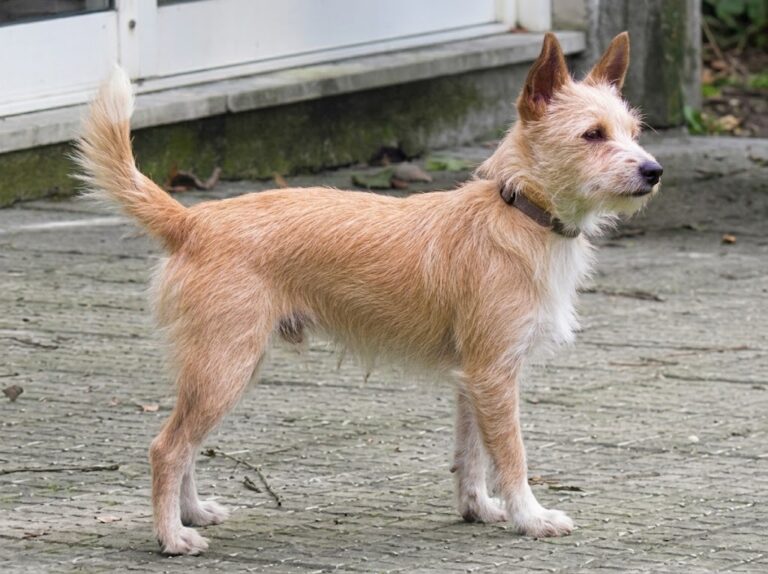
- The Portuguese Podengo is the neighbour across the border, and it comes in three sizes rather than one.
- The Podenco Canario is the island version, leaner still and every bit as quick over rock.
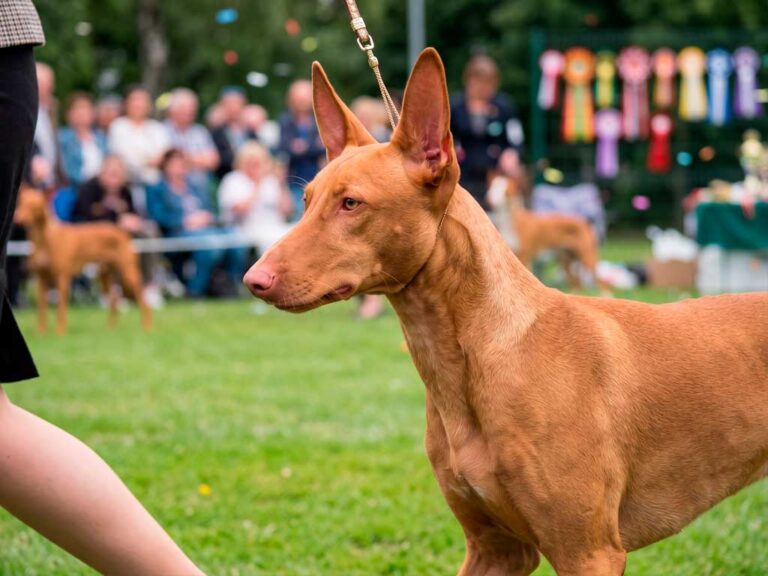
- The Pharaoh Hound shares the Mediterranean roots and adds a blush that turns heads at the park.
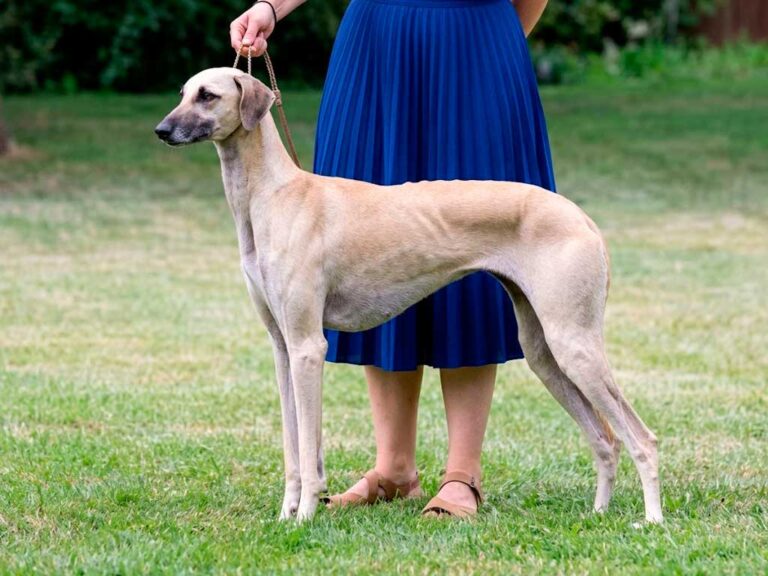
- The Sloughi is the North African courser, quieter still and just as unwilling to be a lap dog on demand.
Frequently Asked Questions
Four questions the rest of the page leaves open.
Sources
- The Kennel Club, Ibizan Hound breed standard (2026).
- Ibizan Hound Club of the United States, Health and approved screenings (2026).
- American Kennel Club, Hound Group health testing requirements (2026).
- American Kennel Club, Ibizan Hound breed information (2026).