Portuguese Podengo: Meet Portugal’s Three-Size Hunting Dog
The Portuguese Podengo comes in three different sizes, and it’s the only breed on this list where size changes almost everything about daily life.
This rustic, agile dog hunts by sight, scent, and sound, and it wears either a smooth coat or a wiry, bearded one.
Here’s a full breakdown of which variety fits your home best, from grooming to daily exercise needs.
Quick Facts
- Life expectancy: 10 to 15 years
- Weight: Small 4-6 kg, Medium 16-20 kg, Large 20-30 kg
- Height: Small 20-30 cm, Medium 40-54 cm, Large 55-70 cm
- Sizes: Three, small, medium, and large
- Coat types: Smooth or wire-haired with a beard
- Colors: Cream to fawn, with or without white
- Exercise needs: High, one to two hours a day
- Good for: Owners with some prior dog experience
History and Origin
The Portuguese Podengo descends from ancient sighthound stock brought to the Iberian Peninsula centuries ago. Portuguese hunters bred the dog specifically for rabbit hunting across rugged, varied terrain.
The smallest size actually started its working life on fishing boats, catching rats belowdecks. Over generations, breeders refined three distinct sizes, each suited to a different kind of hunting ground.
Portuguese Podengo Physical Characteristics
Weight and height vary dramatically across the three sizes. The small Portuguese Podengo weighs 4 to 6 kg and stands 20 to 30 cm tall, making it the most apartment-friendly option.
The medium variety weighs 16 to 20 kg and reaches 40 to 54 cm, striking a balance between agility and substance. The large variety tops out at 20 to 30 kg and 55 to 70 cm, built for demanding, open terrain.
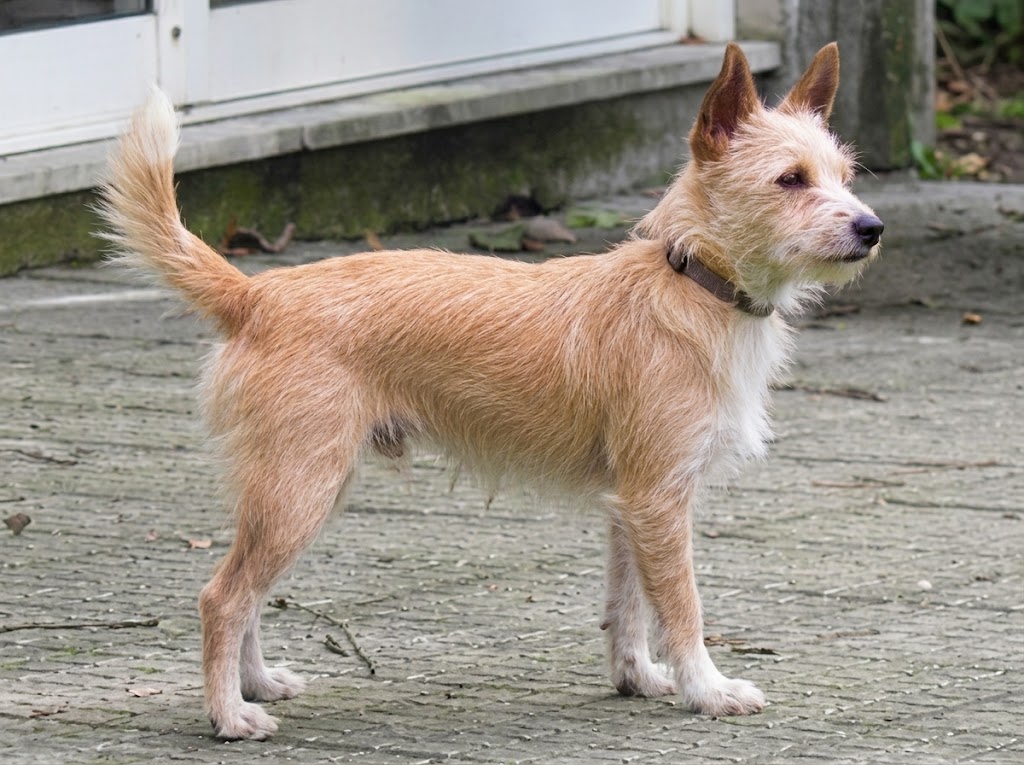
Every size comes in a smooth coat or a wire coat with a distinctive beard. Coat color ranges from cream to fawn, often with white markings, and small Podengos occasionally show black or brown, though breed standards don’t prefer those shades.
Temperament and Personality
This breed stays curious, lively, and genuinely eager to join family activities. Expect an affectionate, expressive dog that thrives on scent games and active walks.
Here’s the thing a Podengo’s exploring instinct runs deep, so recall training matters from puppyhood onward. Socialize early, and this breed adapts well to new people, other dogs, and even life in an apartment.
Care Guide
Grooming Needs by Coat Type
Smooth-coated Podengos need only gentle brushing to remove loose hair. Wire-coated dogs benefit from a weekly brush to prevent tangles around that signature beard.
Neither coat carries a dense undercoat, so grooming stays manageable even for first-time owners. Trim nails regularly, check ears often, and brush teeth on a consistent schedule.
Exercise Requirements
Plan on one to two hours of active exercise daily, regardless of size. This breed loves scent-based games as much as straightforward walks, so mix in some nose work to keep things interesting.
Give it time, and even the small variety will happily match a moderately active household’s pace.
Training a Portuguese Podengo
Positive reinforcement works best with this breed’s curious, food-motivated personality. Start with short, upbeat sessions and build up gradually as focus improves.
Trust me on this one: teaching a rock-solid recall early prevents a lot of frustration later, since this breed’s prey drive doesn’t fade with age. Practice alone-time in small increments too, since confident, independent dogs handle solo time far better as adults.
Portuguese Podengo Health and Longevity
The Portuguese Podengo is a generally healthy, long-lived breed, often reaching 10 to 15 years. Routine vet visits, vaccinations, and parasite prevention cover most of what this breed needs.
As with any dog, weight management protects joints over the long run, especially in the more compact small variety. This article offers general guidance only, not a substitute for advice from your own veterinarian.
Gear That Actually Helps
A well-fitted harness protects the neck better than a collar, especially for the small and medium sizes. Look for adjustable straps, since a growing puppy needs regular resizing through its first year.
Disclosure: Happy Pet Zone participates in the Amazon Associates program, and some links in this article may earn us a small commission at no extra cost to you.
Which Size Is Right for You?
The small Portuguese Podengo suits apartment dwellers who can still commit to daily exercise and mental stimulation. The medium variety fits households wanting a versatile, moderately sized companion for both city and countryside life.
The large variety belongs with active owners who have space to match its bigger stride and stronger drive. Whichever size you choose, the temperament stays remarkably consistent across the board.
Frequently Asked Questions About the Portuguese Podengo
Is the small Portuguese Podengo good for apartment living?
Yes, as long as it gets daily exercise and mental stimulation. Its compact size makes it genuinely manageable in smaller spaces.
What’s the difference between the wire coat and smooth coat?
The wire coat has a rough texture and a distinctive beard, while the smooth coat is shorter and softer. Both types stay easy to maintain with regular brushing.
Is the Portuguese Podengo good with children?
Yes, this breed tends to be affectionate, playful, and cheerful around kids. Adult supervision still matters, as it does with any breed.
Can a Portuguese Podengo live with cats?
It’s possible with gradual introductions and supervision, since this breed has a real chase instinct. Positive reinforcement and calm routines help most dogs adjust.
How much exercise does a Portuguese Podengo need?
Plan on one to two hours of daily activity across all three sizes. Scent games and structured walks both work well.
Which Portuguese Podengo size is easiest to train?
All three sizes share the same trainable, food-motivated temperament. Size mostly affects living space needs, not trainability.
How long do Portuguese Podengos live?
Most live between 10 and 15 years with proper care. Regular vet checkups support a long, active life across all sizes.
Do Portuguese Podengos shed a lot?
No, neither coat type carries a dense undercoat, so shedding stays minimal. Weekly brushing keeps both coat types looking neat.
Are Portuguese Podengos good watchdogs?
This breed isn’t bred for guarding and tends to welcome new people warmly. Its alert nature makes it observant, though not typically protective.
What was the small Portuguese Podengo originally bred for?
Historically, this size worked aboard fishing boats catching rats. That working history explains its sharp senses and high energy today.
Curious how the Portuguese Podengo compares to Spain’s podenco breeds? The Ibizan Hound and Podenco Maneto share similar hunting roots but differ in build and origin. Browse the full Dog Breeds hub to explore more guides, or try our Dog Breed Quiz to find your best match.