Otocinclus Vittatus Care: Tank Size, Diet & Tank Mates
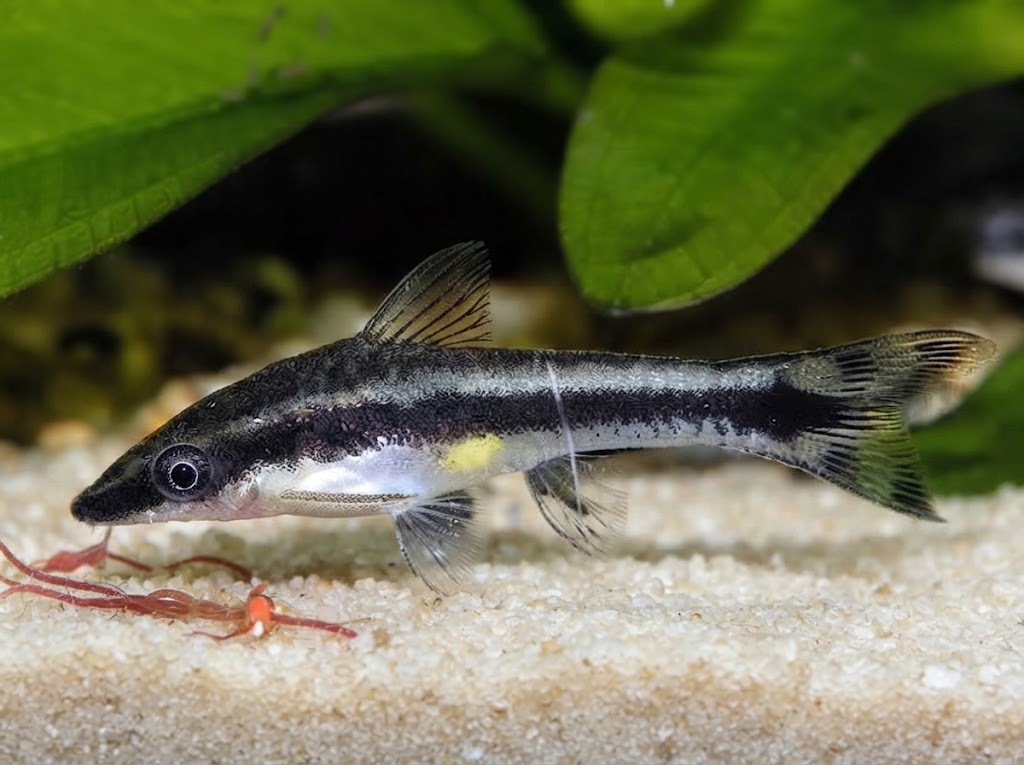
At around 1.5–2 inches long, Otocinclus vittatus is a small South American catfish that spends much of its time grazing on algae and biofilm.
It is peaceful and well suited to planted community aquariums, provided the tank is mature, well oxygenated, and able to supply enough food.
The main challenge with Otocinclus vittatus care is feeding. These fish are often bought as algae cleaners, but the algae growing in an aquarium may not provide enough nutrition to keep them healthy.
A stable environment, a group of at least six, and regular supplemental feeding make a real difference.
This guide covers tank size, water parameters, feeding, behavior, breeding, common mistakes, and six compatible tank mates.
Otocinclus Vittatus: Quick Care Facts
| Care Requirement | Recommendation |
|---|---|
| Scientific name | Otocinclus vittatus |
| Common name | Otocinclus, oto catfish, dwarf suckermouth catfish |
| Adult size | Usually around 1.3–1.6 inches (3.3–4 cm); some individuals may grow larger |
| Minimum aquarium size | 15 gallons; a larger, mature tank provides more grazing surface |
| Temperature | 72–79°F (22–26°C) |
| pH | 6.0–7.5 |
| Water hardness | Approximately 2–15 dGH |
| Temperament | Peaceful and shy |
| Swimming level | Mainly on plants, glass, wood, and other surfaces |
| Social needs | Keep at least 6 together |
| Diet | Herbivorous grazer; algae, biofilm, and supplemental plant-based foods |
| Care level | Intermediate |
| Typical lifespan | Around 3–5 years with good care |
These ranges are practical starting points rather than targets that must be matched to the last decimal. Stable water quality, adequate oxygen, and a reliable food supply are more important than repeatedly adjusting the aquarium to chase a perfect reading.
What Does Otocinclus Vittatus Look Like?
Otocinclus vittatus has a slender, streamlined body, a flattened underside, and a small sucker-shaped mouth adapted for grazing on surfaces. Its body is generally silvery to olive-brown, with a dark horizontal stripe running along the side toward the tail.
Its small size makes it easy to overlook in a planted aquarium. Look closely at leaves, driftwood, and the glass, where it may remain attached while feeding.
The fish belongs to the Loricariidae family, the same family that includes many larger suckermouth catfish. Unlike large plecos, otocinclus stay small and usually leave healthy plants alone.
How Can You Tell If an Otocinclus Is Healthy?
Before buying one, look for these signs:
- A rounded belly rather than a pinched or sunken abdomen.
- Clear eyes and intact fins.
- Active grazing on glass, plants, or decorations.
- Normal responses to nearby movement.
- No obvious sores, white patches, or rapid breathing.
A fish that looks very thin may already be underfed. Even if it begins grazing after you bring it home, recovering from prolonged starvation can be difficult.
Tank Size and Aquarium Setup
A 15-gallon aquarium is a sensible starting point for a small group of Otocinclus vittatus, although a 20-gallon or larger planted aquarium offers more room and grazing surface. The important factor is the tank’s maturity, not just its volume.

FROM AMAZON.COM
Tetra 20 Gallon Complete Tropical Fish Tank Kit
Everything included: 20-gallon glass tank with hinged hood, LED light, filter, filter cartridge, and décor. Ready for freshwater fish.
Buy on Amazon.comAs an Amazon Associate, Happy Pet Zone earns from qualifying purchases, at no extra cost to you.
Avoid adding otocinclus to a newly established aquarium. A tank can be cycled and still have too little natural biofilm to feed a group of these fish.
What Should the Aquarium Include?
| Aquarium Feature | What to Provide |
|---|---|
| Tank maturity | A fully cycled aquarium with established biofilm and some soft algae |
| Plants | Live plants with broad leaves, such as Anubias and Amazon swords |
| Hardscape | Smooth rocks and driftwood that develop grazing surfaces |
| Substrate | Sand or smooth aquarium gravel |
| Filtration | Reliable biological filtration with gentle to moderate flow |
| Oxygenation | Good surface movement and well-oxygenated water |
| Cover | Plants and shaded areas where fish can retreat |
| Lid | A secure lid is helpful for a community aquarium |
Live plants are useful because their leaves provide surfaces for biofilm to develop. Driftwood and smooth rocks add more grazing area, while dense planting gives these shy fish somewhere to settle when they feel exposed.
Keep the aquarium clean, but do not scrub every surface until it looks spotless. A little soft algae and biofilm are useful food resources. Excessive algae growth caused by poor maintenance is a separate problem and should still be corrected.
Why Does Tank Maturity Matter So Much?
Otocinclus spend much of the day grazing on thin layers of algae, microorganisms, and organic material known as biofilm. A newly filled aquarium may look clean and attractive but have very little of this natural food.
Before introducing the fish, check that:
- The nitrogen cycle is established.
- Ammonia and nitrite are consistently at 0 ppm.
- The aquarium has stable temperature and pH.
- Plants, wood, or glass have developed some natural grazing surfaces.
- You have suitable supplemental foods ready.
Do not add otocinclus simply because an aquarium has visible algae. Some algae types are difficult for them to eat, and even a tank with algae may not provide enough nutrition.
Water Parameters for Otocinclus Vittatus
Otocinclus vittatus generally does well in warm, clean, well-oxygenated freshwater. Aim to stay within the ranges below and avoid sudden changes.
| Water Parameter | Recommended Range |
|---|---|
| Temperature | 72–79°F (22–26°C) |
| pH | 6.0–7.5 |
| General hardness (GH) | Approximately 2–15 dGH |
| Ammonia | 0 ppm |
| Nitrite | 0 ppm |
| Nitrate | Preferably below 20 ppm |
| Water changes | Often 20–30% weekly, adjusted to test results and stocking |
| Water movement | Gentle to moderate, with good oxygenation |
The recommended nitrate target is a conservative husbandry goal. Test the water regularly and adjust water changes according to the aquarium’s waste production and measured results.
How to Maintain Stable Water Quality
- Test the water regularly. Check ammonia, nitrite, nitrate, pH, and temperature, especially after adding fish or changing equipment.
- Perform routine water changes. Replace a portion of the water each week, using dechlorinated water close to the aquarium’s existing temperature.
- Maintain the filter. Rinse filter media in removed aquarium water when needed, and avoid replacing all biological media at once.
- Keep oxygen levels high. Surface movement helps gas exchange, particularly in warm aquariums.
- Avoid sudden adjustments. Rapid changes in pH, hardness, or temperature can stress fish.
If your tap water already falls within a suitable range, maintaining it consistently is usually preferable to making frequent chemical adjustments.
What Do Otocinclus Eat?
Otocinclus vittatus is primarily herbivorous and grazes on soft algae, diatoms, and biofilm. In a home aquarium, natural grazing should be supported with additional foods because many tanks cannot produce enough food for a whole group.
This is the feeding issue that deserves the most attention. An oto may appear busy grazing all day and still be losing weight.
Best Foods for Otocinclus Vittatus
| Food | How to Offer It |
|---|---|
| Soft algae and biofilm | Allow the fish to graze naturally on established surfaces |
| Algae wafers | Choose a quality vegetable-based formula and check that the fish are eating it |
| Spirulina-based foods | Use suitable sinking foods as part of a varied diet |
| Blanched zucchini | Offer a small piece and remove leftovers before they foul the water |
| Blanched cucumber | Provide occasionally as a supplement |
| Herbivore gel food | Follow the product directions and place it where otocinclus can reach it |
Offer small amounts and observe what the fish actually consume. Some individuals accept prepared foods quickly; others need time and careful placement before they learn where food is available.
How Often Should You Feed Otocinclus?
Provide access to natural grazing throughout the day and offer supplemental food regularly, often daily in aquariums with limited algae growth. Remove uneaten vegetables and prepared foods within a reasonable period, generally before they begin decomposing.
Watch body condition rather than relying on a fixed portion size. A healthy oto should have a gently rounded belly. A hollow or pinched abdomen suggests that the fish may not be receiving enough food.
What Foods Should You Avoid Relying On?
- Aquarium algae alone: It may not provide enough nutrition for the entire group.
- Meat-heavy foods as the main diet: These do not match the fish’s predominantly herbivorous grazing habits.
- Large pieces of vegetables left for several days: Decomposing food can damage water quality.
- Food that other fish consume first: Otocinclus can lose out to faster, more assertive tank mates.
If an oto is getting thinner despite regular feeding, check whether it is actually eating. Adding more food to the aquarium will not help if other fish consume it first or the food is unsuitable.
Behavior and Temperament
Otocinclus vittatus is peaceful, social, and generally spends its time grazing rather than defending territory. It may attach itself to a leaf or the aquarium glass for long periods, then move to another surface when it finds a new patch of food.
These fish are more comfortable in groups. Keep at least six together, assuming the aquarium has enough space, food, and filtration to support them. A larger group may behave more naturally and be easier to observe.
Otocinclus can also be shy around large, boisterous, or aggressive fish. Their small size makes them vulnerable, so peaceful tank mates are essential.
Is Otocinclus Vittatus Nocturnal?
It can graze throughout the day, although activity may increase during quieter periods or around changes in lighting. Finding an oto resting on a leaf is usually normal. Persistent rapid breathing, loss of balance, or an increasingly sunken belly needs closer attention.
Six Compatible Tank Mates for Otocinclus Vittatus
Otocinclus vittatus generally fits into peaceful community aquariums with small fish that share similar water conditions. The six species below are potential companions when the aquarium is appropriately sized and each species is kept in its own recommended group.
Compatibility depends on the whole setup. A fish that is peaceful in one aquarium may still compete for food or become stressed in a crowded tank.
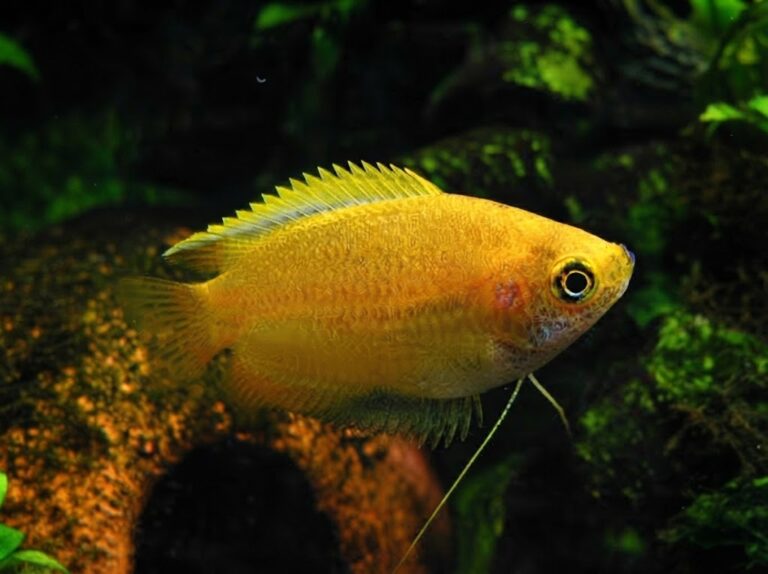
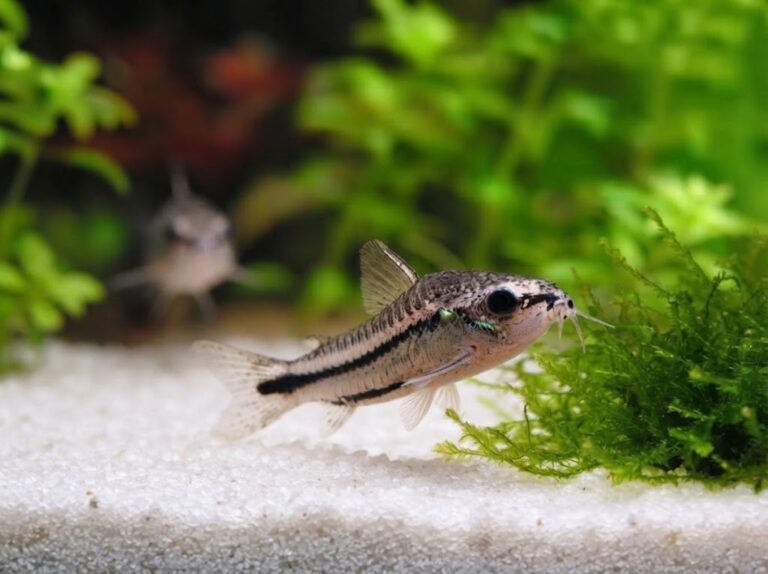
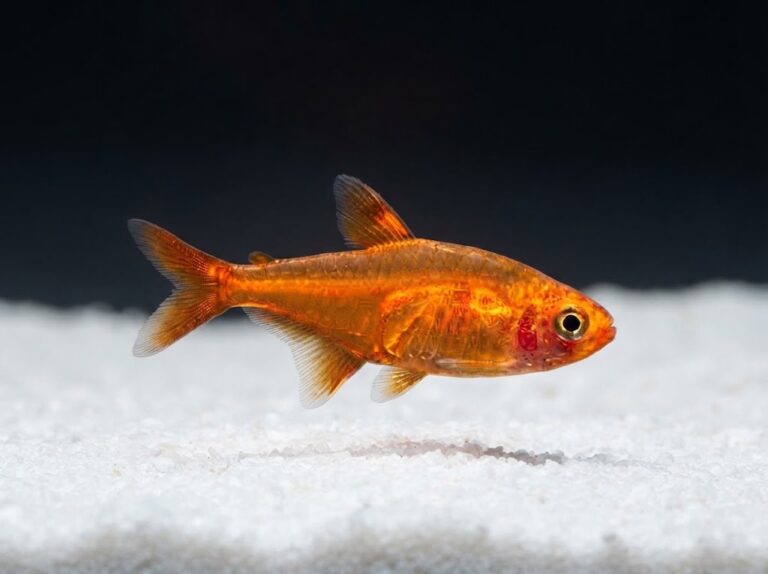
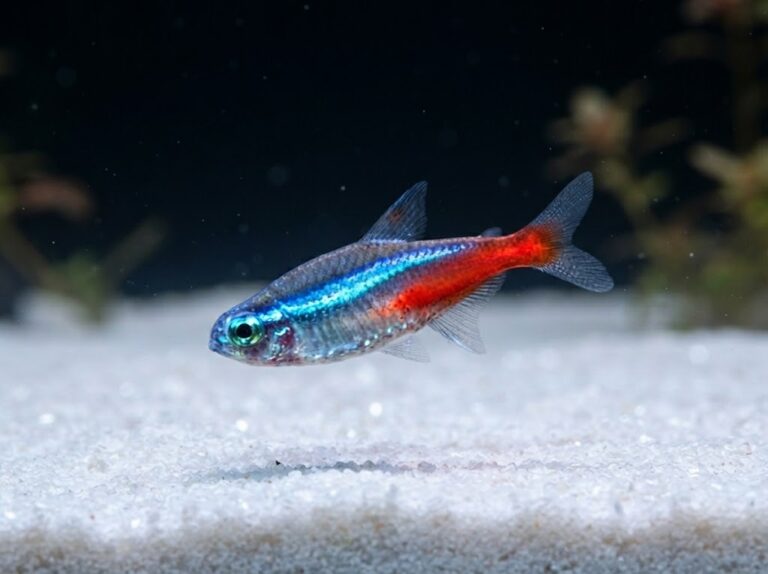
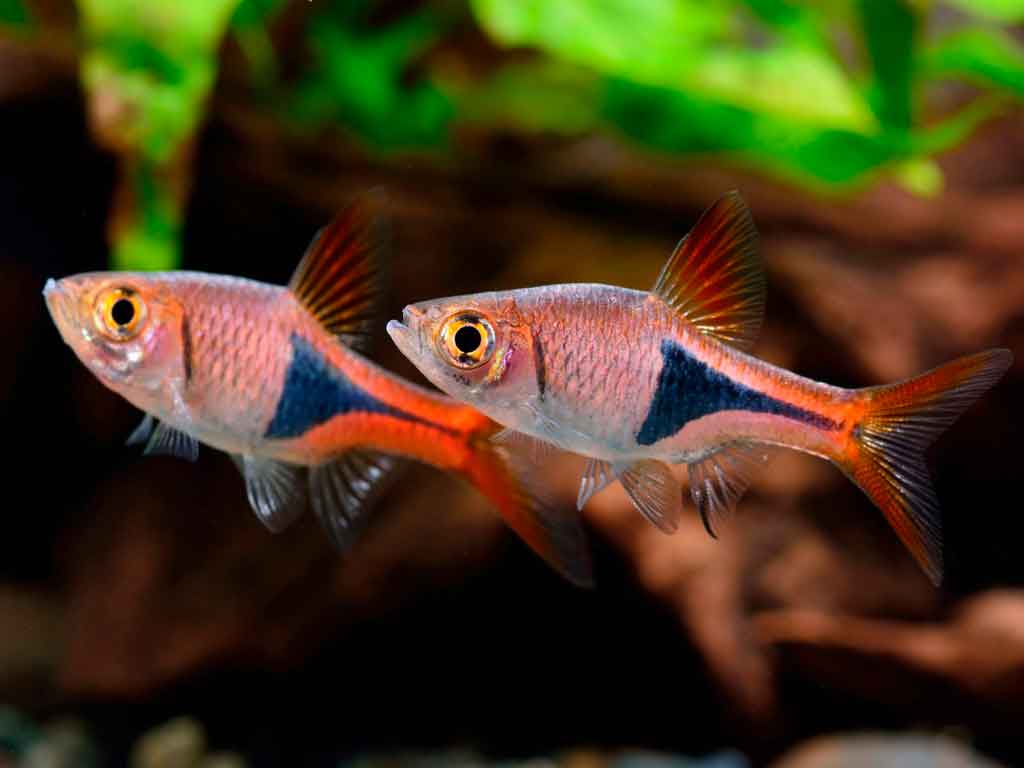
Tank Mate Compatibility Summary
| Compatible Species | Why It Can Work |
|---|---|
| Neon Tetra (Paracheirodon innesi) | Peaceful schooling fish with overlapping water needs |
| Ember Tetra (Hyphessobrycon amandae) | Small, calm fish that uses the middle water column |
| Harlequin Rasbora (Trigonostigma heteromorpha) | Peaceful schooling fish for planted community tanks |
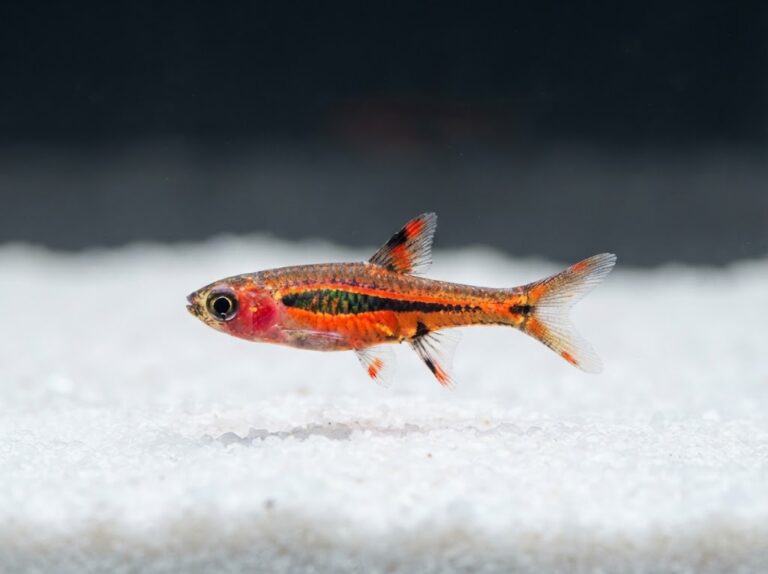
| Chili Rasbora (Boraras brigittae) | Tiny, calm species suited to mature planted aquariums |
| Pygmy Corydoras (Corydoras pygmaeus) | Small, peaceful catfish that can share space when feeding is managed |
| Honey Gourami (Trichogaster chuna) | Generally calm fish that uses a different part of the aquarium |
Important: These are six potential compatible species, not a recommendation to keep all six together in one aquarium. Choose companions according to tank volume, group sizes, filtration, and feeding needs. A 15-gallon aquarium may suit a small, carefully planned community, but a larger tank is preferable when combining several schooling species.
Which Fish Should You Avoid?
Avoid large predatory fish, aggressive cichlids, and species that harass small bottom-dwelling fish. Large or highly competitive tank mates can injure otocinclus or prevent them from feeding.
Use caution with other algae-grazing fish, particularly larger plecos, because competition for food and grazing surfaces can become a problem. Compatibility also depends on individual temperament and the layout of the aquarium.
Can You Breed Otocinclus Vittatus?
Breeding otocinclus in a home aquarium is possible, but raising the fry successfully can be challenging. A mature, well-maintained planted tank, healthy adults, and a consistent food supply give the fish a better chance of spawning.
Otocinclus are egg layers. Eggs may be deposited on plants or other surfaces, and the adults do not provide extended parental care. Eggs and fry are vulnerable to predation in a community aquarium.
For a breeding attempt:
- Maintain a healthy group of adults.
- Keep water quality stable and oxygenation strong.
- Provide varied, suitable foods and ample grazing surfaces.
- Use a separate breeding setup if protecting eggs and fry is a priority.
- Make sure the fry have access to appropriately sized food.
Do not make sudden changes to water chemistry in an attempt to trigger spawning. Stable conditions and good adult health should come first.
Common Otocinclus Care Mistakes
Many problems with otocinclus begin with food availability or the condition of the aquarium when the fish are introduced.
- Adding them to a new tank: Newly established aquariums often lack enough biofilm.
- Expecting them to eliminate every type of algae: They prefer suitable soft algae and biofilm, not every nuisance algae species.
- Keeping too few: They are social fish and should be maintained in a group.
- Assuming grazing means they are well fed: A fish can graze frequently and still lose weight.
- Allowing faster fish to take all the food: Place supplemental foods where otocinclus can reach them.
- Ignoring water tests: Poor water quality can affect these sensitive fish quickly.
- Overcleaning every surface: Removing all natural grazing material reduces a useful food source.
- Buying visibly thin individuals: Sunken bellies can indicate a serious feeding problem before the fish even reaches your aquarium.
The most useful routine is simple: check the fish’s body condition, confirm that supplemental food is being eaten, and test water quality consistently.
Health and Signs of Stress
Healthy otocinclus should remain attached to surfaces, graze regularly, and maintain a rounded body shape. Because they are small, changes in condition can be easy to miss.
Watch for these warning signs:
- A noticeably sunken belly or progressive weight loss.
- Rapid breathing or persistent gasping.
- Loss of balance or unusual difficulty attaching to surfaces.
- Damaged fins, sores, or unusual white growths.
- Sudden hiding combined with reduced activity or appetite.
Start by testing ammonia, nitrite, nitrate, and temperature. Check oxygenation and make sure the fish can reach food. If several fish become unwell, investigate the aquarium’s water quality and recent changes before assuming the problem is a single disease.
Do not medicate an entire aquarium without identifying the likely cause. Some treatments can affect fish or other inhabitants differently, and a qualified aquatic veterinarian can help with persistent or severe symptoms.