Chili Rasbora Care: Tank Size, Diet, Water Parameters & Tank Mates
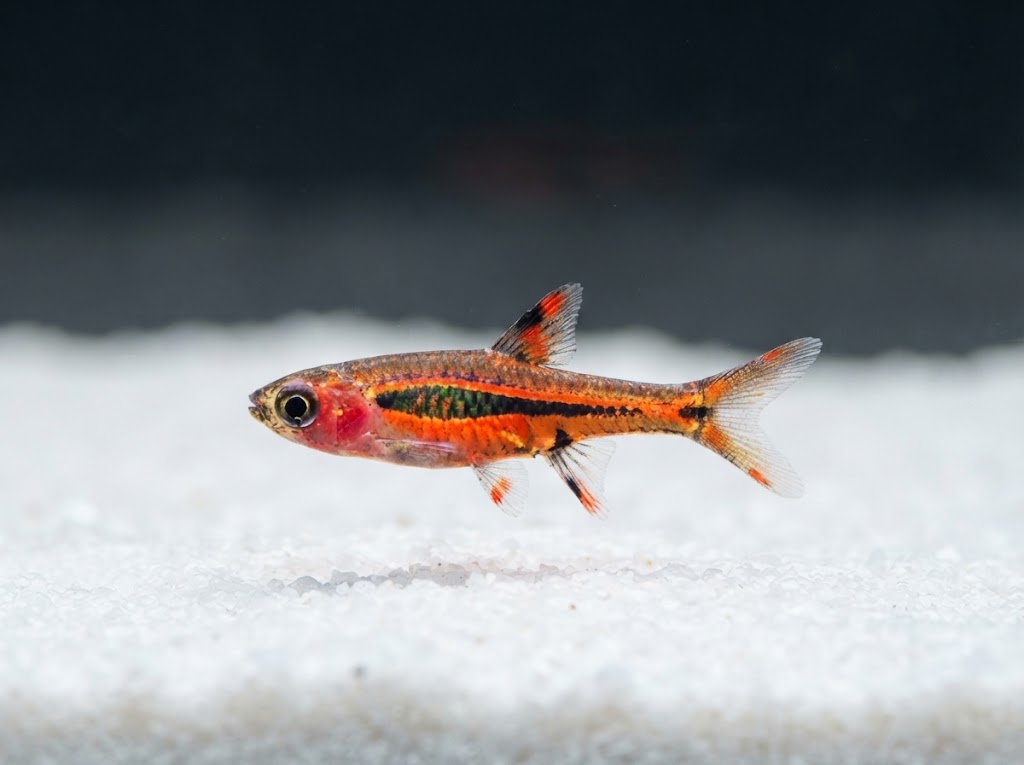
The Chili Rasbora (Boraras brigittae) grows to around 0.8 inches (2 cm), yet its brilliant red coloration can make a planted aquarium stand out.
To keep this tiny shoaling fish healthy, focus on stable water chemistry, gentle filtration, a mature aquarium, and food small enough for its mouth.
Chili Rasboras are peaceful, but their size makes them vulnerable to larger fish and competition at feeding time.
This care guide covers their tank requirements, water parameters, diet, behavior, breeding, and four compatible tank mates to help you plan a suitable aquarium.
Chili Rasbora Care at a Glance
| Care requirement | Recommended range or setup |
|---|---|
| Common name | Chili Rasbora, also called Mosquito Rasbora |
| Scientific name | Boraras brigittae |
| Adult size | Usually around 0.7–0.8 inches (1.8–2 cm) |
| Minimum aquarium | 5 gallons for a carefully maintained species-only setup; 10 gallons offers more stability and room |
| Group size | At least 8–10; 12 or more is preferable |
| Temperature | 73–82°F (23–28°C) |
| pH | 4.5–7.0 |
| Water hardness | Soft water; around 1–8 dGH is a useful target |
| Temperament | Peaceful, shy, and social |
| Swimming level | Mostly middle water |
| Diet | Omnivorous micro-predator; needs very small foods |
| Aquarium style | Mature, planted, low-flow aquarium with shaded areas |
| Difficulty | Moderate; feeding and water stability require attention |
| Lifespan | Several years with suitable care; lifespan varies with conditions |
Important tank-size distinction: a 5-gallon aquarium is a practical lower limit sometimes used for a small species-only group, but the smaller water volume leaves less room for mistakes. A 10-gallon tank with a longer footprint is generally easier to maintain and gives a proper shoal more space. Do not use a small tank as a reason to overcrowd it.
What Is a Chili Rasbora?
The Chili Rasbora is a miniature freshwater fish from southern Borneo, Indonesia. In the wild, it inhabits shallow, heavily vegetated peat-swamp environments where the water is often soft, acidic, and stained by decomposing leaves and other organic matter.
Its small size and peaceful behavior make it appealing for nano aquariums. However, the fish is easily intimidated by boisterous tank mates and may struggle to compete for food in a busy community tank.
A suitable setup recreates the important features of its habitat:
- Soft, stable water with an acidic to near-neutral pH.
- Dense plants and shaded areas that provide security.
- Gentle water movement rather than a strong current.
- A mature biological filter and consistent water quality.
- A group large enough for normal shoaling behavior.
- Tiny, nutritious foods that the fish can actually swallow.
In practice, the combination matters more than any single decoration or piece of equipment. A planted tank with unstable water or inadequate feeding will not provide the conditions this species needs.
Tank Size and Aquarium Setup
Chili Rasboras produce little waste individually, but their tiny size does not eliminate the need for swimming space, stable water chemistry, and effective filtration. Smaller aquariums can change temperature and water parameters quickly, which makes routine maintenance especially important.
A 10-gallon aquarium is a sensible starting point for many keepers. A 5-gallon tank may work for a small, species-only group when the aquarist can maintain stable conditions, but it leaves less flexibility for stocking decisions.
How to Set Up the Tank
- Choose a suitable footprint. A longer aquarium gives the shoal room to move horizontally through plants and open swimming areas. Height is less useful than usable length for this species.
- Add dense planting. Java moss, Cryptocoryne, and other suitable aquarium plants create shelter without requiring the entire swimming area to be covered. Floating plants can soften the light and provide overhead cover.
- Include wood and leaf litter if appropriate. Driftwood and aquarium-safe dried leaves can create a natural-looking environment and release tannins. Use only materials prepared for aquarium use, and monitor water chemistry rather than assuming every leaf will have the same effect.
- Use gentle filtration. A sponge filter or a filter with a controlled outlet can provide biological filtration without creating a strong current. The aquarium still needs adequate circulation and oxygenation.
- Leave open swimming space. Dense cover helps Chili Rasboras feel secure, but a completely overgrown tank can make feeding and observation difficult. Balance sheltered areas with clear paths through the middle of the aquarium.
- Fit a secure lid. A well-fitted cover reduces evaporation and lowers the risk of fish jumping out during sudden movement or stress.
Is a Brand-New Aquarium Suitable?
No. Wait until the aquarium is fully cycled and its biological filtration is functioning reliably before introducing Chili Rasboras.
The cycle should be established, with ammonia and nitrite consistently reading zero. The tank should also have a stable temperature and pH before the fish arrive. A mature aquarium offers a more predictable environment and may contain small organisms that supplement their diet.
Water Parameters for Chili Rasbora
Stable water conditions are central to long-term success. Chili Rasboras are associated with soft, acidic habitats, although captive-bred or well-acclimated individuals may tolerate a broader range than wild-caught specimens.
Use these values as a practical starting point rather than trying to force the water to a precise number every day.
| Parameter | Practical target |
|---|---|
| Temperature | 73–82°F (23–28°C) |
| pH | 4.5–7.0 |
| General hardness (GH) | Approximately 1–8 dGH |
| Ammonia | 0 ppm |
| Nitrite | 0 ppm |
| Nitrate | Keep low and stable; avoid accumulation |
| Water flow | Gentle |
| Maintenance | Regular partial water changes based on test results and stocking |
Temperature
A stable temperature in the mid-to-upper 70s°F suits many Chili Rasbora aquariums. A reliable heater may be necessary in rooms that become cool or experience large daily temperature changes.
Avoid sudden shifts during water changes. Match replacement water reasonably closely to the aquarium temperature, and use a thermometer to verify actual conditions rather than relying only on the heater setting.
pH and Hardness
Soft, acidic water is consistent with the species’ natural habitat. A pH between 4.5 and 7.0 is commonly reported, but the stability of the aquarium is important when choosing a target.
Do not add acids or pH-adjusting chemicals simply to chase a particular reading. Sudden changes can cause more stress than a stable value that is slightly outside an idealized target. If your source water is hard or alkaline, test it first and plan any adjustments carefully.
Ammonia, Nitrite, and Nitrate
Ammonia and nitrite should remain at zero in an established aquarium. Nitrate should be controlled through sensible stocking, feeding, filtration, and water changes.
Test the water more frequently after introducing new fish, changing filtration, or noticing unusual behavior. If ammonia or nitrite is detectable, investigate promptly and take appropriate corrective action.
Water Changes
Regular partial water changes remove dissolved waste and help maintain stable conditions. The amount and frequency should reflect the aquarium’s stocking level, feeding routine, plant growth, and test results.
During each change:
- Treat replacement water with an appropriate conditioner when required.
- Keep the temperature close to the aquarium’s temperature.
- Avoid disturbing the fish with a sudden, forceful refill.
- Check that the filter continues running properly.
- Retest if the fish show stress or if the source water differs substantially from the tank.
Consistency is more useful than making large, infrequent changes to compensate for neglected maintenance.
Diet and Feeding: What Chili Rasboras Eat
Feeding is one of the most important parts of Chili Rasbora care. Their mouths are exceptionally small, so food can be present in the aquarium without the fish being able to eat it.
Chili Rasboras feed on tiny invertebrates and other small food organisms in nature. In captivity, provide a varied diet of appropriately sized prepared, frozen, and live foods.
Suitable Foods
| Food type | How to offer it |
|---|---|
| Baby brine shrimp | Live or frozen, in a size the fish can swallow |
| Cyclops | A useful small frozen food |
| Daphnia | Use suitably small specimens or finely prepared portions |
| Microworms | Suitable live food when sourced and cultured safely |
| Fine powdered flakes | Crush thoroughly so the pieces are genuinely tiny |
| Micro pellets or granules | Choose a size that the fish can eat without struggling |
| Other small frozen foods | Check the particle size before feeding |
A varied menu supports condition and reduces dependence on a single food. Live foods can encourage feeding responses, but high-quality prepared foods can also contribute when their size and nutritional content are appropriate.
How Often Should You Feed Them?
Offer small meals once or twice daily as a starting point, adjusting the routine to the fish’s condition and how quickly they consume food. Very small portions help ensure that each fish gets an opportunity to eat without allowing excess food to pollute the water.
Watch the fish during feeding. Healthy individuals should show interest in food and have normally rounded abdomens rather than persistently sunken bellies.
Common Feeding Mistakes
- Using regular-sized flakes: crush them into a fine powder before feeding.
- Offering oversized pellets: choose micro foods that fit their mouths.
- Feeding only food that sinks quickly: some fish may miss it before it reaches the substrate.
- Assuming they are eating because food disappears: other fish or invertebrates may consume most of it.
- Adding too much food: uneaten particles can degrade water quality.
If Chili Rasboras remain thin despite regular feeding, check the actual particle size, observe individual fish, and consider whether faster tank mates are monopolizing the food.
Behavior and Temperament
Chili Rasboras are peaceful shoaling fish that generally spend much of their time moving through the middle of the aquarium. Their small size and naturally cautious behavior mean they are most comfortable when kept in a proper group with plenty of cover.
A group of 8–10 is a reasonable minimum to work toward, while 12 or more often produces more natural social behavior and gives individuals greater confidence. The available aquarium space and overall stocking plan still determine how many fish can be kept responsibly.
Why Are My Chili Rasboras Hiding?
Some hiding is normal, particularly after transport or introduction to a new aquarium. Persistent hiding may indicate that the fish feel exposed, are being intimidated, or are not yet settled.
Check the following:
- Is the shoal large enough?
- Are there plants or other safe hiding areas?
- Is the lighting excessively bright with no shaded zones?
- Is the filter creating a strong current?
- Are larger fish chasing or frightening them?
- Are temperature and water parameters stable?
- Are they eating enough?
Give new fish time to acclimate, but do not dismiss ongoing hiding alongside faded color, rapid breathing, lethargy, or loss of body condition. Those signs deserve a closer check of the environment and health.
Appearance and Differences Between the Sexes
Chili Rasboras have a slender body, a vivid red to orange-red base color, and a dark horizontal stripe along the side. Their appearance can vary with maturity, lighting, stress, and the conditions in which they are kept.
Mature males are often more intensely colored. Females are generally rounder through the abdomen, especially when carrying eggs, and may appear less vividly red.
Color alone is not a reliable health test. Newly introduced fish may look pale while settling in, and a bright aquarium or lack of cover can affect how their color appears. Persistent fading accompanied by poor appetite or unusual behavior warrants checking water quality and tank mates.
Four Compatible Chili Rasbora Tank Mates
Chili Rasboras should share an aquarium only with small, peaceful species that have compatible water requirements and will not outcompete them for food. The following four options are potential tank mates when the aquarium is large and stable enough for all the animals involved.
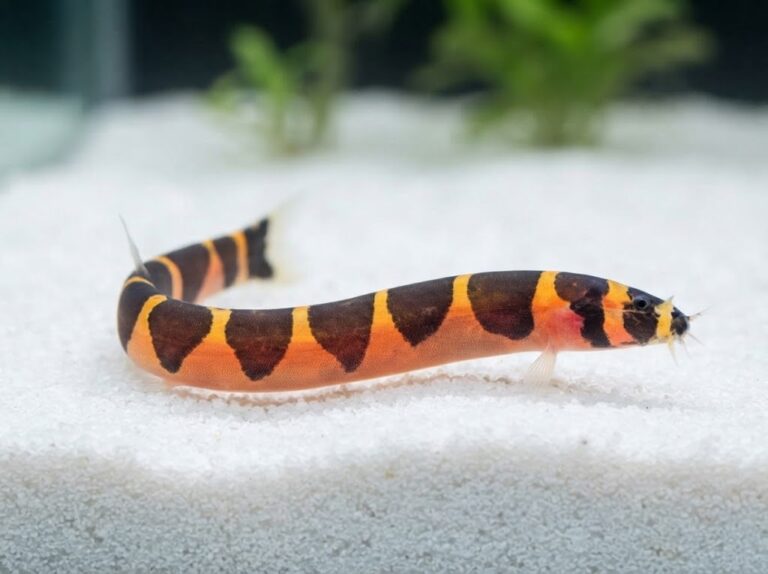
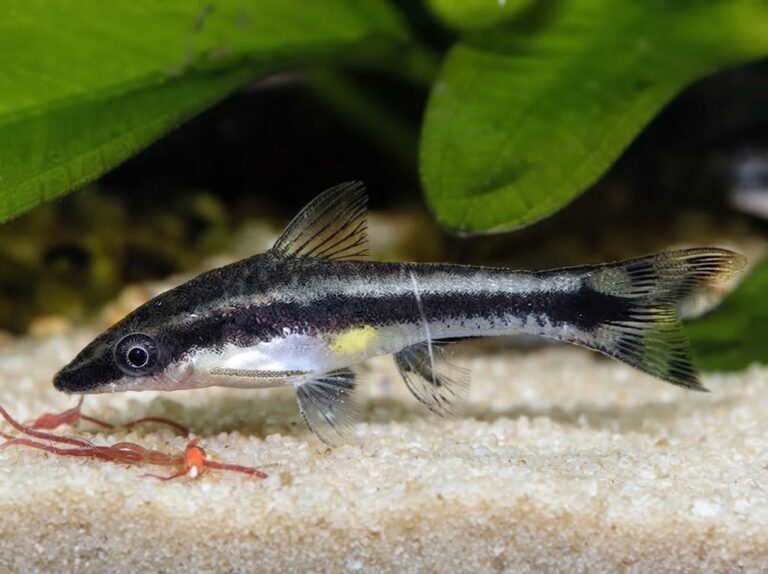
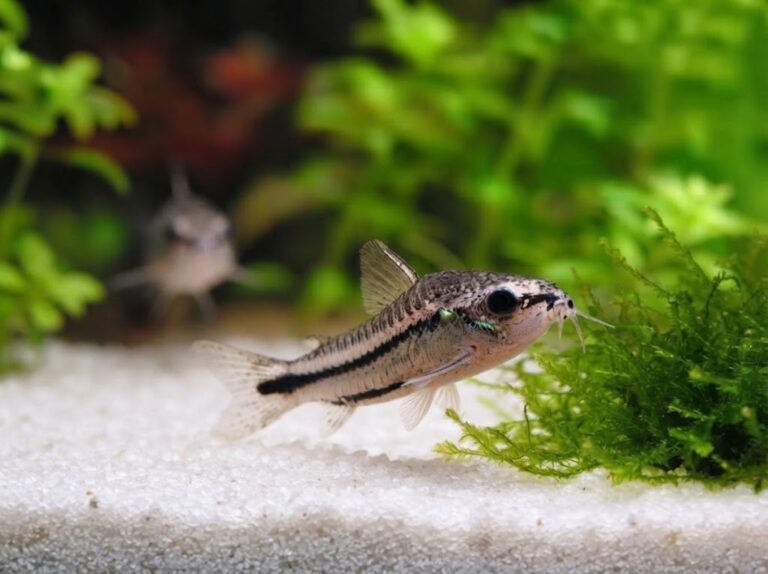
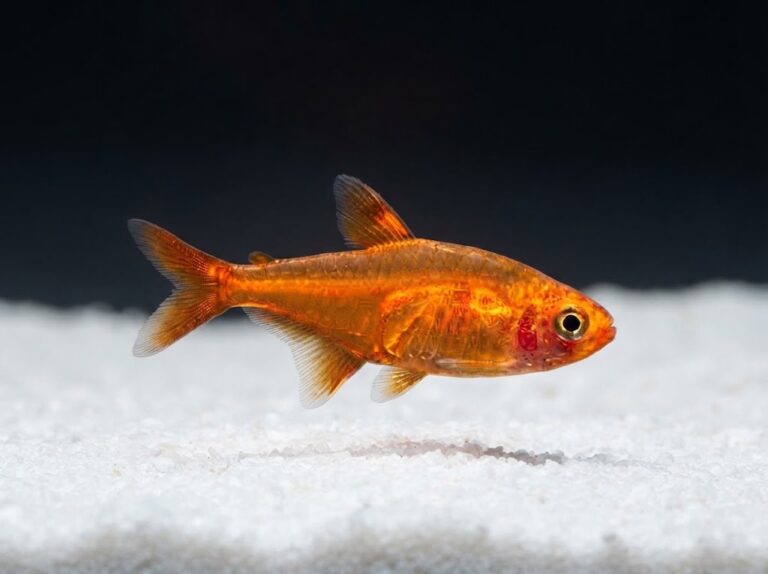
Compatibility depends on the actual fish, aquarium dimensions, water chemistry, and feeding behavior. These pairings are not a reason to place every species into a small tank. For a nano aquarium, a well-maintained species-only shoal may be a more practical plan.
Tank Mates to Avoid
Avoid fish that can swallow Chili Rasboras, harass them, or consistently outcompete them for food. Large cichlids, predatory fish, boisterous species, and fin-nippers are poor choices.
Even a fish described as peaceful may be unsuitable if the size difference is substantial. A predator does not need to be aggressive to eat a fish that fits in its mouth.
Shrimp may also be considered in a carefully planned planted aquarium, but tiny shrimplets can be vulnerable to opportunistic feeding. Do not assume that every juvenile shrimp will survive simply because adult shrimp are too large to be eaten.
Can Chili Rasboras Live in a Nano Aquarium?
Yes, provided the aquarium is mature, properly filtered, and large enough for a suitable group. Their tiny adult size makes them attractive for nano setups, but small water volume increases the importance of stable temperature and chemistry.
A 5-gallon aquarium leaves little room for additional fish and requires careful maintenance. A 10-gallon aquarium generally offers more flexibility for a larger shoal, plants, and a more stable environment.
Before choosing the tank, consider the complete stocking plan rather than the size of one fish alone. The aquarium must accommodate the group’s behavior, feeding needs, and water-quality requirements.
Breeding Chili Rasboras
Chili Rasboras are egg scatterers. Mature fish can release small numbers of eggs among plants and other surfaces, and they do not provide parental care after spawning.
In a densely planted aquarium, some eggs or fry may survive if enough cover is available. However, adults may eat eggs and newly hatched young, so successful breeding is not guaranteed in a community setup.
Conditions That Support Spawning
- Keep the adults well fed with a varied, suitably sized diet.
- Maintain stable, appropriate water conditions.
- Provide dense fine-leaved plants or spawning material.
- Avoid sudden changes in temperature and chemistry.
- Use a separate breeding setup if you want to improve fry survival.
Newly hatched fry are extremely small and need appropriately tiny foods, such as infusoria or Paramecium, before they can accept larger options like newly hatched brine shrimp. The transition between food sizes must follow their growth.
Health Problems and Prevention
Many problems associated with Chili Rasboras begin with unstable water, stress, or inadequate feeding. Their small bodies also make it difficult to spot early changes unless you observe the group regularly.
Warning Signs to Watch For
- Persistent loss of color.
- Sunken bellies or gradual weight loss.
- Reduced interest in food.
- Unusual isolation from the shoal.
- Rapid breathing or abnormal swimming.
- White spots, visible growths, or other physical changes.
These signs do not identify one specific disease by themselves. Check water quality and temperature first, observe the fish closely, and consider quarantine or qualified aquatic-veterinary advice when disease is suspected. Avoid adding medication without identifying the likely problem and checking that the treatment is appropriate for the species and aquarium inhabitants.
A Simple Prevention Routine
- Test ammonia and nitrite when setting up the aquarium and after significant changes.
- Keep temperature and water chemistry stable.
- Feed appropriately sized food and confirm that all fish are eating.
- Perform regular partial water changes.
- Inspect new fish and use a separate quarantine tank when practical.
- Avoid overcrowding and incompatible tank mates.