Neolamprologus Brichardi Care Guide
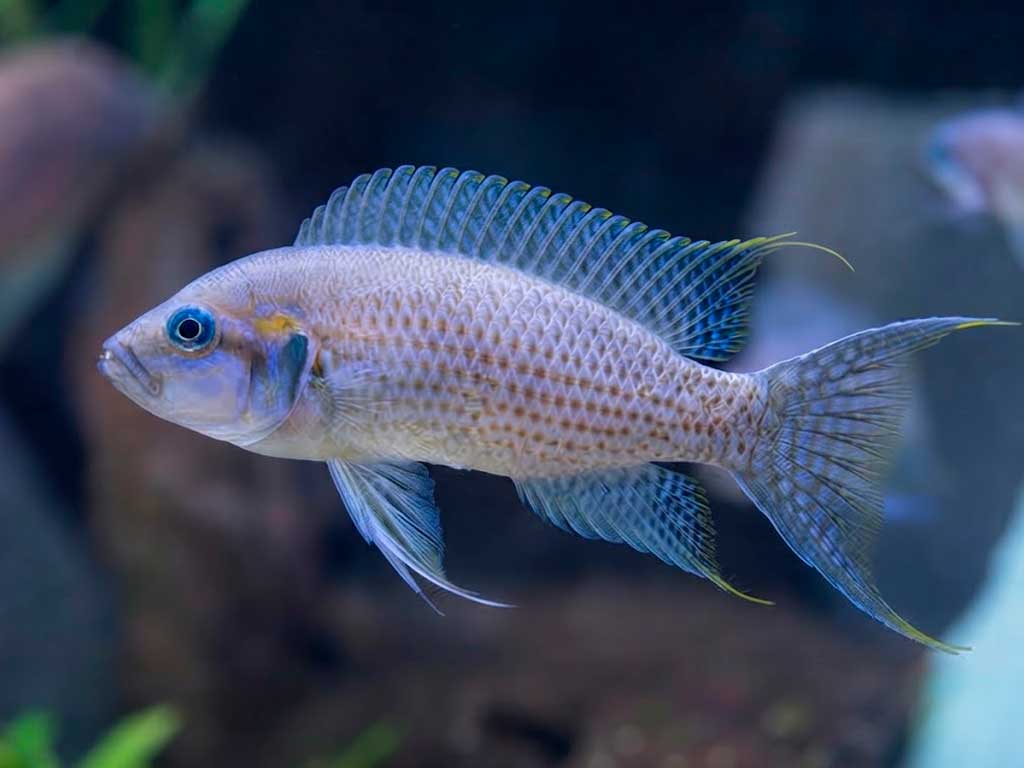
If you want a Rift Lake cichlid that won’t punish a first mistake, Neolamprologus brichardi is one of the safest places to start.
This is a hardy, colony-forming fish from Lake Tanganyika, and its combination of good looks and genuinely interesting social behavior has kept it popular in the hobby for decades.
Here’s what actually matters before you buy a group: this species needs hard, alkaline water, rockwork it can claim as territory, and enough patience to let a colony establish its own pecking order. Get those three things right and brichardi is about as forgiving as African cichlids get.
Quick Identity Card
| Trait | Detail |
|---|---|
| Scientific name | Neolamprologus brichardi |
| Common names | Brichardi cichlid, Princess of Burundi, fairy cichlid, lyretail cichlid |
| Family | Cichlidae |
| Origin | Lake Tanganyika, East Africa (type locality: Kisoje, Burundi) |
| Adult size | 8–9 cm (roughly 3–3.5 inches) |
| Lifespan | Around 5–8 years in a well-kept tank |
| Diet | Omnivore, micropredator/plankton feeder in the wild |
| Temperament | Territorial, mildly to moderately aggressive for its size |
| Minimum tank | 30 gallons (114 L) for a starting group, more as the colony grows |
| Difficulty | Easy to moderate — very hardy once water chemistry is dialed in |
Origin and Wild Habitat
Neolamprologus brichardi comes from the northern reaches of Lake Tanganyika, with wild populations documented in Burundi, Tanzania, and the Democratic Republic of Congo. It’s a lake native, not a river fish, which explains almost everything about how demanding its water chemistry turns out to be.
The taxonomy here has a genuinely messy history, and it’s worth knowing because you’ll see old names floating around fish forums and price lists.
This species bounced between Lamprologus and Neolamprologus for years, and was briefly classified as Lamprologus savoryi elongatus before settling into its current name. If a seller lists it as “N. brichardi” or just “savoryi,” you’re very likely looking at the same fish or a close relative from the same species complex.
In the wild, brichardi lives over rocky substrate, often near the vertical rock faces that drop into deep water. Colonies can number in the thousands, with every adult and larger juvenile pitching in to defend the group’s territory. That cooperative structure is the single most important thing to understand before you set up a tank for this species.
Tank Setup and Water Parameters
Rockwork isn’t optional here — it’s the foundation of the whole setup. Brichardi digs tunnels under rocks and claims caves as breeding sites, and a bare tank with no structure will produce a stressed, constantly bickering colony.
Aim for these parameters as your baseline:
- Temperature: 74–79°F (23–26°C)
- pH: 8.0–9.0
- General hardness: 8–20 dGH, with 150–300+ ppm total dissolved solids on the harder end
- Tank size: 30 gallons minimum for a founding pair or small group, scaling up as the colony grows
- Substrate: sand works well, paired with limestone rock or travertine to help stabilize pH naturally
A quick disclaimer worth repeating for anyone new to Rift Lake fish: these are rough guidelines based on published aquarium data, not a substitute for testing your own water and adjusting gradually. Sudden parameter swings stress any fish, and cichlids from stable lake environments are especially sensitive to that.
Keep nitrate under 50 mg/L and change 20–30% of the water monthly at minimum — weekly is safer if you’re stocking a full colony. Since Tanganyikan cichlids need consistently hard, alkaline water, it’s worth pairing this species with the water-testing and conditioning routine covered in our complete fish tank maintenance guide rather than treating it as a one-time setup step.
Behavior and Temperament
Brichardi is territorial, and it doesn’t hide that fact. Within its own colony, a strict hierarchy forms, and established pairs will defend a patch of rock with real conviction against anything that looks like competition.
That said, the aggression is size-relative. This is a small fish, and while it can be one of the more pushy residents in a mixed Tanganyikan tank, it’s not going to seriously threaten anything much larger than itself. The numbers don’t lie: most reported conflicts involve other small, similarly territorial cichlids competing for the same cave real estate, not larger tankmates.
One quirk worth knowing going in — once a pair spawns successfully, they tend to become considerably more possessive of the tank. It’s not unusual for a single breeding pair to functionally take over a large aquarium, pushing every other fish toward one end while they raise fry in peace.
Diet and Feeding
This species is an easy eater. In the wild it’s a micropredator and plankton feeder, picking small invertebrates and drifting food out of the water column, and in the aquarium it readily accepts flakes, pellets, and frozen or live foods without much fuss.
A cichlid-formulated flake or granule works as a staple, supplemented with occasional frozen brine shrimp or daphnia for variety. Feed small portions two to three times a day rather than one large meal — uneaten food breaks down quickly and pushes ammonia and nitrite up, which undermines the stable water chemistry this species depends on.
Breeding Behavior
Breeding brichardi is genuinely one of the easier projects in the Rift Lake hobby, and it’s a big part of why the species stays popular decades after its introduction. Given a pair and a suitable cave, spawning tends to happen on its own with very little intervention.
This is a substrate spawner the pair lays eggs inside a cave or rock crevice rather than mouthbrooding them, which sets it apart from most of the Lake Malawi mbuna and peacock cichlids in this same care-guide series.
What makes brichardi stand out even among substrate spawners is the sibling care system: older fry from earlier spawns stick around and help guard and raise the next batch, rather than being driven off or ignored.
Early spawns are usually small, sometimes just a handful of fry. As those fry mature into helpers, later spawns from the same pair tend to be noticeably larger, since there’s more of the colony available to defend the nest.
Tankmates and Cohabitation
Because it’s a colony fish by nature, brichardi does best kept in a group of five or more rather than as a lone pair, especially early on before natural pairing sorts itself out. A lone individual or an unbalanced group tends to run into more stress and disease than a properly sized colony.
For tankmates, other moderately peaceful Tanganyikan species generally work, provided the tank is large enough that territories don’t overlap. Avoid pairing brichardi with large, aggressive territorial cichlids the size mismatch works against it and be cautious mixing it with other members of the same species complex, since hybridization between closely related Lamprologus-group fish is a documented risk.
If Tanganyika is a lake you’re planning to build a tank around rather than just a single species, our frontosa cichlid care guide covers a very different but compatible-in-concept approach to stocking the same biotope.
Common Mistakes to Avoid
- Skipping the rockwork. A brichardi tank without caves and tunnels is a stressed brichardi tank, full stop.
- Ignoring hardness. Soft, acidic water is the single fastest way to shorten this fish’s lifespan and suppress breeding.
- Understocking the colony. A single pair with no group structure around it behaves very differently and often more aggressively toward tankmates than an established colony with helpers.
- Mixing incompatible Lamprologus-group species without doing the research first, given the hybridization risk between closely related forms.