Goldfish (Carassius Auratus): The Complete Care Guide
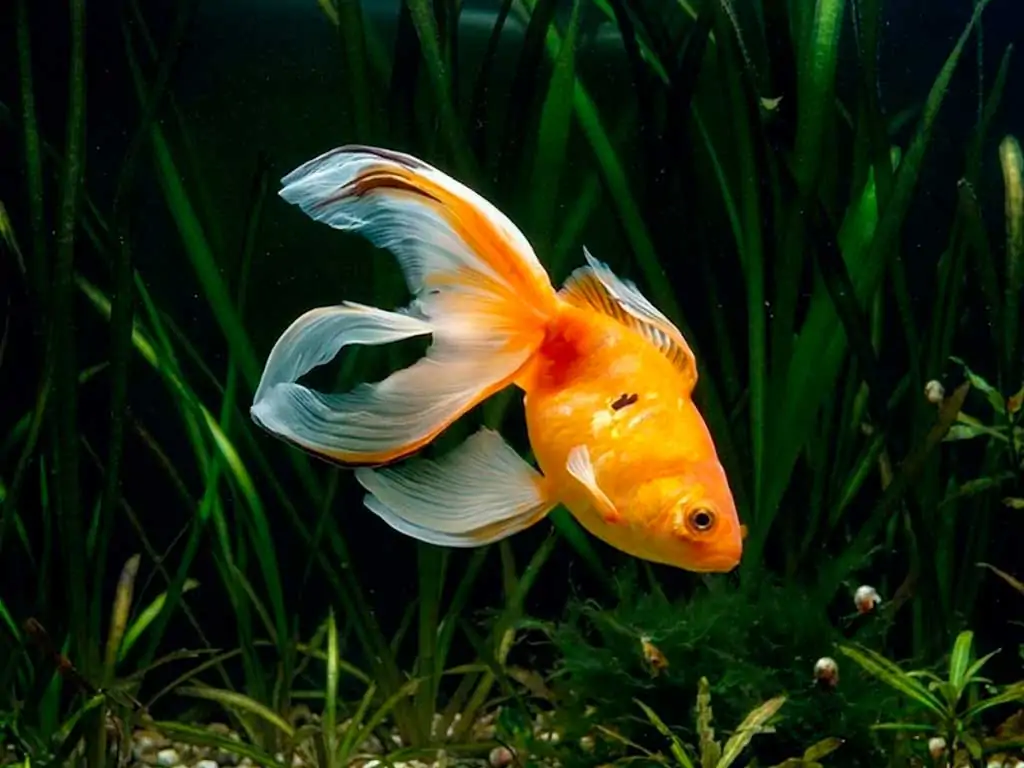
Goldfish are probably the single most misunderstood pet fish on the planet, and the fishbowl is exhibit.
This species was one of the first fish humans ever domesticated, bred for color in imperial China over a thousand years ago, and it deserves genuinely serious care rather than the bowl-and-forget treatment it usually gets.
This guide covers where goldfish actually come from, what real care looks like, and why the bowl myth causes more harm than almost any other piece of aquarium folklore.
Quick Identity Card
| Trait | Detail |
| Scientific name | Carassius auratus (Linnaeus, 1758) |
| Common names | Goldfish |
| Family / Order | Cyprinidae, Cypriniformes |
| Origin | Domesticated in China from wild Prussian carp (Carassius gibelio) |
| Adult size | 1 to 2 in (2.5 to 5 cm) in small tanks; over a foot (30+ cm) in ponds or large systems |
| Diet | Omnivore, plant matter and small invertebrates |
| Temperament | Peaceful, coldwater, social |
| Water temperature | 10 to 24°C (50 to 75°F), true coldwater fish |
| pH | 7.0 to 8.4 |
| GH (hardness) | Moderate to hard |
| Minimum tank | Far larger than most people assume; details below |
| Lifespan | 10 to 15 years typical, 20+ years documented |
| IUCN status | Least Concern, but invasive outside native range |
Origin and a Long-Standing Taxonomic Mix-Up
Goldfish were first selectively bred for color in imperial China more than a thousand years ago, developed from a far less colorful wild ancestor. For a long time, that ancestor was assumed to be the crucian carp, Carassius carassius. That assumption turned out to be wrong.
The actual closest wild relative is the Prussian carp, Carassius gibelio. Telling the two apart comes down to a few concrete traits: Carassius auratus has a more pointed snout, while crucian carp have a rounded one. Gibelio often runs grey or greenish, while true crucian carp stay a consistent golden bronze.
Juvenile crucian carp carry a black spot at the base of the tail that fades with age, a spot goldfish never develop at any life stage. Scale counts along the lateral line settle any remaining doubt: goldfish carry fewer than 31, crucian carp 33 or more.
Identification and Body Types
Wild-type coloration runs olive-green, nothing like the bright orange most people picture. Selective breeding over centuries produced the color and shape range known today, and those varieties split broadly into two structural categories.
Single-tail goldfish keep a body shape close to the wild original: streamlined, fast, and hardy, including common goldfish, comets, and shubunkins. Fancy goldfish carry the elaborate fins, rounded bodies, and sometimes exaggerated head growths bred over generations, including varieties like the oranda, ranchu, and telescope eye.
Single-tail types generally handle cooler water and stronger current better, while fancy varieties tend to need calmer, more controlled conditions given their less streamlined bodies. A full breakdown of specific fancy varieties deserves its own dedicated guide given how many distinct types exist.
Behavior and Temperament
Goldfish run genuinely social and do best in groups of their own kind rather than as a lone fish in a bowl. They spend much of their time foraging along the substrate, a constant, low-key activity that fits their omnivorous, opportunistic feeding style.
Temperament stays peaceful across nearly every variety, making goldfish easy to combine with other coldwater or subtropical species, provided tank size and water quality keep pace with their actual needs.
Diet and Feeding
In the wild, adult goldfish lean toward phytoplankton and vegetation, while young fish rely more heavily on zooplankton and insect larvae. That omnivorous baseline carries directly into captive care.
A rotation of quality sinking pellets, vegetable matter, and occasional live or frozen foods covers a goldfish’s needs well. The feeding guide for ornamental fish covers building that kind of balanced diet, and overfeeding, not underfeeding, is the far more common mistake with this species specifically.
The Bowl Myth: Why Tank Size Actually Matters
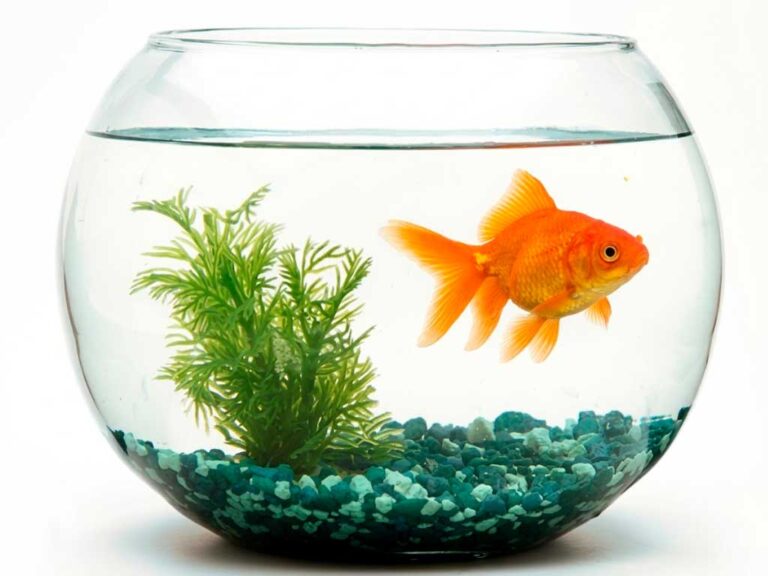
Here’s what actually matters more than almost anything else in this guide: a goldfish bowl is not adequate housing, full stop. Goldfish produce a genuinely heavy bioload for their size, and a bowl offers neither the water volume nor the surface area for gas exchange that this species needs to stay healthy long-term.
Real adult size is the other half of the problem. A goldfish kept in proper conditions, especially in a pond or large tank, can grow well over a foot long, far beyond what most people expect from a fish they bought the size of a fingernail.
Undersized housing doesn’t just stunt growth harmlessly. It shortens lifespan and causes real, documented health problems. Given how much waste this species produces, the filtration systems guide is worth reading closely before stocking any goldfish tank, and the water chemistry guide covers the parameters below in more depth.
Water itself should run cooler than most tropical setups: temperature between 10 and 24°C (50 to 75°F), since this is a true coldwater species that doesn’t need a heater in most climates, pH from 7.0 to 8.4, and moderate to hard general hardness.
Tankmates and Compatibility
Goldfish pair best with other coldwater species that share their temperature range and peaceful temperament, rather than tropical community fish that need warmer water goldfish don’t require.
Mixing single-tail and fancy varieties works in a large enough system, though single-tails’ faster swimming can sometimes outcompete slower fancy types at feeding time.
Given how much space and filtration this species needs on its own, careful stocking density matters more with goldfish than with most community fish covered elsewhere on this site.
Common Health Problems: A Brief Overview
Goldfish are hardy, but a handful of health issues show up often enough to name here. Swim bladder disorder affects buoyancy and balance, often linked to diet or water quality.
Fin rot, a bacterial or fungal condition, shows up as fraying or discoloration at the fin edges, usually tied to poor water conditions. Bloating and general lethargy often trace back to overfeeding or an undersized, poorly filtered tank.
Nearly every one of these problems connects back to the same root causes: insufficient tank size, inadequate filtration, or an inconsistent diet. A dedicated guide to recognizing and treating these issues in more depth is worth its own space given how much specific detail each one deserves.
Breeding
Goldfish are egg-layers, not livebearers, spawning readily in outdoor ponds once water warms in spring. Males chase females during a spawning event, and eggs get scattered across plants or spawning mops rather than cared for afterward.
Given how differently goldfish reproduce compared to the livebearers covered elsewhere on this site, and how much detail exists around triggering and managing a spawn, this is another area worth its own dedicated coverage down the line.
Conservation Status
The IUCN Red List classifies Carassius auratus as Least Concern, unsurprising for a species this widely domesticated and distributed. That domestication history comes with a real downside: released goldfish have established invasive populations across North America and Australia, sometimes displacing native species entirely, including a documented role in the decline of the Pahrump killifish in Nevada.
Never release a goldfish into a local pond, lake, or waterway, regardless of size or how humane it might seem. Rehoming through a shop or another keeper is always the better option.