Tomato Frog Care: The Complete Guide to Dyscophus Species
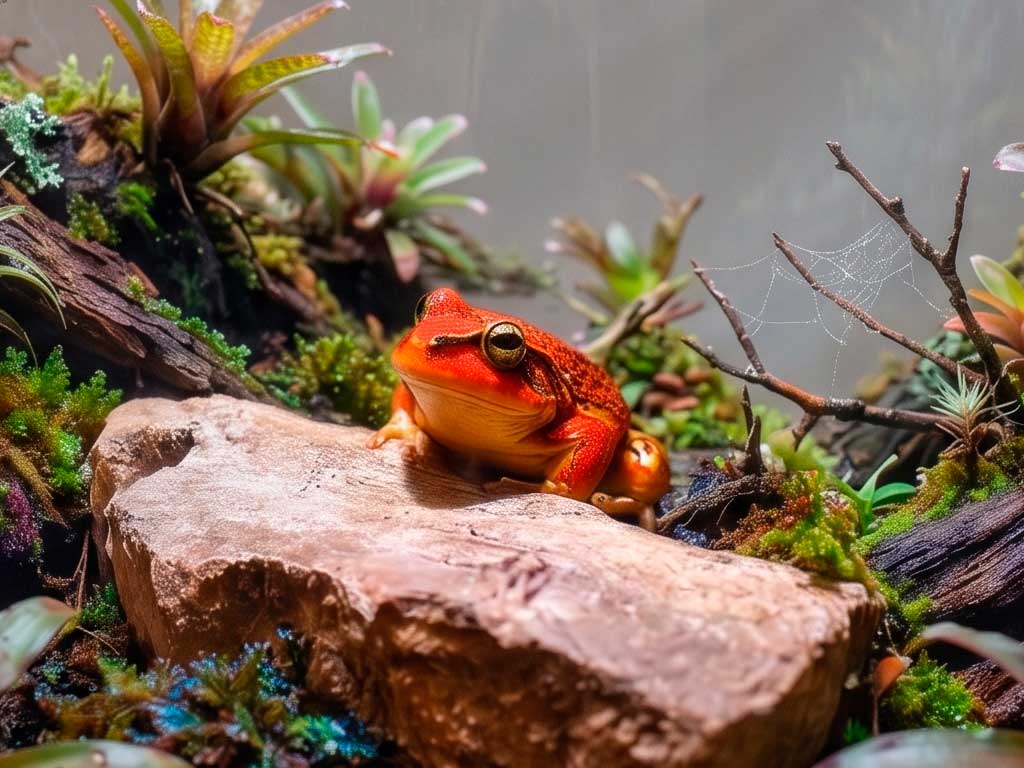
If you’re researching tomato frog care, you’ve picked one of the most striking amphibians in the pet trade. This guide covers everything you need: species identification, housing, diet, health, and what to expect if you ever decide to breed them.
We’ve worked with several Dyscophus species at Happy Pet Zone, and the single biggest factor in long-term success is getting the humidity and substrate right from the start. Get those two variables wrong, and nothing else matters.
By the end of this guide, you’ll know exactly which tomato frog species fits your setup, what supplies you actually need, and the warning signs that mean it’s time to call a vet. Let’s start with the species themselves.
What Is a Tomato Frog?
The tomato frog is a small, round amphibian belonging to the Microhylidae family, commonly called narrow-mouthed frogs. All three species are endemic to Madagascar, meaning they exist nowhere else on Earth.
Their name comes from their bright coloration, which ranges from deep red to orange and yellow. Females are typically more vividly red than males, and the color intensifies during the breeding season.
The 3 Dyscophus Species: Geographic Variants
Not all tomato frogs are the same species, and the differences matter for both legality and care requirements.
| Species | Common Name | Origin | Adult Size | Conservation Status |
|---|---|---|---|---|
| Dyscophus antongilii | True Tomato Frog | Eastern Madagascar | 2.3-4.1 in (60-105mm) | Near Threatened |
| Dyscophus guineti | False Tomato Frog | Eastern Madagascar | 2.5-3.5 in (65-90mm) | Least Concern |
| Dyscophus insularis | Sambava Tomato Frog | Western Madagascar | 1.5-2 in (40-50mm) | Least Concern |
Dyscophus guineti is the species most commonly available in the pet trade, largely because it is not protected under CITES Appendix I the way D. antongilii is. Always confirm the exact species before purchasing, since D. antongilii requires additional permits in many countries.
Tomato Frog Habitat Setup
A properly built enclosure prevents the majority of health problems you’ll encounter with this species. Here’s what your setup actually needs.
Tank Size
A single adult tomato frog does well in a 10 to 20-gallon tank. For a breeding pair or trio, move up to a 20-gallon long or an 18x18x18 front-opening terrarium. Floor space matters more than height for this species, since they spend most of their time on the ground rather than climbing.

FROM AMAZON.COM
20 Gallon Reptile Tank — 30″ × 12″ × 12″ Glass Terrarium
Top screen ventilation, sliding door, and cable & fogger pass-throughs. Fits bearded dragons, lizards, geckos, frogs, and snakes.
Buy on Amazon.comAs an Amazon Associate, Happy Pet Zone earns from qualifying purchases, at no extra cost to you.
Substrate
Tomato frogs are burrowers by nature, so substrate depth is non-negotiable. Use a moisture-retentive mix of coconut fiber, organic topsoil, and sphagnum moss, kept at least 2 to 3 inches deep. Frogs that like to dig will appreciate even more depth.
Avoid gravel, sand, or any loose particulate substrate near the feeding area. Tomato frogs are ambush feeders that lunge at prey, and substrate ingestion during a feeding strike is a common cause of impaction.

FROM AMAZON.COM
Exo Terra Plantation Soil, 8 Qt (8.8 L)
A compressed coconut fiber substrate that holds humidity well, making it a solid base layer for tropical terrariums and bioactive reptile setups.
Buy on Amazon.comAs an Amazon Associate, we earn from qualifying purchases. Happy Pet Zone may earn a commission when you click through to Amazon.com, at no extra cost to you.
Humidity and Temperature
Target humidity between 60% and 80%. Daily misting, combined with a moist substrate and live plants, typically maintains this range without much effort. A digital hygrometer takes the guesswork out of monitoring.
Keep the ambient temperature between 70°F and 75°F (21°C to 24°C). Most tomato frogs do fine at standard room temperature, so supplemental heating is only necessary if your home regularly drops below 68°F. If you do add heat, use a low-wattage source controlled by a thermostat, since these frogs overheat easily.

FROM AMAZON.COM
Exo Terra Plantation Soil, 8 Qt (8.8 L)
A compressed coconut fiber substrate that holds humidity well, making it a solid base layer for tropical terrariums and bioactive reptile setups.
Buy on Amazon.comAs an Amazon Associate, we earn from qualifying purchases. Happy Pet Zone may earn a commission when you click through to Amazon.com, at no extra cost to you.
Hides and Décor
Add cork bark, half-logs, or partially buried clay pots to give your frog secure hiding spots. Live plants like pothos, philodendron, or moss help stabilize humidity while making the enclosure feel more natural. A shallow water dish, always filled with dechlorinated water, should be available at all times since frogs absorb moisture through their skin.
Tomato Frog Diet and Feeding Schedule
These frogs are strict insectivores in captivity and only accept live prey, never frozen or pre-killed food.
Staple feeders: crickets, dubia roaches, and earthworms should make up the bulk of the diet. Match prey size to the frog; nothing should be wider than the frog’s head.
Occasional treats: waxworms, mealworms, and phoenix worms can be offered once or twice a month. These are high in fat and shouldn’t become a regular part of the rotation.
Feeding frequency:
- Juveniles under 2 inches: feed nightly, offering 3 to 4 small crickets or the equivalent
- Adults: feed every other night, offering 6 to 10 medium crickets or equivalent prey
Always gut-load feeder insects 24 hours before offering them, and dust prey with a calcium and vitamin D3 supplement at every other feeding. This single habit prevents the majority of metabolic bone disease cases in captive amphibians.
How Tomato Frogs Reproduce
Breeding season in the wild runs from October through January, triggered by heavy seasonal rains. Males call from shallow ponds to attract females, and once a female responds, the pair enters amplexus, the same external fertilization position used by most frog species.
A single female can lay anywhere from 1,000 to 15,000 eggs per clutch, depending on the species and her size. Neither parent provides care after spawning. Tadpoles hatch within 36 hours and complete metamorphosis into froglets in roughly 45 to 60 days.
If you’re interested in replicating this process at home, our complete guide on how to breed frogs walks through environmental triggers, rain chamber setup, and tadpole care in detail. Many of the same principles apply directly to Dyscophus species.
Health Issues to Watch For
Tomato frogs are generally hardy, but a few conditions show up repeatedly in captive specimens.
Red leg syndrome is the most serious. This bacterial infection causes reddening of the legs and underside, lethargy, and loss of appetite. It progresses quickly and can be fatal without treatment, so any frog showing these signs needs an amphibian-experienced vet immediately.
Metabolic bone disease results from insufficient calcium or vitamin D3 in the diet. Watch for soft or deformed limbs, especially in juveniles that are still developing.
Stress secretions are a defense mechanism, not a disease. When threatened, tomato frogs puff up and release a thick white substance from their skin that can irritate human skin on contact. Frequent secretions usually indicate something in the husbandry setup needs adjustment, whether that’s handling frequency, enclosure size, or noise levels.
This article is intended for general informational purposes. Always consult a veterinarian experienced with amphibians if your frog shows any signs of illness.
3 Common Mistakes With Tomato Frog Care
- Underestimating substrate depth. A shallow substrate layer prevents natural burrowing behavior and increases stress, which shows up later as reduced appetite or excessive secretions.
- Handling too frequently. Tomato frog skin is highly permeable and sensitive to oils and salts from human hands. Limit handling to necessary tank maintenance, and always wear clean, damp gloves when you do.
- Skipping the calcium dusting schedule. Many keepers dust inconsistently, which slowly leads to metabolic bone disease over months rather than showing immediate symptoms.
Frequently Asked Questions About Tomato Frog Care
More Frog Care Guides on Happy Pet Zone
Tomato frogs are just one of several amphibian species we cover in depth. If you’re expanding your collection or simply researching before you commit, these guides are a good next stop.
Thinking about breeding your frogs down the line? Our complete guide to breeding frogs at home covers species selection, rain chamber setup, and tadpole care from start to finish, many of the same principles apply across species.
Curious about another genus entirely? Our Pacman frog care guide breaks down the Ceratophrys genus, including feeding techniques that prevent impaction and the most common mistakes even experienced keepers make.