Borzoi: The Elegant Russian Wolfhound
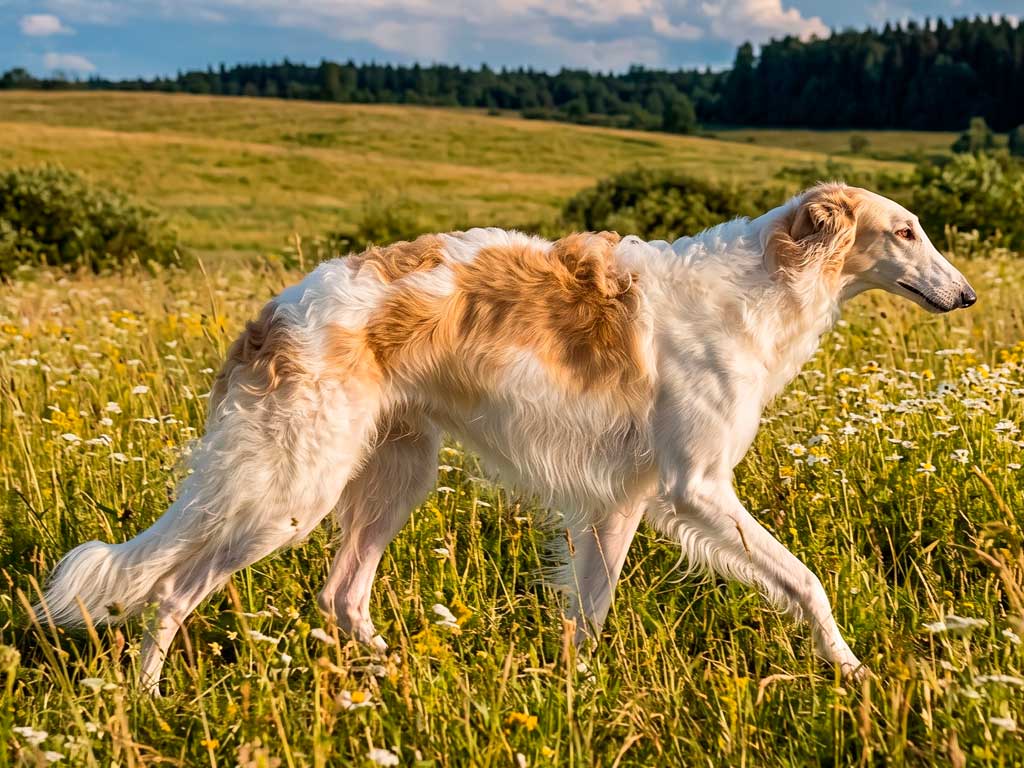
The Borzoi dog breed is one of the most breathtaking sighthounds you’ll ever encounter a living sculpture of speed, elegance, and quiet nobility.
If you’re considering adding one to your family, this guide covers everything you need to know: history, temperament, care, health, and whether this stunning breed truly fits your lifestyle.
In fact, many first-time Borzoi owners are surprised by just how calm and affectionate these giants can be at home.
History and Origin
The Borzoi’s story begins in 17th-century Russia, where aristocrats needed a dog fast enough to outrun wolves across open steppe.
A Russian duke first attempted to import Arabian Greyhounds for this purpose. The experiment failed those dogs couldn’t survive the brutal Russian winters. Undeterred, breeders crossed imported sighthounds with native Russian dogs, likely Tatar hunting dogs or long-legged herding breeds. The result was the Borzoi: a dog built for cold, speed, and endurance.
For centuries, the breed was synonymous with Russian imperial power. The Tsars gifted Borzois to European monarchs as diplomatic tokens, cementing the breed’s reputation as a dog of royalty.
Then came 1917. The Russian Revolution ended everything. The Bolsheviks destroyed most kennels because Borzois were seen as symbols of the ruling class. The breed came dangerously close to extinction. Fortunately, the royal gifts sent to Western Europe kept the bloodline alive and the Borzoi gradually made its way into the wider world.
Today, the Borzoi is classified in the Hound group by the UK Kennel Club, recognized for its exceptional coursing ability and unmistakable silhouette.
Fun fact: Captain E. J. Smith of the RMS Titanic owned a Borzoi named Ben. A famous photograph shows the two together on deck before the ship’s fateful voyage. Ben, wisely, stayed ashore.
Physical Characteristics
The Borzoi is built for one thing: pure, breathtaking speed.
Every physical feature serves that purpose. The long, narrow head minimizes wind resistance. The deep chest provides lung capacity. The arched, muscular back acts like a spring it flexes with each stride to extend the dog’s reach dramatically.
Here are the key stats:
- Height: Males at least 74 cm (29 in); females at least 68 cm (27 in)
- Weight: Males around 41 kg (90 lbs); females around 34 kg (75 lbs)
- Coat: Silky, wavy or slightly curly; medium length with heavy feathering on legs, belly, and tail
- Colors: Almost any color white, gold, red, gray, black brindle, or spotted; only blue merle is excluded
- Size classification: Large
The coat is one of the Borzoi’s most striking features. It flows elegantly as the dog moves and has a distinctive silky texture that sets it apart from other large breeds. However, that beauty comes with a grooming commitment more on that below.
Despite their imposing size, Borzois carry themselves with a light, almost cat-like grace. Watching one run at full speed is genuinely one of the most impressive sights in the dog world. Top Borzois can reach speeds of 37 mph (60 km/h).
Temperament and Personality
Here’s where the Borzoi surprises most people.
Despite their regal bearing and impressive size, Borzois are remarkably calm indoors. They’re gentle, sensitive dogs that bond deeply with their families though they tend to express affection in a quiet, dignified way rather than with the exuberance of a Labrador.
With strangers, expect reserve. Borzois are not aloof in a fearful sense they simply prefer to take their time assessing new people. Proper socialization from puppyhood makes a significant difference.
With other dogs, Borzois generally do well, especially with dogs of a similar calm temperament. However, their prey drive is extremely high. This is a dog bred specifically to chase and catch fast-moving animals. If a small animal runs a squirrel, a cat, a rabbit a Borzoi’s instinct kicks in immediately.
This means:
- Cats and small pets need to be introduced very carefully, ideally from puppyhood
- Off-leash time should only happen in securely fenced areas
- Children can coexist well with Borzois, but interactions should always be supervised, particularly with very young kids
The Borzoi is not a watchdog. It won’t bark at strangers or guard your property. What it offers instead is calm companionship and occasional bursts of breathtaking athleticism in the yard.
Care Guide
Diet and Nutrition
Feeding a Borzoi isn’t complicated, but it does require attention to a few key points.
As a large breed, the Borzoi has different nutritional requirements than smaller dogs including specific mineral and vitamin balances to support joints and long-term health. Choose a high-quality food formulated for large breeds.
The most important dietary consideration for this breed is bloat risk. Borzois, like other deep-chested breeds, are prone to gastric dilatation-volvulus (GDV), a life-threatening condition where the stomach twists. To reduce this risk:
- Feed smaller meals more frequently two or three times per day rather than one large meal
- Avoid vigorous exercise for at least an hour before and after eating
- Use slow-feeder bowls if your dog eats quickly
- Learn to recognize early signs of bloat (distended belly, unproductive retching, restlessness) this is a veterinary emergency
Exercise Requirements
The Borzoi needs at least one hour of vigorous exercise per day and ideally more.
At home, they’re surprisingly lazy. A Borzoi will happily spend hours sprawled on a comfortable couch. But they need the opportunity to truly run not just a sedate walk around the block.
Access to a large, securely fenced area is essentially non-negotiable. A Borzoi that catches sight of prey and bolts will be gone in seconds, and their speed means recall is difficult to enforce in open spaces. A 6-foot fence is the minimum; some Borzois can jump higher.
Daily exercise should include:
- Leashed walks for mental stimulation and training
- Off-leash running in a safely enclosed space for cardiovascular needs
- Lure coursing an organized sport where dogs chase a mechanical lure — is an excellent and fulfilling activity for this breed
Grooming Needs
The Borzoi’s silky coat needs regular attention brushing two to three times per week is the standard recommendation.
Key grooming tasks include:
- Brushing out the feathering on legs, belly, and tail to prevent tangles
- Trimming the hair between the paw pads regularly this hair can collect debris and affect traction
- Bathing every four to six weeks, or as needed
- Checking and cleaning ears weekly
- Trimming nails every two to three weeks
Shedding is a real consideration. Borzois go through heavy seasonal shedding periods where the amount of loose hair is considerable. During these times, more frequent brushing is essential.
The Borzoi is not hypoallergenic.
Training and Education
Training a Borzoi requires a shift in mindset if you’re coming from working breeds like German Shepherds or Border Collies.
Borzois are intelligent but they’re independently intelligent. They were bred to make split-second hunting decisions without human input. Consequently, they don’t feel compelled to perform for approval the way many other breeds do.
This means:
- Harsh corrections don’t work — Borzois are sensitive dogs and will shut down or become avoidant
- Positive reinforcement is the only effective approach — use high-value treats and keep sessions short (10-15 minutes)
- Patience is essential — a Borzoi may understand a command perfectly and simply choose not to comply
Recall training is the single most critical skill to develop, and even then it can be unreliable around prey. This is why reliable off-leash work should always take place within secure enclosures.
Socialization early in life is equally important. Expose puppies to a wide range of people, sounds, environments, and animals it builds the confident, well-adjusted temperament this breed is capable of.
For experienced dog owners, the Borzoi is a rewarding training partner. For first-time owners, expect a learning curve but it’s absolutely manageable with the right approach.
Health and Longevity
The Borzoi is generally a healthy breed, with a lifespan of 7 to 10 years somewhat shorter than average, which is common among very large dogs.
Key health considerations include:
- Bloat (GDV): As mentioned above, this is the most serious health risk for the breed. Understanding the risk and taking preventive measures can be life-saving.
- Hereditary eye conditions: Borzois can be affected by inherited eye diseases. Dogs intended for breeding should be examined by a veterinary ophthalmologist and cleared before being bred.
- Hypothyroidism: Reduced thyroid function can be hereditary in this breed. Symptoms include weight gain, lethargy, and skin problems. It’s manageable with daily medication once diagnosed.
- Sensitivity to anesthesia: Like many sighthound breeds, Borzois have very low body fat. This affects how they metabolize certain drugs, including anesthetics. Always inform your veterinarian that your dog is a sighthound before any procedure.
- Cardiac screening is also recommended as part of routine health monitoring.
Work with a responsible breeder who performs health testing on breeding stock, and schedule regular veterinary checkups at least once a year for adults, more frequently as the dog ages.
Is This the Right Dog for You?
The Borzoi is not a dog for everyone and knowing that upfront saves heartache for both owner and dog.
The Borzoi is an excellent fit if you:
- Have a large, securely fenced yard
- Live an active lifestyle and can commit to daily vigorous exercise
- Appreciate a calm, quiet companion rather than an eager-to-please working dog
- Have some prior dog ownership experience
- Can dedicate time to regular grooming
- Understand the prey drive and can manage it responsibly
You should probably look at another breed if you:
- Live in a small apartment without outdoor space
- Have cats or small pets and cannot manage careful, gradual introductions
- Want a highly obedient dog that excels at off-leash work in open areas
- Are a first-time dog owner looking for an “easy” breed
- Have very young children and cannot supervise interactions
For the right owner, the Borzoi is an extraordinary companion graceful, gentle, and quietly devoted. There is nothing quite like sharing your home with one of these living works of art.