Komondor Dog Breed: The Corded Coat Guardian Comprehensive Care Guide
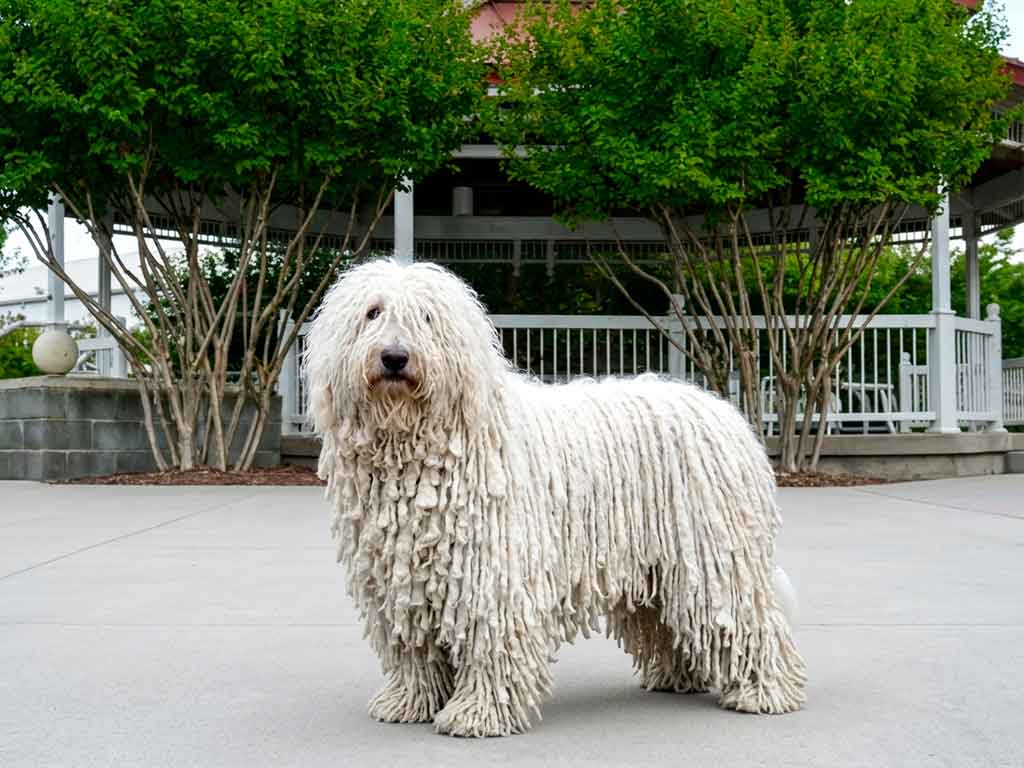
The Komondor is a Hungarian flock guardian whose coat is not a hairstyle but a structure: a coarse topcoat and a fine undercoat that felt themselves into cords over roughly two years. A dog carries 50 to 60 kg (110 to 132 lb) on a frame of at least 70 cm (27.5 in); a bitch 40 to 50 kg (88 to 110 lb) on at least 65 cm (25.6 in). The color is ivory and nothing else, and the AKC records that a coat which has not corded by the age of two is a disqualification.
This page is written for the owner who is considering the commitment rather than the look. It covers how cords form, how they are separated, how the dog is washed and dried, what the coat collects outdoors, and the hours the job actually takes.
The Coat Is the Breed
The FCI standard is unusually precise about hair. The body is covered by long coat made of a coarser topcoat and a finer undercoat, and the shaggy tendency towards matting is, in its words, a basic requirement. A dense, wavy, corded coat also occurs, and the smaller tufts are less matted or not matted at all.
The lengths are graded by zone, and the grading is the design. On the croup, the loin and the back of the thighs the coat reaches at least 20 to 27 cm. On the back, the sides of the chest and the shoulder blades it is 15 to 22 cm. On the cheeks, the eyebrows, the top of the head, the ears, the neck and the limbs it is 10 to 18 cm. At the lips and the lower limbs it is shortest, 9 to 11 cm.
Then comes the sentence that governs the whole job: neither a combed coat nor a completely neglected one is desirable. The breed wants a coat that is neither tidy nor abandoned, which is a narrow target to hit by hand.
| Feature | Komondor |
|---|---|
| FCI group | Group 1, sheepdogs |
| Official use | Herding dog |
| Working trial | Not required |
| Height | Minimum 70 cm (27.5 in) dogs, 65 cm (25.6 in) bitches |
| Weight | 50 to 60 kg (110 to 132 lb) dogs, 40 to 50 kg (88 to 110 lb) bitches |
| Coat | Matted, corded, ivory only |
| Lifespan | 10 to 12 years |
From Fluff to Cords
A Komondor puppy looks nothing like the adult. The first months are a normal shaggy white coat, and the cords do not exist yet.
Between nine and ten months the coat begins to clump, and the clumps plate together. This is the moment the work starts. An experienced breeder quoted by the AKC describes the method: the plates are split into sections that grow out of a patch of skin about the size of a quarter, and each of those patches becomes a cord.
The deadline is not decorative. A coat that has not corded by two years is a disqualification, which is another way of saying that cording is a developmental process the dog either reaches or does not, and that the owner’s job is to help it along without forcing it.
Never Brush, Always Split
There is no brush in this routine. Brushing destroys the cords by combing the felt apart into frizz, and it is the single most common mistake made by owners who are used to long-haired breeds.
Separation is done with the fingers, section by section, from the skin outwards. The cords are teased apart where they have joined, and the work moves over the whole dog, including the parts that do not show.
Frequency matters more than duration. Short sessions every couple of weeks keep the cords separate and the skin visible; a single long session after months of neglect is the situation that produces mats, and mats on a Komondor are a veterinary problem rather than a grooming one.
The Bath and the Long Dry
Bathing is a project, and the drying is the larger half of it. A wet Komondor carries a great deal of water in the cords, and a dog that stays damp is a dog heading for skin trouble and a smell that no shampoo will cover.
The method that works is simple and slow. Bathe with dilute shampoo, then rinse until there is no trace of it left, because residue in a cord is residue against the skin. Squeeze the cords out by hand, wrap the dog in towels, and finish in front of a strong fan overnight.
Owners who skip the drying stage end up with a dog that smells of pond for a week. There is no reason for a cared-for corded coat to smell at all, and the difference between the two outcomes is hours of air movement.
What the Cords Collect
The coat is a filter, and it works on everything that touches it.
Leaves, Twigs, and Burrs
Check the coat after every walk in cover, and pull the debris out by hand while it is still on the surface. A burr that works its way down to a cord’s root is a small operation.
Grass Seed
Grass seed is the one to take seriously. It migrates, it disappears into a cord, and it abscesses weeks later. A dog that comes back from rough ground in late summer gets a full check, not a glance.
Snow and Ice
Wet snow balls up on the cords and pulls at the skin. Knock the balls off outside, and never rub the coat dry, because friction felts it tighter.
The Time Budget
This is the part that decides whether the breed is a good idea. The figures below are for a pet coat, not a show coat.
| Task | Frequency and time |
|---|---|
| Separating cords | Every two to four weeks, one to three hours |
| Full bath and dry | Three to four times a year, two hours plus overnight drying |
| Debris check after walks | Every walk in cover, ten to twenty minutes |
| Ears, nails, teeth | Weekly, monthly, weekly |
| Vet and skin check under the coat | Twice a year, one appointment |
Add the ordinary life of a 55 kg guardian and the total is a genuine part-time job. The owners who do it well describe the sessions as the quiet part of their week; the ones who resent it are the ones whose dogs end up shaved or rehomed.
The Dog Under the Coat
The standard does not soften the temperament. The Komondor has imperturbable courage in the guarding of the herds and the property entrusted to him, he attacks silently, he regards his territory as his own property and will not tolerate another living creature in it, his nature is suspicious, and during the day he keeps a lying position from which he can watch his area. At night he is always on the move. That is a working description of a guard, and it explains the dog you meet: calm on his own ground, unimpressed by visitors, and awake while you are asleep.
In the House
The coat changes the household arithmetic as much as the temperament does.
| Situation | What to expect |
|---|---|
| A visitor at the gate | Watched in silence and blocked until the family accepts them |
| A visitor who walks in | A different and much faster reaction |
| Children of the family | Guarded closely, and supervised because of the mass |
| Another dog | Tolerated on his territory at best, and often not that |
| Coming home wet | A towel, a fan, and no dog on the sofa for the night |
The Health List
The AKC records no health problems specific to the breed, which is unusual and welcome for a giant. Responsible breeders have hips certified by the Orthopedic Foundation for Animals and eyes checked by an ophthalmologist, and the parent club asks for both plus a dentition exam.
That does not make the dog invulnerable. The checks exist because giant breeds carry joint risk, and the dentition exam matters for a breed with a long jaw and a strong bite.
Bloat is the one to memorize. When the stomach twists, it closes its own blood supply. The signs are a dog that retches and produces nothing, a belly that is tight and swelling, and pacing that will not settle. That dog goes to a veterinarian immediately, at any hour, because the alternative is a dead dog by morning.

Lemonade Pet Insurance
Explore customizable pet insurance coverage and learn whether Lemonade is the right fit for your dog or cat.
- Customizable coverage options
- Online policy management
Feeding a Guardian That Eats Little
The Komondor is famously undemanding at the bowl. Breeders quoted by the AKC note that the breed eats little for its size, will sometimes skip a meal, and that a very high protein level can show up as scratching or hot spots on the skin.
Feed twice a day, weigh the portion, choose a formula for giant breeds, and take the bowl away between meals, which suits the dog and reduces the bloat risk at the same time.
Weight is easy to hide under cords, so the check is by hand: ribs under the coat, a waist behind them, and a weigh-in at the vet twice a year.
Shop for Your Breed

Just Food For Dogs – Fresh Frozen
Fresh meals. Gently cooked, then frozen to lock in nutrients. 100% Human Grade Ingredients. Gently Cooked in the USA. #1 Vet-Recommended Fresh Food.
Shop on JustFoodForDogs
Raw Paws Pet Food – Frozen Raw Pet Food
Feeding your pet a frozen raw pet food diet is a simple way to deliver real, whole-food nutrition in its most natural form.
Shop on RawPawsPetFood
Bravecto Chews for Dogs
Bravecto is a long-lasting flea and tick protection option for your dog. 1 dose of Bravecto chew provides up to 12 weeks of powerful protection, which is nearly 3 times longer than a monthly treatment.
Shop on BestVetCare.com
Deworming Treatments for Dogs
BestVetCare offers you a wide range of worm treatments which come in a variety of forms such as oral paste, tablets, granules, and liquid solutions.
Shop on BestVetCare.comHappyPetZone participates in various affiliate programs with brands and retailers. We may receive a commission on purchases made through our links, at no extra cost to you.
The Honest Decision
Shaving is the shortcut that many owners eventually take, and it is worth being clear about what it means. The dog loses the cords that define the breed, the coat comes back in a different texture, and the weather protection goes with it.
| What it asks | What you get |
|---|---|
| Two to four hours a month, forever | A coat that cords evenly and stays clean |
| Overnight drying, three or four times a year | A dog that smells of nothing |
| A towel by the door and a fan in the utility room | A house that survives the rain |
| A fence and a routine | A guardian that patrols instead of escaping |
| An owner who enjoys the work | A dog that keeps its breed’s defining feature |
If that sounds like a life you would enjoy, start from the dog breeds hub.
A short look at the breed. Watch the coat move when the dog turns: cords swing as one piece, which is the sign that they are separate and sound.
The Other Corded and Guarding Breeds
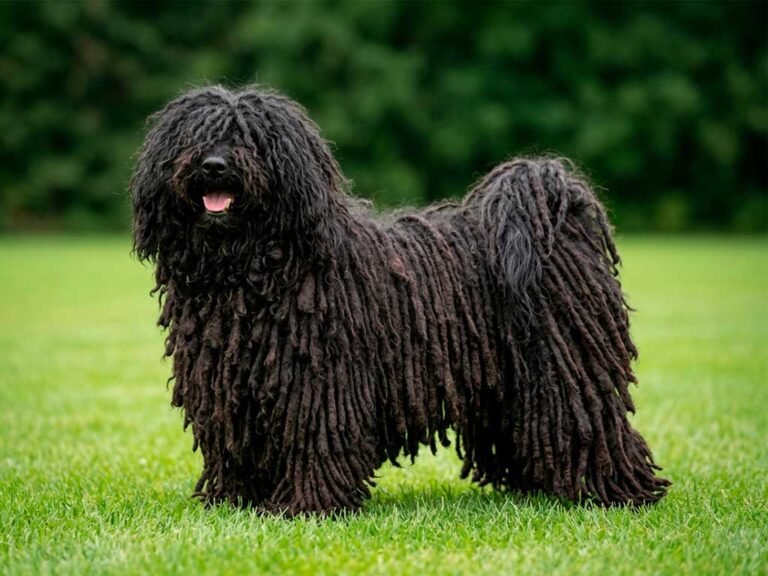
- The Hungarian Puli is the small corded herder, same country and a very different coat to manage.
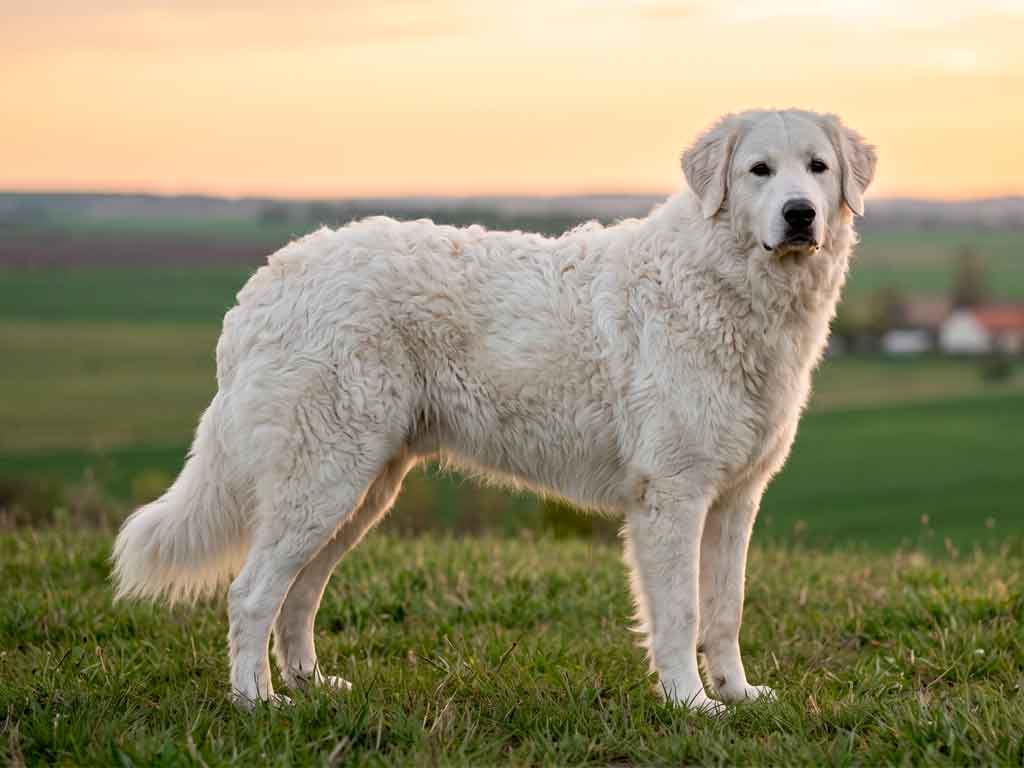
- The Hungarian Kuvasz is the white guardian without cords, and a weekly brush instead of a monthly separation.
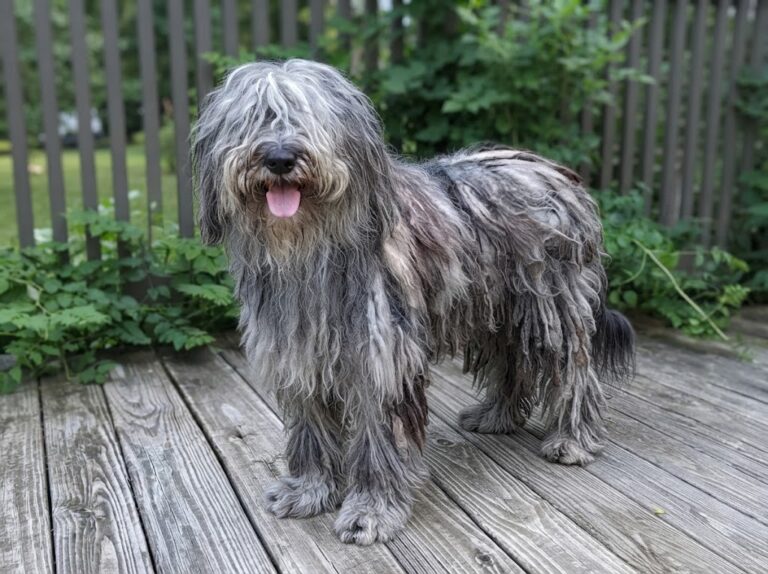
- The Bergamasco is the Italian corded shepherd, with mats that form in flat layers instead of cords.
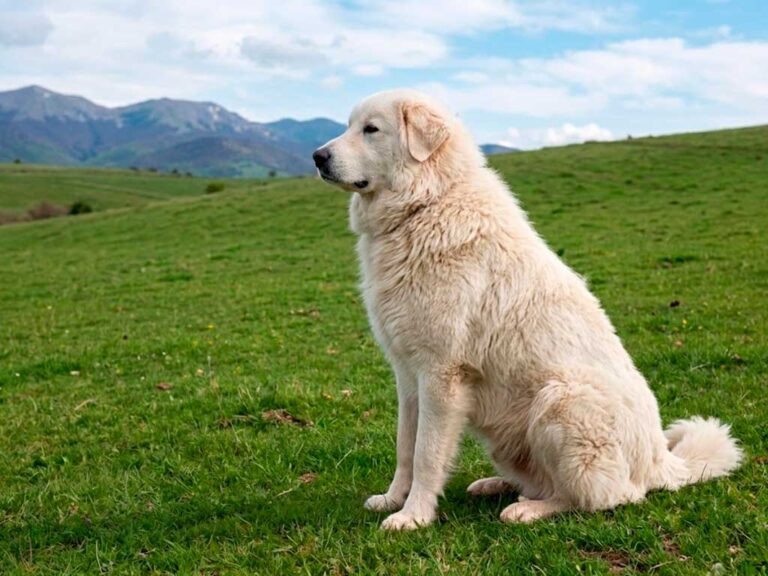
- The Maremma Sheepdog is the Italian guardian with an ordinary coat and the same job.
Frequently Asked Questions
Sources
- Fédération Cynologique Internationale, Komondor breed standard No. 53, full text (2000).
- American Kennel Club, Komondor breed profile, grooming and health statement (2026).
- Wisdom Panel, Komondor breed profile (2026).