Bergamasco Dog Breed: Everything You Need to Know
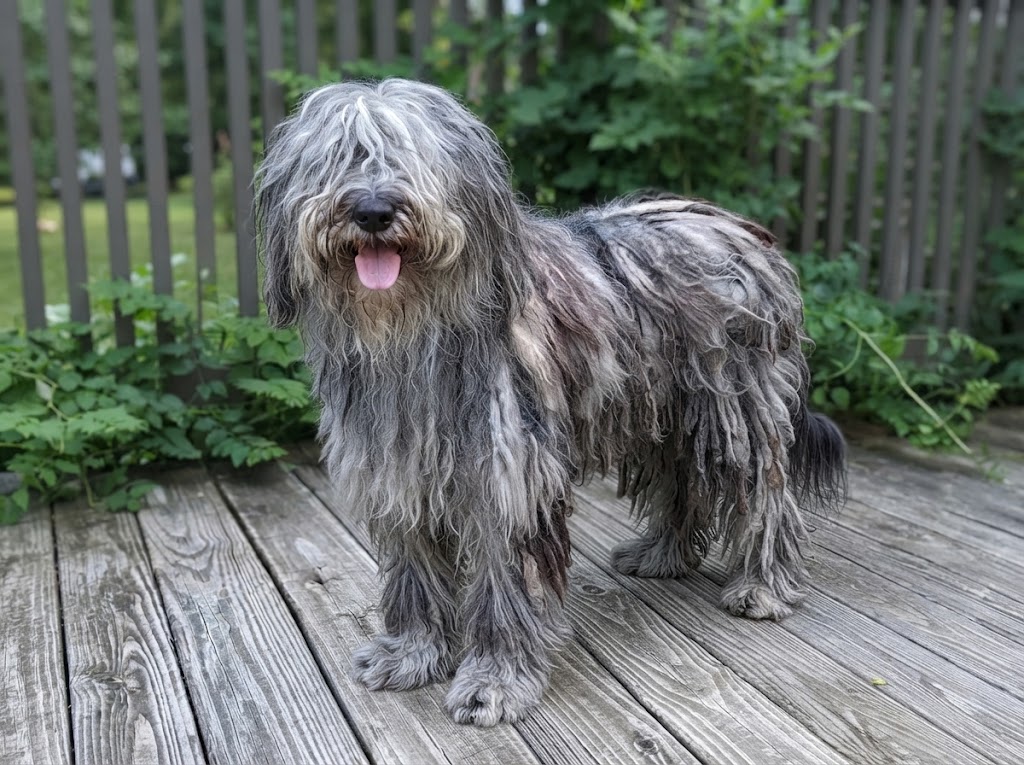
The Bergamasco dog breed is unlike anything else you’ve ever seen. Those dramatic, rope-like mats covering its entire body aren’t a grooming accident they’re a masterpiece of evolutionary design built over thousands of years.
In this guide, you’ll get the full picture: where this ancient sheepdog came from, what it’s really like to live with one, and exactly what that extraordinary coat demands of its owner.
By the end, you’ll know whether this rare Italian breed belongs in your home or not.
History and Origin
The Bergamasco’s story doesn’t begin in Italy. It begins much further east.
Most breed historians trace the Bergamasco’s ancestry back to ancient Persia, where nomadic farmers relied on large, intelligent herding dogs to move and protect livestock across brutal mountain terrain. These dogs were built for endurance, independence, and working in harsh conditions with minimal human direction.
As nomadic groups migrated westward over centuries, some settled in the Italian Alps specifically in the valleys around the city of Bergamo in the Lombardy region. The dogs traveled with them and gradually adapted to their new environment. Over time, the breed took on the name of the region where it became established: Bergamasco.
For generations, the Bergamasco was an indispensable working tool for Alpine shepherds. It guided flocks across steep, rugged passes and stood guard against wolves and other predators, often operating entirely on its own judgment when shepherds couldn’t keep pace. This independent problem-solving streak is still deeply wired into the breed today.
The breed nearly vanished completely after World War II. As wool production declined sharply across Italy, the economic need for working sheepdogs collapsed alongside it.
Bergamasco numbers plummeted to dangerously low levels. Fortunately, dedicated Italian breeders most notably Dr. Maria Andreoli launched a focused recovery effort that pulled the breed back from the brink. The Bergamasco was officially recognized by the Fédération Cynologique Internationale (FCI) and later by the American Kennel Club in 2015.
Today it remains one of the rarest dog breeds in the world.
Physical Characteristics
The Bergamasco is a large, solidly built dog but its most defining feature has nothing to do with size or structure. It’s that coat.
Key physical stats at a glance:
- Height: Males 58–62 cm (23–24 in); Females 54–58 cm (21–23 in)
- Weight: Males 32–38 kg (70–84 lbs); Females 26–32 kg (57–70 lbs)
- Coat: Three distinct hair types that naturally weave together into flat, felted mats
- Colors: Grey, black, fawn (Isabella), or light brown — often with white patches
- Lifespan: 13–15 years
The Bergamasco’s coat is a three-part system. The first layer is a fine, oily undercoat that sits close to the skin. The second is a longer, rougher “goat hair” layer. The third is a woolly outer layer. Over time, all three interlock and felt together into those iconic flocks flat, irregular mats that eventually reach the ground by the time the dog is around five years old.
There’s a fascinating color note worth knowing. Genetically, Bergamascos are black or grey with black patches. The warmer fawn and light brown tones seen in adults aren’t actually their base color they’re the result of sun bleaching on older hair at the tips of the flocks.
It’s essentially the dog growing its own natural highlights. Young Bergamascos will always display deeper, more intense colors than their adult counterparts.
Temperament and Personality
Spend an afternoon with a Bergamasco and one thing becomes immediately clear: this dog thinks for itself.
Centuries of working independently on mountain passes with no human oversight produced a breed that is calm, observant, and highly self-reliant. A Bergamasco doesn’t wait to be told what to do.
It evaluates situations, makes decisions, and acts on its own judgment which is precisely what made it so valuable to Alpine shepherds, and precisely what makes it challenging for inexperienced dog owners.
That said, the Bergamasco forms deep, loyal bonds with its family. It is patient, gentle, and often especially attuned to children it has been raised alongside. However, its strong protective instincts and natural wariness toward strangers mean that early socialization is non-negotiable. An under-socialized Bergamasco can become overly suspicious or reactive.
This is emphatically not a beginner’s dog. It needs an owner who understands working breeds, respects the dog’s intelligence, and can provide confident, consistent leadership without resorting to harsh methods.
The Bergamasco responds best to positive, partnership-based training it genuinely wants to please its people, but only when it respects them.
It is also a vocal breed. Bergamascos bark to communicate and to alert, and they do so readily. Apartment living is strongly discouraged.
Care Guide
Diet and Nutrition
The Bergamasco is a large, active breed with an appetite to match. Feed a high-quality large-breed formula with real animal protein as the primary ingredient to support its muscle mass and joint health.
One critical feeding consideration: large, deep-chested breeds like the Bergamasco carry an elevated risk of bloat (gastric dilatation-volvulus), a potentially life-threatening condition where the stomach twists.
To reduce this risk, split daily food into two or three smaller meals rather than one large feeding. Avoid vigorous exercise immediately before or after eating. Some owners also use slow-feeder bowls to reduce the rate of consumption.
Consult your veterinarian to determine the right daily caloric intake based on your individual dog’s age, weight, and activity level. Overfeeding a large breed puts unnecessary stress on joints and shortens lifespan.
Exercise Requirements
The Bergamasco needs a minimum of one to two hours of exercise per day and it will happily take more if you offer it. This is a working dog with genuine stamina. A casual leash walk around the block is not enough.
Off-leash time in a securely fenced yard, hiking, and canine sports like tracking, herding trials, or agility are all excellent outlets for this breed’s physical and mental energy. Mental stimulation matters enormously. A bored Bergamasco will find its own entertainment, and you probably won’t enjoy the results.
After every outdoor session, check the coat thoroughly for burrs, debris, and mud that can work their way into the flocks.
Grooming Needs
Here’s the part that surprises most potential owners: once the Bergamasco’s adult coat is fully formed, it’s actually one of the lower-maintenance coats in the dog world.
Getting there, however, takes real work and patience.
The process unfolds across three distinct phases. During puppyhood, the soft baby coat requires weekly brushing. From roughly 10 months to 3 years, the adult coat begins replacing the puppy coat, and the three hair types start matting together.
During this phase, daily brushing and regular hand-separation of forming flocks is essential to guide the coat into proper flat mats rather than one large tangled mass. A reputable breeder should walk you through this process in detail.
Once the coat is fully mature at around three years old, maintenance drops dramatically. A couple of brushings per month and one or two baths per year are typically all that’s needed.
The flocks should never be shaved doing so damages the coat permanently. The full-length coat reaches the ground at approximately five years of age.
On the upside: the Bergamasco is considered low-shedding and hypoallergenic-friendly, making it a surprisingly viable option for households with mild dog allergies.
Training and Education
Training a Bergamasco requires a specific mindset shift from the start.
This breed does not respond well to repetitive, drill-based training. It finds monotony insulting. Instead, approach training as a collaborative problem-solving exercise give the dog a job to do, explain what you want, and let it engage its intelligence to figure out how to get there.
Sessions should be short (15–20 minutes), varied, and always reward-driven.
Early socialization is the single most important investment you can make with a Bergamasco puppy. Expose it to diverse people, environments, sounds, children, and other animals from the earliest possible age.
This directly shapes how manageable and confident the adult dog becomes. Gaps in early socialization are extremely difficult to fully close later.
Recall training and leash manners must be established early and reinforced consistently. When a Bergamasco decides to investigate something interesting, it can be remarkably selective about hearing your voice.
Because this breed was bred to guard as well as herd, it also benefits from clear, established household rules from day one. Inconsistency confuses it and can lead to the dog taking on a self-appointed guardian role that becomes difficult to redirect.
Health and Longevity
One of the most genuinely encouraging aspects of the Bergamasco is its health profile. With a lifespan of 13–15 years, it outlives many breeds of comparable size by a meaningful margin.
Unlike many purebred dogs, the Bergamasco has no documented breed-specific hereditary conditions at present. Its relative rarity has actually worked in its favor genetically the recovery breeding program was conducted carefully, with an emphasis on maintaining genetic diversity.
The primary health considerations to monitor are those common to large breeds generally: hip and elbow dysplasia, which can develop with age and excess weight, and the bloat risk discussed in the nutrition section.
Regular veterinary checkups, weight management, and appropriate exercise throughout the dog’s life are the most effective preventive tools available.
Additionally, because the dense flocked coat creates a warm, protected microenvironment against the skin, it’s worth performing routine checks for skin irritation, parasites, or moisture buildup particularly in humid climates.
Is This the Right Dog for You?
The Bergamasco is a genuinely extraordinary animal. However, it demands an owner who is equally prepared.
This breed is a strong fit if you:
- Have prior experience with working or herding breeds
- Live in a house with outdoor space not an apartment
- Can commit to 1–2 hours of active daily exercise
- Are willing to learn and manage the coat formation process during the first three years
- Want a deeply loyal, intelligent, and independent companion
- Are looking for a low-shedding, hypoallergenic-friendly large breed
Reconsider carefully if you:
- Have never owned a dog before
- Prefer a highly obedient, people-pleasing breed
- Live in close quarters with neighbors sensitive to barking
- Can’t provide consistent early socialization and structured training
- Are attracted primarily to the coat but haven’t fully researched what it takes to develop and maintain it
In the right home, the Bergamasco is a devoted, perceptive, and impressively long-lived companion that carries thousands of years of working history in every one of those extraordinary flocks.