Japanese Spitz Dog Breed: Meet the Cloud Dog
Could a Japanese Spitz be the right companion for your home? This bright, fluffy white dog has a cheerful personality, a sharp eye for unusual activity, and a real fondness for family life.
Beneath that cloud-like coat is an active little dog that needs daily exercise, consistent training, and plenty of time with its people.
The Japanese Spitz dog breed was developed in Japan during the 20th century and has since become a popular companion in many countries. Its striking appearance attracts attention, but its temperament, grooming routine, and tendency to bark deserve just as much consideration before you bring one home.
This guide covers what living with a Japanese Spitz is really like, from puppy care and feeding to common health concerns and finding a responsible breeder.
Japanese Spitz at a Glance
- Breed group: Spitz-type companion dog
- Origin: Japan
- Height: Approximately 12–15 inches at the shoulder
- Weight: Commonly listed within a range of 10–25 pounds, depending on the individual and breed standard
- Coat: Thick, double coat
- Standard color: Pure white
- Life expectancy: Around 10–14 years
- Temperament: Intelligent, affectionate, alert, and playful
- Exercise: Daily walks, active play, and mental stimulation
- Grooming: Regular brushing, with more frequent care during heavy shedding
- Best suited to: Owners who want an involved companion and can provide training, exercise, and company
Individual dogs can differ in size, energy, confidence, and sociability. These figures are useful starting points, not a guarantee of how every Japanese Spitz will develop.
Where Does the Japanese Spitz Come From?
The Japanese Spitz has a relatively recent breed history compared with many European working dogs. Its development took place in Japan during the 1920s through the 1950s, using white Spitz-type dogs imported from several countries.
According to the United Kennel Club’s Japanese Spitz breed standard, early dogs came from places including Canada, the United States, Australia, and China. Japanese breeders worked to develop a consistent white companion dog with the distinctive upright ears, curled tail, and abundant coat associated with the breed today.
The breed became established in Japan after the Second World War and gradually gained recognition elsewhere. It reached Sweden in the 1970s before spreading to other parts of Europe and beyond.
Despite its name, the Japanese Spitz is not simply a smaller Samoyed or a white Pomeranian. These dogs share some Spitz characteristics, including pointed ears and thick coats, but they are distinct breeds with their own standards.
The American Kennel Club’s Japanese Spitz profile provides additional information about the breed’s characteristics and recognition status.
What Does a Japanese Spitz Look Like?
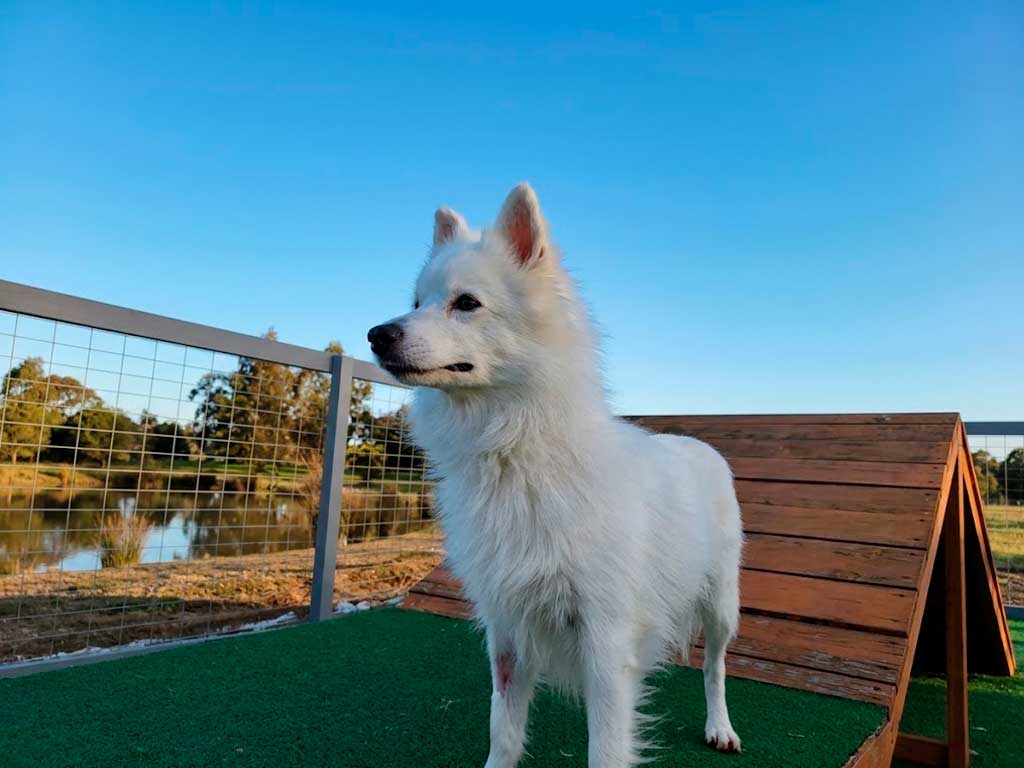
The Japanese Spitz has a compact, sturdy body covered by a thick white coat that stands away from the skin. Its silhouette looks rounded and fluffy, particularly around the neck, chest, and tail.
Several features give the breed its recognizable expression:
- Head: A moderately sized head with a tapered muzzle.
- Ears: Small, triangular ears that stand upright.
- Eyes: Dark, expressive eyes, usually framed by dark eye rims.
- Nose and lips: Typically black.
- Tail: A well-feathered tail carried curled over the back.
- Coat: A dense undercoat beneath a longer, straight outer coat.
The Japanese Spitz should look balanced and athletic beneath its fur. Although the coat adds visual volume, this is a lively, capable dog rather than a fragile decorative pet.
Japanese Spitz Size and Weight
Most Japanese Spitz dogs fall into the small-to-medium companion category. The American Kennel Club lists a height of 12–15 inches and a weight range of 10–25 pounds.
Actual size depends on genetics, sex, body condition, and the standard used by the relevant kennel organisation. Some breed standards also distinguish male and female heights.
If you are choosing a puppy, ask the breeder about the parents’ adult sizes. A puppy’s current weight alone cannot reliably predict its final size.
Are Japanese Spitz Dogs Always White?
Yes, pure white is the standard color for the Japanese Spitz under the UKC breed standard. The bright coat contrasts with the dog’s dark eyes, nose, and lips.
You may encounter advertisements for black, brown, or mixed-color Japanese Spitz dogs. Ask for clear information about the dog’s pedigree and whether it is a crossbreed. Color alone does not establish a dog’s breed identity, and unusual colors should be checked carefully before paying a premium for a supposedly purebred puppy.
Japanese Spitz Temperament and Personality
The Japanese Spitz is generally an affectionate, alert, and playful companion. It often forms a close bond with its household and enjoys being included in ordinary activities, whether that means a walk, a training session, or relaxing nearby.
Its intelligence makes learning enjoyable, but it also means the dog needs regular interaction. A Japanese Spitz left alone for long periods without enough exercise or mental activity may develop unwanted habits.
Are Japanese Spitz Dogs Good Family Pets?
They can be excellent family companions when children understand how to handle dogs respectfully. Japanese Spitz dogs are often playful and people-oriented, making them a good match for households that enjoy spending time with their pets.
Every dog has individual limits, though. Teach children to leave a resting dog alone, avoid pulling its fur or tail, and give it space while eating. Always supervise interactions between dogs and young children.
A Japanese Spitz may also live successfully with other dogs or pets when introductions are handled carefully. Early socialisation helps the puppy learn how to respond calmly to unfamiliar animals, visitors, and everyday household activity.
Do Japanese Spitz Dogs Bark a Lot?
They can be vocal. Japanese Spitz dogs are alert and may bark when someone approaches the home, when they hear an unfamiliar sound, or when they become excited.
That behaviour can be useful if you want a dog that notices changes around the house. It becomes frustrating when every passing pedestrian or distant noise triggers a long barking session.
Start training early:
- Reward quiet behaviour when your dog notices something without barking.
- Teach a simple cue such as “quiet” when the dog is calm enough to learn.
- Close curtains or adjust access to windows if outdoor movement sets off repeated barking.
- Provide enough exercise and enrichment to reduce boredom.
- Avoid shouting, which may increase excitement rather than help your dog settle.
The goal is to teach your Japanese Spitz when barking is useful and when it is time to relax. Consistent practice is more effective than waiting until the habit becomes difficult to interrupt.
Are Japanese Spitz Dogs Easy to Train?
Their intelligence and eagerness to engage can make training rewarding. Some individuals learn household routines quickly, while others become distracted or test boundaries when a session feels repetitive.
Keep lessons short and reward the behaviour you want to see. Food rewards, toys, praise, and play can all work, depending on what motivates your dog.
Focus on these skills first:
- Responding to its name and coming when called.
- Walking calmly on a lead.
- Settling on a mat or bed.
- Greeting visitors without jumping.
- Accepting grooming and handling.
- Remaining comfortable around unfamiliar people and dogs.
Puppy socialisation is especially important. Introduce new sights, sounds, surfaces, and experiences gradually, keeping the puppy comfortable rather than forcing interactions.
For more support with the early months, see our complete guide to puppy care, training, nutrition, hygiene, and play.
Caring for a Japanese Spitz’s White Double Coat
That thick white coat is one of the breed’s defining features. It can look demanding, but a regular grooming routine makes it manageable for most owners.
The coat has two layers: a soft, dense undercoat and a longer outer coat. The undercoat helps insulate the dog, while the outer layer contributes to its fluffy appearance.
How Often Should You Brush a Japanese Spitz?
Brush your Japanese Spitz about once or twice a week during much of the year. Check areas where friction or loose fur can create tangles, especially behind the ears, around the legs, and beneath the tail.
During heavy shedding, you may need to brush daily. The amount of loose fur can increase noticeably as the undercoat is replaced.
A practical grooming routine includes:
- Brush in sections. Work through the coat gently so loose undercoat does not remain trapped near the skin.
- Check for tangles. Pay attention to areas behind the ears, under the legs, and around the collar.
- Inspect the skin. Look for redness, sores, unusual flakes, or persistent itching.
- Trim nails regularly. Nails that grow too long can affect comfort and movement.
- Check ears and teeth. Include these quick checks in your weekly routine.
Never pull hard at a mat. If a tangle sits close to the skin or cannot be removed comfortably, ask a professional groomer for help.
Is the Japanese Spitz Coat Self-Cleaning?
The coat has a useful quality: dried mud and some dirt can brush out relatively easily. That can make outdoor adventures less troublesome than you might expect from a white dog.
However, the coat is not literally self-cleaning. Grease, urine, food residue, and other contaminants still need attention. Brush dirt out once it has dried, and bathe your dog when it is genuinely dirty or needs cleaning.
Use a dog-safe shampoo and rinse thoroughly. Frequent unnecessary bathing can irritate the skin or remove natural oils.
Avoid shaving the coat close to the skin unless a veterinarian recommends clipping for a medical reason. The double coat serves an insulating purpose, and shaving it is not a shortcut to better coat care.
How Much Does a Japanese Spitz Shed?
Japanese Spitz dogs shed, and seasonal coat changes can be substantial. Many owners notice periods when loose undercoat comes out much more heavily than usual.
Keep a brush and vacuum handy during these times. Regular brushing helps remove loose fur before it spreads around the house.
The breed is not hypoallergenic. Anyone with dog allergies should spend time around Japanese Spitz dogs before committing to one, since individual reactions vary.
Exercise and Daily Activity
A Japanese Spitz needs daily movement, play, and opportunities to use its brain. Many adult dogs do well with a combination of walks and active games, with the exact amount adjusted for age, health, and individual energy.
For a healthy adult, begin with a routine that includes:
- A daily walk or two shorter walks.
- Play sessions with toys or a ball.
- Reward-based training to practise useful skills.
- Sniffing opportunities and safe exploration.
- Puzzle feeders or other activities that encourage problem-solving.
A fenced yard can provide extra room to play, but it does not replace interaction with the owner. Apartment living can work if the dog receives enough exercise, training, and attention outside the home.
Puppies need a different approach. Their growing bodies are not ready for the same sustained exercise as a fit adult. Use short, age-appropriate play and walks, and ask your veterinarian how to increase activity as your puppy grows.
Feeding and Nutrition for a Japanese Spitz
Japanese Spitz dogs need a complete and balanced diet suited to their life stage, body size, activity level, and health. A puppy requires food formulated for growth, while an adult needs a maintenance diet that supports a healthy weight.
Because the breed’s thick coat can make body shape harder to judge, check your dog’s condition by touch as well as appearance. You should be able to feel the ribs without pressing hard, and the waist should be visible from above.
How Much Should a Japanese Spitz Eat?
There is no single portion size that suits every Japanese Spitz. The right amount depends on the food’s calorie content, your dog’s weight, age, activity, and whether it needs to gain or lose weight.
Start with the feeding guide on the food label, then adjust according to body condition and veterinary advice. Measure meals rather than estimating them by eye, and count treats as part of the daily intake.
Most adult dogs do well with meals divided into a consistent routine, often twice daily. Growing puppies usually need more frequent meals, depending on age and the feeding plan recommended by the breeder and veterinarian.
Keep fresh water available at all times. If your dog suddenly loses interest in food, vomits repeatedly, or develops persistent diarrhoea, contact your veterinarian instead of assuming the food is the cause.
Is Fresh Dog Food an Option?
If you want to compare fresh food with dry or canned diets, JustFoodForDogs is one option to consider. Its fresh-frozen sampler includes several recipes, which may help owners compare options before choosing a regular diet.

FROM JUSTFOODFORDOGS
Just Fresh
Resealable meals. No preservatives. Open, serve, refrigerate.
Shop Just FreshHappy Pet Zone may earn a commission when you click through to JustFoodForDogs, at no extra cost to you.
Check the nutritional adequacy statement, feeding instructions, storage requirements, and cost per day before making a decision. A food’s appearance or ingredient list alone does not establish that it is suitable for your dog.
For a growing Japanese Spitz puppy, make sure the particular recipe is appropriate for growth. Do not assume every adult maintenance food provides the nutrients a puppy needs.
Whatever food you choose, transition gradually over several days unless your veterinarian recommends a different plan. This can help reduce digestive upset when changing diets.
Our dog nutrition guide explains how to compare feeding options and build a balanced routine.
Japanese Spitz Health and Life Expectancy
The Japanese Spitz is generally considered a healthy breed, but no dog is free from the possibility of inherited conditions or age-related problems. Preventive veterinary care, suitable exercise, dental care, and a healthy body weight all matter throughout its life.
The American Kennel Club lists a life expectancy of approximately 10–14 years. Individual dogs may live shorter or longer lives depending on genetics, care, and overall health.
Patellar Luxation
Patellar luxation occurs when the kneecap moves out of its normal position. It can cause intermittent limping, an unusual skipping step, or difficulty using a leg comfortably.
The severity varies. Some dogs show mild signs, while others need more extensive veterinary treatment. If your Japanese Spitz repeatedly lifts a hind leg while walking or seems uncomfortable, arrange an examination.
When choosing a puppy, ask the breeder what health screening is performed on breeding dogs and whether there is a family history of joint problems.
Tear Staining and Eye Discharge
Some Japanese Spitz dogs develop reddish-brown staining beneath the eyes. Tear staining can have several causes, including irritation, abnormal tear drainage, and the shape of the eye area.
Gently clean the area with a suitable product recommended for dogs, and keep the fur around the eyes clean. Avoid household cleaners or products that could irritate the eyes.
Excessive tearing, thick discharge, redness, squinting, or pawing at the face warrants veterinary attention. Staining is sometimes cosmetic, but it should not automatically be assumed harmless when other symptoms appear.
Dental Health and Weight Management
Small companion dogs can develop dental problems, so establish a tooth-brushing routine early. Use toothpaste made for dogs, and ask your veterinarian about dental examinations and professional cleaning when needed.
Weight management is equally important. Extra pounds can put unnecessary strain on the joints and make exercise more difficult. Measure meals, use treats thoughtfully, and monitor changes in body condition.
Veterinary disclaimer: This section provides general breed-care information, not a diagnosis. A veterinarian can assess your dog’s individual risks and recommend appropriate screening and treatment.
Japanese Spitz Puppies: Finding a Responsible Breeder
If you are looking for a Japanese Spitz puppy, take time to investigate the breeder rather than choosing based on photographs or availability alone.
A responsible breeder should be willing to discuss the puppies’ health, temperament, early socialisation, and the care provided before they leave. You should also be able to meet the mother where possible and see the environment in which the puppies are raised.
Before making a decision, ask:
- What health checks have been performed on the parents?
- Can I see the puppy’s veterinary and vaccination records?
- How are the puppies introduced to people, household sounds, and handling?
- What food are the puppies eating now?
- What support is available after the puppy goes home?
- Will the breeder provide a written contract and take-back policy if circumstances change?
Be cautious if a seller pressures you to pay immediately, refuses reasonable questions, or offers to ship a puppy without allowing meaningful checks. A very low price is not proof of a scam, but neither is an expensive puppy proof of responsible breeding.
How Much Does a Japanese Spitz Cost?
Japanese Spitz puppy prices vary considerably by country, breeder, pedigree, health testing, and local demand. There is no reliable universal price that applies to every market.
When comparing costs, budget for more than the purchase price. Food, grooming supplies, training, routine veterinary care, preventive treatments, and unexpected medical bills all add to the lifetime cost of ownership.
Adoption may also be worth exploring. Contact reputable rescue organisations and local shelters, and ask whether they have Japanese Spitz dogs or similar Spitz-type companions available.
Japanese Spitz vs. Similar Breeds
The Japanese Spitz is sometimes confused with other fluffy, upright-eared breeds. Appearance can overlap, but size, coat, temperament, and exercise needs differ.
- German Spitz: A related Spitz-type breed with several recognised size varieties. Compare the German Spitz breed guide to understand the differences.
- Samoyed: Usually larger and more substantial, with a dense coat and a greater need for space and activity. Read our Samoyed guide for more details.
- Pomeranian: Generally much smaller, although it also has a thick coat and a lively personality. See the Pomeranian breed guide.
Choose based on the dog you can realistically care for, not just the breed that looks most appealing in photographs.
Is the Japanese Spitz Right for You?
The Japanese Spitz can suit many homes, including some apartments, provided its daily needs are met. It is a particularly good match for people who want an engaged companion and enjoy spending time on walks, training, play, and grooming.
It may be less suitable if you need a dog that stays quiet in every situation or can be left alone for long stretches most days. Its alert nature can lead to barking, and its attachment to family life means it benefits from regular company.
Before bringing one home, consider whether you can provide:
- Consistent daily exercise and mental stimulation.
- Regular brushing, especially during seasonal shedding.
- Patient training to manage alert barking.
- Preventive veterinary care and a suitable diet.
- Time for companionship rather than occasional attention.
If those needs fit your routine, the Japanese Spitz can be a cheerful, loyal addition to the household.
Frequently Asked Questions
Choosing a Japanese Spitz is about more than falling for its fluffy white coat. Meet the dog, ask thoughtful questions, and make sure its needs fit your everyday life before you commit.