Irish Wolfhound: The Ultimate Guide to the Gentle Giant
You will discover exactly how to successfully raise and care for a healthy Irish Wolfhound in this definitive breed guide. Fortunately, our dedicated editorial team has spent decades analyzing giant dog behavior to deliver the most practical ownership advice.
Specifically, this guide reveals their unique dietary demands, exercise requirements, and vital socialization steps. Therefore, let us dive directly into the fascinating world of this historic guardian to prepare your home.
History and Origin of the Irish Wolfhound
The ancient history of the Irish Wolfhound dates back thousands of years to the rugged landscape of Ireland. Roman records from as early as 391 AD explicitly mention these massive canines with great awe. Initially, Irish Celts bred these swift giants to serve as fierce war dogs and protectors.
Furthermore, local chieftains relied heavily on their unmatched speed to hunt massive Irish elk and destructive wolves. These dogs performed their hunting duties so effectively that wolves completely vanished from the Irish countryside. Consequently, the breed faced a severe crisis and nearly became extinct due to a lack of purpose.
Fortunately, a dedicated breed enthusiast named Captain George Augustus Graham successfully revived the bloodline during the nineteenth century. He carefully crossed the remaining native hounds with Scottish Deerhounds, Great Danes, and Borzois. As a result of his historic work, the modern canine population we love today was saved.
Today, these majestic animals are celebrated worldwide as peaceful companions rather than fierce hunters. Indeed, they represent a proud symbol of Irish history and canine resilience.
Physical Characteristics
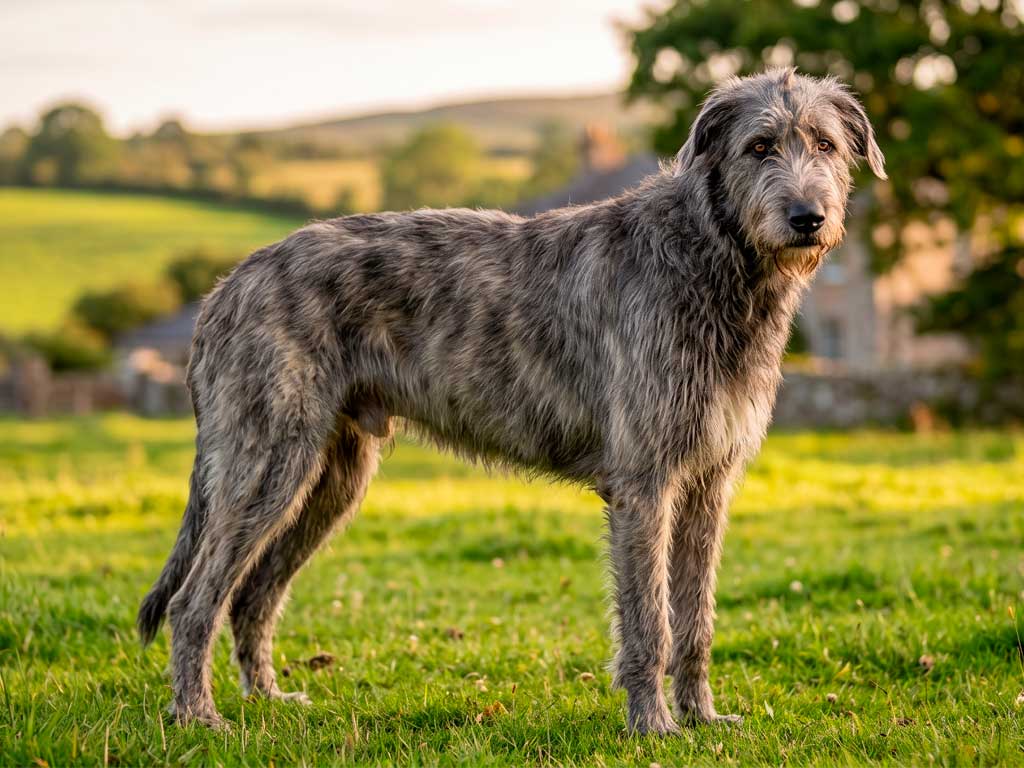
You will immediately feel amazed by the commanding physical stature of a mature Irish Wolfhound. They hold the official distinction of being the tallest of all recognized canine breeds. Generally, a mature male individual stands at a minimum height of 32 inches at the shoulder.
In contrast, female dogs are slightly smaller but still present an incredibly imposing silhouette. Their minimum height begins at 30 inches, making them taller than almost any other animal in your neighborhood. Healthy adult males routinely weigh at least 120 pounds of solid bone and lean muscle.
Meanwhile, mature females typically maintain a healthy weight framework starting around 105 pounds. Their unique physical structure combines the elegant grace of a sighthound with the immense power of a mastiff. Additionally, their rough and wiry coat provides superb protection against harsh weather conditions and dense brambles.
This weather-resistant fur comes in various attractive shades including gray, brindle, red, black, pure white, and fawn. You will also notice their dark, expressive eyes that radiate profound wisdom and absolute gentleness. Their long, curved tail hangs low to complete their balanced and athletic outline.
Temperament and Personality
The outstanding temperament of the Irish Wolfhound has earned them the universal nickname of the gentle giant. They possess an incredibly sweet, easygoing nature that makes them wonderful additions to calm households. Because of this relaxed disposition, they form deeply affectionate bonds with all members of their human family.
They crave constant human companionship and truly thrive when included in your daily indoor activities. However, this intense sociability means they do not tolerate long periods of isolation well. If left alone for extended intervals, they can easily develop destructive separation anxiety behaviors.
Furthermore, their playful yet patient demeanor ensures they interact wonderfully with well-behaved children. You must realize, however, that their massive size can accidentally knock over small toddlers during enthusiastic greetings. While they are alert guardians, they generally lack aggressive biting tendencies or intense territorial instincts.
Consequently, they make terrible watchdogs because they usually welcome unfamiliar guests with polite curiosity rather than warning growls. Their historical hunting background means they still retain a remarkably strong prey drive outdoors. Therefore, they will instinctively chase smaller animals like stray cats or rabbits that cross their path.
Care Guide
Properly managing a giant canine companion requires a massive daily investment of your time and financial resources. You must carefully prepare your home layout and budget to accommodate their significant physical needs comfortably.
Diet and Nutrition
Providing balanced nutrition is absolutely critical for supporting their heavy skeletal frame during rapid growth phases. You should select a premium commercial kibble formulated specifically for giant canine breeds. Make sure the recipe features real animal protein as the primary ingredient to build lean muscle mass.
These giant dogs can easily suffer from a life-threatening medical emergency known as gastric torsion or bloat. This dangerous condition occurs when the deep chest traps gas and causes the stomach to twist unexpectedly. To minimize this risk, you must divide their total daily food allowance into two or three smaller meals.
Additionally, prevent any vigorous exercise or running sessions for at least one full hour after feeding time. Using specialized slow-feeder bowls can also successfully stop them from gulping down large amounts of kibble rapidly. Always ensure that fresh, clean water is accessible throughout your home at all times.
Exercise Requirements
An active Irish Wolfhound requires regular physical exertion to maintain proper muscle tone and joint health. You should provide around 60 minutes of structured walking exercise every single day. Long, relaxed strolls are excellent for their mental satisfaction and physical well-being.
However, they also need regular opportunities to sprint freely within a large, securely fenced open area. Because they are sighthounds, running at high speeds satisfies their deepest instinctual desires perfectly. You must avoid over-exercising young puppies to protect their developing growth plates from permanent damage.
Failing to provide adequate physical outlets can result in a restless or anxious giant inside your home. Fortunately, satisfying their exercise needs ensures they remain incredibly calm and quiet when relaxing indoors. They will happily spend the rest of the day lounging contentedly on a large dog bed.
Grooming Needs
Maintaining the rough, wiry coat of an Irish Wolfhound is relatively straightforward but requires consistent effort. You should brush their thick fur at least twice a week to remove dirt and loose hair. Specifically, using a sturdy slicker brush and a metal comb will easily prevent painful mats from forming.
Fortunately, their rugged coat naturally repels mud, meaning full baths are rarely necessary throughout the year. You should only wash them every few months using a mild canine shampoo designed for coarse hair. Excessive bathing can strip away natural skin oils and diminish their coat’s protective qualities.
Additionally, remember to trim their fast-growing nails monthly to prevent discomfort and structural walking difficulties. Routine dental care and weekly ear cleanings will complete their basic physical hygiene plan perfectly. Regular inspections of their skin will help you catch any minor irritations before they turn into infections.
Training and Education
Training an Irish Wolfhound requires an abundance of patience, gentle consistency, and a clear understanding of sighthound intelligence. These sensitive canines learn concepts rapidly but completely reject harsh, repetitive commands. For this reason, utilizing positive reinforcement methods like high-value treats and enthusiastic praise yields the best results.
Punishment or physical dominance will only cause them to shut down completely and lose trust in your leadership. You should keep your education sessions short, creative, and highly engaging to maintain their focused attention. Furthermore, comprehensive early puppy socialization is absolutely mandatory to manage their immense adult size safely.
Expose your young companion to various public environments, strange noises, and diverse people regularly. This proactive exposure ensures they grow into confident, well-adjusted adults who handle novelty calmly. Establishing clear household rules early prevents them from testing your personal boundaries as they grow larger.
Health and Longevity
Disclaimer: The following health information serves educational purposes only and requires professional veterinary verification.
The Irish Wolfhound is a structurally magnificent breed but suffers from a heartbreakingly short lifespan of 6 to 8 years. Like many giant dogs, they face specific genetic health vulnerabilities during their lifetime. For instance, dilated cardiomyopathy is a serious cardiac disorder that frequently impacts this breed’s heart function.
In addition, bone cancer, specifically osteosarcoma, represents a prevalent health concern within the older canine population. Orthopedic issues like hip and elbow dysplasia can also cause painful joint inflammation and debilitating arthritis. Responsible breeders actively screen their adult stock using specialized health evaluations to protect future puppies.
Regular veterinary wellness examinations are vital for monitoring their internal organ health and catching issues early. Maintaining an ideal, lean body weight will drastically reduce dangerous strain on their developing joints. Proactive management of their daily calorie intake is the best preventive care you can provide.
Is This the Right Dog for You?
Deciding to adopt an Irish Wolfhound requires an honest and thorough evaluation of your current lifestyle habits. If you possess a spacious home and desire a loyal, incredibly gentle partner, they are outstanding companions. Active families who can provide a large, securely fenced yard will match their physical needs beautifully.
However, apartment dwellers or busy city residents should definitely consider a smaller, less demanding breed. These giant dogs need ample physical space to stretch out comfortably without bumping into your furniture. Furthermore, you must feel fully prepared to invest heavily in premium giant breed nutrition and regular veterinary care.
Start with establishing a consistent daily exercise routine because structured care has the biggest impact on their behavior. Providing them with calm affection ensures you receive absolute devotion and quiet companionship for many wonderful years. You can discover additional step-by-step care resources directly on happypetzone.com to prepare your home today.
Frequently Asked Questions (FAQ)
Do Irish Wolfhounds make good guard dogs?
No, they are generally too friendly and gentle to serve as reliable guard dogs. While their immense size can deter intruders, they usually welcome strangers with polite curiosity rather than aggression.
How much food does an adult eat?
The exact amount depends heavily on their weight, age, and individual activity levels. Generally, a mature adult requires between four and eight cups of high-quality kibble divided into separate daily meals.
Are they good with household cats?
Their intense sighthound prey drive makes living with small pets like cats highly risky. While some can tolerate a household cat if raised together, they will likely chase unfamiliar outdoor felines instinctively.
Do Irish Wolfhounds shed a lot?
They shed a moderate amount of hair consistently throughout the course of the year. Regular brushing a few times a week easily keeps the loose hair under control and out of your home.
Are they easy to housebreak?
Yes, their high intelligence allows them to grasp house training concepts relatively quickly. Using a consistent schedule and positive reinforcement will ensure total housebreaking success within a few weeks.
For another Irish breed with real wartime history, the Irish Terrier served as a messenger dog in World War I and earned the nickname “Red Devil” for its legendary bravery.