Melanochromis Auratus: Care Guide for the Golden Mbuna
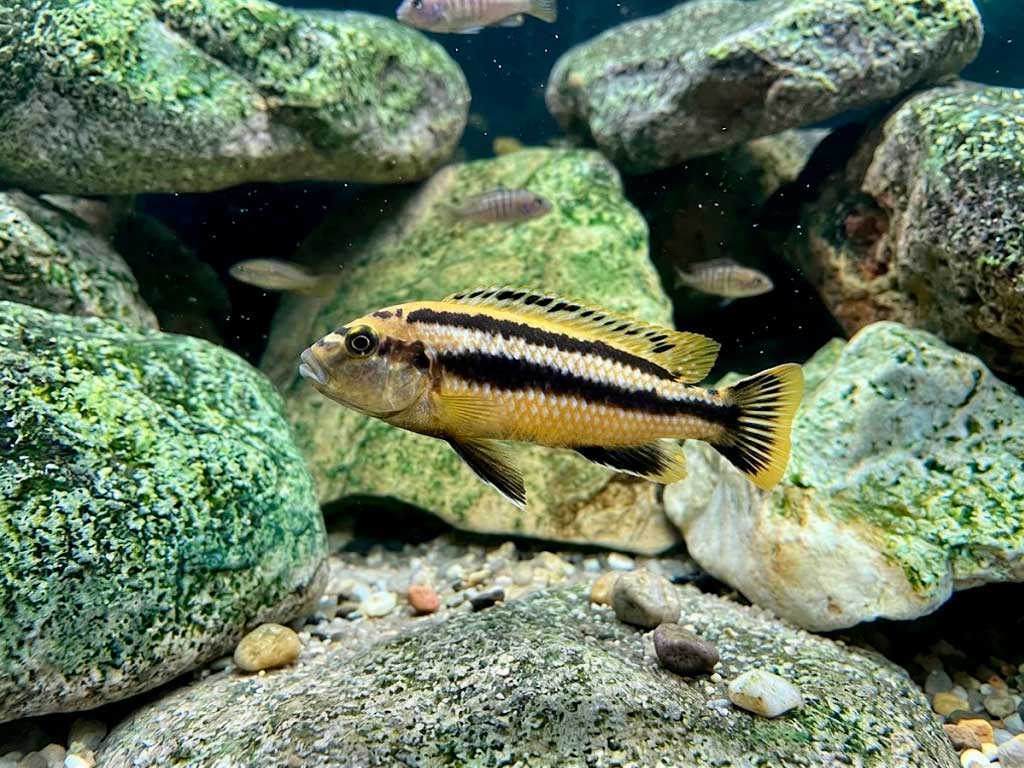
Melanochromis auratus does something genuinely unusual among cichlids: adult males wear the literal negative image of what females and juveniles look like.
In practice, this reversed color pattern makes the species instantly recognizable, but it also masks a real problem lurking behind the cheap price tag and easy availability: this is one of the more difficult mbuna to manage when it comes to aggression, despite how often it gets marketed as a beginner fish.
This guide covers what actually drives that color reversal, honest behavior expectations, and how this species connects to the taxonomic story that opened this whole series.
Quick Identity Card
| Trait | Detail |
| Scientific name | Melanochromis auratus (Boulenger, 1897) |
| Common names | Auratus Cichlid, Golden Mbuna, Malawi Golden Cichlid |
| Family | Cichlidae (mbuna, Lake Malawi) |
| Origin | Endemic to southern Lake Malawi, Jalo Reef to Crocodile Rocks (western coast) |
| Adult size | 11 cm (4.3 in) formal record; some sources report up to 20 cm |
| Diet | Algae and aufwuchs grazer in the wild |
| Temperament | Genuinely difficult to manage; not for novices |
| Water temperature | 22 to 28°C (72 to 82°F) |
| pH | 7.5 to 9.0, hard and alkaline |
| GH (hardness) | 10 to 25 dGH |
| Minimum tank | 80 cm (30 gal) for smaller fish; 100+ cm for larger adults |
| Breeding | Polygamous maternal mouthbrooder |
| IUCN status | Least Concern |
Origin and a Genus This Series Already Knows
Here’s a direct link back to where this series started: Abactochromis labrosus, the very first species covered here, was moved out of the genus Melanochromis in 2010 specifically because it lacked the banded color pattern that defines the group. Melanochromis auratus is exactly that classic banded pattern in action, making it a useful point of comparison for understanding why labrosus didn’t fit.
The species itself has its own tangled taxonomic past, originally described and reclassified across Tilapia, Chromis, and Pseudotropheus before settling into Melanochromis.
Origin and Natural Habitat
This species is endemic to the southern region of Lake Malawi, ranging from Jalo Reef southward along the entire western coast down to Crocodile Rocks. It’s absent from the lake’s eastern shore entirely, occupying rocky shoreline habitat typical of mbuna throughout the lake.
Identification: A Literal Color Reversal
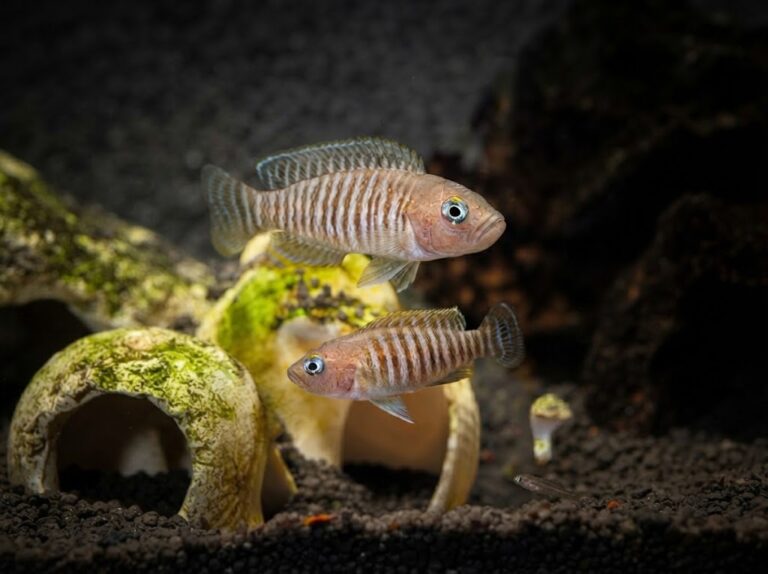
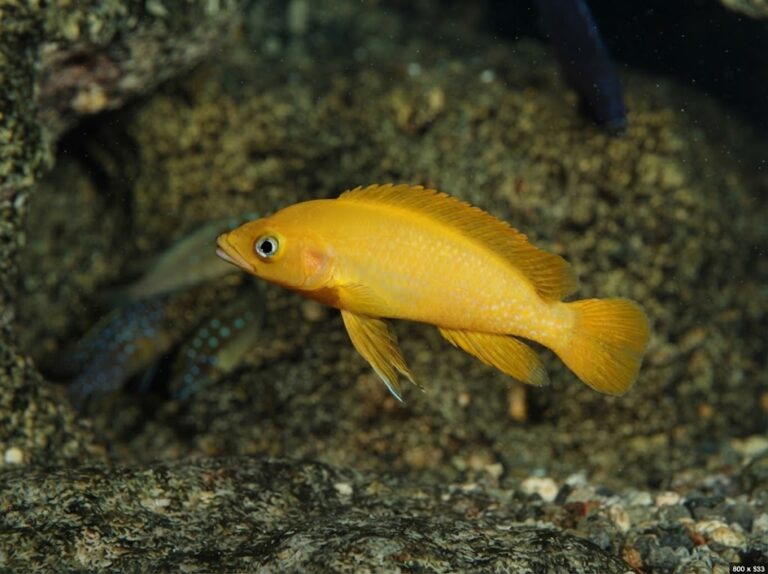
Here’s what actually matters for identifying this species correctly: juveniles and females carry a golden-yellow base color marked with black horizontal bands, each edged with thin white stripes. Adult males show the negative image of that exact pattern: a dark brown to black body with light blue or yellow stripes running through it.
That reversal isn’t subtle, and it creates a genuinely unusual situation in aquarium stores. Shops typically display one dominant, black-colored male alongside several yellow-colored fish showing the “female” pattern. If that dominant male gets sold, the next most dominant fish in the tank will develop the black coloration in his place.
An Even Stranger Color Behavior
Female Melanochromis auratus can permanently change color to resemble a male, without any actual change in sex, when kept without a male present for an extended period. This shift usually happens in a single dominant female, who takes on full male coloration and assumes the dominant social role, while other females in the group retain their normal yellow pattern.
Behavior and Temperament: An Honest Warning
Despite its rock-bottom price and constant availability, this is genuinely not a beginner fish. Managing aggression in this species is difficult even for experienced keepers, and males in particular show real intolerance toward each other and toward similarly shaped or colored tankmates.
The standard approach is one male paired with at least three females, since a single female will face constant harassment from a lone male otherwise. Suitable tankmates need to be other robust, similarly sized mbuna capable of holding their own, never smaller or more docile species.
Diet and Feeding
In the wild, this species grazes algae and the small organisms living within it, a diet reflected in its natural feeding behavior. Captive diets should include a genuine vegetable component alongside protein.
A rotation of quality cichlid pellets or flake, spirulina-based foods, fresh vegetables, and occasional live or frozen fare like brine shrimp or daphnia covers this species well. The feeding guide for ornamental fish covers building that kind of balanced diet in more depth.
Tank Requirements and Water Parameters
A tank around 80 cm (30 gallons) works for smaller individuals, but larger adults need at least 100 cm or more, with extensive rockwork essential for creating hiding spots and territory boundaries given how much space this species’ aggression actually demands. The African cichlid tank setup guide covers building that kind of system properly.
Water needs to stay firmly hard and alkaline, consistent with every Lake Malawi cichlid on this site: temperature between 22 and 28°C (72 to 82°F), pH from 7.5 to 9.0, and general hardness on the harder side, 10 to 25 dGH. That profile matches the Labidochromis caeruleus guide closely, another Malawi mbuna covered in this series, though auratus demands far more careful stocking given its temperament.
Breeding
This species is a polygamous maternal mouthbrooder, following the standard mbuna reproductive pattern with one male maintaining a harem of several females. Breeding happens readily and rapidly under good conditions, consistent with how prolifically this species reproduces both in the wild and in captivity.
Females carry fertilized eggs and fry in their mouths for several weeks before release, matching the brooding pattern seen across other Lake Malawi mouthbrooders covered in this series.
Conservation Status
The IUCN Red List classifies Melanochromis auratus as Least Concern, assessed in 2018. Despite being endemic to Lake Malawi, the species remains widespread across the southern portion of the lake with no currently recognized threats to its wild population.