Hamster Types and Breeds: Syrian vs. Roborovski vs. Winter White vs. Campbell’s
If your kids just found out there’s more than one hamster type, expect a few strong opinions on the car ride home. Hamster types differ more than most first-time owners expect, and picking the wrong one can mean a cage that’s too small or a pet that bites more than it should.
This guide breaks down the four hamster types you’ll actually find at most pet stores: Syrian, Roborovski, Winter White, and Campbell’s. Each one has its own size, temperament, and care needs, and by the end you’ll know exactly which fits your family.
For the full setup, diet, and health basics that apply to every type, check our complete pet hamster care guide after you pick your breed.
Hamster Types at a Glance
Here’s the short version before we go deep on each one.
| Hamster Type | Quick Snapshot |
|---|---|
| Syrian | Largest, solitary, easiest to handle, best for kids |
| Roborovski | Smallest, fastest, best watched rather than held |
| Winter White | Small, coat changes color with the seasons, occasionally social |
| Campbell’s | Small, active, can be nippy without early handling |
Syrian Hamsters: The Classic Beginner-Friendly Type
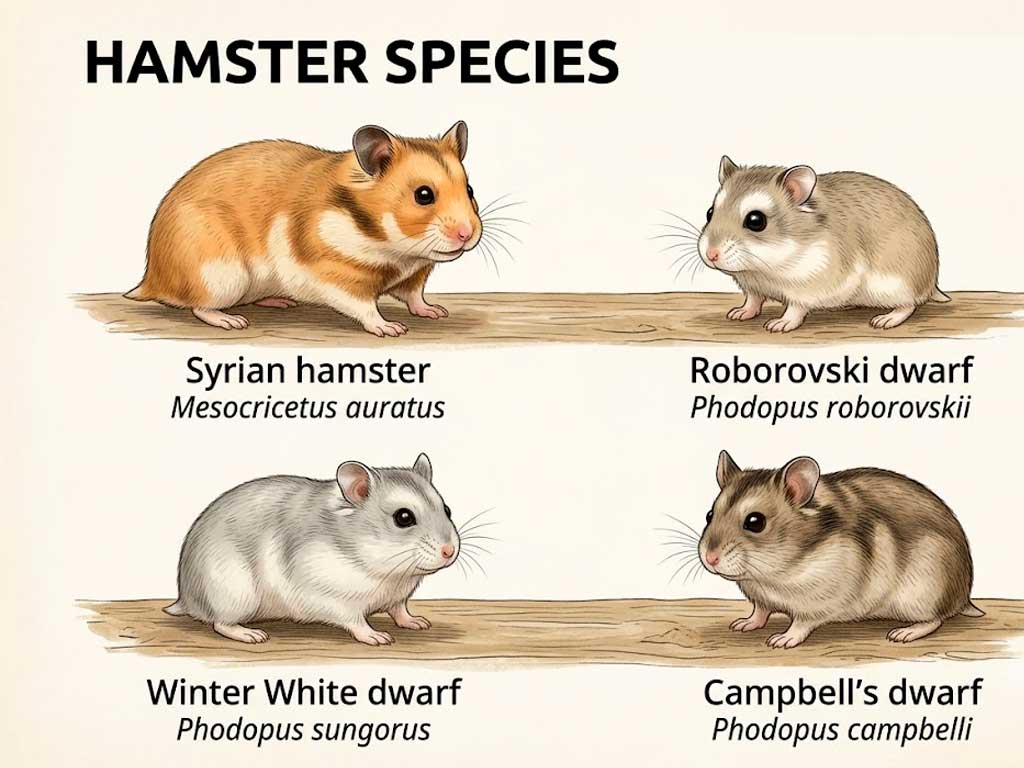
Syrian hamsters are the ones most people picture when they hear the word “hamster.” They’re also sold as “teddy bear” or “golden” hamsters, depending on their coat.
At 5-7 inches long, Syrians are the largest of the four types. That size actually makes them easier for kids to hold safely, since they’re less likely to slip through small fingers.
Syrians come in several coat styles, including short-haired and long-haired varieties. The long-haired type needs more frequent brushing to prevent tangles and matting.
Here’s the thing: Syrians are strictly solitary. Never house two together, no matter how big the cage is, since they’ll fight and injuries can turn serious.
Bottom line: if this is your family’s first hamster, a Syrian is almost always the safest starting point. Whichever type you pick, our taming guide walks through building trust without getting bitten.
Roborovski Hamsters: Tiny, Fast, and Built to Watch
Roborovski hamsters, often called “robos,” are the smallest hamster type on this list at just 2 inches long. That tiny size comes with a tradeoff.
Robos move fast, and they’re not big fans of being picked up. Most owners enjoy them more as a “watch and enjoy” pet than a hands-on one.
Their small size also means a barred cage isn’t a safe choice. A glass tank or terrarium with tight-fitting mesh works much better, since robos can squeeze through gaps that would hold a Syrian just fine. Our hamster cage buying guide compares real options for every type.
Kids who want a pet they can gently hold every day usually end up happier with a Syrian instead. Robos are better suited to older kids or adults who enjoy quiet observation.
Winter White Hamsters: The Color-Changing Type
Winter White hamsters, also called Djungarian hamsters, have a party trick most owners don’t expect. Their coat can shift from gray-brown in summer to nearly white in winter, especially when exposed to shorter daylight hours.
They’re small, usually 3-4 inches long, and a step up in size from a Roborovski. Some Winter Whites can live in same-sex pairs if they’re raised together from a young age, though this isn’t guaranteed to work out peacefully.
Here’s what nobody tells you before you buy one: not every “white hamster” at the pet store is actually a Winter White. Plenty of pale-colored Syrians and Campbell’s get mislabeled the same way, so ask about the specific type before you commit.
Campbell’s Dwarf Hamsters: Small, Active, and Occasionally Nippy
Campbell’s dwarf hamsters look a lot like Winter Whites at first glance, and that’s exactly where most confusion starts. They’re a similar size, similarly active, and sold in the same “dwarf hamster” section at most stores.
Campbell’s tend to be a little more prone to nipping than the other types, especially if they aren’t handled gently and often from a young age. Consistent, calm handling in the first few weeks makes a real difference here.
Unlike Winter Whites, Campbell’s don’t change coat color with the seasons. That’s actually the easiest way to tell the two apart at a glance.
Winter White vs. Campbell’s: What’s the Difference?
This is one of the most common mixups in the hamster world, and it’s a fair one to make. Both types are small, both are technically “Russian dwarf hamsters,” and pet stores don’t always label them correctly.
The clearest difference is the coat. Winter Whites lighten toward white in winter conditions, while Campbell’s keep a consistent color year-round. Temperament is a secondary clue, since Campbell’s tend to run a bit more nippy without regular handling.
Which Hamster Type Is Right for Your Family?
Keep it simple: match the hamster type to how your family actually wants to interact with it.
- Want a pet kids can hold daily? Go with a Syrian
- Want a low-maintenance pet that’s fun to watch? A Roborovski fits well
- Like the idea of a seasonal coat change and don’t mind occasional pairing? Try a Winter White
- Want a small, active hamster and can commit to gentle handling early on? A Campbell’s could work
Whatever type you choose, the daily care basics stay mostly the same, though portion sizes shift a bit with body size — our hamster food guide breaks that down by type. If you haven’t brought one home yet, our guide to where to get a hamster covers adoption, rescues, and pet stores. Curious what it all costs? Our hamster cost breakdown has the full picture. Our complete pet hamster care guide covers habitat setup, diet, and health monitoring in detail.
Frequently Asked Questions (FAQ)
What is the friendliest hamster type?
Syrian hamsters are generally considered the friendliest and easiest to handle, which is why they’re the top pick for families with kids.
Can different hamster types live together?
No. Even within the same type, most hamsters do best housed alone. Mixing different types together is never safe, regardless of size.
What’s the smallest hamster type?
Roborovski hamsters are the smallest, typically around 2 inches long as adults.
How do I tell a Winter White from a Campbell’s hamster?
Look at the coat through the seasons. Winter Whites lighten toward white in cooler months, while Campbell’s stay a consistent color year-round.
Which hamster type lives the longest?
Lifespan is similar across types, generally 2-3 years, with some dwarf hamsters occasionally reaching 3-4 years under excellent care.
Are dwarf hamster types good for young children?
Not usually. Dwarf types like Roborovski and Campbell’s move fast and can be harder for young kids to hold safely. A Syrian is typically the better fit.
Do all hamster types need the same size cage?
Minimum floor space stays similar across types, but Roborovskis need extra-secure enclosures since they can escape standard bar spacing.
Can Winter White hamsters live in pairs?
Sometimes, if raised together from a young age, but it’s not guaranteed to stay peaceful. Most owners find single housing simpler and safer.
Pick the hamster type that matches your family’s routine, not just the cutest one in the store window. Get that match right, and the rest of hamster care gets a whole lot easier.