Best Hamster Food: What to Feed a Syrian, Robo, or Dwarf Hamster
Getting hamster food right is simpler than the pet store aisle makes it look. Between a dozen brands and endless treat bags, it’s easy to overthink something that really comes down to a few basic rules.
This guide breaks down exactly what belongs in a hamster’s bowl, what to avoid, and whether diet changes depending on the type you own. Keep it simple, and your hamster will do just fine.
Quick Answer: What Do Hamsters Eat?
Hamsters are omnivores, but their diet should lean heavily plant-based. Here’s the short version before we go deeper.
- Daily base: commercial hamster pellet mix
- Fresh veggies: daily, small portions
- Fresh fruit: 2-3 times a week, not daily
- Protein: occasional nuts or seeds
- Water: fresh, changed daily, always available
The Daily Base: Commercial Pellet Mix
A good commercial hamster food should make up most of your hamster’s daily diet. Look for a pellet-based mix rather than a loose seed mix, since hamsters tend to pick out their favorite bits and leave the rest, which throws off the nutrition balance.
Here’s the thing: seed mixes look appealing on the shelf, but hamsters will selectively eat the fatty seeds and ignore the healthier pellets. That habit alone can lead to obesity over time.
Bottom line: a uniform pellet mix removes the guesswork and keeps nutrition consistent bite after bite.
Fresh Vegetables and Fruits
Fresh food fills the gaps that dry pellets can’t cover. Offer a small piece daily, and remove anything uneaten after a few hours so it doesn’t spoil in the cage.
Safe vegetables (offer daily, small portions):
- Carrots
- Zucchini
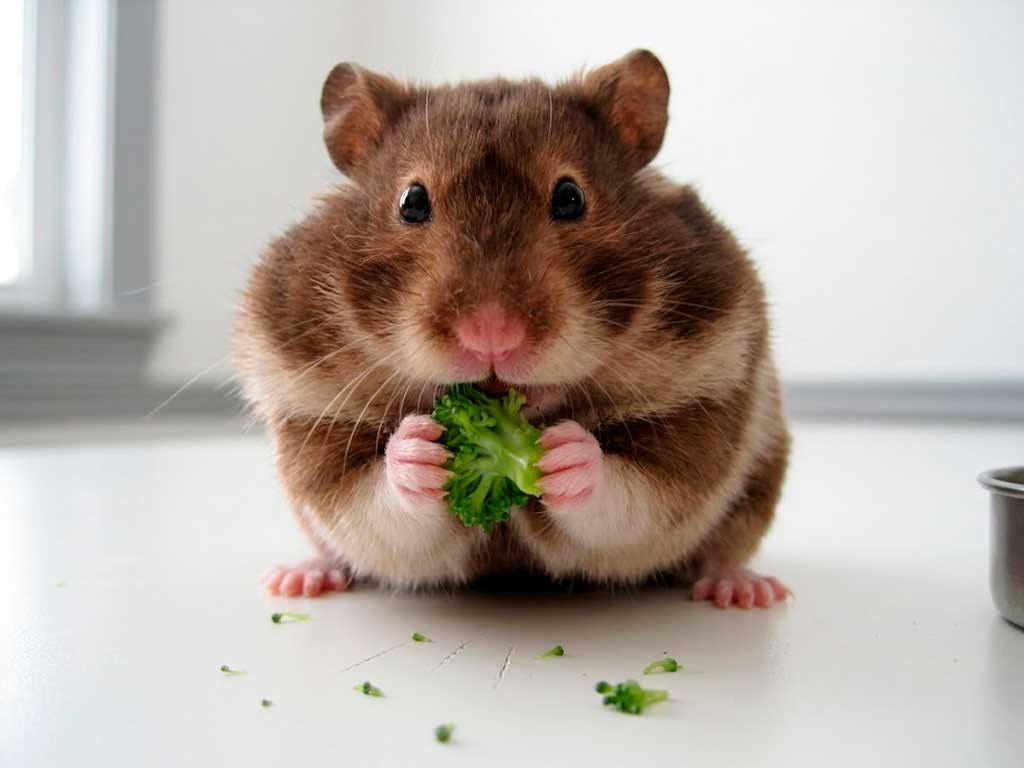
- Broccoli, in small amounts
- Cucumber
- Fresh sprouts
Safe fruits (2-3 times a week only):
- Apple, no seeds
- Pear
- Strawberries
- Small amounts of kiwi
Fruit is higher in natural sugar than vegetables, so daily servings can lead to weight gain over time. Keep it simple and treat fruit like dessert, not a daily staple.
Protein and Occasional Treats
Hamsters need a small amount of protein now and then, especially since they’re technically omnivores in the wild. A few unsalted nuts or seeds once or twice a week covers this well.
- Unsalted walnuts or almonds, in small pieces
- Sunflower seeds, in moderation, they’re high in fat
- A small piece of cooked, unseasoned egg or chicken occasionally
Store-bought treats are fine in moderation, but check the ingredient list first. Many “hamster treats” lean heavily on sugar and food coloring, which your hamster doesn’t need.
Foods That Are Toxic to Hamsters
Some common kitchen foods are genuinely dangerous for hamsters, even in small amounts. Skipping this section is one of the most common mistakes first-time owners make.
Never feed a hamster any of the following:
- Onion or garlic
- Grapes or raisins
- Avocado
- Rhubarb
- Chocolate or anything caffeinated
- Citrus fruits, in large amounts
- Salty or spicy snacks
- Almonds with the skin on, in large quantities (bitter almonds specifically are toxic)
This guide shares general feeding information and isn’t a substitute for veterinary advice. If your hamster eats something on this list, or shows sudden lethargy, diarrhea, or refuses food, contact an exotic vet right away. Our hamster illness signs guide covers wet tail and other symptoms in detail.
Does Diet Change by Hamster Type? (Syrian vs. Robo vs. Dwarf)
The core diet stays mostly the same across hamster food needs, but portion size shifts with body size. If you’re deciding between types first, our hamster types and breeds guide breaks down the differences in size, temperament, and care.
- Syrian hamsters: the largest type, so portions run slightly bigger, roughly one to two tablespoons of pellet mix daily
- Roborovski hamsters: tiny bodies need tiny portions, about half to one tablespoon daily
- Dwarf types (Winter White, Campbell’s): similar portion sizing to Robos, watch closely for weight gain since dwarf hamsters are more prone to diabetes than Syrians
Here’s what nobody tells you before you buy one: dwarf hamster types are more sensitive to sugar than Syrians. That makes the “fruit 2-3 times a week” rule even more important for Winter Whites and Campbell’s.
Feeding Schedule and Portions
Keep it simple with a consistent daily routine.
- Feed once a day, typically in the evening since hamsters are nocturnal
- Remove uneaten fresh food within a few hours to prevent mold
- Keep a small reserve of pellet mix available, hamsters naturally hoard food in their cheeks
- Always have fresh water available in a bottle, checked and changed daily
Mistakes to Avoid
- Feeding a loose seed mix instead of a balanced pellet mix
- Giving fruit daily instead of a few times a week
- Leaving fresh food in the cage too long, letting it spoil
- Assuming all “hamster treats” on the shelf are actually healthy
- Feeding onion, garlic, or grapes without realizing they’re toxic
Frequently Asked Questions (FAQ)
What is the best hamster food to buy?
Look for a pellet-based commercial mix rather than a loose seed blend. Pellets prevent selective eating and keep nutrition balanced in every bite.
Can hamsters eat human food?
Some human food is safe in small amounts, like plain cooked chicken or unsalted nuts. Many common foods, including onion, garlic, and chocolate, are toxic and should never be offered.
What is a hamster’s favorite food?
Most hamsters love sunflower seeds and fresh fruit, but both should stay limited to occasional treats rather than daily staples, since they’re high in fat or sugar.
How much food does a hamster eat per day?
Roughly one to two tablespoons of pellet mix for a Syrian hamster, and about half to one tablespoon for smaller dwarf types, plus a small daily portion of fresh vegetables.
Do hamsters need fresh water every day?
Yes. Water should be checked and changed daily, even if the bottle still looks full, since bacteria can build up quickly.
Can hamsters eat cheese or dairy?
Small amounts of plain, low-fat dairy are generally tolerated, but it’s not necessary and can upset digestion in larger amounts. It’s safer to stick to their regular diet.
Why is my hamster hoarding food in its cage?
That’s completely normal behavior, not a sign of a problem. Hamsters instinctively stash food in their cheeks and hide it around the cage, even when they’re not hungry.
Is peanut butter safe for hamsters?
A tiny amount of unsalted, unsweetened peanut butter is generally fine as an occasional treat, but it can stick to cheek pouches, so offer only a small dab.
Getting hamster food right isn’t about finding one perfect brand. It’s about balancing a solid daily base with the right fresh foods, in the right portions, while steering clear of the toxic list. Get that right, and feeding becomes the easiest part of the routine.