
Best Hamster Cages: Buying Guide by Size and Species
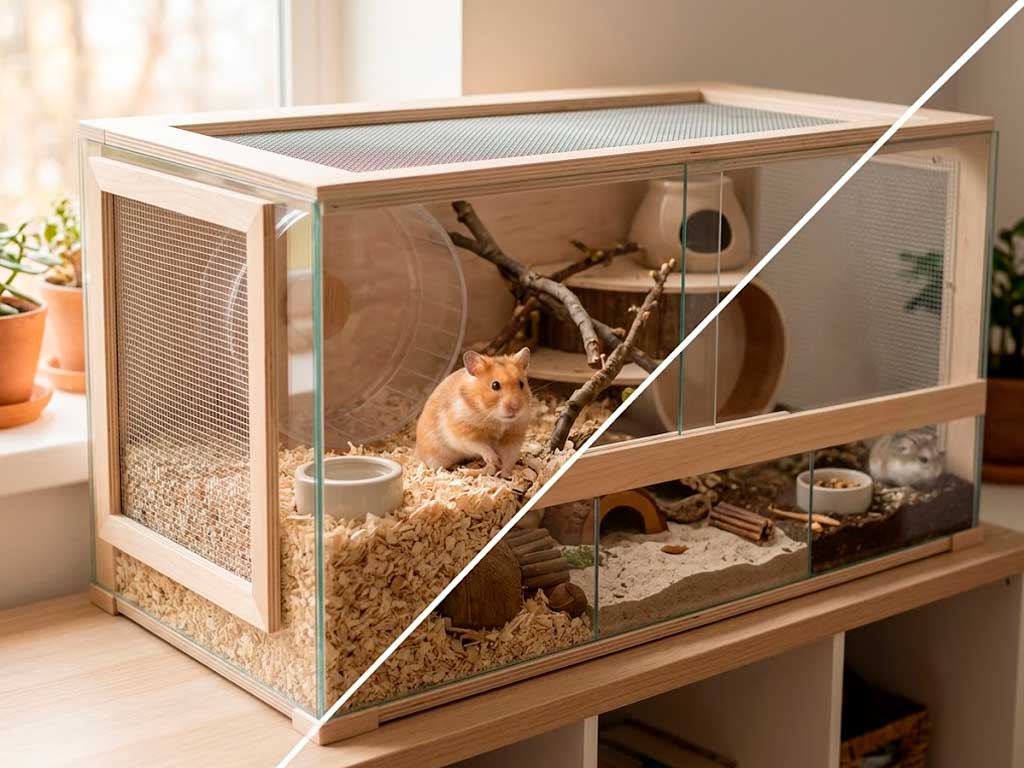
Picking the right cage is the single biggest decision in setting up a new hamster’s home, and it’s also where most first-time owners get steered wrong by starter kits that look bigger than they actually are. This guide compares three widely available cages by real, verified specs, so you can match the right one to your hamster’s size and species.
A quick note on how this guide works: we’re comparing verified manufacturer specifications and real owner-review patterns, not hands-on testing we haven’t done. Some links below are affiliate links, meaning we may earn a commission if you buy through them, at no extra cost to you. That relationship never changes which cage we’d actually recommend, drawbacks included.
How Much Space Does a Hamster Actually Need?
Here’s something worth knowing upfront: cage-size guidance has shifted over the years, and you’ll see different numbers depending on where you look.
An older, still widely cited minimum puts Syrian hamsters at 450-600 square inches of floor space. More current veterinary guidance recommends significantly more: at least 900 square inches for Syrian hamsters and 700 square inches for dwarf or Chinese hamsters, with a cage height of about 24 inches to allow for deep bedding.
Bottom line: the bigger number reflects better hamster welfare and is worth aiming for if your space and budget allow it. The smaller number is a floor, not a target. Every cage below gets measured against both.
What to Look for in a Hamster Cage
Before comparing specific cages, here’s what actually matters, in order.
- Floor space: more important than height for a burrowing animal
- Bedding depth capacity: at least 6 inches, ideally up to 10 for a Syrian
- Material and ventilation: wire tops for airflow, solid sides for containing bedding, no all-wire designs that leak substrate
- Escape safety: tight bar spacing, secure latches, no gaps at seams
- Ease of cleaning: removable base, accessible corners
The 3 Cages We’re Comparing
| Cage | Floor Space |
|---|---|
| Prevue Universal Small Animal Home | ~617 sq in |
| Kaytee CritterTrail SUPER Habitat | 540 sq in |
| Niteangel Vista (Small) | ~566 sq in |
Prevue Universal Small Animal Home
This cage measures 32.5″ long by 19″ wide by 17.5″ high, giving roughly 617 square inches of floor space, comfortably above the older minimum and closer to the current dwarf-hamster target. It uses tight 3/8-inch wire spacing on a snap-on mesh top over a 6.25-inch deep plastic base, with two access doors and a secure wire latch.
It’s genuinely versatile, listed for hamsters, gerbils, guinea pigs, and several other small pets, and the metal-and-plastic build is easy to wipe down and disinfect.
The honest drawback: because it’s designed as a multi-species “universal” home rather than a hamster-specific cage, the base depth is shallower than dedicated deep-burrowing setups, and it falls short of the newer 900 square inch Syrian target. It’s a solid, easy-to-clean option for a dwarf hamster or as a clear upgrade from an undersized starter kit, but a Syrian owner chasing the higher welfare benchmark may want to size up further.
Kaytee CritterTrail SUPER Habitat
This habitat measures 30″ long by 18″ wide by 16.5″ high, with 540 square inches of floor space and 1/4-inch bar spacing. It includes a second-level shelf and ramp, plus a port door that connects to other CritterTrail habitats and tube accessories for expansion.
The honest drawback, and it’s a real one: PetMD specifically advises against CritterTrail-style habitats for Syrian hamsters, citing exercise wheels that run too small for their size and connector tubes with joints that can trap bacteria from waste. Owner reviews on Petco echo practical concerns too, including reports of wire spacing gaps and lid pieces coming loose over time. This habitat is a better fit for a dwarf or Roborovski hamster than a Syrian, and if you do choose it, skip the connecting tubes or clean them frequently.
Niteangel Vista (Small)
This cage measures 32.9″ long by 17.2″ wide by 21.1″ high, giving about 566 square inches of floor space. It’s built from MDF Aspen wood and birch, with transparent PET side panels, an acrylic roof vent for airflow, and an oblique-opening front door that makes daily access easier than a straight panel design.
The deeper wooden base handles substrate well for burrowing, and the taller height gives more room for platforms and climbing accessories than the other two options here.
The honest drawback: wood construction, even the eco-friendly MDF Aspen used here, is harder to fully disinfect than plastic or glass, and it can hold odor longer if cleaning gets delayed. It’s also worth noting this is the “Small” size in Niteangel’s lineup; the Medium (40.7″×22.7″×22.9″) clears the 900 square inch Syrian target if you want to size up.
Which Cage Fits Your Hamster?
Matching your pick to your hamster’s type matters more than chasing the single “best” option. If you haven’t settled on which type you’re getting, our hamster types and breeds guide breaks down the differences in size and temperament.
- Dwarf or Roborovski hamster, tight budget: the Kaytee CritterTrail SUPER is workable, skip the connector tubes
- Syrian hamster, want easy cleaning: the Prevue Universal Small Animal Home, though consider sizing up further for the newer welfare target
- Syrian hamster, want the best balance of space and ventilation: the Niteangel Vista, sized up to Medium if your budget allows
DIY Bin Cage Option
If none of the above fit your budget, a large plastic storage bin makes a genuinely solid DIY hamster cage, and it’s a common, well-regarded option in the hamster-keeping community.
- Choose a bin with at least 450 square inches of floor space, larger if possible
- Cut out the center of the lid, leaving a secure frame
- Attach a wire mesh panel over the opening using zip ties through small drilled holes
- Add bedding, a hideout, food and water dispensers, and a properly sized wheel
This route costs less than most pre-made cages and often provides deeper bedding capacity for burrowing, since storage bins tend to be taller than typical starter cages.
Frequently Asked Questions (FAQ)
What is the minimum cage size for a hamster?
An older standard puts the minimum at 450-600 square inches, though current veterinary guidance recommends significantly more, around 900 square inches for Syrian hamsters.
Is a wire cage or a tank better for hamsters?
A solid-sided base with a wire top is generally better than an all-wire cage, since all-wire designs let bedding fall through and don’t hold burrowing depth well.
Are CritterTrail cages bad for hamsters?
They’re not ideal for Syrian hamsters specifically, since the wheels tend to run too small and the connector tubes can trap bacteria. They work better for smaller dwarf or Roborovski hamsters.
Can I use a fish tank as a hamster cage?
An all-glass tank can work but tends to have poor ventilation and gets heavy fast. A hybrid setup with a solid base and wire or mesh top usually balances airflow and containment better.
How deep should hamster bedding be?
Aim for at least 6 inches, up to 10 inches for a Syrian hamster who wants to burrow, which is part of why base depth matters as much as overall floor space.
Is a bigger cage always better?
Generally yes, within reason. More floor space supports natural behavior and reduces stress, as long as the material, ventilation, and safety details are solid too.
What size cage does a dwarf hamster need?
Current guidance recommends at least 700 square inches for dwarf and Chinese hamsters, more than many dedicated “dwarf” cages on the market actually provide.
Do I need to buy cage accessories separately?
Often yes. Most cages include a wheel or platform, but a good hideout, ceramic sand bath dish, and chew-safe toys are usually purchased separately.
Whatever cage you land on, the daily care that goes inside it matters just as much. Our complete pet hamster care guide covers habitat setup, diet, and health monitoring in full detail.
Affiliate Disclosure: This article contains affiliate links. If you purchase through them, we may earn a commission at no additional cost to you.