Hamilton Stovare Dog Breed: The Swedish Hunting Hound Complete Guide
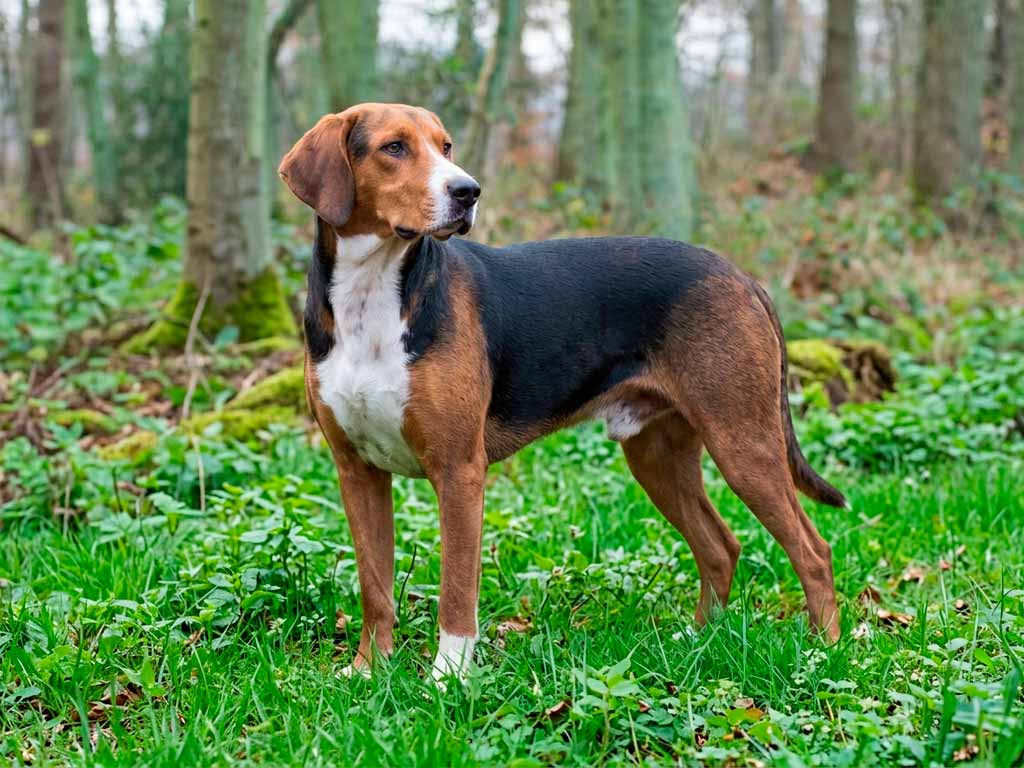
The Hamilton Stovare is a Swedish scent hound that hunts hare and fox on its own, and it needs more than two hours of exercise every day. It sits in FCI Group 6 among the medium-sized hounds, with males standing 53 to 61 cm at the withers and females 49 to 57 cm.
That exercise figure is the part most new owners underestimate. The Kennel Club lists the Hamilton Stovare at more than two hours a day, and it also asks for a large garden and a country setting.
This article sets out what the FCI, the Kennel Club and the AKC publish about the Hamilton Stovare dog breed, where those sources disagree, and what the breed needs in a normal week. It also covers the scent work that keeps a hound settled and the health questions worth asking a breeder.
What Is a Hamilton Stovare?
The Hamilton Stovare dog breed is a tricoloured Swedish hound bred to trail hare and fox and give tongue while it works. Standards describe a rectangular, hardy dog with the strength and stamina for a long day in the field, and warn that it should never look heavy.
Two details separate it from the hounds most people know. It hunts alone rather than in a pack, and the FCI states that it is never used for hunting deer.
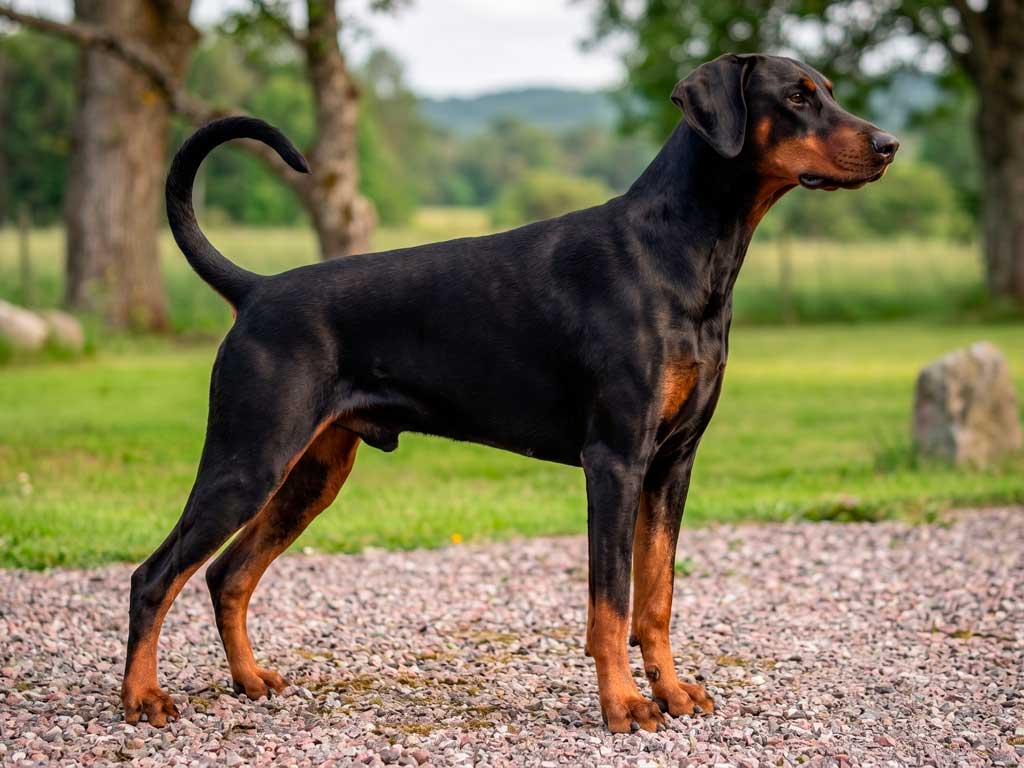
The coat is short, harsh and close lying, with a dense undercoat that thickens in winter. Colour is tricolour: a black mantle over the body, tan on the head and legs, and white markings on the muzzle, throat, chest and feet.
A working trial is attached to that classification, which tells you how the breed is judged. Conformation and field ability are meant to sit together, and the standard treats them as one package rather than two separate tests.
These are the headline figures, with the source named where the registries differ.
| Official name | Hamiltonstövare, written Hamilton Stovare in English |
| Origin | Sweden |
| FCI group | Group 6, scenthounds, Section 1.2 medium-sized hounds |
| Working trial | Part of the FCI classification |
| Height, males | 53 to 61 cm (21 to 24 in) |
| Height, females | 49 to 57 cm (19.25 to 22.5 in) |
| Weight | 40 to 75 lb (18 to 34 kg), AKC figure |
| Coat | Short, harsh, close lying, with undercoat |
| Colour | Tricolour: black, tan and white |
| Exercise | More than 2 hours a day |
| Grooming | Once a week |
| Lifespan | 14 to 17 years, AKC figure |
Where Does the Name Hamilton Stovare Come From?
It carries the name of Count Adolf Patrik Hamilton, a founder of the Swedish Kennel Club. The FCI records that the name Hamiltonstövare was adopted in 1921, and that the hounds were called Swedish hounds before that.
Its history starts at the first Swedish dog show in 1886, where 189 scent hounds were exhibited. A dog and a bitch named Pang and Stella, owned by Hamilton, are treated as the foundation pair of the breed.
The ancestry is a mix of scent hounds from southern Germany and Switzerland, plus Foxhounds and Harriers. English Foxhounds crossed with German hounds is how the Kennel Club summarises the same history, which is why the English Foxhound still looks like a close relative.
Hunting with hounds was a privilege of royalty and gentry in Sweden until 1789. Once the restriction lifted, hounds spread beyond the estates, and the breed took shape in that wider pool of working dogs.
English speakers usually drop the umlaut and write Hamilton Stovare. Both spellings point to the same breed, and the FCI spelling is the one that appears on pedigrees.
How Big Does a Hamilton Stovare Get?
Height is consistent across the registries once the conversions are lined up. The Kennel Club standard gives males 53 to 61 cm and females 49 to 57 cm, with ideal heights of 57 cm and 53 cm.
Weight is where the sources part company. The FCI and the Kennel Club publish no weight at all, while the AKC gives a range of 40 to 75 lb (18 to 34 kg) that covers both sexes and a wide spread of build.
This table compares the three published size ranges.
| FCI standard No. 132 | Males 53 to 61 cm, females 49 to 57 cm; no weight given |
|---|---|
| Kennel Club (UK) | Males 21 to 24 in, females 19.25 to 22.5 in; no weight given |
| American Kennel Club | 19 to 24 in; 40 to 75 lb |
The standard also sets a proportion that is easy to check by eye. Depth of chest should equal half the height at the withers, which keeps the dog rectangular without making it heavy.
Colour faults are strictly defined. A two-coloured dog, whether black and white or black and tan, is disqualifying under the FCI standard, and the same applies to blue eyes and any size outside the limits.
What Is the Hamilton Stovare’s Temperament Like?
Both the FCI and the Kennel Club describe an even-tempered hound, and the FCI adds the word friendly. That is a calm baseline for a dog with this much stamina.
Voice is part of the package. The breed gives tongue on a trail, and the Kennel Club notes a loud, clear voice as one of the qualities hunters valued in it.
Independence is the other half of the temperament. A hound that works alone has to make decisions without a handler nearby, and it brings that habit home with it.
The AKC adds a detail that says something about trainability. Hamilton Stovares have worked as service dogs in the United States since the late 1990s, which is not a job for a dog that cannot learn.
Independence shows up in small ways at home. The dog may pick the coolest floor over the sofa, and it may ignore a recall it understood an hour earlier. That is a hound weighing the odds rather than a training failure.
Shop for Your Breed

Just Food For Dogs – Fresh Frozen
Fresh meals. Gently cooked, then frozen to lock in nutrients. 100% Human Grade Ingredients. Gently Cooked in the USA. #1 Vet-Recommended Fresh Food.
Shop on JustFoodForDogs
Raw Paws Pet Food – Frozen Raw Pet Food
Feeding your pet a frozen raw pet food diet is a simple way to deliver real, whole-food nutrition in its most natural form.
Shop on RawPawsPetFood
Bravecto Chews for Dogs
Bravecto is a long-lasting flea and tick protection option for your dog. 1 dose of Bravecto chew provides up to 12 weeks of powerful protection, which is nearly 3 times longer than a monthly treatment.
Shop on BestVetCare.com
Deworming Treatments for Dogs
BestVetCare offers you a wide range of worm treatments which come in a variety of forms such as oral paste, tablets, granules, and liquid solutions.
Shop on BestVetCare.comHappyPetZone participates in various affiliate programs with brands and retailers. We may receive a commission on purchases made through our links, at no extra cost to you.
How Much Exercise Does a Hamilton Stovare Need?
More than two hours a day, according to the Kennel Club, which also lists a large house, a large garden and a country setting as the breed’s fit.
That is a serious daily commitment for a dog of this size, and it reflects the job. The breed was built to work a full day on scent, and a short pavement walk does not touch that requirement.
Two hours does not have to arrive in one block. A 60-minute road walk in the morning and a 60-minute field walk in the evening meet the figure, and the field walk does more for the dog because it allows scenting. Time in the garden helps, but it rarely matches a walked route with new scents.
A week that meets the requirement looks roughly like this.
| Monday to Friday | One 60 to 90-minute walk, part of it on a long line |
|---|---|
| Three evenings a week | A second shorter walk or a scent game in the garden |
| Saturday | Free running in a secure field, or a laid track to follow |
| Sunday | A long country walk with time to work a scent properly |
Fencing matters as much as the minutes. Once a hound is on a scent it does not check the boundary, so the fence has to do that job for it.
Long lines and enclosed fields do the heavy lifting. Off-lead work in open country asks for a recall the breed rarely offers, and the risk on roads is not worth testing.
Summer afternoons are worth avoiding. A short coat does not make a hound heat-proof, and early mornings suit this breed better than midday sun.
Does the Breed Need Scent Work?
Yes, and it is the closest thing this breed has to a job. The Kennel Club credits the Hamilton Stovare with an excellent nose and perseverance in tracking, which are the two traits a trailing dog needs.
Because it hunts alone, solo trailing suits it better than pack drills. The work fits a dog that makes its own decisions inside clear boundaries: one track, one handler, one scent.
Four activities suit the breed and can start at home.
- Lay a short trail of 50 to 100 metres and work it on a harness and a long line.
- Hide a toy or some food in the garden, which needs no equipment and builds the same focus.
- Join a tracking or mantrailing class, where the dog learns to work a track in a controlled space with other dogs nearby.
- Indoor scent games on wet days keep the nose working when the weather does not cooperate.
Twenty minutes of scent work often tires a hound more than an hour of pavement. It also gives the dog an outlet for the instinct that otherwise sends it over a fence. The Bloodhound works that same instinct over longer distances and needs the same outlet.
You need very little equipment. A harness that leaves the throat free, a long line of five to ten metres, a handful of high-value food, and a start article that the dog is allowed to smell. That is enough for a first season of tracking.
How Do You Groom a Hamilton Stovare?
Grooming once a week is enough, according to the Kennel Club, which also notes that the coat sheds. The FCI describes a harsh, close-lying coat that is very short and smooth on the head, ears and front of the legs.
A weekly routine covers most of it.
- Brush the whole body with a rubber curry comb or a short-bristled brush, working with the lie of the coat rather than against it.
- Check the ears, because drop ears trap warmth and debris even on a short-coated hound.
- Trim the nails every few weeks, since long nails change the way the dog stands and moves.
- Bathe only when the dog is genuinely dirty, and dry the undercoat properly afterward.
- Look over the paws and between the pads after country walks, where grass seeds collect.
There is no clipping routine to learn. The coat is meant to look like a working hound’s coat, and a shaved dog loses the weather resistance the standard asks for.
What Health Problems Do Hamilton Stovares Have?
The Kennel Club’s pre-breeding guidance for the breed asks for one thing above all: prioritising genetic diversity. It does not list a breed-specific DNA package, and it points breeders toward the inbreeding coefficient and individual tests.
The FCI standard takes a similar line from the other direction. Only functionally and clinically healthy dogs with breed-typical conformation should be used for breeding.
Lifespan figures differ by source. The American Kennel Club gives 14 to 17 years, and the Kennel Club gives over 10 years, which reads as a floor rather than a breed average.
This table compares what each registry publishes on health, which is more useful than a list of conditions the breed may never develop.
| Kennel Club (UK) | Prioritise genetic diversity; no breed-specific DNA package |
|---|---|
| FCI standard (No. 132) | Healthy breeding stock with breed-typical conformation |
| American Kennel Club | Life expectancy of 14 to 17 years |
Questions worth asking a breeder follow from that guidance. Ask for the inbreeding coefficient of both parents, ask how closely they are related, and ask which health tests were run and why.
Older hounds tend to keep the nose longer than the joints. A dog that still wants the trail but stiffens after a long walk may do better with shorter sessions and softer ground, and a vet can check for the usual age-related changes.
Any dog that stops eating, loses weight, develops a limp or changes behaviour needs a vet rather than a wait-and-see approach. This guide is educational and does not replace veterinary advice for the dog in front of you. Owners who want to plan costs can compare breed-specific dog insurance before a problem appears.

Lemonade Pet Insurance
Explore customizable pet insurance coverage and learn whether Lemonade is the right fit for your dog or cat.
- Customizable coverage options
- Online policy management
How Do You Train a Hamilton Stovare?
Start with the recall, and start it on a long line. A scent hound that decides to follow a trail is not being stubborn, it is doing the work it was bred for.
Three skills carry most of the weight for this breed.
- Build a recall that works at ten metres on a long line before testing it at fifty.
- Teach a settle on a mat, because two hours of exercise still leaves an evening indoors.
- Loose lead walking is easier to teach at five months than at two years.
Service work is a useful benchmark for what the breed can learn. Dogs that have tracked for a living can also learn to hold a position in a busy room, given clear criteria and good food.
Puppy classes and calm exposure to traffic, livestock and strangers do the rest. A hound that has met a hundred people before its first birthday is easier to take anywhere, and the puppy care guide covers the first months in detail.
Is the Hamilton Stovare Right for You?
This breed fits a household that wants a working hound and has the time to walk it properly. It does not fit a flat, a busy city street, or an owner who wants a dog that stays close without training.
The breed works when these points are true.
- You can give more than two hours of exercise a day, split into at least two outings.
- Your garden is securely fenced, and you have access to open country for longer walks.
- You enjoy scent work or tracking, and you are willing to build a recall on a long line.
- Expect a vocal dog that gives tongue when it is working.
Look at other breeds if any of these apply.
- You need a dog that can be trusted off lead without training.
- A quiet dog that settles without a daily outlet for its nose is a better match.
- Flat living with no garden and no easy access to fields leaves the breed short on exercise.
Buying well means asking about the parents rather than the pedigree. Ask how many litters the breeder raises a year, ask to meet the mother, and expect to travel to see where the litter was raised.
The Hamilton Stovare dog breed rewards an owner who likes being outdoors and does not need a dog underfoot all day. Start with the exercise figure honestly: if two hours a day is not realistic in your week, this is the wrong hound. If it is, few breeds give back as much on a trail.
The Dog Breeds hub lists the rest of the scent hound group by size and temperament, so the shortlist happens before a deposit rather than after.