Eclectus Parrot Care Guide: What to Know Before You Get One
Eclectus parrot care starts with a fact that surprises almost every new owner: males and females look so different that early naturalists classified them as two separate species.
That single trait shapes nearly everything else about this bird, from how you’ll recognize one to how carefully you’ll need to manage its diet.
This guide covers what makes eclectus parrots unique, what housing and diet actually require, the calmer temperament that sets them apart from most parrots, and what one costs to keep. Compare eclectus parrots against other species in our types of pet parrots guide if you haven’t settled on one yet.
What Makes Eclectus Parrots Different: Extreme Sexual Dimorphism
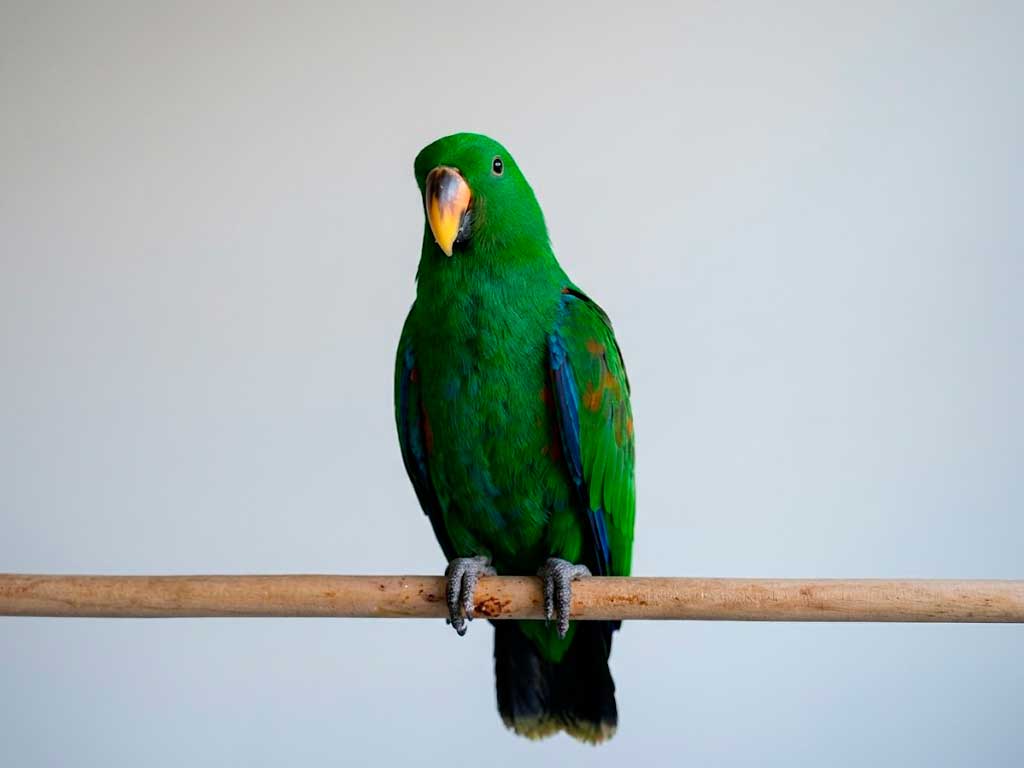
Male and female eclectus parrots are colored so differently that telling them apart takes no training at all. Males are emerald green with blue wing accents and a coral-orange upper beak. Females are deep red and purple with a solid black beak. No other commonly kept parrot species shows this dramatic a split between the sexes, and it’s the reason 18th- and 19th-century naturalists originally described males and females as different birds entirely.
Three subspecies show up most often in the pet trade. The Grand eclectus, sometimes called the red-sided eclectus, is the most common and typically the least expensive of the three. Vosmaeri eclectus parrots run larger, with a wider yellow tail tip on females and a slightly longer, more slender build.
The Solomon Island eclectus is the smallest of the three, with a shorter tail and a more compact frame. Care needs are nearly identical across all of them; the differences are mostly cosmetic and regional, tied to which island group the wild population originates from.
Housing: Cage Size and Setup
Eclectus parrots need a genuinely spacious cage, at least 30 inches wide, 24 inches deep, and 40 inches tall, with bar spacing around 1 inch. They’re less acrobatic than a macaw or cockatoo but still need room to climb, stretch, and move between multiple perches without feeling cramped.
Use perches of varying diameter and material, natural wood, rope, and concrete all work well, positioned at different heights so the bird can choose where to settle. Keep the cage in a calm, moderately trafficked part of the home rather than a chaotic one, since this species handles a steady environment better than a loud or unpredictable one.
Offer several hours of supervised out-of-cage time daily. Rotate toys and rearrange cage accessories periodically, since a static environment tends to bore this species faster than owners expect from a bird known for being calm.
Diet: What Eclectus Parrots Eat
Diet is the single area where eclectus parrots differ most from every other parrot in this cluster, and getting it wrong causes real problems. This species has an unusually long digestive tract, which makes it more sensitive than most parrots to synthetic additives, artificial coloring, and over-supplementation.
Build the diet around a high-quality pellet free of artificial ingredients, supplemented generously with fresh vegetables and fruit: dark leafy greens, carrots, sweet potato, bell peppers, and berries all work well. Avoid heavily fortified pellets or piling on extra vitamin supplements on top of an already-complete diet. More isn’t better here; it can actually cause harm.
Feeding should happen on a consistent daily schedule rather than leaving food available around the clock, and any fresh produce should come out of the cage within a few hours to avoid spoilage. If you’re switching an eclectus to a new pellet brand, do it gradually over one to two weeks, mixing old and new food, rather than swapping diets abruptly.
Skip avocado, chocolate, caffeine, and salty or sugary table food, same as with any parrot.
Temperament: Calm, Observant, and Reserved
Eclectus parrots are noticeably quieter and calmer than conures, cockatoos, or Amazons. They tend to watch a room before engaging with it rather than demanding attention the moment something happens, and they’re less likely to be constantly playful or high-energy.
That doesn’t mean silent or aloof. A well-socialized eclectus bonds deeply, enjoys being near its people, and can pick up words and routines with regular interaction. They simply prefer a steadier pace than the site’s louder species. Overstimulating environments, too much noise or activity, can push a sensitive eclectus toward stress and feather plucking rather than excitement.
In the Wild: Nesting and Communication
Wild eclectus parrots have one of the more unusual breeding setups in the parrot family. Females spend remarkably long stretches, sometimes months, inside a single nest hollow, even outside of breeding season, while males range out to feed and return with food. Some observations report up to eight birds of both sexes attending a single nest, suggesting a level of cooperative care that’s rare among parrots.
That reserved, watchful temperament pet eclectus parrots show at home echoes their wild communication style. Rather than constant chatter, wild birds rely on a sharp contact call in flight and a softer “chu-wee, chu-wee” while feeding, along with occasional chuckling, bell-like sounds. A pet eclectus that seems to observe more than it vocalizes isn’t being standoffish; it’s behaving close to how the species operates in the forest canopy.
Common Health Issues
Toe-tapping and wing-flipping are neurological symptoms specific to this species, most often linked to over-supplementation or exposure to synthetic vitamins and preservatives in the diet. It’s one of the clearest examples of how directly an eclectus’s diet connects to its health, and it’s largely preventable by sticking to a clean, appropriately balanced pellet rather than layering on extras.
Feather plucking shows up here too, usually tied to stress, boredom, or diet, same as in other parrots, but eclectus feathers are especially fine and dense, so changes in plumage condition are often one of the earliest visible signs something’s off. Psittacine beak and feather disease (PBFD) and proventricular dilatation disease (PDD) affect eclectus parrots as they do other species, making an annual avian vet exam and testing new birds before introducing them to a flock worthwhile here as well.
How Much Does an Eclectus Parrot Cost?
Expect to pay somewhere between $1,500 and $3,000 for the bird itself, with Vosmaeri and rarer subspecies sometimes running higher. Setup costs, cage, perches, toys, and dishes, add a meaningful amount on top, and food and annual vet visits continue for the life of the bird, which can stretch past 30 years.
Choosing an Ethical Source
A pet eclectus should always be captive-bred. Wild-caught eclectus parrots have historically been exported from parts of Indonesia and Papua New Guinea for the pet trade, and while the species as a whole isn’t considered globally threatened, some regional populations face real pressure from habitat loss and past trapping. A legitimate breeder will be transparent about a chick’s parentage and history and will let you see the parent birds without hesitation.