Cockatoo Care Guide: What to Know Before You Bring One Home
Every solid cockatoo care guide has to open with the same blunt fact: these are the parrots most likely to end up in a rescue, and it’s rarely because something is wrong with the bird.
Cockatoos bond harder and louder than almost any other parrot, and that same intensity that makes them so affectionate is exactly what catches new owners off guard.
This guide covers the real species differences, what housing and diet require, the behavioral issues that define this family more than any other parrot, and what a cockatoo actually costs to keep. If you’re still comparing species, our types of pet parrots guide is a good place to start.
Types of Cockatoos: Which Species Should You Get?
There are more than 20 cockatoo species, but only a handful show up regularly in the pet trade.
- Umbrella cockatoos are pure white with a crest that fans out into a dramatic circle when raised. They’re among the most affectionate parrots kept as pets, which is exactly why they’re also one of the two species most often surrendered to rescues.
- Moluccan cockatoos (also called salmon-crested) are the largest common pet cockatoo, blush-pink with a striking crest. They share the dubious honor with umbrellas of topping the feather-plucking and relinquishment statistics.
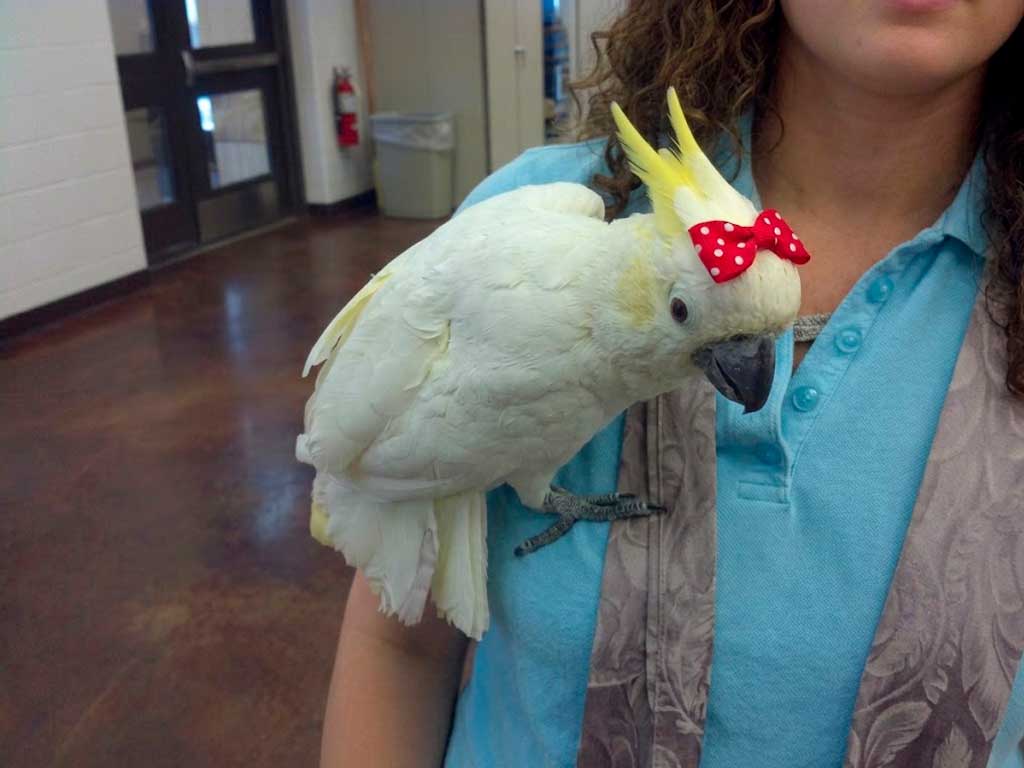
- Sulphur-crested cockatoos are the loud, yellow-crested bird most people picture when they hear the word. They’re intelligent and can be wonderful companions, but their voice carries even further than most cockatoos, which is saying something.
- Goffin’s cockatoos run smaller and, by most keepers’ accounts, a bit more manageable than the giants above. They’re still demanding, but their compact size makes housing and travel easier.
- Galahs, also sold as rose-breasted cockatoos, are gray and pink and known for a slightly calmer temperament, though they’re also frequent feather pluckers according to avian vets.
- Major Mitchell’s cockatoos (sometimes called pink cockatoos or Leadbeater’s) are strikingly colored and considered one of the more sensitive species, doing best with an experienced, patient owner.
Australia’s black cockatoos, including the red-tailed, yellow-tailed, glossy, and gang-gang, rarely show up as pets outside their native range. Most are protected native species with strict permit requirements even within Australia, so treat any “black cockatoo for sale” listing with real suspicion.
Housing: Cage Size and Setup
Go bigger than you think you need. A cockatoo cage should measure at least 24 inches deep, 48 inches wide, and 48 inches tall, with bar spacing between 1 and 1.5 inches depending on the species. An outdoor aviary, where climate allows, gives a cockatoo far more room to burn off energy than any indoor cage ever will.
Every piece of the cage and every toy needs to be free of zinc, lead, and galvanized metal. Cockatoos chew constantly, and heavy metal poisoning from cheap hardware is a real and preventable risk.
Set perches at different heights and place the softest one highest, since that’s typically where a cockatoo chooses to sleep. Toys should include soft wood branches, rope, cardboard, and vegetable-tanned leather, anything a cockatoo can pick apart with its feet, since manipulating objects is a core part of how this species stays entertained.
Unlike most parrots, cockatoos sleep in rather than waking at dawn, so a well-lit room with natural light matters more than an early light cycle. Aim for roughly 12 hours of light and 12 of darkness, and never park the cage directly in a sunny window, where it can overheat fast.
Diet: What Cockatoos Eat
Build the diet around a high-quality pelleted feed, roughly 75 percent of what the bird eats day to day. Fill out the rest with fresh vegetables, legumes, grains, and fruit, with seeds and nuts kept to a small treat portion rather than a dietary staple.
Skip chocolate, caffeine, avocado, shelled peanuts, and potato skins entirely. Cockatoos are social eaters in the wild, so feeding time tends to go better when the household is nearby rather than off in another room.
Temperament, Bonding, and the Overbonding Problem
This is the section that matters most for anyone weighing a cockatoo against another large parrot. No other companion bird bonds as intensely, and that intensity is both the appeal and the risk.
Cockatoos read as flock animals, and a lone owner becomes their entire flock. Left alone for a full workday, many cockatoos scream, not out of malice but because in the wild that kind of prolonged isolation would signal real danger. Setting boundaries early, before the bird turns one, makes a measurable difference later.
Sexual maturity, usually somewhere between five and seven years old, often brings a rough patch. A bird that was cuddly as a baby can turn possessive, nippy, or outright aggressive toward everyone except one favorite person. It’s a normal phase, similar in spirit to adolescence, and most cockatoos come through it, though it’s also the exact window where a lot of owners give up and rehome the bird.
Feather plucking is the clearest sign something’s off, and umbrellas, Moluccans, and rose-breasted cockatoos top the list of species prone to it. The causes range from boredom and anxiety to an underlying medical issue, which is why any sudden feather-destructive behavior deserves a vet visit before anything else. Feather-safe toys and enrichment that mimics preening help, but they’re prevention, not a cure once the habit sets in.
Watch the crest for a read on mood: raised can mean anything from excitement to a warning that a bite is coming, while a relaxed, lowered crest generally signals a calm, approachable bird. Vocalizations carry meaning too. A short, sharp squawk at dawn or dusk is just the flock call, a soft growl usually means a bird is enjoying a meal, and a hiss is a clear warning to back off.
On a lighter note, cockatoos are one of the few animals proven to keep a beat. Studies on captive cockatoos found they can synchronize movement to a musical rhythm, and plenty of owners report their bird bobbing along to a favorite song. It’s a genuinely fun way to bond, as long as you’re reading the bird’s excitement level first, since an overstimulated cockatoo mid-dance can deliver an accidental bite.
Common Health Issues
Psittacine beak and feather disease (PBFD) and proventricular dilatation disease (PDD) both affect cockatoos and have no cure, which makes testing new birds before introducing them to an existing flock genuinely important. Psittacosis is a bacterial infection that can pass to humans, another reason annual exams matter.
Reproductive issues like egg binding show up in females, and liver disease and obesity are both linked to diets that lean too heavily on seeds and fatty treats. Cockatoos also produce a fine white powder from their feathers, called powder down, that can irritate the respiratory system of sensitive owners and other birds sharing the home.
How Much Does a Cockatoo Cost?
A typical cockatoo runs $600 to $1,500, with rarer species climbing into the thousands. That’s before the ongoing costs: a large cage, a steady supply of destructible toys, pellets, fresh food, and annual vet visits all add up fast for a bird this size.
Rescue, Adoption, and Choosing an Ethical Source
Cockatoos are among the most frequently surrendered parrots, which means rescues regularly have well-socialized adult birds looking for a second home, often at a fraction of a breeder’s price. Adopting an adult can also sidestep the unpredictable “teenage” phase entirely, since many rescue cockatoos are already through it.
If buying from a breeder, insist on captive-bred stock only. Every cockatoo species is protected under CITES, and wild capture has already pushed some Australian species to the edge of extinction in parts of their range. A legitimate breeder will show you the parents and answer questions about the chick’s history without hesitation.