Quaker Parrot Care Guide: What to Know Before You Get One
Quaker parrot care comes with a question most other parrot guides never have to answer: is it even legal where you live? These small, clever, endlessly entertaining birds are banned or restricted in several US states, which makes checking local law step one, not an afterthought, for anyone considering one.
Past that hurdle, Quakers make rewarding companions. This guide covers what they’re called, whether you can legally own one, what housing and diet actually require, and the nest-building instinct that makes this species unlike any other parrot you can keep. If you’re still comparing species, our types of pet parrots guide is a good place to start.
Quaker Parrot or Monk Parakeet? Same Bird, Different Name
Quaker parrot and monk parakeet refer to the exact same species, Myiopsitta monachus. “Monk” comes from the pale, hood-like grey feathering across the face and chest, while “Quaker” reportedly comes from an old description of the bird’s quivering, bobbing greeting display.
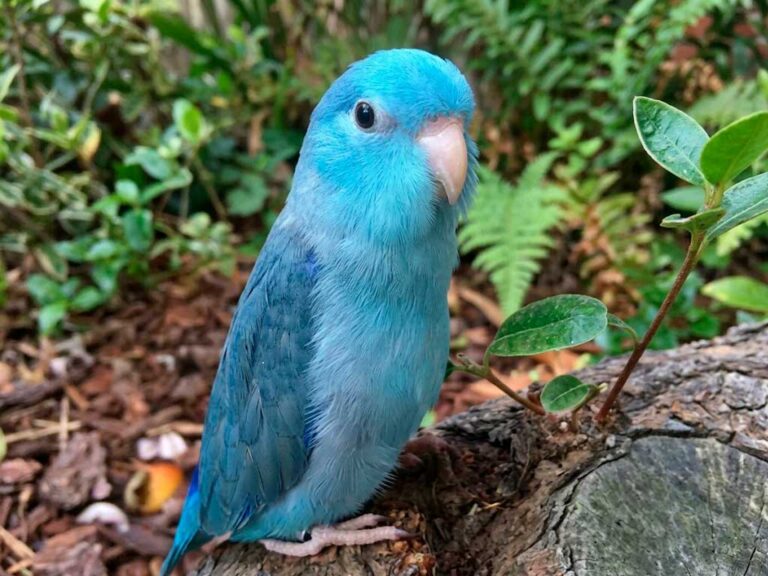
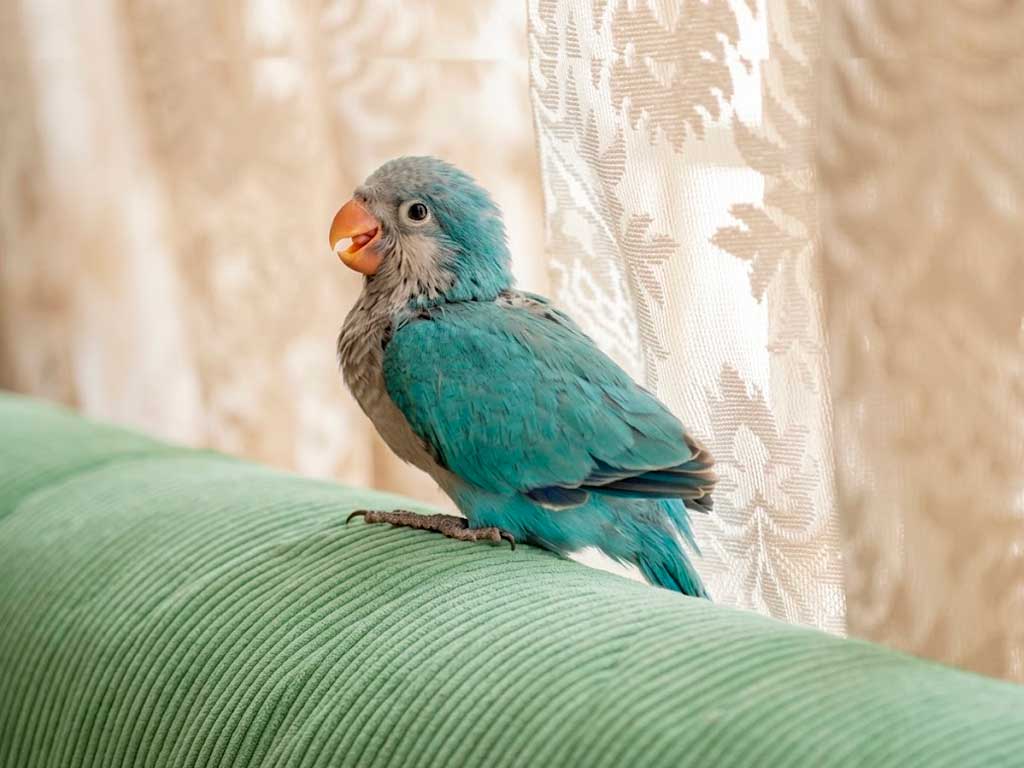
The wild-type color is bright green with that distinctive grey face and blue flight feathers, but captive breeding has produced blue, yellow, lutino (a soft cream-yellow), grey, and opaline variations. Color doesn’t change temperament or care needs, so pick whichever appeals to you.
Is It Legal to Own a Quaker Parrot?
This is the one question to answer before falling in love with a photo. Quaker parrots build large stick nests, sometimes taken over by other wildlife or built on infrastructure, and wildlife agencies in several states classify them as a potential agricultural or ecological risk if released or escaped. California and New Jersey are among the states that restrict or ban private ownership outright, and rules vary and change, so confirm current law with your state’s wildlife agency before you buy, not after.
Where they are legal, most jurisdictions still expect secure housing, since an escaped Quaker has a real shot at surviving and even establishing a colony, which is exactly what’s happened in several US cities already.
Housing: Cage Size and Setup
Aim for a cage at least 35 inches wide, 20 inches deep, and 35 inches tall, with bar spacing between 1/2 and 3/4 inch. Quakers are compact but active, and they’ll use every level of a multi-perch setup.
The latch matters more here than with almost any other parrot on this site. Quakers are notoriously good at working open standard cage clasps, so spring-loaded or two-stage locks are worth the extra cost. Offer three or four perches of different widths and materials, and keep a play stand nearby for supervised time outside the cage.
A shallow bathing dish or a fine mist from a spray bottle a few times a week keeps feathers in good condition and gives the bird something to do besides rearrange its cage furniture.
Diet: What Quaker Parrots Eat
Quakers tolerate a bit more seed in the diet than most companion parrots, but pellets should still anchor it: aim for roughly 65 percent high-quality pellet, with fresh vegetables and fruit making up most of the rest and a modest seed portion layered in as a supplement rather than the main course.
Skip avocado, chocolate, caffeine, onion, garlic, and anything salted. A seed-heavy diet is still the fastest route to obesity and fatty liver disease in this species, same as it is in larger parrots.
Temperament, Nesting Instinct, and “Borrowing”
No other parrot commonly kept as a pet builds an actual nest the way a Quaker does, and that single trait shapes almost everything else about living with one. Quakers have an intense, hardwired urge to weave, arrange, and defend a home, and it shows up in captivity as constant nest-building behavior inside the cage.
Give a Quaker safe materials, paper strips, palm fronds, or soft twigs, and watch it go to work weaving them into a structure with real purpose and persistence. Owners often describe a related quirk: Quakers have a habit of collecting small household objects, pens, jewelry, bits of foil, and tucking them into the nest, sometimes not turning up again until a deep cleaning months later.
That same nesting drive has a sharper edge. Quakers can become surprisingly territorial around their cage, and many owners report an otherwise gentle, affectionate bird nipping when a hand reaches in to retrieve it. That’s rarely random aggression; it’s a bird defending its home, and understanding that context makes it much easier to work around.
Hand-raised Quakers that are spoken to consistently can start picking up words as early as three months old, and by adulthood many build a genuinely large, clear vocabulary. They’re also, by most keepers’ accounts, a touch quieter day to day than a conure or cockatoo, even if their alarm call is sharp and can repeat for a long stretch if the bird wants something and isn’t getting it.
The Feral Colonies: A Uniquely Adaptable Parrot
Quaker parrots are the only parrot species known to establish permanent, self-sustaining wild colonies in cold climates, a direct result of their communal nest-building. Escaped and released pet birds have built thriving feral populations in cities including Chicago and New York, insulated through winter by the sheer bulk of their stacked, multi-chambered stick nests.
It hasn’t been entirely uneventful. Quaker nests built on utility poles and transmission equipment in New York have grown large and heavy enough to cause power outages, which is part of why several states treat the species with more caution than most companion birds. It’s a remarkable adaptation story, and also exactly why legal status varies so much by location.
Common Health Issues
Quakers are less prone to the feather-destructive behavior that plagues cockatoos and African greys, but they’re not immune to the same seed-diet-driven problems as other parrots: obesity and fatty liver disease top the list, both largely preventable with a pellet-based diet.
Psittacosis, a bacterial infection transmissible to humans, and proventricular dilatation disease (PDD) both affect Quakers as they do other parrots, which is why sourcing from a healthy, reputable breeder and scheduling an annual avian vet exam both matter here as much as anywhere else in this cluster.
Respiratory infections linked to vitamin A deficiency show up occasionally too, another reason to keep pellets, rather than seed, at the center of the diet.
How Much Does a Quaker Parrot Cost?
Expect to pay somewhere between $200 and $500 for the bird itself, depending on color mutation and where you’re buying. Blue and other mutation colors typically run higher than the standard green. Setup costs, cage, toys, dishes, and nest-building material, add a modest amount on top, and food and vet care continue for the life of the bird.
Choosing a Legal, Ethical Source
Because Quaker parrots aren’t wild-caught or endangered the way many large parrots are, the ethical question here runs in the opposite direction: it’s about keeping one legally and responsibly, not about protecting a wild population from capture. Buy only from a breeder who can confirm your state allows ownership, and keep the cage genuinely secure, both for the reasons above and because an escaped bird in the wrong state can become a real problem for local wildlife authorities.