Sun Conure Care Guide: What to Know Before You Get One
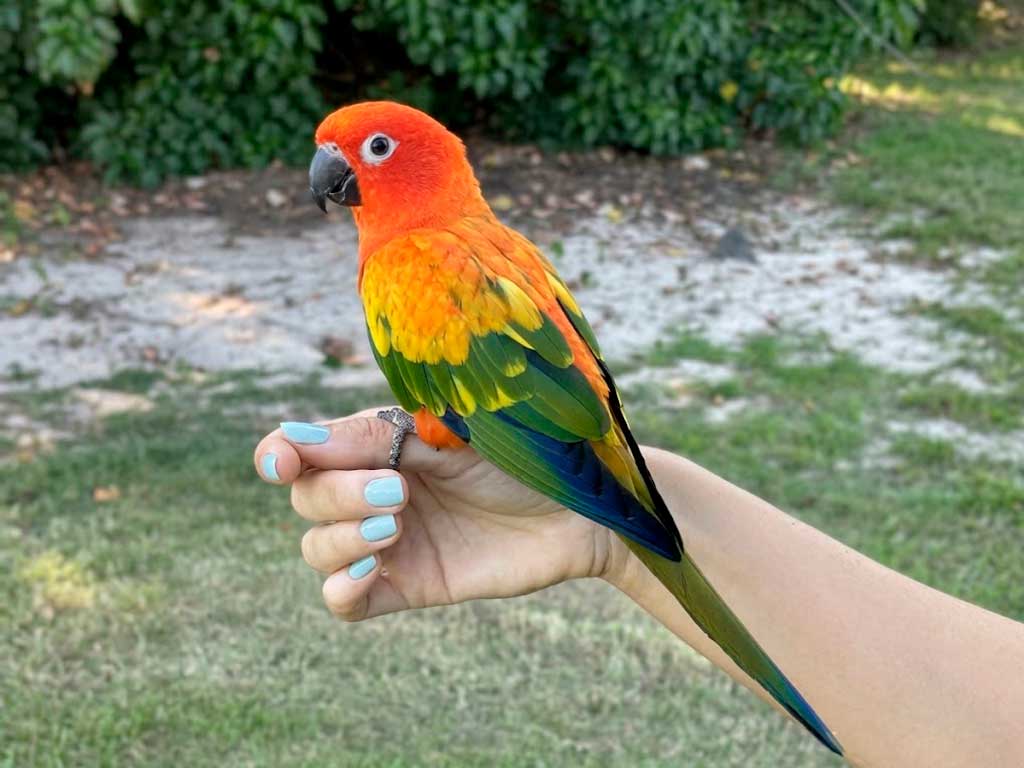
Good sun conure care starts with color, because this bird doesn’t arrive looking the way it will end up. Sun conures are famous for a blaze of gold and orange plumage, but that’s not what greets a new owner on day one, and understanding that early change is part of understanding the species as a whole.
This guide covers what to expect as a sun conure matures, what housing and diet actually require, the noise level that catches so many new owners off guard, and why sourcing one responsibly matters more than most buyers realize. Compare sun conures against other parrots in our types of pet parrots guide if you’re still deciding.
Sun Conure Basics: Colors, Size, and How They Change
Juvenile sun conures hatch mostly olive-green, and the vivid gold and orange coloring people picture doesn’t fully set in until around two years old, with the shift starting noticeably around six months. It’s a slow reveal, not an overnight transformation, so a young bird’s photo can look very different from what it’ll become.
Adults run about 10 to 12 inches long and weigh somewhere around 4 to 5 ounces. Males and females look nearly identical, flatter and squarer-headed on males by some accounts, but a DNA or blood test is the only reliable way to sex one.
Sun conures belong to a small cluster of closely related Aratinga species, including the jandaya conure and the golden-capped conure, and they can interbreed. A sun-jandaya cross, sometimes called a “sunday” conure, shows up in the pet trade occasionally. It’s not a separate species, just a hybrid, and a reputable seller should be upfront about it rather than passing one off as pure.
Housing: Cage Size and Setup
Aim for a cage at least 30 inches wide, 30 inches deep, and 36 inches tall, with bar spacing of 3/4 inch or smaller. Stainless steel is the safest material; skip anything made with galvanized wire or wood, which can expose the bird to toxic residue.
Sun conures need real UV exposure to process dietary calcium properly, and a glass window doesn’t provide it, since glass filters UV light out. Either give the bird supervised time in an escape-proof outdoor enclosure or run a full-spectrum avian UV light over the cage for 10 to 12 hours a day, replacing the bulb roughly every six months as its output fades.
Fill the cage with perches of varying width, around 1/2 inch in diameter works well, made of wood, rope, or concrete, never sandpaper or gravel-coated, both of which can injure a bird’s feet. Add foraging toys and rotate the selection regularly, since a bored sun conure is a loud, sometimes feather-plucking one.
Offer a water dish large enough to bathe in, since most sun conures will preen and splash on their own given the chance. For birds that don’t bathe themselves, a few passes with a fine mist spray bottle a couple of times a week keeps feathers in good shape.
Diet: What Sun Conures Eat
Build the diet around a high-quality pellet formulated for conures, roughly 60 to 70 percent of daily intake. Fresh vegetables and fruit make up most of the rest, capped around 30 percent, with seeds and treats limited to about 10 percent.
Skip avocado, chocolate, caffeine, alcohol, onion, and garlic entirely, and remove any fresh food left out more than about 10 hours before it spoils. Never share food directly from your own mouth or plate; human saliva carries microorganisms that can make a bird seriously ill.
Noise Level and Talking Ability
Set expectations here before anything else: sun conures are loud, among the loudest birds this size, with a shrill, piercing flock call that evolved to carry across dense rainforest. Dawn and dusk calling sessions are normal, not a sign anything’s wrong, and an under-stimulated bird will scream for attention well beyond those windows.
Talking is the flip side of that noise. Despite the vocal volume, sun conures aren’t known as strong talkers, and plenty of individuals never pick up a word at all. If a chatty bird matters to you, an African grey or Amazon is a better bet; if a colorful, high-energy companion matters more than conversation, a sun conure still delivers.
Anyone working a regular full-time schedule should seriously consider a second bird for company, since a lone sun conure left alone all day tends to get louder, not quieter, over time.
Temperament, Biting, and Feather Plucking
Sun conures are social, food-motivated, and generally enjoy being handled, though they’d rather perch on you than be cradled like a baby. Watch the body language before reaching in: pinned eyes, a flared tail, or a bird leaning in and lunging are all warning signs a bite may follow.
If a bite happens anyway, resist the urge to yell. Reacting loudly actually rewards the behavior with attention, so the better response is calmly setting the bird down somewhere safe and walking away, a brief time-out that teaches biting doesn’t get results.
Feather plucking shows up in this species when boredom, stress, or an underlying medical issue goes unaddressed. Prevention beats treatment once it starts, since the behavior tends to become habitual. A roomy cage, rotating toys, and daily one-on-one time go a long way toward heading it off, and any sudden onset of plucking is worth a vet visit before assuming it’s purely behavioral.
Common Health Issues
Pacheco’s disease, a fast-moving herpesvirus, and proventricular dilatation disease both affect sun conures and can be serious, which is why quarantining and testing a new bird before introducing it to an existing flock matters. Polyoma virus is another risk, particularly for young birds.
Malnutrition, usually a vitamin A or D deficiency tied to a seed-heavy diet, remains one of the most preventable issues in this species, and it ties directly back to the UV light and pellet-based diet covered above. Heavy metal and Teflon toxicosis round out the list, both avoidable by keeping the cage metal-free and the kitchen’s nonstick cookware away from the bird entirely.
Endangered in the Wild: Why Sourcing Matters
This is a species where buying responsibly carries real weight. The IUCN lists the sun conure as Endangered, and researchers estimate the total wild population at fewer than 2,500 mature individuals, concentrated in a shrinking, fragmented range across northeastern Brazil and Guyana. Heavy trapping for the pet trade has already led to the species’ near-total disappearance from Guyana specifically.
Every pet sun conure should come from captive-bred stock, and a legitimate breeder will have no trouble confirming that and showing you the parent birds. Given how small the wild population already is, buying a wild-caught bird, even unknowingly, adds real pressure to a species with very little room left to absorb it.
How Much Does a Sun Conure Cost?
Expect to pay somewhere between $300 and $800 for the bird itself, depending on age and source. Setup costs, cage, UV lighting, perches, and toys, add a meaningful amount on top, and food and annual vet visits continue for the life of the bird, which can stretch past 30 years with good care.