Egyptian Mau: The Only Naturally Spotted Domestic Cat
Your cat isn’t imitating a cheetah for fun — it’s built with the same mechanical trick. The Egyptian Mau has a loose flap of skin running from flank to hind leg that gives it an unusually long stride and real bursts of speed, a genuine physical feature shared with its wild lookalike.
Here’s what makes that especially remarkable: this is the only naturally spotted domestic cat breed in existence. Every other spotted breed got there through deliberate crossbreeding. The Mau’s spots are simply how the breed has always looked, going back thousands of years.
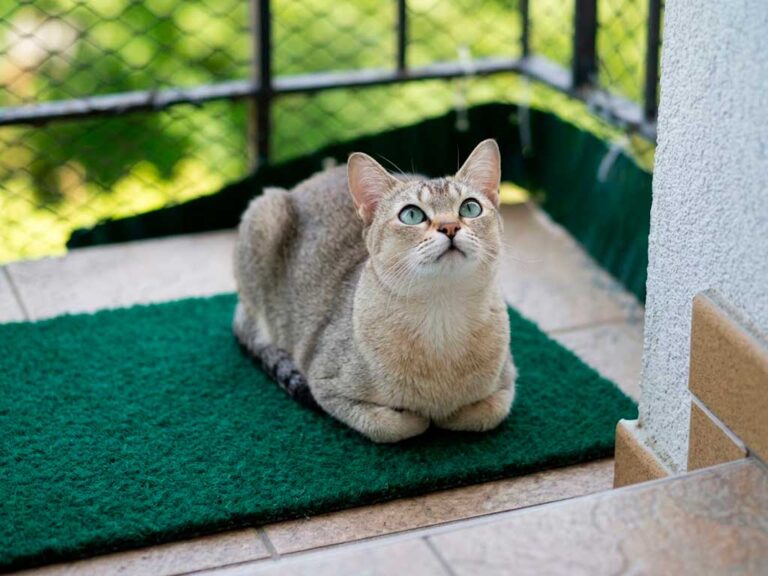
Quick Facts: Medium size, muscular, athletic build. Gooseberry-green eyes. Coat in silver, bronze, or smoke. Naturally spotted pattern, no two cats marked exactly alike.
History: From Egyptian Tombs to a Russian Princess
The word “mau” meant cat, or sun, in ancient Egyptian. Papyri and tomb frescoes dating back to roughly 1550 BCE depict spotted cats closely resembling today’s Egyptian Mau, making this one of the oldest identifiable cat breeds anywhere.
For generations, cats believed descended from those ancient Egyptian felines were kept by the country’s nobility and diplomatic circles. One of these cats eventually reached Nathalie Troubetskoy, a Russian princess living in Rome, who was captivated enough to start a dedicated breeding program. When she emigrated to the United States in 1956, three Maus traveled with her — the true foundation of the breed in America. CFA accepted the Egyptian Mau for registration in 1970 and granted championship status in 1977.
That direct line from a Roman princess’s personal fascination to a fully recognized CFA breed is a relatively short, well-documented path compared to most ancient-looking breeds, which makes the Mau an unusual case: a modern pedigree built on genuinely old genetics.
Physical Characteristics: The Cheetah-Like Gait
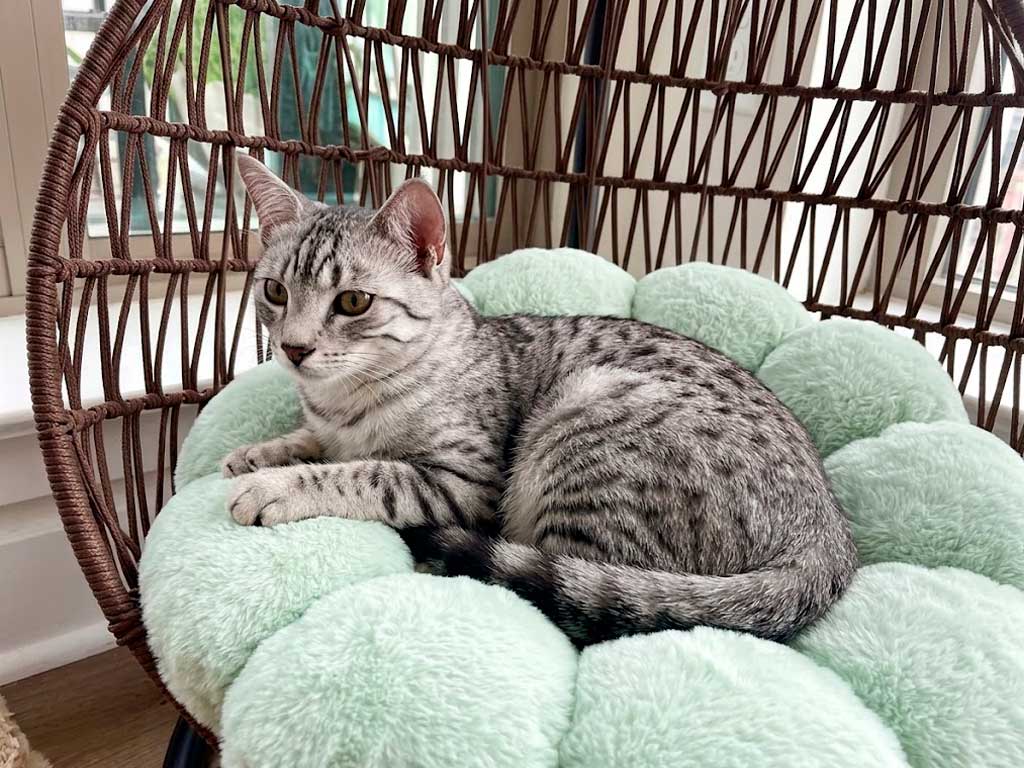
The spots are the headline feature, scattered randomly across the body in no fixed pattern, varying in size and shape from cat to cat. Forehead markings form a distinctive “M” and frown lines, while “mascara” markings frame the cheeks and gooseberry-green eyes.
What sets the Mau apart structurally is that loose skin flap extending from flank to hind leg — a trait unique among domestic breeds. It gives the cat real freedom of movement for twisting and jumping, and combined with higher shoulder blades and proportionately longer hind legs, produces a gait breeders genuinely compare to a cheetah’s.
Males typically run larger and heavier through the neck and shoulders than females once mature, a detail worth expecting if you’re comparing littermates or judging by size alone.
Three colors are recognized: silver, bronze, and smoke. Silver and bronze coats are dense and resilient, with enough length to show multiple bands of ticking on each hair; the smoke coat runs finer and silkier. All three carry a natural sheen.
Egyptian Mau vs. Other Spotted Breeds
Breeds like the Bengal or Ocicat also carry spotted coats, but both got there through deliberate crossbreeding with other species or breeds decades or centuries after their spots first appeared through selective work. The Mau’s spotting occurred naturally, without any engineered crosses — the defining distinction CFA points to when calling it the only natural spotted domestic breed.
Personality and Temperament
Your cat isn’t just watching you — it’s genuinely tracking everything. Egyptian Maus have unusually sharp senses of smell, hearing, and sight, which makes them acutely tuned in to their surroundings and to your mood specifically. Many have a knack for showing up with a soft purr right when you need one.
Intelligent and devoted, Maus expect to be treated as full household members. Many learn to play fetch, walk comfortably on a harness and leash, and generally participate in whatever’s happening — shoulder-riding, refrigerator-investigating, or acting as an early alarm clock.
This breed is also genuinely strong-willed. Egyptian Maus tend to be selective about who handles them, sometimes cautious or reserved with strangers, while remaining deeply affectionate, loyal, and outgoing with their own people. Vocally, they’re quiet with a low, melodious voice, often chirping or chattering in greeting rather than meowing loudly.
That sensitivity to mood is often described by owners as almost uncanny — a Mau seems to register a bad day before anyone says a word about it, and responds with proximity rather than performance.
Caring for an Egyptian Mau
Grooming is low-effort: this breed sheds only minimally, and a weekly combing session controls loose hair and reduces hairballs without taking more than a few minutes. Regular bathing isn’t necessary outside of show preparation, though an occasional bath can bring out the coat’s natural sheen — check with your breeder for cat-safe product recommendations first.
Because the coat’s natural sheen is part of the breed’s appeal, some owners use a chamois cloth for a quick polish between combing sessions — a small extra step that brings out the shine without any real time investment.
Diet needs are standard for the breed’s size and activity level. Given how much this breed enjoys interactive play, fetch sessions and puzzle toys do double duty as both exercise and mental stimulation.
Nail trims, ear checks, and dental care round out the routine on a standard schedule — nothing breed-specific there, just consistency over what’s typically a long, healthy life.
Health Conditions to Know
Egyptian Maus are a healthy, natural breed capable of a long life with proper care. Breeders have been diligent about testing for pyruvate kinase deficiency, an inherited enzyme condition that causes anemia. Urolithiasis — the formation of stones in the kidneys or urinary tract — can also occur, though genetic testing isn’t yet available for every known heritable condition in the breed.
Watch also for signs of urinary discomfort — straining, frequent litter box trips, or blood in the urine — and contact your vet promptly if any appear, since urinary blockages can become emergencies quickly in cats.
Health Disclaimer: This guide is for educational purposes only and doesn’t replace professional veterinary advice. Ask breeders directly about any history of pyruvate kinase deficiency or urinary issues in their lines.
Finding an Egyptian Mau: Price and Availability
This breed has a devoted following in the U.S. and Europe, and popularity has grown in recent years — enough that demand currently outpaces the number of active breeders. Expect a genuine wait for a kitten. A cat show remains a solid way to connect with a breeder, though it’s worth confirming with the sponsoring club ahead of time that Maus will actually be present.
If you’re flexible on color, silver tends to be the most commonly available, with bronze and smoke sometimes requiring extra patience depending on a breeder’s current litters.
Is an Egyptian Mau Right for You?
This breed suits people who want an intelligent, athletic, deeply bonded cat and don’t mind a bit of initial wariness around new visitors. If the idea of a cat that plays fetch, walks on a leash, and reads your mood accurately sounds appealing, an Egyptian Mau delivers all of that.
It’s a tougher match for households that want an instantly friendly cat with every guest, or anyone unwilling to wait for a kitten given current demand. Your cat isn’t going to warm up to everyone immediately. Once it decides you’re “its” person, though, that loyalty runs deep.
Apartment living can work well too, provided there’s enough vertical space and interactive play to satisfy that athletic build — this isn’t a breed that needs outdoor access to feel content, just consistent engagement.
One last practical note before we wrap up: because demand currently outpaces supply, don’t be surprised if a breeder asks detailed questions about your household and experience before agreeing to a placement — it’s a sign of a responsible cattery, not an obstacle.
Frequently Asked Questions
Is the Egyptian Mau related to ancient Egyptian cats?
The breed’s appearance closely matches spotted cats depicted in Egyptian art dating back to roughly 1550 BCE, and cats believed descended from that lineage were the foundation of the modern breed, though direct genetic continuity over thousands of years isn’t scientifically documented.
Why does the Egyptian Mau move differently than other cats?
A unique flap of loose skin from flank to hind leg gives this breed exceptional flexibility, contributing to a distinctive, cheetah-like gait and impressive jumping ability.
What colors do Egyptian Maus come in?
Three colors are recognized for showing: silver, bronze, and smoke. Solid black and dilute colors can occur and are eligible for registration but not for show.
Are Egyptian Maus hypoallergenic?
No cat breed is truly hypoallergenic, though the Mau’s minimal shedding makes it more manageable for some allergy-sensitive households.
How much does an Egyptian Mau cost?
Given rising popularity and a limited number of active breeders, expect a premium price and a real wait for a kitten.
An Egyptian Mau carries thousands of years of history in a coat that was never engineered, only inherited. Between the natural spots and that unmistakable cheetah-like stride, it’s easy to see why this breed has held its devoted following for so long.
Browse more breed profiles in the full Cat Breeds guide.