Rough Collie: The Complete Breed Guide
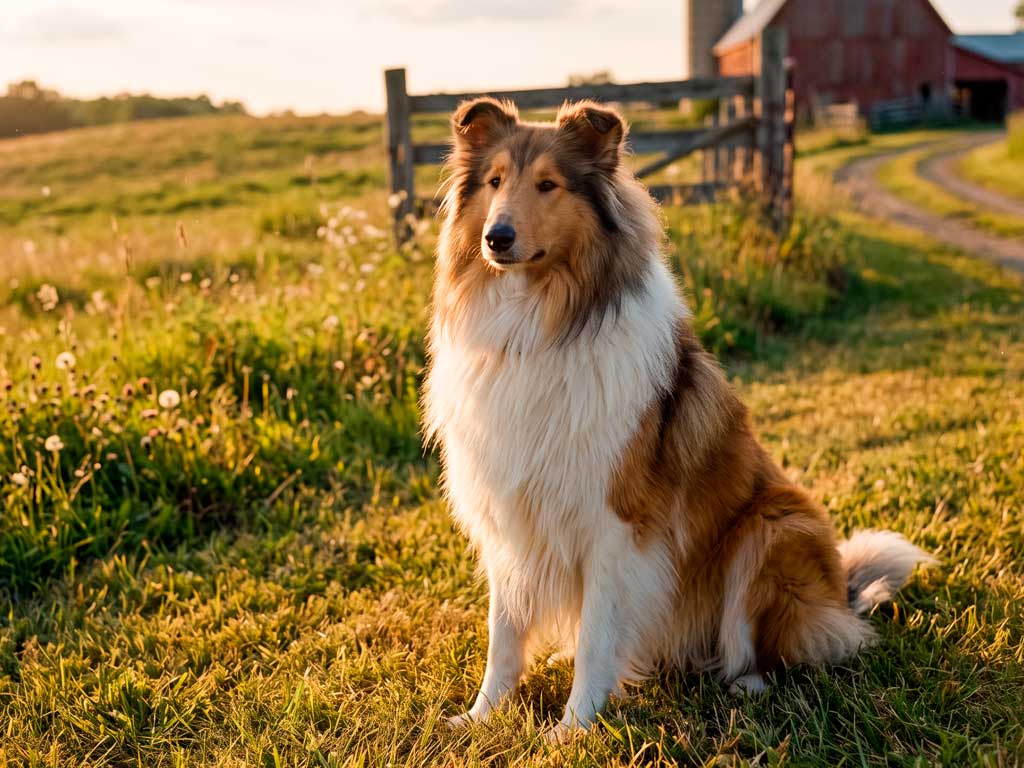
You already know this dog’s face, even if you’ve never heard the breed name. That’s the Rough Collie — the dog behind Lassie, and one of the most recognizable breeds in the world.
Here’s everything you actually need to know before bringing one home.
Quick Facts
- Height: 22–24 in (males), 20–22 in (females)
- Weight: 60–75 lbs (males), 50–65 lbs (females)
- Lifespan: 14 to 16 years
- Coat colors: sable and white, tricolor, blue merle, white
- Group: Herding
- Best suited for: experienced owners with an active household
History and Origin
The Rough Collie descends from herding dogs brought to Scotland by Roman invaders around 50 BC, crossed with native Scottish herders. The name likely traces back to the Colley, a black-faced sheep once raised in Scotland’s lowlands, which these dogs were bred to herd.
Queen Victoria fell for the breed during an 1860s visit to Balmoral and brought several back to Windsor Castle. That royal endorsement pushed the Collie into the show ring almost overnight, and the breed’s popularity has never really faded since.
A Rough Collie named Blair became the first dog star in film history back in 1905, decades before Lassie made the breed a household name. I’ve gone deep on that whole Hollywood connection in a dedicated piece — it’s a genuinely fun rabbit hole.
Temperament and Personality
Here’s the thing — Rough Collies are about as far from nervous or aggressive as a herding breed gets. They bond hard with their family, learn fast, and genuinely light up when you give them a new training challenge to solve.
They’re also natural watchdogs. A Rough Collie stays alert to anything unusual around the house and will bark to let you know, though they warm up to familiar visitors quickly. Supervision matters when young kids are around, simply because this is a big, energetic dog that doesn’t always know its own size.
Coat and Colors
That famous double coat comes in four recognized colors: sable and white, tricolor, blue merle, and white. Blue merle gets searched constantly, and for good reason — the mottled gray-and-black pattern is genuinely striking and a little rare compared to the classic sable look most people picture.
I’ve broken down each color pattern, the genetics behind merle, and what to watch for with double-merle breeding in a dedicated color guide. For now, know that any reputable breeder should be able to explain exactly how they’re managing merle-to-merle pairings.
Exercise and Training Needs
Surprisingly, Rough Collies don’t need as much exercise as their herding-breed reputation suggests. About an hour of daily activity keeps most adults content, though they’ll happily take more if you’re offering it.
Training goes smoothly with this breed. Trust me on this one: Rough Collies genuinely enjoy the mental work, so short, varied sessions beat long repetitive drills every time. Their herding instinct means they may try to “herd” kids or other pets, so redirecting that behavior early makes a real difference.
Grooming Basics
That gorgeous double coat needs daily brushing, full stop. The undercoat is soft and dense, while the outer coat is harsh and straight, and skipping even a few days lets mats set in fast, especially during shedding season.
Occasional trimming around the paws and tail feathering keeps things tidy between full grooming sessions. I’ve put together a complete grooming walkthrough covering deshedding tools, mat prevention, and what a bad coat day actually looks like — this breed’s coat deserves its own guide, not just a paragraph.
Health and Longevity
Rough Collies are a genuinely long-lived breed, often reaching 14 to 16 years. That said, several inherited eye conditions show up in the breed with some regularity — collie eye anomaly, progressive retinal atrophy, and retinal pigment epithelial dystrophy among them — along with hip dysplasia.
One condition worth knowing by name: MDR1 gene mutation, which makes some Collies unusually sensitive to certain medications. This article offers general guidance, not a diagnosis — talk to a licensed veterinarian about eye screening, hip evaluation, and MDR1 testing before breeding or as part of routine care.
Bringing One Home: Cost and Adoption
Prices vary a lot depending on breeder reputation, location, and coat color — blue merle puppies especially tend to command a premium. I’ve broken down realistic price ranges and what actually drives them in a dedicated cost guide.
Adoption is worth serious consideration too. Rough Collie rescues and breed-specific adoption groups place dogs of all ages, often at a fraction of breeder pricing — I’ve covered exactly where to look, country by country, in a dedicated piece.
Mistakes to Avoid
- Skipping daily brushing and assuming a weekly session is enough — it isn’t, and mats build fast
- Buying from a breeder who can’t explain their merle-to-merle breeding safeguards
- Assuming high energy means marathon exercise sessions — this breed actually needs less than people expect
- Leaving a Collie’s herding instinct unmanaged around small kids or other pets
Frequently Asked Questions (FAQs)
Is the Rough Collie the same dog as Lassie?
Yes. Lassie was played by a series of male Rough Collies descended from the original film dog, Pal. The breed’s fame traces directly back to that franchise.
Are Rough Collies good with children?
Generally yes, though supervision matters given their size and herding instinct. Most Collies are gentle and protective with kids they know well.
Do Rough Collies bark a lot?
They’re vocal and alert by nature, quick to bark at anything unusual. Consistent training helps manage excessive barking without suppressing their natural watchdog instinct.
How much grooming does a Rough Collie really need?
Daily brushing, no exceptions. The double coat mats quickly without it, especially during heavy shedding periods twice a year.
Give this breed daily brushing, moderate exercise, and a family willing to engage that sharp herding brain, and you’ll end up with one of the most loyal, recognizable dogs you could ask for.