Amazon Parrot Care Guide: What to Know Before You Get One
Good Amazon parrot care starts with understanding a contradiction at the heart of this species: they’re often called the clowns of the parrot world for their playful, theatrical personalities, yet they’re also one of the most frequently surrendered parrots to rescue groups. The charm is real. So is the intensity behind it.
This guide covers the Amazon species most commonly kept as pets, what housing and diet actually require, the behavioral patterns that catch new owners off guard, and what the bird costs to keep. Compare Amazons against other large parrots in our types of pet parrots guide if you’re still narrowing things down.
Types of Amazon Parrots: Which Species Should You Get?
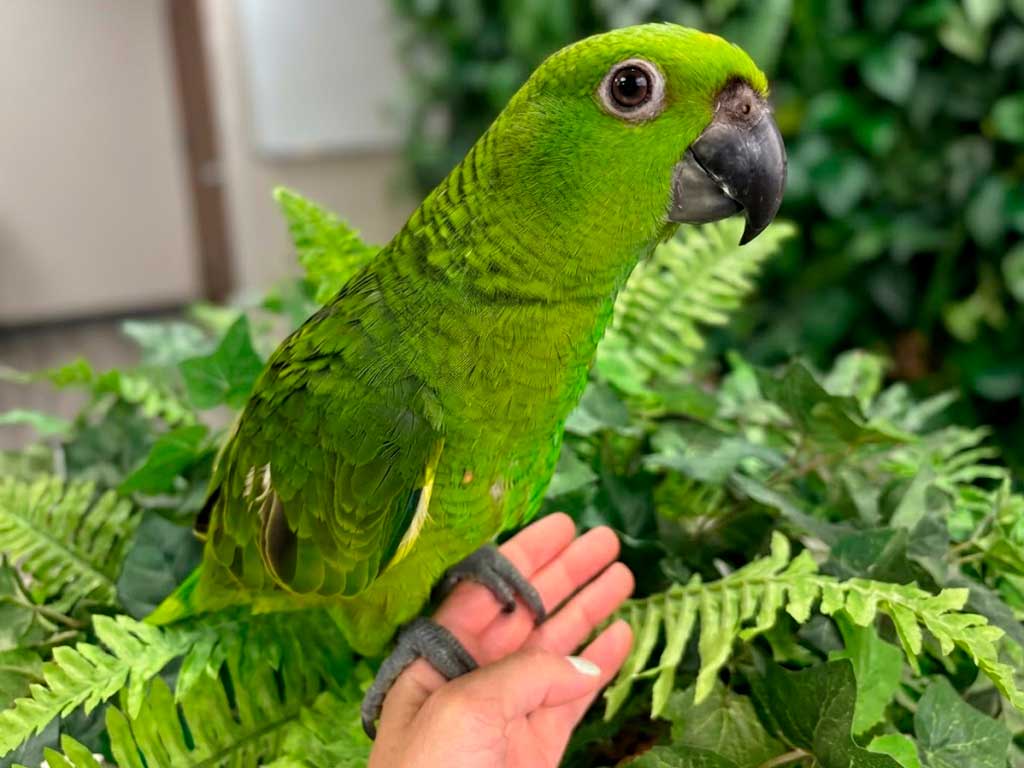
Amazon parrots include 27 species native to Mexico, Central and South America, and the Caribbean, though only about 10 show up regularly in the pet trade.
- Blue-fronted Amazons are probably the most widely kept Amazon species, mostly green with a patch of blue above the beak and known for strong talking ability.
- Yellow-naped Amazons (sometimes sold as yellow-headed) rank among the best talkers in the entire parrot family, though that reputation comes with a correspondingly strong personality and, in males especially, a tendency toward more assertive behavior during play.
- Orange-winged Amazons run a bit smaller and calmer than many of their cousins, which makes them a reasonable starting point for someone set on an Amazon specifically.
- White-fronted Amazons are the smallest commonly kept Amazon species, with a distinctive white patch above the beak and red around the eyes.
- Red-lored Amazons and double yellow-headed Amazons round out the more common options, both known for good talking ability and the same bold, attention-seeking personality that defines the genus.
All Amazons share a family resemblance in temperament: intelligent, social, food-motivated, and happiest when treated as a genuine member of the household flock rather than a decoration.
Housing: Cage Size and Setup
Aim for a cage at least 39 inches wide, 30 inches deep, and 59 inches tall, with bar spacing between 1 and 1.5 inches. Bigger is always better with this species, since Amazons are active, acrobatic birds that use every inch of space they’re given.
Unlike cockatoos, which sleep in, Amazons are early risers and will call out the moment the sun comes up, so plan the cage’s location with that morning volume in mind. A 12-hour light and 12-hour dark cycle works well for most Amazons; reproductive females sometimes need a shorter light cycle if hormonal behavior gets out of hand, but that’s a conversation for an avian vet rather than a DIY fix.
Provide three or four perches in different diameters and materials, and keep the softest one at the highest point, since that’s usually where an Amazon chooses to sleep. Stock the cage with six to eight rotating toys, including chew toys and foraging puzzles, since these birds are aggressive chewers that go through wood and rope fast.
Amazons also relish texture, not just flavor, when it comes to enrichment. Offering food in different forms, whole, chopped, skewered, or hidden inside a foraging toy, taps into the same instinct that drives them to gorge on a good find in the wild, and it keeps mealtime from becoming just another routine the bird tunes out.
Diet: What Amazon Parrots Eat
Obesity is the single biggest dietary risk for this species, and it’s largely preventable. Build the diet around a high-quality pellet, roughly 75 percent of daily intake, with fresh vegetables, legumes, grains, and fruit making up most of the rest. Keep seeds and nuts to a small treat portion, since Amazons that fill up on fatty seeds are the ones most likely to develop weight-related disease later.
Skip chocolate, caffeine, avocado, alcohol, shelled peanuts, and potato skins entirely. Amazons are social eaters and tend to do better with meals timed around when the household is nearby rather than off in another room.
Temperament, Noise, and Reading Body Language
Amazons are loud, and one specific trait makes it worse in a busy household: they tend to match the volume around them. A quiet home gets a relatively quiet bird, while a loud, chaotic one gets an Amazon that’s learned to shout over it.
Watch for “eye pinning,” where the pupils rapidly contract and expand. It’s one of the clearest signals in this species and can mean excitement, playfulness, or a warning, depending on what else the bird’s body is doing at the same time. Paired with a fanned tail or raised neck feathers, it usually means back off rather than lean in.
Bonding with more than one household member matters more for Amazons than for most parrots. A bird that only ever interacts with one person is far more likely to become possessive of that person and aggressive toward everyone else. Rotating who feeds, trains, and plays with the bird from early on heads off a lot of that risk.
The Teenage Phase and Hormonal Aggression
Most Amazons are purchased young, when they’re at their most affectionate and easygoing. That tends to shift once the bird approaches sexual maturity, usually past six years old, when hormonal surges bring on a stretch that owners and behaviorists alike describe as a teenage phase.
Yellow-naped, double yellow-headed, and blue-fronted Amazons, particularly males, have a reputation for being the most assertive during this period. It’s not permanent, and it’s not a sign anything went wrong. But it is the exact window where a lot of Amazons get relinquished by owners who weren’t prepared for the shift, which is exactly why patience and consistent handling through it matter so much.
Common Health Issues
Hepatic lipidosis, better known as fatty liver disease, is the defining health risk for this species, almost always tied to an obesity-driving, seed-heavy diet. It can show up as an overgrown beak or nails, among other signs, and it’s serious enough to need prompt veterinary attention once suspected.
Amazons are also susceptible to psittacine beak and feather disease (PBFD) and proventricular dilatation disease (PDD), both incurable, and hypocalcemia can affect reproductively active hens specifically. Feather picking shows up here too, often tangled up with the same obesity and boredom issues that drive fatty liver disease.
An annual avian vet exam, with bloodwork and a fecal check, catches most of this early enough to matter.
How Much Does an Amazon Parrot Cost?
Expect to pay somewhere between $500 and $2,500 for the bird itself, depending on the species, its age, and how well-socialized it already is. Rarer or better-talking individuals can run higher. Initial setup, cage, perches, toys, and dishes, adds a meaningful amount on top, and ongoing costs for pellets, fresh food, and annual vet care continue for the life of the bird.
Rescue, Adoption, and Choosing an Ethical Source
Amazon parrots are, by most rescue organizations’ accounts, among the most commonly surrendered companion birds, which means adoption is a realistic and often more affordable path to a well-socialized adult bird. Most Amazon species are protected under CITES, and a pet Amazon should always be captive-bred, never wild-caught. A legitimate breeder will be transparent about a chick’s history and let you see the parents without hesitation.